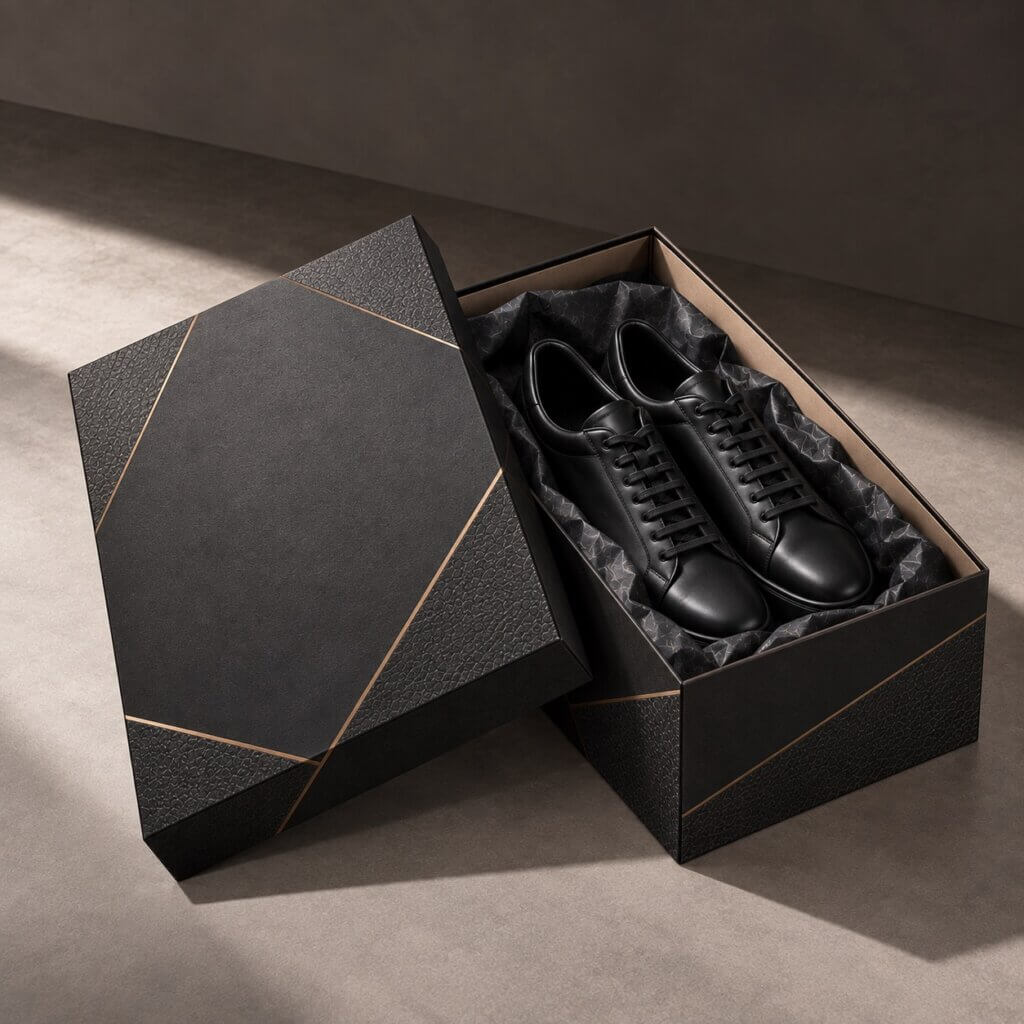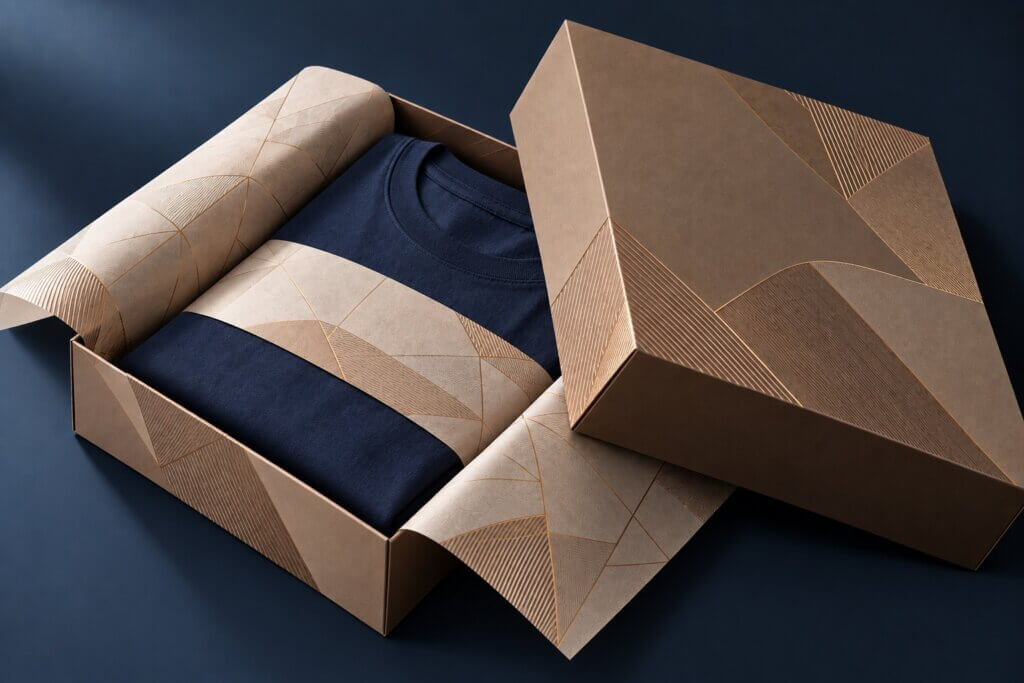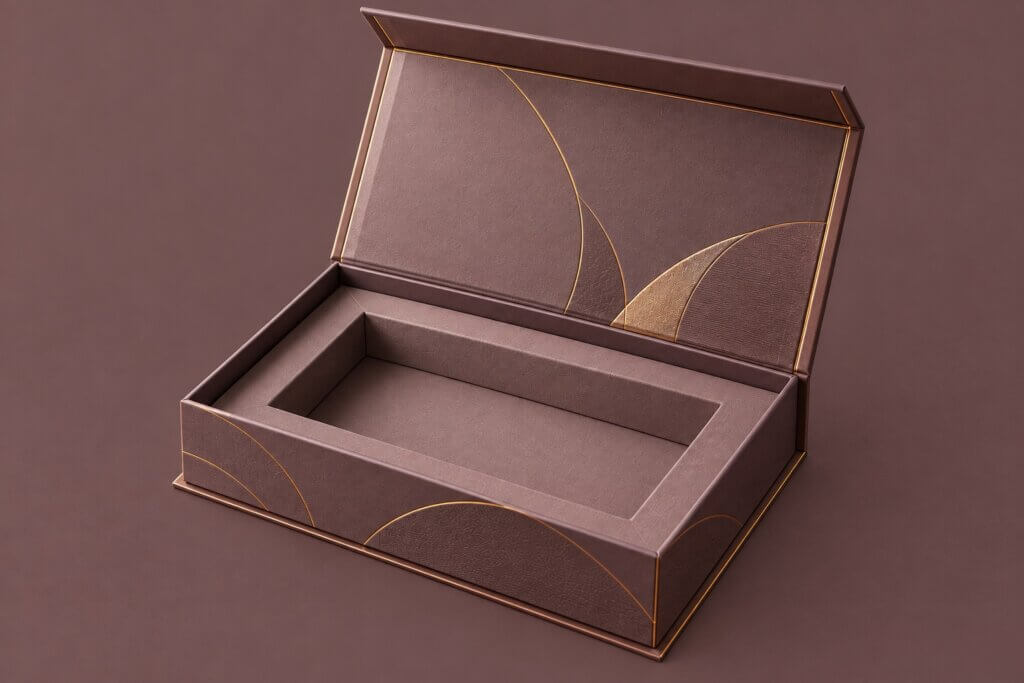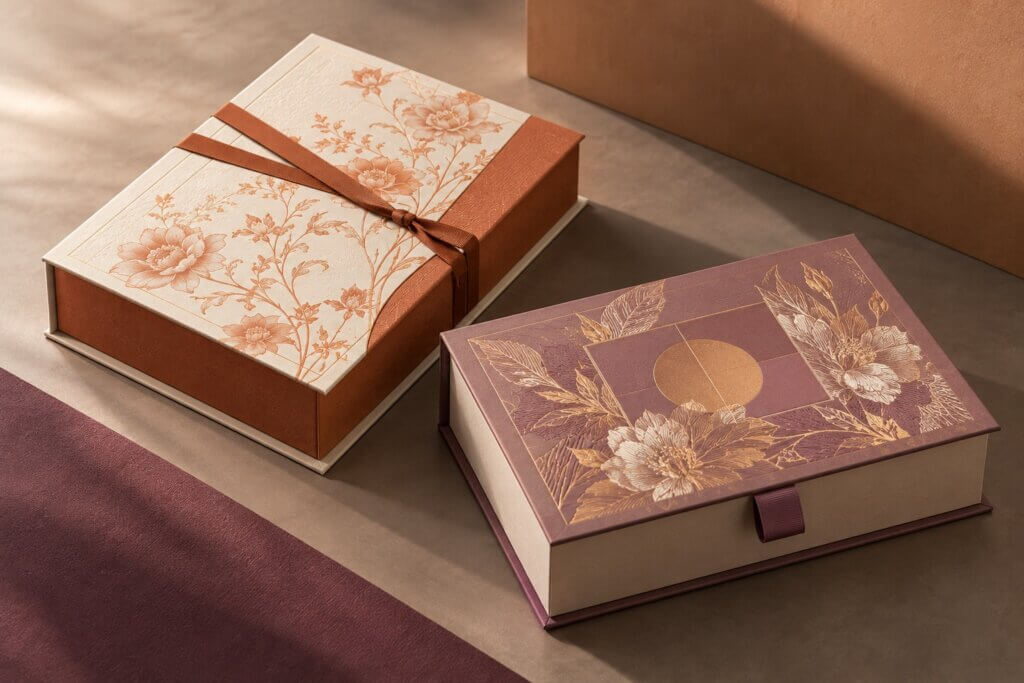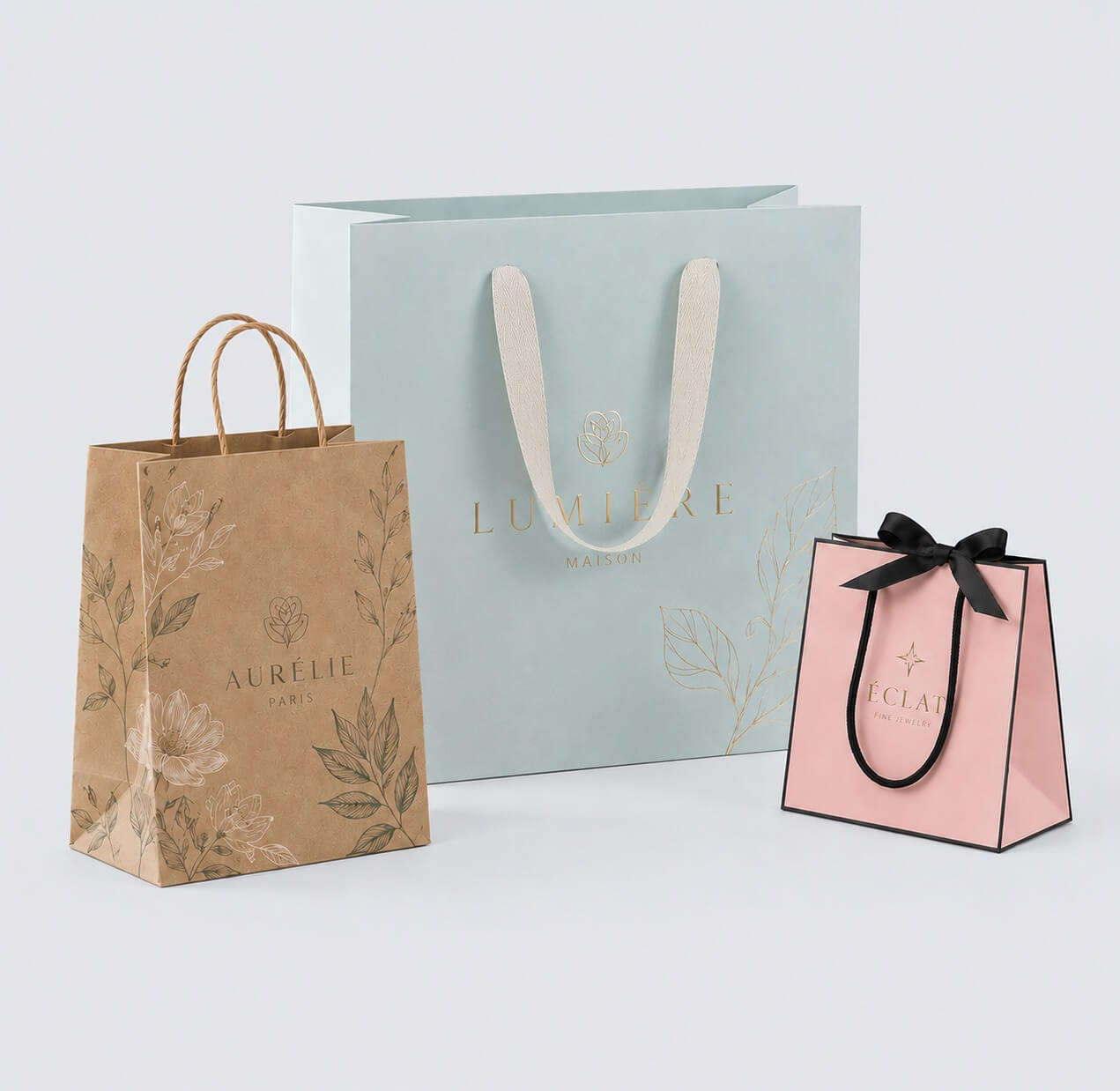

A more complicated package is not automatically a better package. Adding rigid board, magnets, inserts, sleeves, additional panels, or unusual opening mechanisms can make packaging look more substantial, but every extra component also changes cost, assembly, storage, packing efficiency, and production consistency. The right question is therefore not how sophisticated a box can become, but whether each additional structural element solves a problem that a simpler package cannot solve.
For many lightweight retail products, a well-engineered folding carton can already provide adequate product fit, printable surface area, efficient storage, and straightforward assembly. When a product needs a more controlled reveal or additional internal organization, drawer boxes may become more appropriate. Products that benefit from cylindrical geometry may instead lead the development toward round boxes.
These structures are not levels on a scale from basic to premium. They are different engineering responses to different packaging requirements.
Complexity Should Solve a Specific Packaging Problem
A packaging structure usually becomes more complex for a reason: the product is heavier than a standard carton can comfortably manage, it is fragile, it moves too much inside the package, several components need to remain separated, the opening sequence contributes to the product experience, or the geometry of the product makes a conventional rectangular box inefficient.
The most reliable way to judge whether additional structure is justified is to begin with the simplest workable format and ask what it fails to do. Does the product shift when the box is handled? Does the structure deform once the product is loaded? Is the customer expected to remove several components in a particular order? Is there enough clearance for the product without creating excessive empty space? Can the package be assembled repeatedly without workers manually adjusting every unit? These questions reveal structural needs much more clearly than beginning with a catalogue of premium box styles.
This is particularly relevant when brands compare different luxury packaging solutions. A sophisticated package does not necessarily need more pieces. Accurate dimensions, controlled tolerances, clean wrapping, consistent corners, appropriate paper selection, and predictable opening resistance can make a relatively simple structure perform better than an unnecessarily complicated alternative. Packaging becomes genuinely more advanced when its construction solves a measurable problem, not simply when more components have been added.
Weight, Movement, and Product Geometry Usually Drive Structural Changes
Weight is one of the clearest examples of why two similarly sized packages can require completely different structures. A folded shirt occupies a significant amount of space but creates relatively little concentrated load, which is why shirt boxes can often remain shallow and structurally straightforward. The package mainly needs to keep the garment folded, reduce unwanted movement, protect the surface, and present it neatly when opened.
A filled glass fragrance bottle behaves very differently. With custom perfume packaging boxes for luxury fragrances, the relevant dimensions are not only bottle width and height. The bottle weight, base shape, shoulders, cap or pump, center of gravity, and available clearance all influence how the package should support it. A heavy bottle that has significant free movement can repeatedly load the insert and surrounding walls during handling, while a fit that is too tight may make removal difficult or place unnecessary pressure on decorative bottle surfaces.
This leads to a question buyers often ask: does a luxury perfume automatically need a rigid magnetic box? Not necessarily. Some bottles can be packaged effectively in a properly dimensioned folding carton with a well-designed paperboard insert. Others may justify a rigid presentation box because their weight, value, opening experience, or support requirements are different. The product should determine the structure rather than the category name printed on the brief.
Product geometry creates another kind of complexity. Custom hair extension boxes, for example, may contain products that are lightweight but unusually long, flexible, and sensitive to presentation. Increasing board thickness does not solve the main problem. The package instead needs to keep the extensions organized, minimize unnecessary folding or tangling, and maintain the intended orientation. A long folding carton, drawer structure, internal card, restraint, or presentation platform may therefore be more useful than simply making the outer box heavier.
The same principle applies to paper packaging tubes. A cylindrical structure can be appropriate when the product shape, presentation, stacking method, or brand concept genuinely benefits from a round format. But a tube should not be selected only because it looks different. Internal diameter, usable height, lid overlap, product clearance, internal support, and transport configuration still have to work together. If a rectangular product requires extensive adaptation merely to fit into a tube, the unusual geometry may create more complexity than value.
An Insert Is Useful Only When It Has a Clear Function
One of the most common structural questions is whether a package needs an insert at all. The presence of empty space is not, by itself, a sufficient reason.
Brands sometimes request custom boxes with foam inserts at the beginning of a project because foam is associated with protection and a fitted presentation. However, if the actual problem is simply that the outer box is oversized, correcting the box dimensions may be a cleaner solution than filling unnecessary volume with another material.
An insert becomes more useful when it has a defined job: controlling the position of a heavy bottle, preventing two components from contacting one another, keeping accessories in a fixed sequence, protecting a delicate surface, supporting an irregular shape, or ensuring that the product appears in the intended position when the package is opened. Once that function is clear, the material can be selected around the requirement rather than around appearance.
Paperboard inserts can handle many positioning, separation, and presentation tasks and can integrate naturally with a paper-based packaging system. Foam may be appropriate when cushioning, precise recesses, or particular product characteristics justify it. Corrugated structures, molded pulp, or combinations of materials can solve different problems again.
The important distinction is between filling space and controlling the product.
Chocolate packaging demonstrates this particularly well. With custom boxes for chocolate, the outer box can appear relatively simple while the internal structure does most of the work. Product count, cavity size, spacing, tray height, removal access, and the relationship between primary food-contact packaging and the presentation box should ideally be resolved before the outer dimensions are finalized. Designing the exterior first and forcing the tray into the remaining space can create awkward cavity dimensions, unnecessary gaps, or additional components that would not otherwise be needed.
Opening Experience Can Justify More Structure—But Not Always
Protection is not the only legitimate reason for structural complexity. Sometimes the way a package opens is itself part of what the brand is purchasing.
Magnetic gift boxes illustrate this clearly. Concealed magnets allow a rigid hinged lid to close without a visible tuck tab, clasp, or ribbon, producing a controlled opening and closing sequence. The magnet, however, is not working independently of the rest of the structure. Its position, the stiffness of the surrounding board, lid alignment, wrapping thickness, and the required opening resistance all influence how the closure behaves. Current packaging guidance on magnetic boxes similarly treats magnet position and pull force as part of the structural specification rather than as a purely decorative feature.
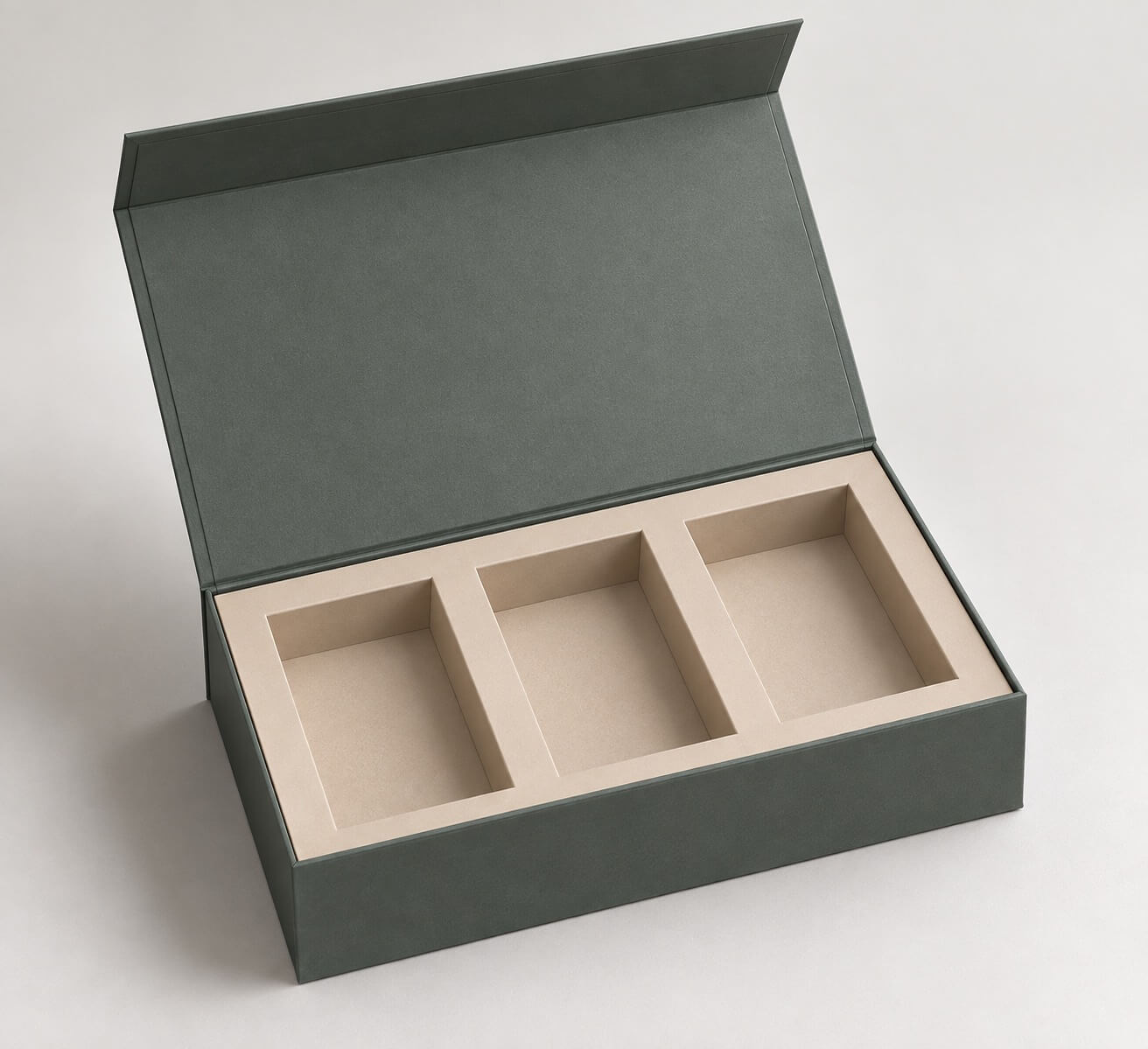
That additional construction can make sense for fragrance, jewelry, premium gift sets, presentation kits, or reusable packaging where opening and reclosing are part of the intended experience. It becomes harder to justify when the box is opened once, the product is removed immediately, and the package has little reason to be retained.
This is why “Are magnetic boxes better?” is not really the right question. They are better only when the closure experience, reuse, product positioning, or brand presentation provides enough value to justify the extra material and assembly.
The same logic should be applied to every additional sleeve, ribbon, platform, flap, or opening mechanism. If removing the component produces almost no functional or experiential difference, its necessity deserves another look.
Visual Complexity and Structural Complexity Are Different
Another distinction worth making is between a package that looks complex and one that is structurally complex.
Custom holographic boxes are a good example. A carton can create a strong rainbow-like reflective effect while retaining a relatively conventional structural design. The visual result may come from holographic film, specialty board, foil, or another surface treatment rather than from additional box components. Holographic finishes are fundamentally surface effects that change how light interacts with the package; they do not inherently require a more elaborate box geometry.
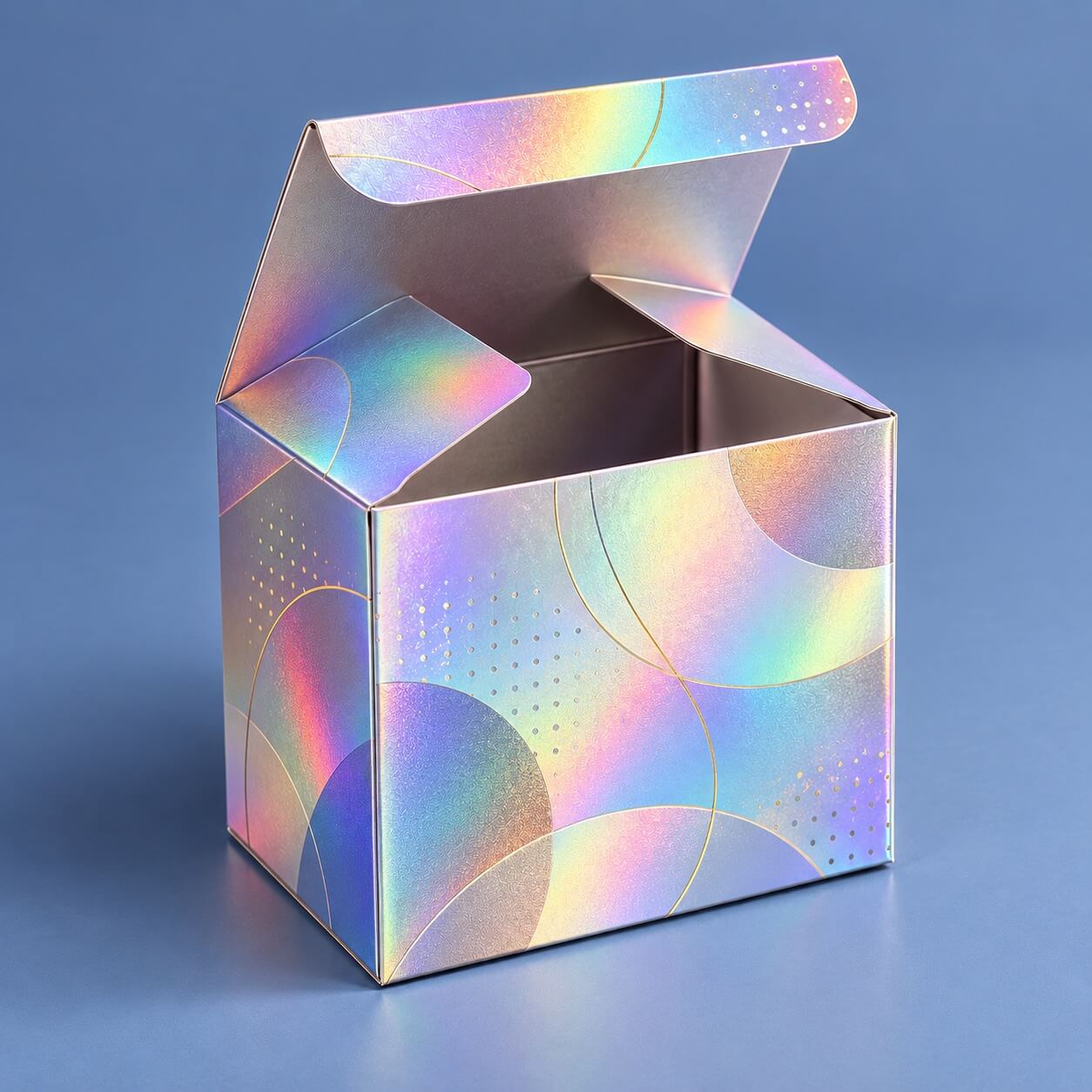
For this type of project, the more important technical questions may concern artwork placement, reflective direction, print opacity, white ink, finish coverage, registration, and compatibility between the selected surface and subsequent converting processes. The structure itself could remain quite simple.
The reverse can also be true. A completely plain package with almost no decorative finishing may contain highly engineered internal supports, several tolerance-sensitive components, or a closure that requires careful alignment.
For brands working with luxury packaging companies, separating these two kinds of complexity is useful because it clarifies where the budget is actually going. A project may need sophisticated graphics but very little structural engineering, or substantial structural development with deliberately restrained decoration. Treating both as one vague idea of “premium packaging” makes sourcing and comparison much more difficult.
More Structure Also Means More Production Work
Structural complexity does not stop at the prototype. Every additional component eventually has to be manufactured, handled, assembled, inspected, packed, stored, or transported.
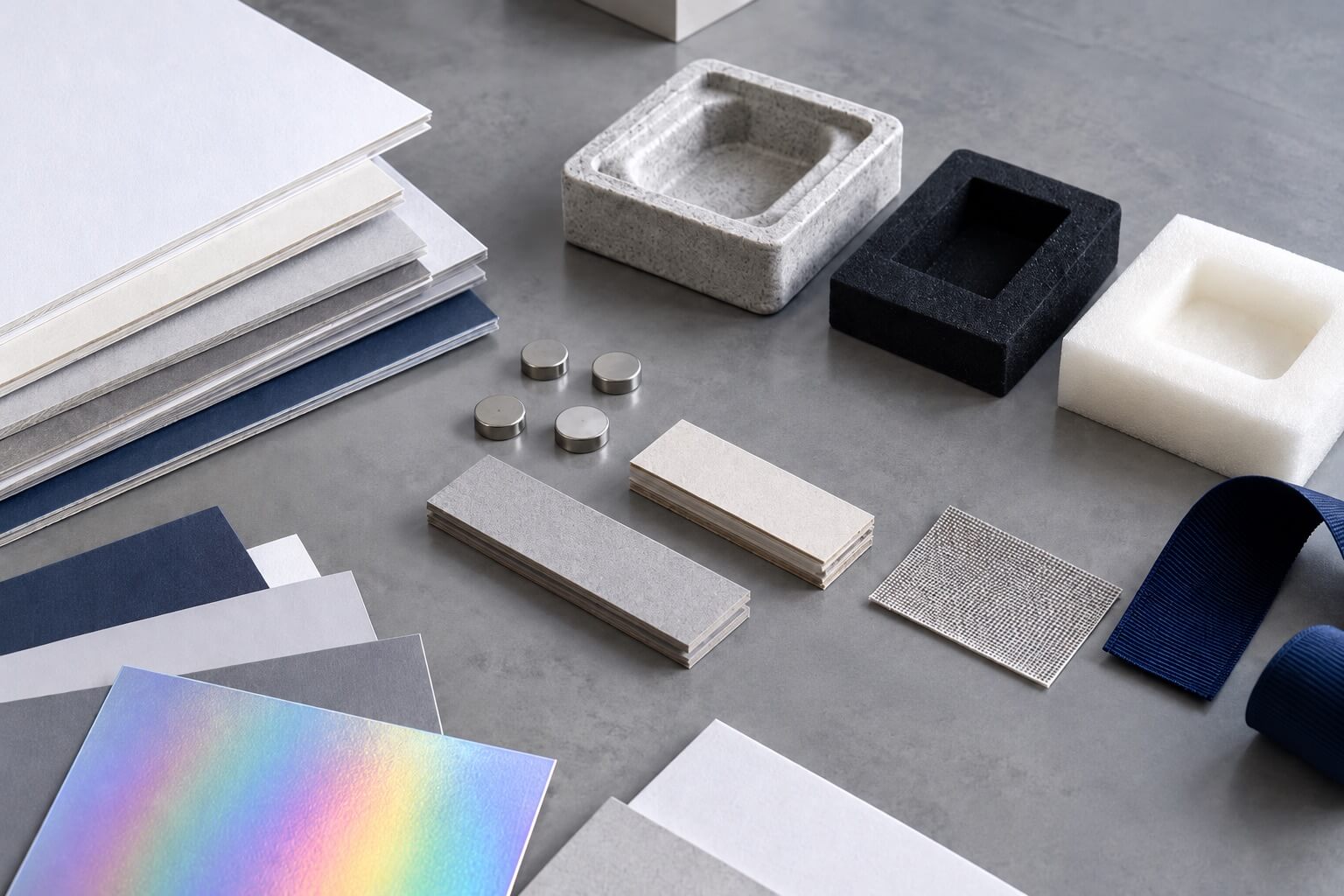
A second insert may introduce another die-cutting and assembly operation. A magnetic lid requires additional component positioning and alignment. A sleeve adds another printed piece and another packing step. A platform that creates an attractive product reveal may also reduce how efficiently empty boxes can be packed for shipment. A structure that looks excellent when assembled by one sample maker can therefore behave very differently when several thousand units need to move through production.
This is where structural design and manufacturing need to remain connected. A successful package should not depend on operators constantly pushing, trimming, repositioning, or manually correcting parts to make each unit look right. Small differences in paper thickness, wrapping, glue position, insert dimensions, or board cutting can accumulate when several components have to fit together, so tolerances become increasingly important as the structure becomes more involved.
That is why buyers should not evaluate luxury packaging companies only by photographs of finished samples. A stronger question is whether the supplier can reproduce the same fit, opening behavior, insert position, and assembled appearance consistently across the production quantity.
Sampling becomes especially important here. For a simple carton, a sample may primarily confirm dimensions, printing and finishing. A complex structure should also answer practical questions: Does the loaded product deform the box? Does the insert remain seated? Can the product be removed comfortably? Does the magnetic flap align after repeated opening? Can the operator load the product without excessive adjustment? Can the finished structure be packed and transported efficiently?
At Demei Packaging, most custom packaging projects start from 500 pieces, but the final MOQ depends on the box type, structure, materials, and finishing requirements.
The purpose of sampling is therefore not simply to approve the appearance of the first box. It is to expose unresolved structural issues while they are still relatively inexpensive to change.
The Best Structure Is Usually the Simplest One That Solves the Real Problem
A complex package can be completely justified. Heavy products may require stronger support. Fragile products may need controlled clearance. Multi-component sets may need separation. Long products may require positioning structures. A deliberate opening sequence may justify magnets or additional panels. An unusual product shape may genuinely work better in a tube or another non-standard geometry.
But none of those decisions mean that complexity is valuable by itself.
A carefully engineered folding carton can outperform an oversized rigid box when the product does not need the extra structure. A properly sized box can sometimes remove the need for filler. A paperboard insert may solve a positioning problem without foam. A visually dramatic holographic surface can create strong shelf impact while the underlying structure remains simple.
The most reliable development process is therefore to begin with the simplest structure that appears capable of doing the job, test it against the real product and distribution conditions, and add complexity only when a specific requirement remains unresolved.
Every additional structural element should be able to answer one question: what problem does it solve?
When that answer is clear, a more complex package can be technically and commercially justified. When it is not, simplicity is often the more professional design decision.