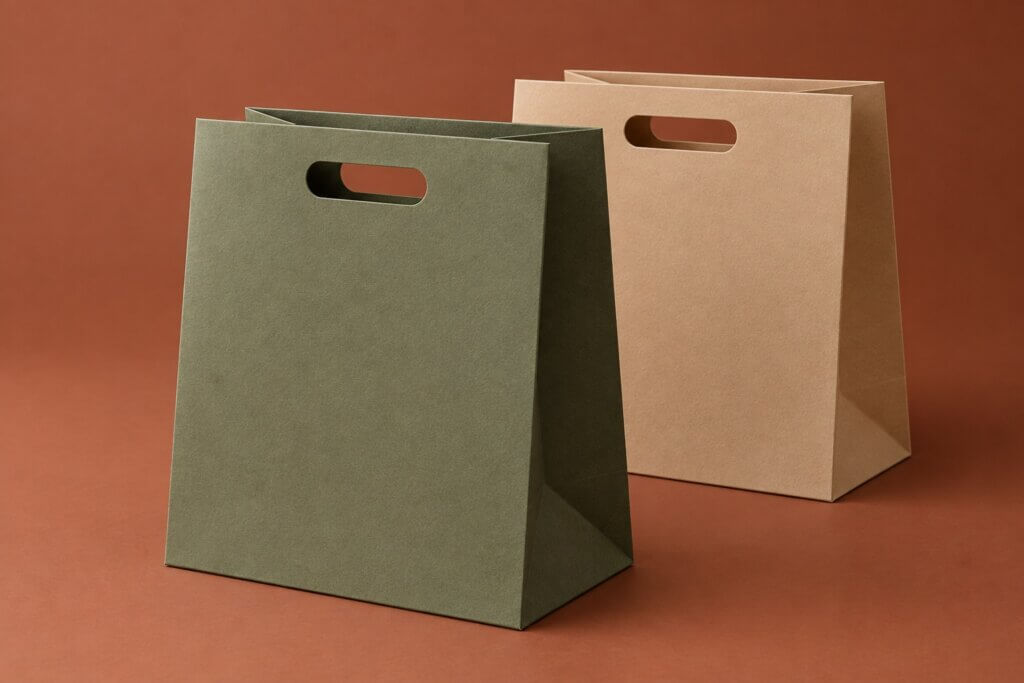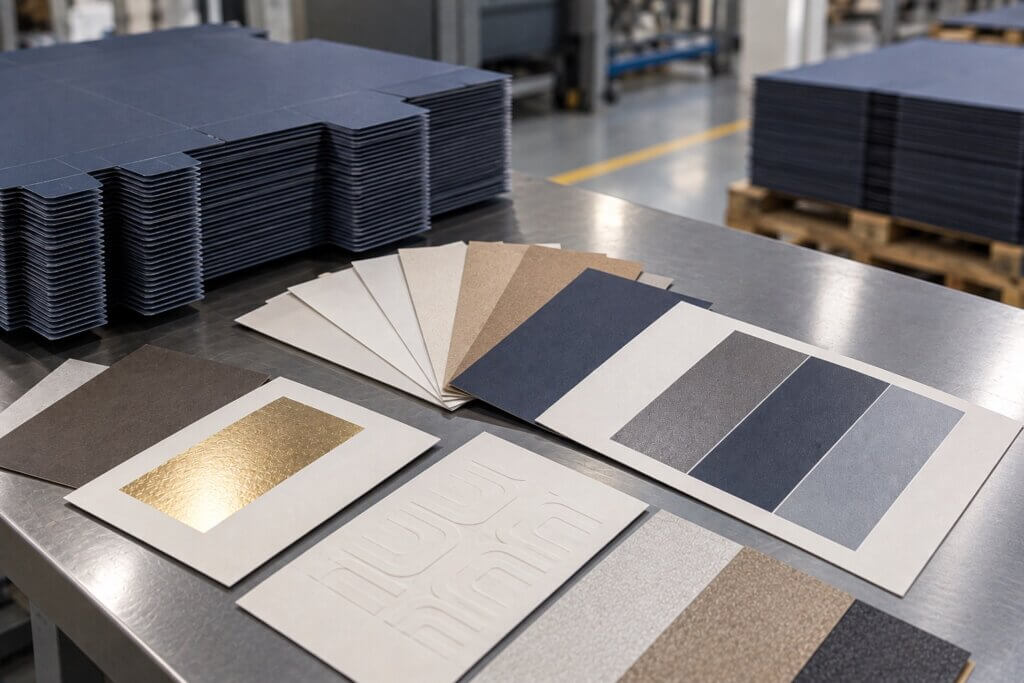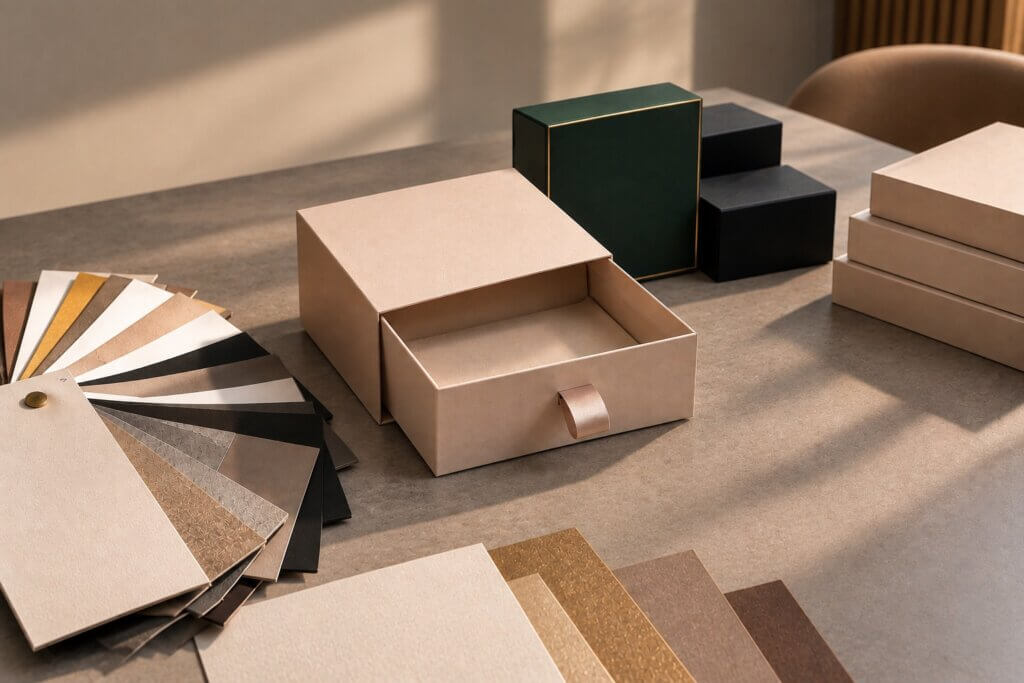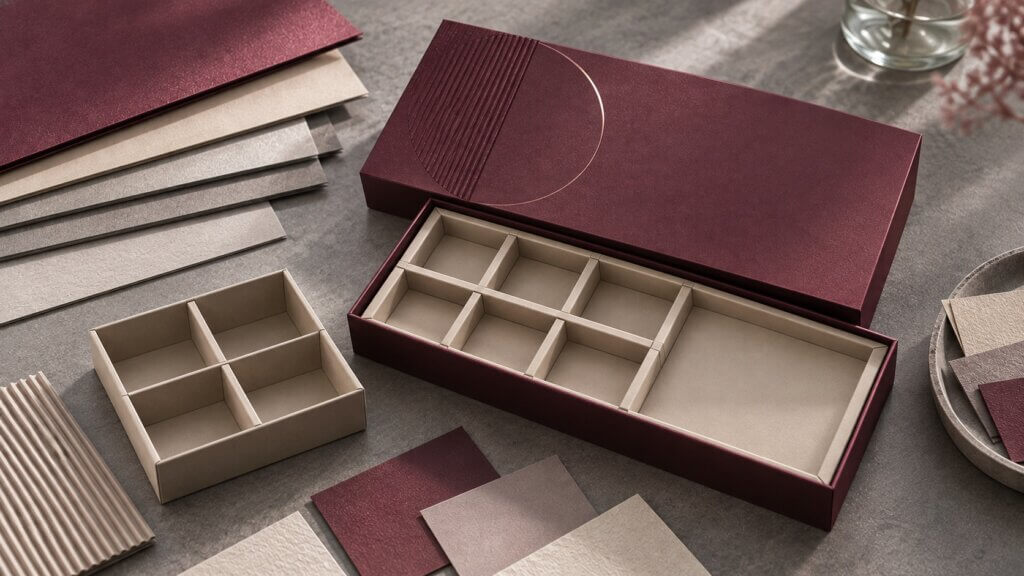

A finished box rarely shows how much work was required to make it usable.
Once a package is standing square on a table, it is easy to judge it by its size, materials, graphics, closure, or opening experience. What is less visible is the sequence that came before it: opening the flat structure, identifying the correct panels, forming the corners, engaging the locks, positioning the insert, loading the product, and closing the package without damaging any of those components.
That sequence matters whenever packaging is assembled manually. A few extra movements may be irrelevant for a small sample run, but the same movements repeated across thousands of units can affect packing speed, labor requirements, error rates, and the consistency of the finished package. This is why assembly should be considered while the structure is being developed, rather than treated as a fulfillment issue after the box has already been approved.
When comparing structures through our Packaging Types, the useful question is therefore not simply whether a box can be folded by hand. The better question is whether an operator can understand, repeat, and complete the assembly sequence reliably without unnecessary force, correction, or decision-making.
Assembly Difficulty Is Usually a Sequence Problem
The number of panels alone does not determine whether a box is easy to assemble. A structure with six folds may be easier to handle than one with four if every movement naturally prepares the next one.
Good manual assembly has a clear progression. A sidewall rises and remains in position while the next wall is formed. A locking tab is visible before it needs to be inserted. The structure becomes increasingly stable as assembly continues, rather than requiring the operator to hold several loose sections together until the final step. Once the sequence has been repeated a few times, it should become almost mechanical.
Difficult structures behave differently. Two panels may need to be aligned while neither can support itself. A tab may disappear underneath another panel before it is locked. One flap may need to be folded temporarily in the wrong direction to access another part. The operator may have to squeeze the box into shape before a final lock will engage. Individually, these actions look minor; together, they create hesitation and variation.
This distinction is particularly relevant for custom tuck boxes. Two tuck cartons can use similar materials and have almost identical external dimensions, yet behave very differently during packing because the dust flaps, tuck depth, tab shape, crease position, and opening clearance interact differently.
The objective is not to remove every fold. It is to make the necessary folds work in an unmistakable order.
Creasing Controls More Than Folding
A crease is often treated as a simple line where paperboard bends, but in manual assembly it functions more like a controlled hinge.
Its position, depth, relationship with the board caliper, and proximity to neighboring folds affect how the panel rotates and where it stops. If a crease is too resistant, operators compensate by applying more force. If it bends too freely or is incorrectly positioned, the box may form quickly but lose the geometry needed for clean corners and reliable closure.
This becomes more noticeable as board thickness increases. Thicker material does not automatically make a package harder to assemble, but its bending behavior needs to be accounted for structurally. The inside of a fold compresses while the outside travels a longer path, so panels cannot simply be designed as if board thickness has no effect. Where several folds meet, small dimensional conflicts can accumulate into a corner that feels tight or refuses to sit square.
That is why “Does thicker board make the box stronger?” is only part of the question. A material can provide greater stiffness while simultaneously requiring more appropriate crease geometry, clearances, and folding allowances.
A structure should therefore be tested using material that is reasonably close to the final production specification. An easy-to-fold thin prototype can give an unrealistic impression of how the finished package will behave.
A Locking Feature Only Saves Time If It Is Difficult to Misuse
Self-locking bases, tabs, slots, and interlocking panels can eliminate glue or tape during final packing, but adding a lock does not automatically make a box efficient.
A good lock gives the operator enough visual and tactile information to know what to do and when it has been completed correctly. Tabs should approach their slots naturally rather than requiring the whole structure to be distorted. Once engaged, the connection should remain stable while subsequent components are installed.
Poor locking arrangements create a different problem: they may allow several assembly sequences, but only one produces the correct result. An operator can then create a box that appears finished while one tab is only partially seated or one base flap is trapped incorrectly. This is more serious than a structure that is simply slow because an incorrect assembly can continue unnoticed into product packing.
The issue is especially relevant to custom counter display boxes. These structures often need to move from a compact shipping format into a stable retail display, sometimes at a store rather than a packaging facility. Assembly has to be understandable, but the erected display also has to tolerate the weight and position of the products placed inside it.
An empty display is therefore a poor final test. A more meaningful test is to load it to the intended capacity, remove products from different positions, refill it, and observe whether the base, front wall, sidewalls, dividers, and back panel continue to work together.
Fast assembly has little value if the structure becomes unstable after it is loaded.
Flat-Pack Packaging Moves Work From One Stage to Another
One of the most common assumptions in packaging procurement is that flat-packed structures are automatically more efficient.
They can be highly efficient, particularly when storage and transportation volume matter. But flat packing does not eliminate work; it changes where that work occurs.
This is particularly clear with collapsible rigid boxes. Unlike a permanently formed rigid box, a collapsible structure has to create a three-dimensional body from connected flat or folding panels. Depending on the design, sidewalls may be secured with adhesive areas, magnetic sections, mechanical locks, or a combination of methods.
From a logistics perspective, reducing the volume of empty packaging can be valuable. From a packing perspective, however, someone must perform the final transformation. If several corners need careful alignment, protective liners need to be removed from adhesive areas, or each assembled box needs to be squared manually before the insert is installed, some of the logistical efficiency has been exchanged for fulfillment labor.
This does not make collapsible packaging inefficient. It means the right comparison is broader than “flat versus assembled.”
A buyer should consider how the boxes arrive, where they will be assembled, who will assemble them, whether any tools or consumables are needed, how long the structure takes to become stable, and whether finished boxes will be erected individually or prepared in batches before the packing line begins.
A flat-packed box that becomes rigid in a few clear movements can work extremely well. A flat-packed box that requires constant adjustment may create a bottleneck even if it saves substantial warehouse space.
Pre-Assembled Boxes Solve a Different Problem
At the opposite end are structures that arrive almost completely formed.
Traditional magnetic closure boxes, for example, can minimize final box erection because the rigid shell and hinged cover have already been constructed. The fulfillment operator may only need to position the product, arrange any presentation components, and close the lid.
This makes the customer-side packing process simple, but it does not mean the packaging itself required less assembly. Much of that work has moved upstream to the manufacturer, where greyboard components, wrapped sections, hinge areas, magnets, linings, and other components have to be positioned accurately.
Projects described as decorative boxes hinged lid structures have a similar characteristic. From the brand’s perspective, the box may arrive ready to use. From a manufacturing perspective, alignment between the lid and body, movement at the hinge, wrapping around the joint, and repeated opening all have to be controlled during construction.
This illustrates an important procurement distinction: “Does the box require assembly?” depends on which stage of the supply chain is being discussed.
Reducing labor at fulfillment may increase manufacturing labor or shipping volume. Reducing manufacturing steps may create more work at the packing stage. Neither approach is inherently better; the correct balance depends on how and where the package will be used.
Inserts Often Determine the Real Packing Speed
A simple outer box can still produce a slow packing process if its internal components are complicated.
This is why custom inserts for boxes should be evaluated as part of the assembly sequence rather than as isolated protective components. A paperboard insert may need to be folded from several panels, locked into shape, placed inside the box, aligned against specific walls, and checked before the product can be loaded. If it supports several products or accessories, loading order may matter as well.
A common engineering mistake is to make the insert fit so tightly that it looks excellent in the finished sample but becomes difficult to install repeatedly. The opposite is also possible: excessive clearance makes installation easy but allows the insert to lift, shift, or rotate inside the package.
The ideal fit therefore needs to consider two different interfaces. The first is between the insert and the box. The second is between the insert and the product. Tightening one interface without considering the other can make assembly worse rather than better.
Material choice is only one part of the packing question. A paperboard insert may require folding and locking before it is placed into the box, while corrugated partitions can involve several interlocking pieces that must remain square during loading. Molded fiber inserts usually arrive already formed, but their fit, orientation, and product clearance still affect how quickly the product can be positioned. The important point is that different insert structures create different assembly sequences, so protection, presentation, and packing efficiency should be evaluated together rather than separately.
This also answers a practical question: should an insert be installed before or after the outer box is fully erected?
There is no universal answer. If the insert helps square and support the structure, early installation can be useful. If inserting it blocks access to locking tabs or prevents a flat-pack structure from opening properly, it should come later. The sequence needs to be designed around the specific package rather than copied from another box.
Product Characteristics Change the Assembly Requirement
The same structure can be easy to pack for one product and frustrating for another.
Consider apparel gift boxes. Garments are generally lightweight and can tolerate some dimensional flexibility. Once the box has been erected, the product can often be folded, placed, adjusted, and closed without requiring precise mechanical positioning. In this case, a fast and intuitive box setup can have significant operational value.
A project involving premium candle boxes creates a different requirement. A glass candle can be comparatively heavy, and its support needs to control movement without making insertion or removal unnecessarily difficult. The packer may need to push the product to a defined seating position, confirm that it is fully supported, and ensure that the insert has not shifted under the load.
With hair extension boxes, product orientation and presentation can have more influence on cycle time than the outer structure itself. Press on nail boxes may involve trays, multiple small components, or carefully arranged products that make precise placement more important than the speed of erecting the carton.
Food and personal-care packaging introduce their own requirements. Custom macaron boxes may require cavities or dividers that keep individual products separated, while custom handmade soap boxes may involve windows, internal supports, sleeves, or several units arranged in a fixed orientation.
For these projects, measuring the time required to assemble an empty box does not reveal much.
The useful measurement is the complete packing cycle: erect the package, prepare the internal components, load the product, make any required adjustments, inspect the result, close the package, and move it out of the working area.
Rigid Structures Are Not Automatically Easier or Harder
The same principle applies when evaluating rigid gift boxes.
A fully formed rigid box can be extremely simple at the final packing stage because there may be little or no structural erection required. But rigid packaging is not one single construction method. Two-piece boxes, hinged structures, foldable rigid boxes, and other configurations shift labor between manufacturing, transportation, storage, and final packing in different ways.
Even rigid boxes with lids require more precise consideration than the name suggests. If the lid is separate, the packer needs enough clearance to place and remove it smoothly without excessive resistance. If several box parts and product components are handled simultaneously, workspace organization may become more important than the number of folding steps.
The fastest structure is therefore not automatically the best structure.
A package that takes several seconds longer to assemble may provide better product control, cleaner presentation, easier inspection, or lower damage risk. The objective is not to remove every second from the process. It is to make sure that every additional operation has a reason.
Unusual Geometry Makes Assembly Logic More Important
Rectangular packaging benefits from familiarity. Most operators can identify a base, wall, corner, and lid without studying the structure for long because the relationships between those components are predictable.
With hexagon boxes, that advantage becomes weaker. Additional corners create more relationships that need to close correctly, and several similar-looking panels may make the starting point less obvious. If the structure is folding rather than permanently set up, dimensional variation can also accumulate across several angled joints before the final panel is connected.
None of this means a six-sided structure has to be difficult to assemble. It means the geometry needs to communicate its sequence clearly.
This is one reason physical prototypes remain important for unusual structures. A rendering can demonstrate the finished appearance, but it cannot fully show how easily someone can hold the package, reach a locking point, rotate an insert, or keep several angled walls stable at the same time.
An attractive structure should still make sense when viewed from the operator’s side of the table.
The Best Hand-Assembled Structures Reduce Decisions
One useful way to evaluate a design is to stop counting folds and start counting decisions.
During each packing cycle, does the operator have to stop and determine which panel goes first? Can two similar tabs fit into the wrong openings? Can an insert be installed backward? Does the worker have to judge by eye whether a corner has reached the correct position? Can a lock look complete even when it is only partly engaged?
Every unnecessary decision introduces variation.
This does not mean a package should be simplified until it loses its intended function. Instead, the structure should make correct assembly easier than incorrect assembly. Asymmetrical tabs can prevent reversed installation. Different panel shapes can make the fold order more obvious. Positive locking features can make the final position easier to feel. Components that serve no purpose at the fulfillment stage can sometimes be pre-glued or pre-assembled at the factory.
A well-engineered box does not require the operator to remember the design logic. The geometry communicates that logic through the way the parts interact.
How Should Manual Assembly Be Tested Before Production?
The first requirement is to test the complete package rather than a dieline alone.
Use material that is close to the intended production board, because stiffness and crease behavior affect the way panels move. Include the insert or divider. Use the actual product whenever possible, or at minimum use a substitute with realistic dimensions and weight.
Then ask someone who was not involved in developing the structure to assemble it without detailed coaching.
This is one of the most revealing tests available. A designer or structural engineer already knows what every tab and fold is intended to do, so familiarity can hide problems. A new operator exposes them quickly. If the person repeatedly rotates the box, searches for the next fold, forces a lock, installs the insert backward, or needs to reopen a completed step to reach another component, the sequence should be reviewed.
The second requirement is repetition. One successful assembly proves very little. After several consecutive cycles, it becomes easier to see whether the process develops into a smooth rhythm or continues to require correction.
Timing can also be useful, but the figure needs context. If two structures take 12 and 20 seconds respectively, that eight-second difference becomes more meaningful at several thousand units. At the same time, the slower structure may still be the better solution if those additional seconds provide necessary product support, reduce packing errors, or prevent damage.
The purpose of the test is therefore not to identify the fastest box.
It is to identify unnecessary work.
Assembly Is Part of Packaging Engineering
Customers usually approve packaging in its finished state. They see the printed surfaces, proportions, closure, product arrangement, and opening experience. The operator encounters the package in the opposite direction: as a series of unfinished panels and components that have to become that finished result again and again.
Good packaging engineering needs to account for both perspectives.
Before a structure moves into production, it is worth asking how it arrives at the packing location, how many actions are required before the product can be loaded, which operations require judgment or force, whether the insert affects the erection sequence, whether the structure stays stable while being packed, and whether the same method still makes sense at the intended order quantity.
These considerations are part of the broader production approach behind our Case Studies , where structural decisions are evaluated in relation to the product rather than only the appearance of the finished box.
At Demei Packaging, most custom packaging projects start from 500 pieces, but the final MOQ depends on the box type, structure, materials, and finishing requirements. Manual assembly is one of the details worth testing during structural sampling. A small unnecessary movement may be easy to ignore when building one sample, but when the same movement is repeated across an entire production run, it becomes part of the real cost and performance of the packaging.