
A custom package rarely moves from the first design directly into mass production without changing. Even when the initial concept looks complete on screen, it still has to become a physical structure, hold a real product, accommodate materials with real thickness, and remain workable when the same package is produced hundreds or thousands of times. This is why custom packaging development is not simply the stage where a box is drawn. It is a gradual process in which the product, structure, materials, insert, artwork, finishing, assembly, and production tolerance are brought into alignment.
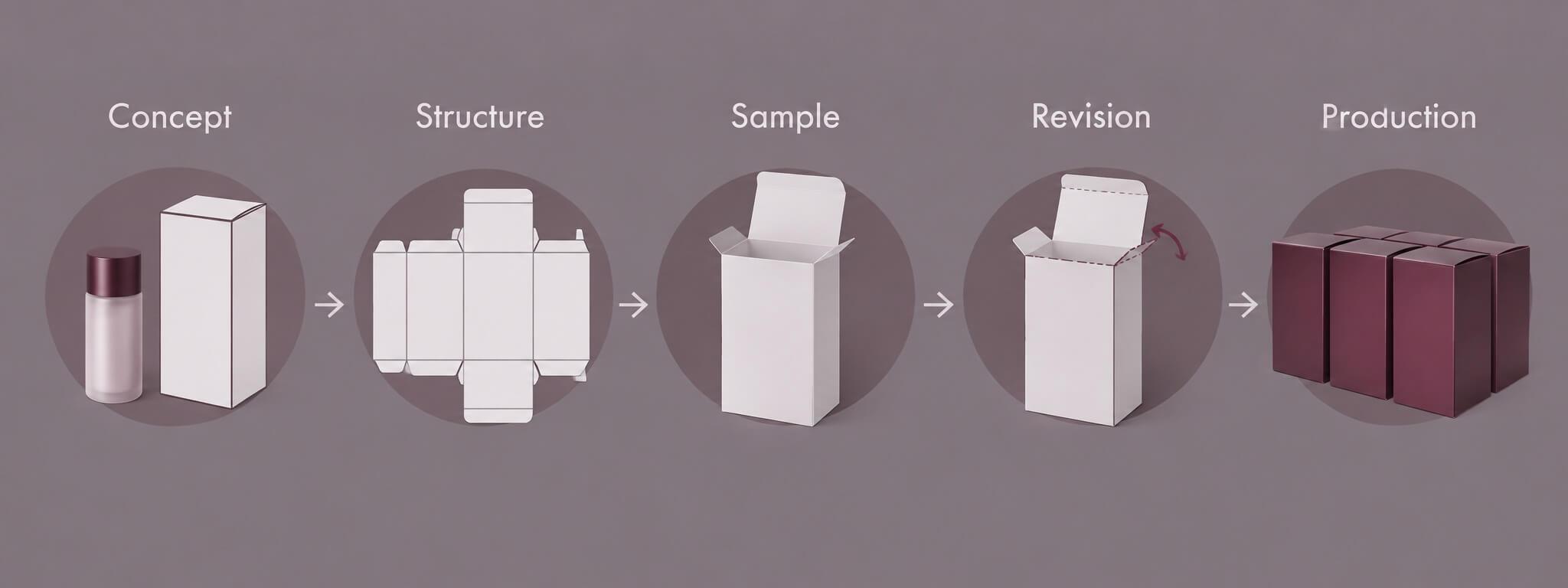
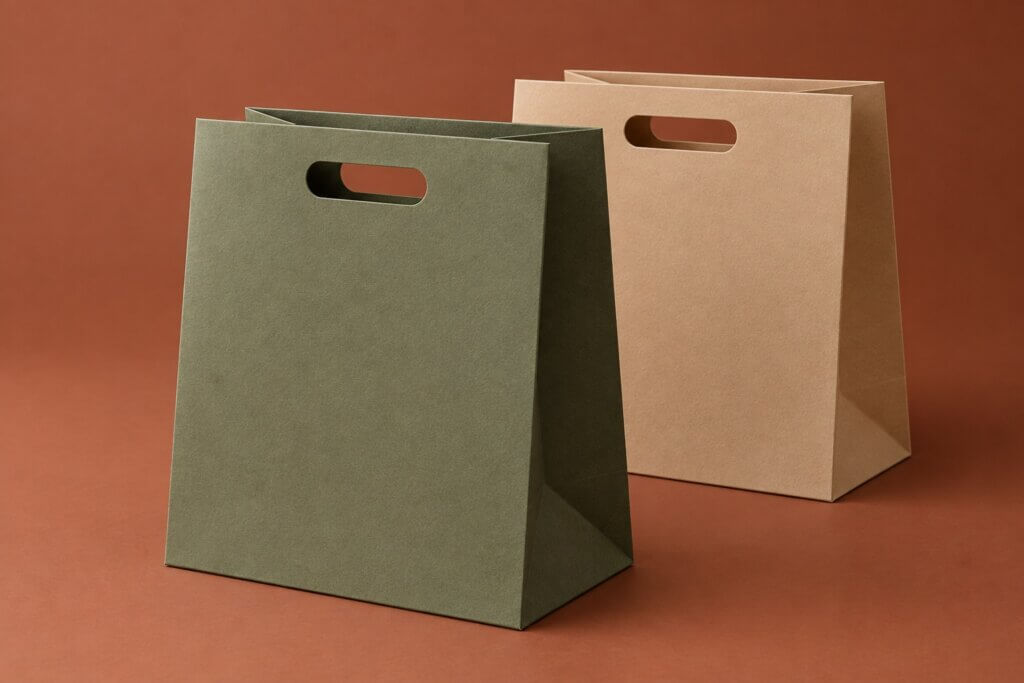
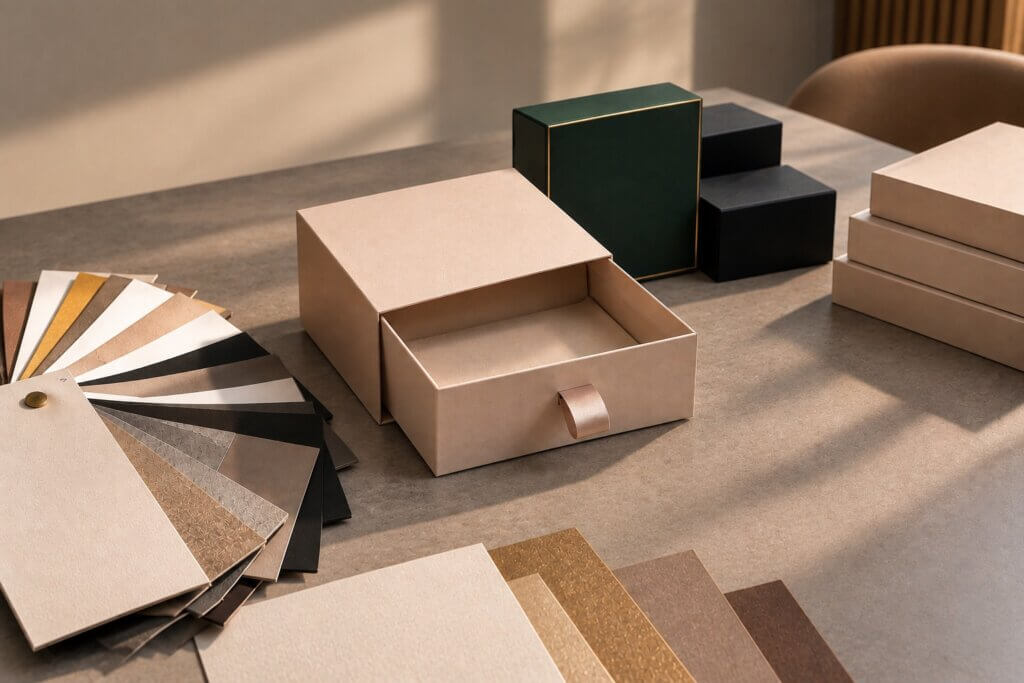
A project may begin with a product sample, reference packaging, basic dimensions, or even a rough idea of how the box should open. From there, the appropriate format becomes clearer. A lightweight retail product may eventually use custom folding cartons , while a product that benefits from a sliding presentation may lead toward custom drawer boxes. Cylindrical products or gift sets may instead point toward custom round boxes. The important point is that these structures should become more definite as the project develops, rather than being treated as fixed before the packaging requirements are fully understood.
The First Stage Is About Understanding What the Package Needs to Do
At the beginning of a project, the packaging is still largely a concept. A brand may already know the desired appearance, target market, approximate dimensions, and opening style, but the information that ultimately determines whether the package works is more practical: product size, weight, quantity, fragile areas, surface sensitivity, accessories, orientation, shipping method, and how the product will be packed or displayed. These factors create the structural conditions that the later design has to solve.
For example, custom packaging for beauty products may need to hold a bottle, jar, applicator, or several components in one presentation. A candle package may need to support a relatively dense glass vessel and prevent concentrated loading at the bottom. Apparel behaves differently because the product is flexible, while bottles, jars, and other fixed-shape products usually require a more controlled relationship between the product and internal space. At this point, the purpose is not to lock every detail. It is to define the actual packaging problem before the design becomes difficult to change.
One common question at this stage is what information a supplier needs before development can begin. In practice, the most useful starting information normally includes product dimensions, weight, product photos or samples, expected quantity, preferred packaging style, shipping method, brand requirements, and any restrictions such as retail shelf dimensions or required inserts. Not every project begins with complete information, but the more physical conditions that are confirmed early, the fewer assumptions need to be corrected later.
Structural Design Turns the Concept Into a Manufacturable System
Once the basic requirements are clear, the project moves from a visual idea into structural development. Dimensions are translated into dielines, folds, glue areas, tray depths, lid overlaps, window openings, and insert positions. At this stage, each element begins to affect another. A change in board thickness may affect the internal dimensions; an insert may influence the outer size; a window position depends on where the product actually sits; and a drawer or sleeve needs enough clearance to move without feeling loose.
For folding cartons, this may involve panel dimensions, board caliper, tuck depth, dust flaps, locking details, and how the carton will be erected during packing. In custom packaging boxes with window, the window cannot simply be placed where it looks attractive on the artwork. Its size and position need to work with the product location, structural strength around the opening, and normal manufacturing variation. If the product shifts slightly in the insert or the opening is too close to a fold, a design that looked correct in a rendering can feel poorly aligned in the finished box.
Custom packaging tubes introduce a different set of relationships. A cylindrical package may appear simple, but lid depth, tube diameter, wrapped paper thickness, internal clearance, and insert height all affect how it feels when opened and closed. This is why structural development is the point where a packaging concept stops being simply “a box idea” and becomes a system of dimensions that must work together.
Inserts Become More Important Once the Outer Structure Is Defined
As the outer packaging becomes more specific, the inside can no longer remain an undefined empty space. This is when custom packaging inserts usually move from a general idea into a structural component with a clear function. The insert may need to hold a product in position, separate multiple parts, support weight from below, protect delicate surfaces, organize accessories, or improve how the product is presented and removed.
The choice between paperboard, corrugated board, molded pulp, foam, or another insert material should follow those functions rather than appearance alone. Lightweight cosmetic products may work well with folded paper partitions, while a heavy glass product may need stronger support beneath the base. Products that require cushioning and precise positioning may justify custom packaging with foam inserts, but foam should be selected because its compression and support characteristics solve a real problem, not simply because it looks protective.
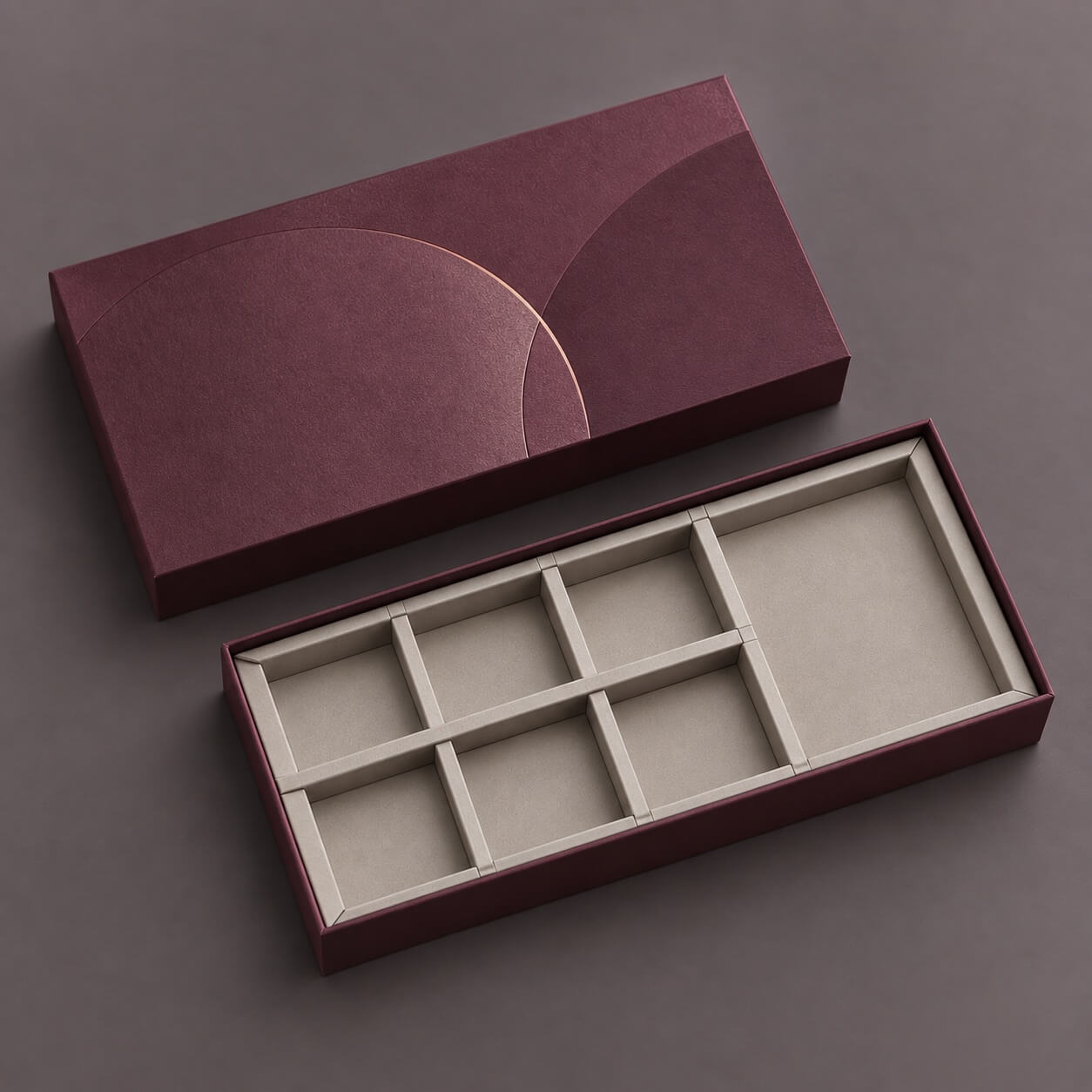
The difference between an insert and a divider also becomes clearer at this stage. An insert is normally designed around the position or support of a particular product, while a divider is often used to separate multiple products or create compartments. Some structures perform both functions. The terminology matters less than the engineering question: what movement, contact, weight, or presentation needs to be controlled? The most effective custom packaging with inserts is developed together with the outer structure rather than added after the box dimensions have already been fixed.
The First Physical Sample Changes the Type of Questions Being Asked
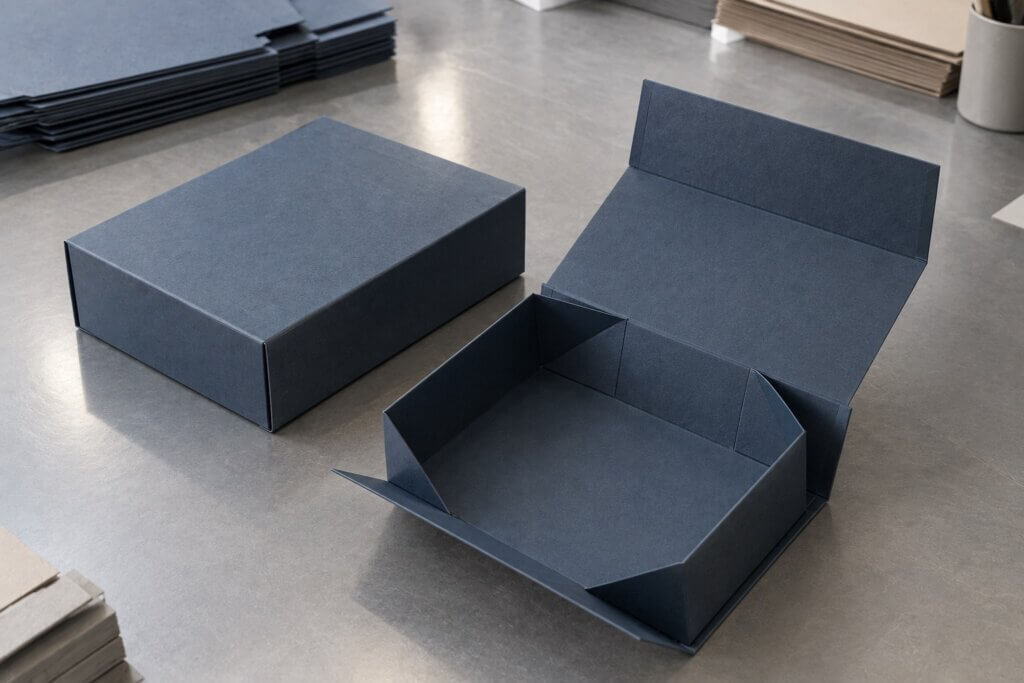
Before a sample exists, most decisions are judged through drawings, dimensions, materials, or renderings. Once the first physical prototype is produced, the project becomes much more concrete because the packaging can finally be tested with the actual product. Issues that were difficult to predict on screen may become immediately visible: an insert may be too tight, a lid may create more friction than expected, a paper structure may flex under weight, or a window may reveal less of the product than intended.
For this reason, the first prototype should not be treated as proof that development is finished. Its main purpose is to turn assumptions into something that can be handled and tested. Product position, ease of packing, removal, opening resistance, insert deformation, sleeve movement, and overall fit can now be evaluated together instead of separately. In custom packaging with foam inserts, for example, the real fit depends not only on the cavity dimensions but also on foam density, compression, finger clearance, and whether the product can be removed without excessive force.
This is also why a prototype cannot guarantee that the final package is ready for production simply because it looks correct. A dieline may be dimensionally accurate while the real material still behaves differently after folding, wrapping, laminating, or assembly. The sample provides information that the digital stage cannot fully reproduce, and that information becomes the basis for the next round of decisions.
Revision Moves the Package From “Possible” to “Better Controlled”
After the first sample, the project usually enters a more precise stage. The question is no longer whether the concept can be produced at all, but which details should be adjusted so that the structure functions more reliably. A few millimeters may be removed from a tray depth, an insert opening may be widened, a support point may be moved, finger clearance may be increased, or a window may be repositioned so that the product appears more centered.
These changes are often small individually, but they can have a large effect on the finished experience. A slightly wider insert opening can improve packing speed. A better support point can reduce pressure on a fragile component. A change in lid clearance can turn a stiff opening into a controlled one. Once the structure is more stable, artwork and finishing can also be placed with greater confidence because folds, cut lines, visible panels, and wrapped edges are less likely to change.
Sample revision should therefore not be treated as evidence that the first design failed. It is a normal part of custom packaging development because a physical sample reveals relationships that cannot always be predicted from a screen. The purpose of revision is to reduce uncertainty before those small issues become expensive production problems.
A Good Sample Is Still Different From a Production-Ready Package
An approved sample proves that one package can work. Mass production requires the same structure to continue working across an entire order, and that introduces a different level of difficulty. Paper and board have thickness variation, die-cutting has tolerances, wrapped components can vary slightly, inserts are not mathematically identical, and manual or semi-manual assembly also introduces normal differences from unit to unit.
This means that a sample that works only when every component fits perfectly may still be too sensitive for stable production. A robust design needs enough controlled allowance that normal variation does not immediately create looseness, excessive friction, misalignment, or difficult assembly. For custom packaging boxes with window, this means the relationship among the product, insert, carton, and window must remain stable enough for the product to continue appearing in the intended position. For tubes, the same principle may appear in lid fit, where too little tolerance can create tight units while too much can make other units feel loose.
The key difference is repeatability. At the sample stage, the question is whether the packaging works once. Before mass production, the question becomes whether it can continue to work under normal production variation.
Pre-Production Confirmation Connects Design With Manufacturing
Once the revised sample is approved, the project moves toward pre-production confirmation. By this point, the structure, materials, insert configuration, printing files, finishes, and important tolerances should no longer be treated as separate decisions. Together they form the specification that production is expected to repeat.
This stage is also where assembly efficiency becomes more important. A paper insert with several locking tabs may position a product very well, but if it takes too long to erect, the solution may be less practical at higher quantities. A foam cavity may hold a product securely, but if every unit requires excessive pressure during packing, the packing process can become slow and inconsistent. A visually sophisticated structure that requires constant manual adjustment may perform well as a prototype but poorly as a production system.
For this reason, production-ready packaging has to work for both the end user and the manufacturing process. The package should provide the intended presentation and protection while still being realistic to die-cut, fold, wrap, assemble, pack, inspect, and ship repeatedly.
Mass Production Tests Repeatability Rather Than the Original Idea
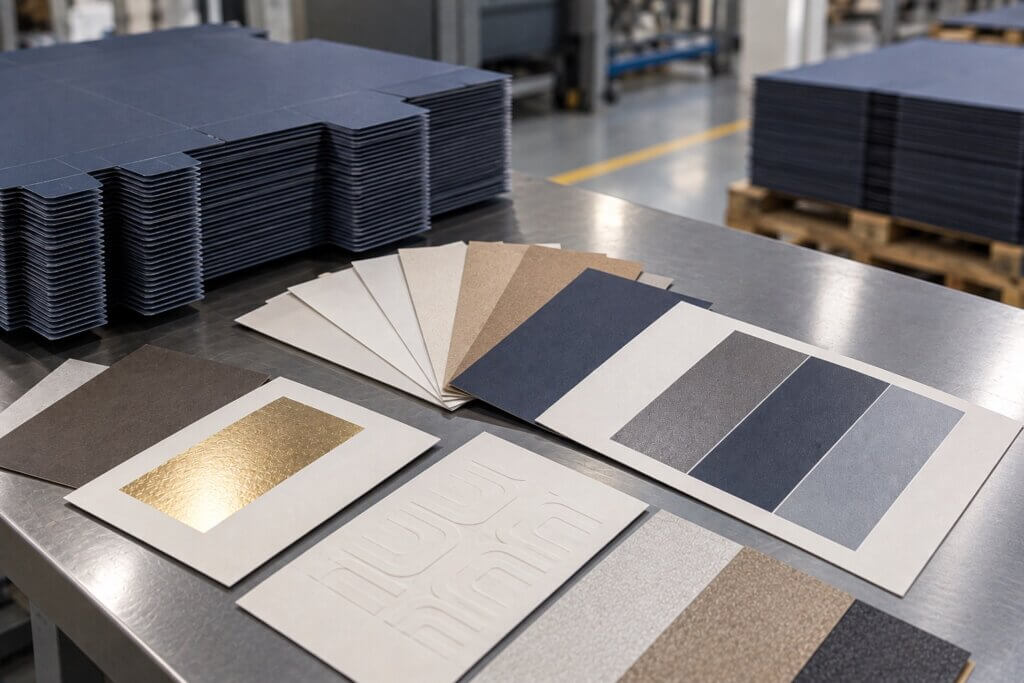
Once production begins, the packaging enters its final type of validation. The question is no longer whether the approved sample looks good. Printing needs to remain within an acceptable range, die-cutting and creasing need to stay consistent, inserts need to continue fitting, wrapped edges need to remain clean, and finishes such as foil stamping or embossing need to maintain acceptable registration across the run.
Many problems that appear to be production problems are actually rooted in earlier development decisions. A structure with extremely tight tolerance, unnecessary complexity, or too many dependent components can be difficult to reproduce consistently even when the first sample was excellent. Development quality and production quality are therefore closely connected: the more thoroughly the structure has been tested and simplified before production, the easier it is to maintain consistency later.
Demei’s Our Packaging Types page can be used here as a broader reference for the different structural formats that may move through this same development process, from folding cartons and drawer boxes to round boxes, shaped boxes, paper bags, and mailer boxes.
When Is Custom Packaging Development Actually Finished?
A packaging project is not truly finished when the rendering is approved, and it is not necessarily finished when the first sample looks attractive. It becomes production-ready when the structure, materials, insert, artwork, finishing, packing method, and normal production variation have been considered together and the approved result can be reproduced consistently.
Simple projects may move through these stages quickly, while more complex structures may require additional adjustment. What matters is that each stage answers a different question. The concept stage defines what the packaging needs to achieve; structural development determines whether the idea can be manufactured; sampling tests whether the design works physically; revision improves fit and usability; pre-production confirmation checks whether the design can be repeated; and mass production tests whether the complete system remains stable at scale.
That is how a packaging concept becomes a production-ready product: not because the first design was perfect, but because every stage reduces a different type of uncertainty.