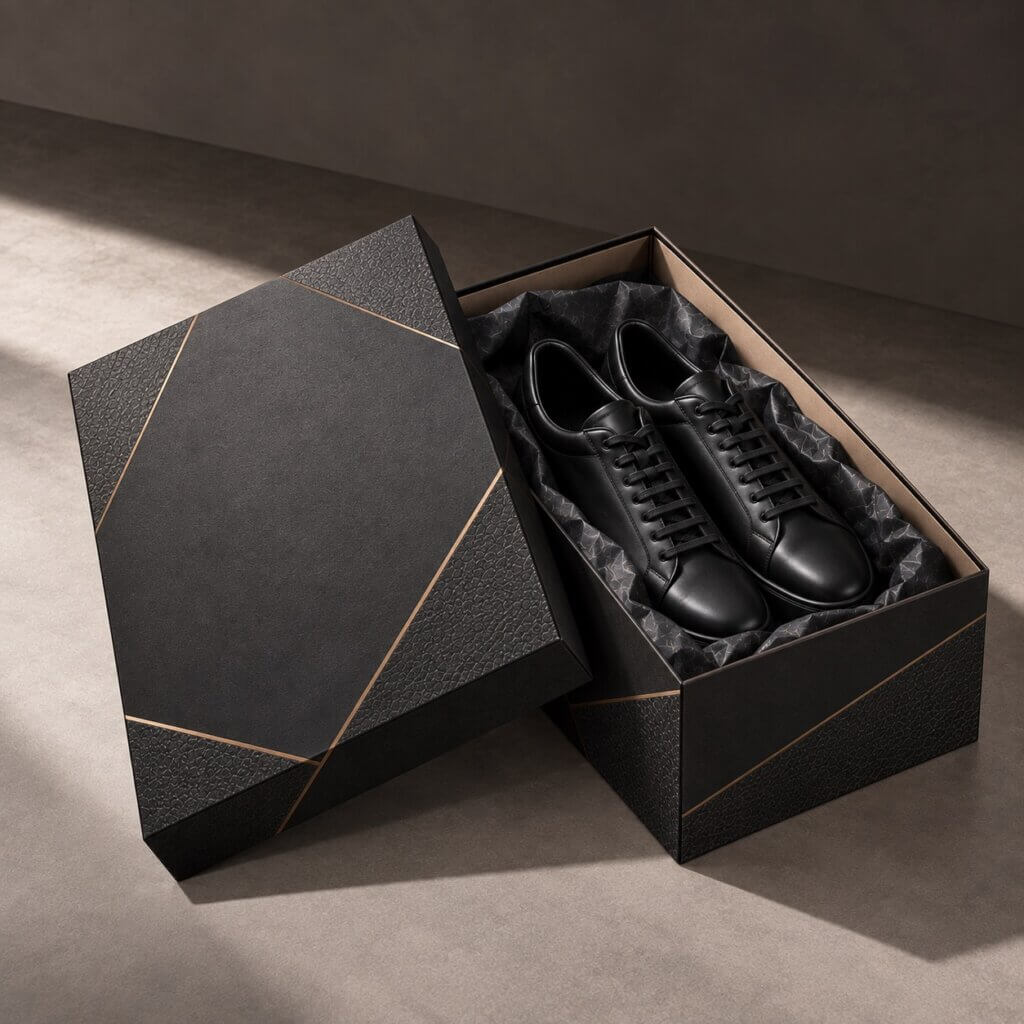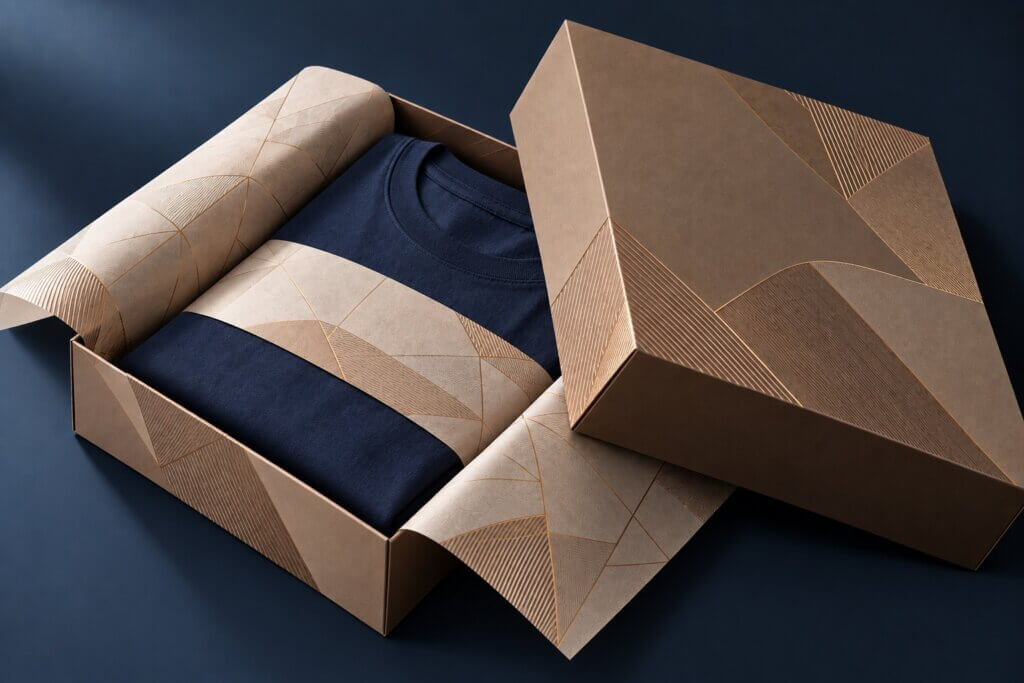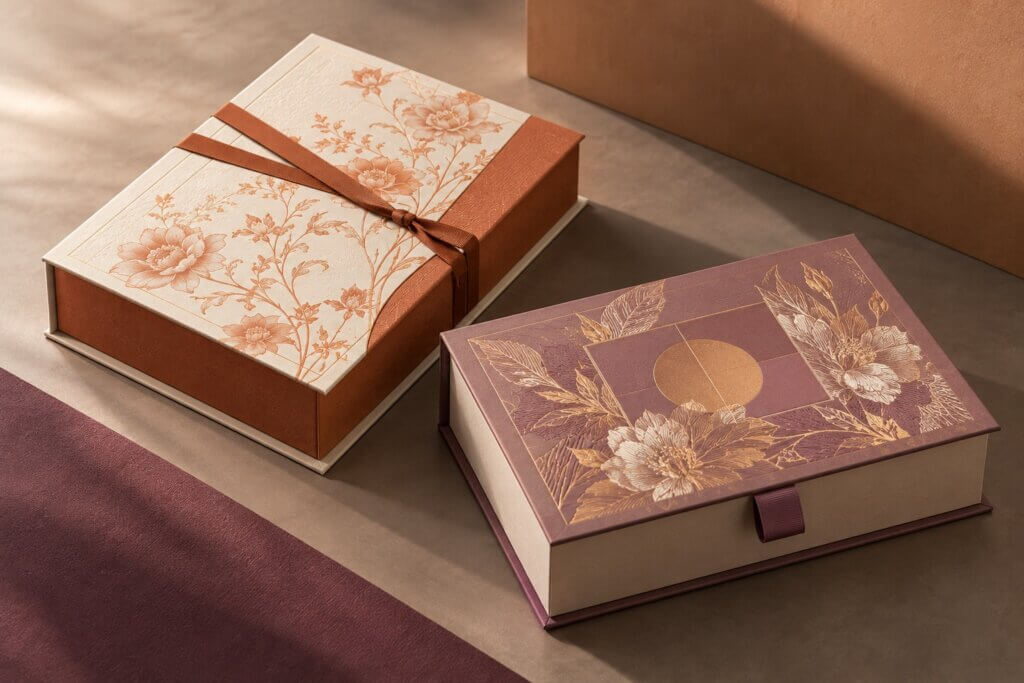

A foldable gift box is easy to understand from a photograph: it opens like a rigid presentation box, often closes with magnets, and can look substantial once fully assembled. What matters more is what happens before that final appearance is reached.
Unlike a conventional setup box that keeps its finished shape throughout storage and transport, a foldable magnetic structure is expected to move between two states. It must remain compact enough to justify folding, yet become stable, square, and visually complete after assembly. That transition is where most of the real engineering decisions sit.
For brands developing custom magnetic gift boxes, the question is therefore not simply whether the box can collapse. It is whether the structure still performs properly after repeated forming, packing, closing, and handling. Demei’s Foldable Rigid Box is one example within the broader Custom Shape Boxes category, where the outer form is part of the packaging function rather than just decoration.
A Foldable Box Is Really Two Packages in One
A foldable magnetic box has to succeed twice: once while it is flat, and again when it becomes a finished package.
In its flat state, the structure should be efficient to stack, carton, store, and move. In its assembled state, none of that efficiency should remain visually obvious. The customer should not see side walls that lean inward, lid panels that sit unevenly, or corners that look as though they were recently unfolded.
This is why freight volume alone is not enough to justify the structure. A large apparel box, for example, may benefit considerably from taking up less space before use, while a very small box may not gain enough logistical advantage to offset added assembly steps. The value depends on box size, quantity, where packing takes place, and how many times the structure must be handled before reaching the customer.
The best foldable projects are not designed around “flat packing” as a feature. They are designed around a clean conversion from flat form to finished form.
The Box Should Not Look Foldable After Assembly
Once assembled, a premium box should read as one stable object.
The side walls should stand straight, the lid should settle into the intended position, and the front flap should meet the body without visible twisting. Small deviations matter more in luxury packaging design because the box usually uses larger uninterrupted surfaces, cleaner graphics, and more controlled opening movements. Those design choices make misalignment easier to notice.
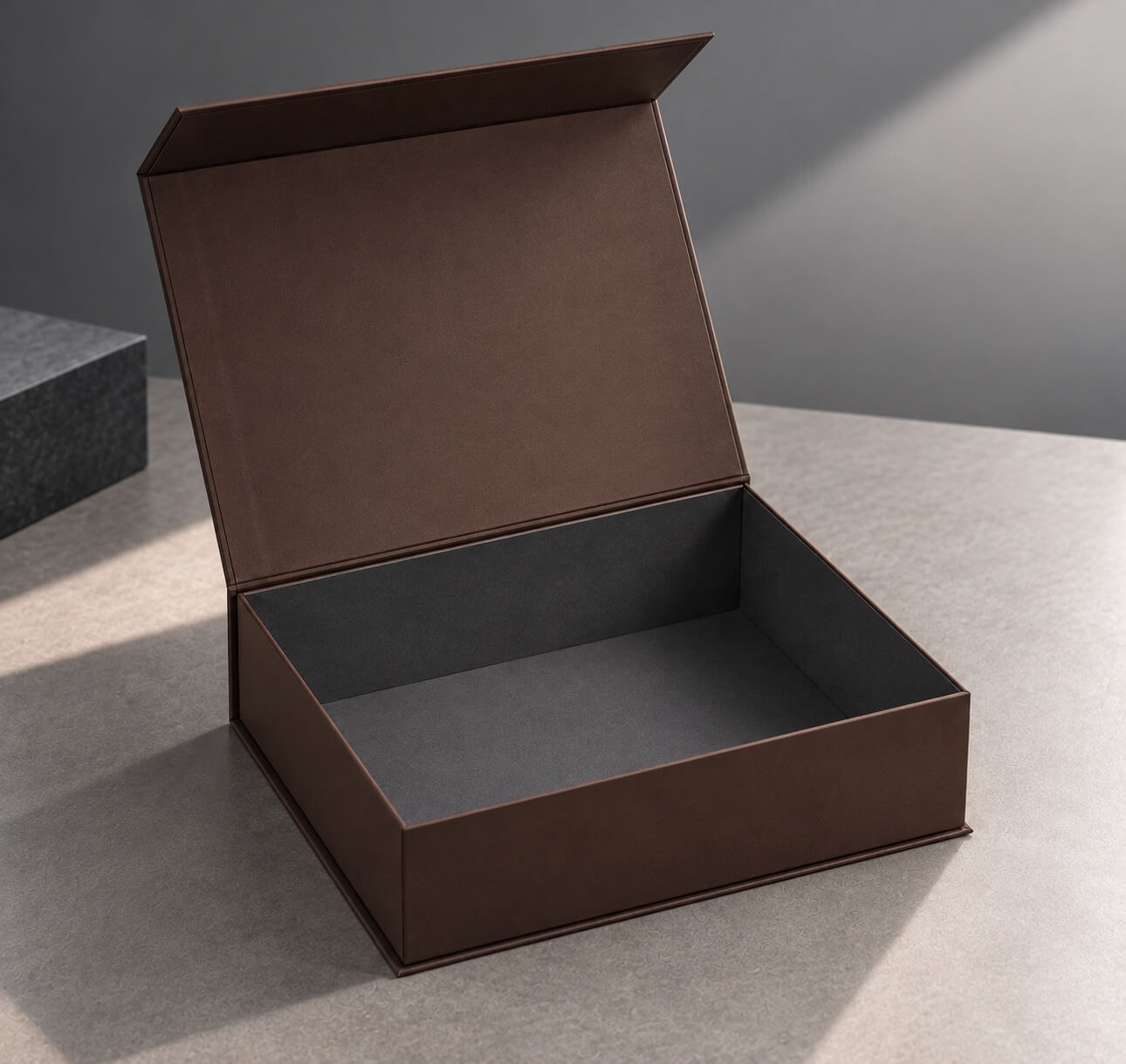
The folding mechanism therefore needs to disappear visually after use. Hidden fixing areas, pre-glued sections, locking walls, or magnetic panels may all help establish the final shape, but the user should not need to understand how the box was engineered in order to feel that it is stable.
This is also why approving only a digital rendering is risky. A rendering can show proportion and artwork, but it cannot show whether one corner tends to pull inward, whether the lid becomes slightly skewed after several opening cycles, or whether the box needs manual adjustment every time it is formed. For high end packaging design, the assembled physical sample is the more important reference.
Magnetic Closure Is a Positioning Problem Before It Is a Magnet Problem
One of the most misunderstood parts of custom boxes with magnetic closure is the assumption that closure quality depends mainly on magnet strength.
In practice, positioning often matters more.
The two magnetic points must meet at the correct distance after the board, wrapping paper, glue layers, and folded panels all settle into their final positions. If one panel stands slightly proud or the front flap closes at a small angle, a strong magnet can still feel weak because the magnetic points are no longer aligned.
That is why stronger magnets are not always the solution. Excessive pull can make opening abrupt and place unnecessary stress on the wrapped board. A better result comes from controlling the geometry first, then selecting magnetic strength to suit the finished structure.
This becomes especially important in luxury magnetic closure boxes with logo, where the front flap often carries the main branding. If the flap lands too high or too low, the problem is not only mechanical. The logo itself may appear off-center, making a structural tolerance issue visible as a branding issue.
Large Artwork Can Make a Foldable Structure Less Forgiving
A foldable rigid box is not only a structural object; it is also a graphic surface that changes shape.
This matters when the artwork depends on several panels lining up precisely. Continuous borders, long metallic lines, oversized typography, and graphics crossing multiple folds can all amplify small production differences. A slight shift that would be almost invisible on a plain box can become obvious when a line is expected to continue perfectly around an edge.
That does not mean foldable structures should use only minimal graphics. It means the artwork should acknowledge where the box folds and where production tolerances accumulate.
For many projects, one well-placed logo, a controlled color block, subtle embossing, or a restrained foil detail is more robust than a design that depends on several surfaces becoming one uninterrupted image.
Brands comparing different opening experiences can also look at a Luxury Drawer Box. A drawer box controls presentation through a sliding movement, while a foldable magnetic box depends more heavily on panel alignment and front-flap closure. The structures solve different presentation problems.
Flat Packing Moves Cost Instead of Simply Removing It
It is tempting to think that a foldable box is automatically cheaper because it may reduce shipping and storage volume.
That is too simple.
What flat packing often does is move cost from one part of the packaging process to another. Freight and warehouse space may decrease, while structural complexity, magnets, wrapping steps, adhesive areas, assembly labor, or inspection time may increase.
A more realistic comparison therefore looks at the whole process rather than just the factory unit price. Manufacturing, export carton volume, international freight, storage, assembly time, packing speed, and rejection risk all contribute to the final cost of using the box.
This is also why fixed claims about percentage savings are rarely useful. The answer changes with box size, quantity, packing method, destination, and the cost of local labor.
A foldable structure is commercially useful when the reduction in occupied volume creates more value than the additional work required to turn that flat structure into a finished box.
The Packing Team Is Part of the Packaging System
During sampling, one box may only take a few extra seconds to assemble. At scale, those seconds become part of production.
The packing team therefore becomes part of the packaging system itself.
Can an operator form the box correctly without repeatedly adjusting the walls? Does the front flap find its magnetic position naturally? Is there protective film or tape that slows assembly? Can the box be opened, squared, and packed in one smooth sequence?
These questions matter particularly for custom clothing boxes. Apparel packaging is often relatively large, so reducing empty-box storage can be attractive. But if the foldable structure requires too many manual steps, a busy fulfillment line may lose some of that advantage.
With cosmetic packaging boxes, the balance can be different. The boxes are often smaller, but the final presentation may be more demanding. If several bottles, jars, or tubes need to sit in a precise arrangement, small assembly errors can become visually obvious.
So the same foldable structure can make sense for two industries for completely different reasons.
An Insert Can Stabilize the Product but Destabilize the Box
An insert is usually designed to hold the product, but in a foldable rigid box it can also influence the outer structure.
A tightly fitted tray, thick foam component, or multi-level insert can push against the walls after assembly. If it is slightly oversized, the outer box may bow, corners may open, or the lid may stop sitting cleanly.

This is why the insert should not be approved independently from the assembled outer box.
Paperboard inserts, molded pulp, or other lighter structures can work well when they support the product without forcing the side walls outward. Heavier inserts are still possible, but they need to be checked as part of the complete system.
The more fragile or heavy the product is, the more important this becomes. If the product depends on a very substantial internal support system, the storage advantage of a foldable outer box may become less important than the stability of a permanently assembled structure.
Which Products Usually Suit This Structure?
There is no single category that automatically needs foldable gift boxes. The structure is more useful when several conditions happen at the same time: the finished box needs to look substantial, the box is large enough for storage volume to matter, and the product is not so heavy that the outer structure is constantly under stress.
That is why apparel, accessories, skincare sets, corporate gifts, lightweight electronics, confectionery gift sets, and seasonal promotional products are common candidates.

The structure can also be useful when a brand keeps several box sizes in stock across multiple SKUs. Flat-packed inventory may be easier to manage than large volumes of assembled boxes, provided the final packing team can form them consistently.
Not every premium product needs this format. A lighter retail product may be better suited to Custom Folding Cartons , which already ship flat with a simpler material system. If the main requirement is parcel protection rather than presentation, Custom Mailer Boxes may be the more appropriate outer structure.
The structure should follow the product and distribution model, not the assumption that a more complicated box is automatically more premium.
A Good Sample Should Be Tested as a Workflow, Not as a Display Piece
A sample can look excellent on a table and still reveal problems once it enters a real packing process.
For this type of box, sampling should include repeated assembly, product loading, closing, reopening, and basic handling. The goal is not only to check whether one sample looks good. It is to see whether the structure behaves predictably each time.
Does the box naturally form square? Does the magnetic closure engage without correction? Does the insert alter the side walls? Does the lid stay aligned after several opening cycles? Does the logo remain in the expected position? How long does a normal packing operator actually need to prepare one box?
These questions are more useful than judging the sample only from a photography angle.
At Demei Packaging, most custom packaging projects start from 500 pieces, but the final MOQ depends on the box type, structure, materials, and finishing requirements. For a foldable magnetic project, structure approval is especially important because the finished result depends not only on how the box leaves the factory, but also on how reliably it can be formed and packed later.
Choose the Box Around the Complete Process
A foldable magnetic gift box can be an effective way to combine a substantial presentation with more efficient storage and transportation, but only when the whole process supports that choice.
The structure has to work flat and assembled. The magnetic closure has to align with the panels rather than compensate for them. Artwork needs to tolerate real folds. The insert must support the product without distorting the outer box. And the packing team must be able to assemble the structure consistently.
That is the more useful way to evaluate foldable gift boxes.
The question is not whether the box can collapse. It is whether the entire packaging process works better because it can.