
A packaging project can move surprisingly far before anyone looks closely at how the product actually sits inside the box. A brand may already have selected a box style, approved a visual direction, or decided that the finished package should have a particular size. Only later does the physical product enter the discussion.
That order can work when the product is simple and forgiving. But once weight, surface sensitivity, multiple components, irregular geometry, or shipping protection becomes important, designing the box first can create problems that are difficult to solve with artwork or finishing.
For this reason, packaging structure is usually more reliable when the product defines the internal requirements first. The outer format can then be selected around those requirements. A lightweight retail item may work well in custom folding cartons, while products sold and shipped directly to consumers may need custom mailer boxes. Products that require a controlled reveal or fitted insert may instead lead toward custom drawer boxes. The important point is that the box style should be the result of the packaging problem, not the starting assumption.
This becomes especially important in custom packaging for ecommerce, where a package is expected to survive handling as well as create a good presentation after arrival.
The First Problem Is Usually Not the Box — It Is the Space Inside It
Imagine that the outside dimensions of a box have already been approved. The product is then measured and placed inside. If there is more space than expected, that space has to be managed somehow.
A few millimeters of clearance may be useful because products and packaging materials are not manufactured to mathematically perfect dimensions. Too much clearance, however, allows the product to move. Too little can make packing difficult, create pressure points, or cause the insert to grip the product so tightly that removal becomes frustrating.
This is particularly noticeable in custom packaging for precision parts. A small component does not necessarily require a complex box, but its position may need to be controlled carefully. Two metal parts that are allowed to contact each other can behave very differently from the same parts held separately. A polished component may require attention to surface contact, while a dense part may concentrate load in a small area of the insert.
This is why product dimensions alone are not enough. Packaging development should also consider the product’s weight, orientation, contact surfaces, center of mass, allowable movement, and how the customer is expected to remove it.
The issue becomes more complicated when the product itself has dimensional variation. A cavity designed exactly around one prototype can become too tight when another production unit is slightly larger. Conversely, excessive allowance added “for safety” can defeat the purpose of the insert. The useful clearance is therefore not simply empty space. It is a controlled relationship between the product, the insert, and normal manufacturing variation.
Extra Space Often Creates a Second Problem: The Packaging Needs to Be Repaired
Once a box has been designed too large for the product, the next reaction is often to fill the unused volume.
This is where an insert may be added not because the product originally required one, but because the box now requires something to make the product fit. Paperboard platforms, corrugated partitions, molded pulp, and foam can all be useful materials when they solve a defined problem. They are less efficient when their main purpose is to compensate for dimensions that were established too early.
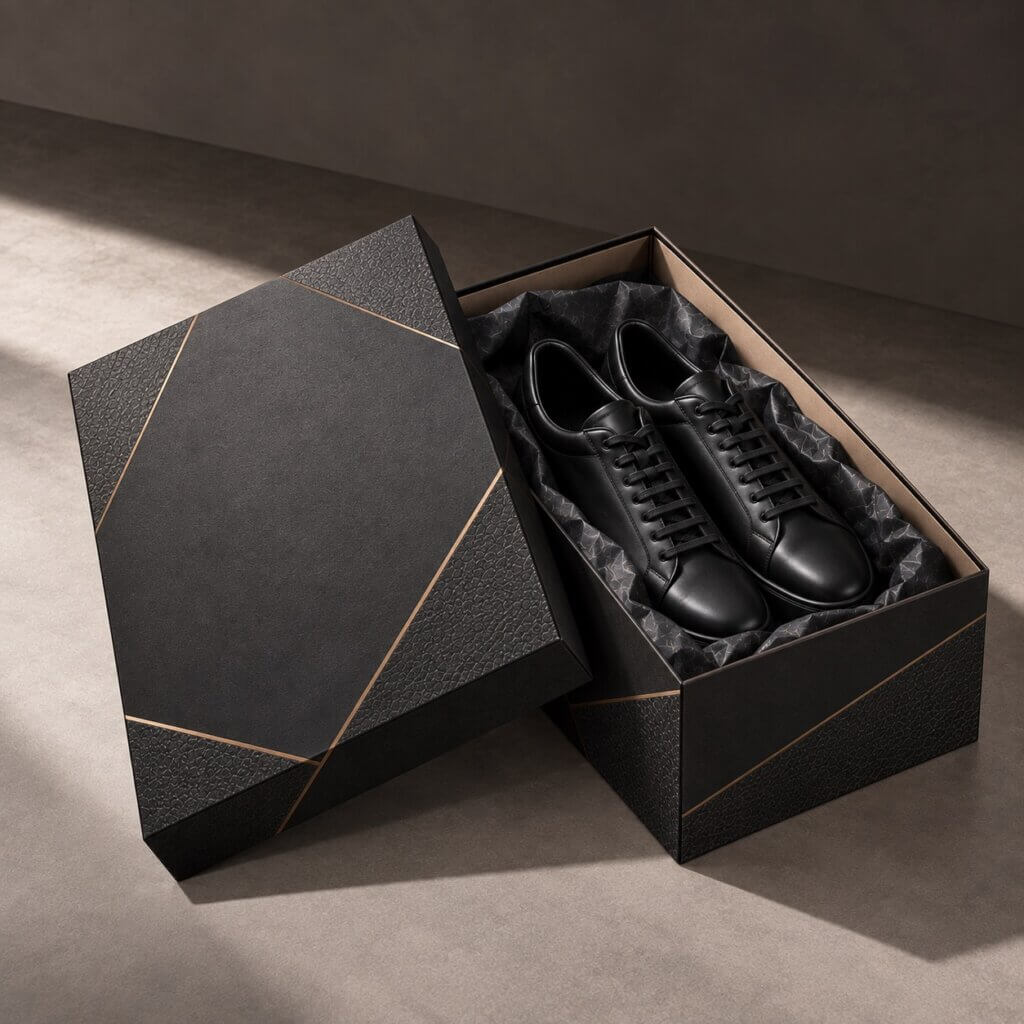
Custom packaging foam inserts, for example, can provide cushioning, separation, and accurate product positioning. They are useful when the product genuinely benefits from those properties. But changing to thicker foam simply to occupy an oversized cavity adds material without necessarily improving the overall package.
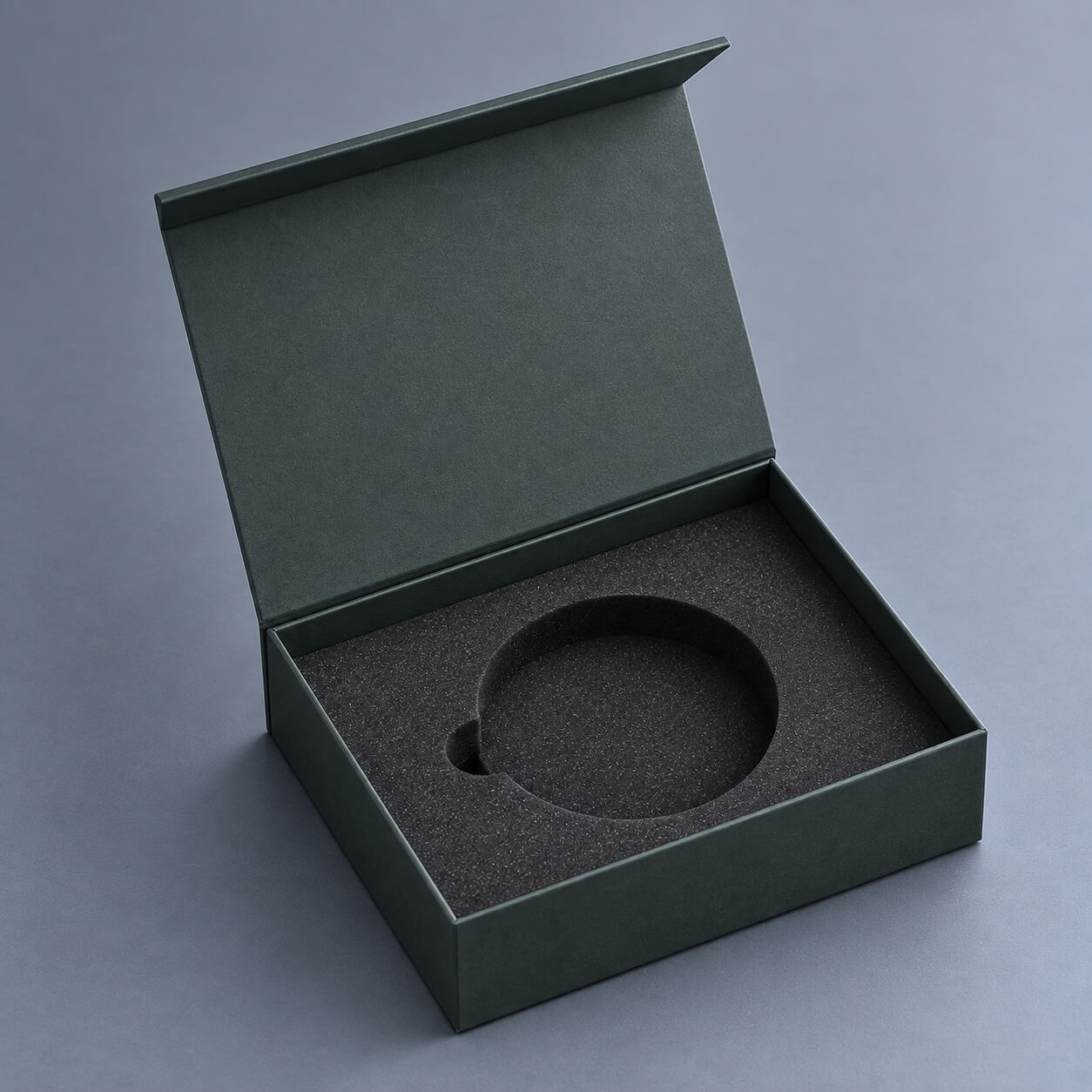
The same applies to custom packaging boxes with foam inserts. The important decision is not whether foam looks more protective. It is whether the material, density, cavity geometry, and support points match the weight and vulnerability of the product.
Does every custom package need an insert?
No. An insert has a function, and if that function is unnecessary, the insert may only add material, assembly steps, and cost.
A lightweight product that already fits a correctly dimensioned carton may need little more than the carton itself. Several small components may benefit from a paper divider. A fragile coated product may need controlled contact surfaces. A heavy item may require support below the product rather than simply a decorative frame around it.
The decision should therefore begin with what movement or contact needs to be controlled, not with a predetermined assumption that every premium box needs an insert.
Demei’s custom folding cartons already support several paperboard and corrugated insert configurations, illustrating that the insert can be considered as part of the structural system rather than as a separate decorative accessory.
Fixing the Interior Can Quietly Make the Entire Package Larger
An oversized interior rarely remains only an interior problem.
Add a thicker insert and the outside dimensions may increase. Increase the outside dimensions and paper consumption changes. Master-carton packing may change as well. For e-commerce orders, unnecessary external volume can also mean that more space is being transported around the product.
This is one of the reasons custom packaging for ecommerce should be developed with both the product and the shipping environment in mind. A package can look compact on a design screen while still using considerably more physical volume than the product requires.
The same principle applies to custom packaging sleeves. A sleeve can be a useful way to add branding, group a tray and product, or create a sliding presentation. But the sleeve needs to be engineered around the finished dimensions beneath it. If the underlying carton or tray changes after the sleeve has been defined, sliding resistance, assembly clearance, and alignment can change with it.
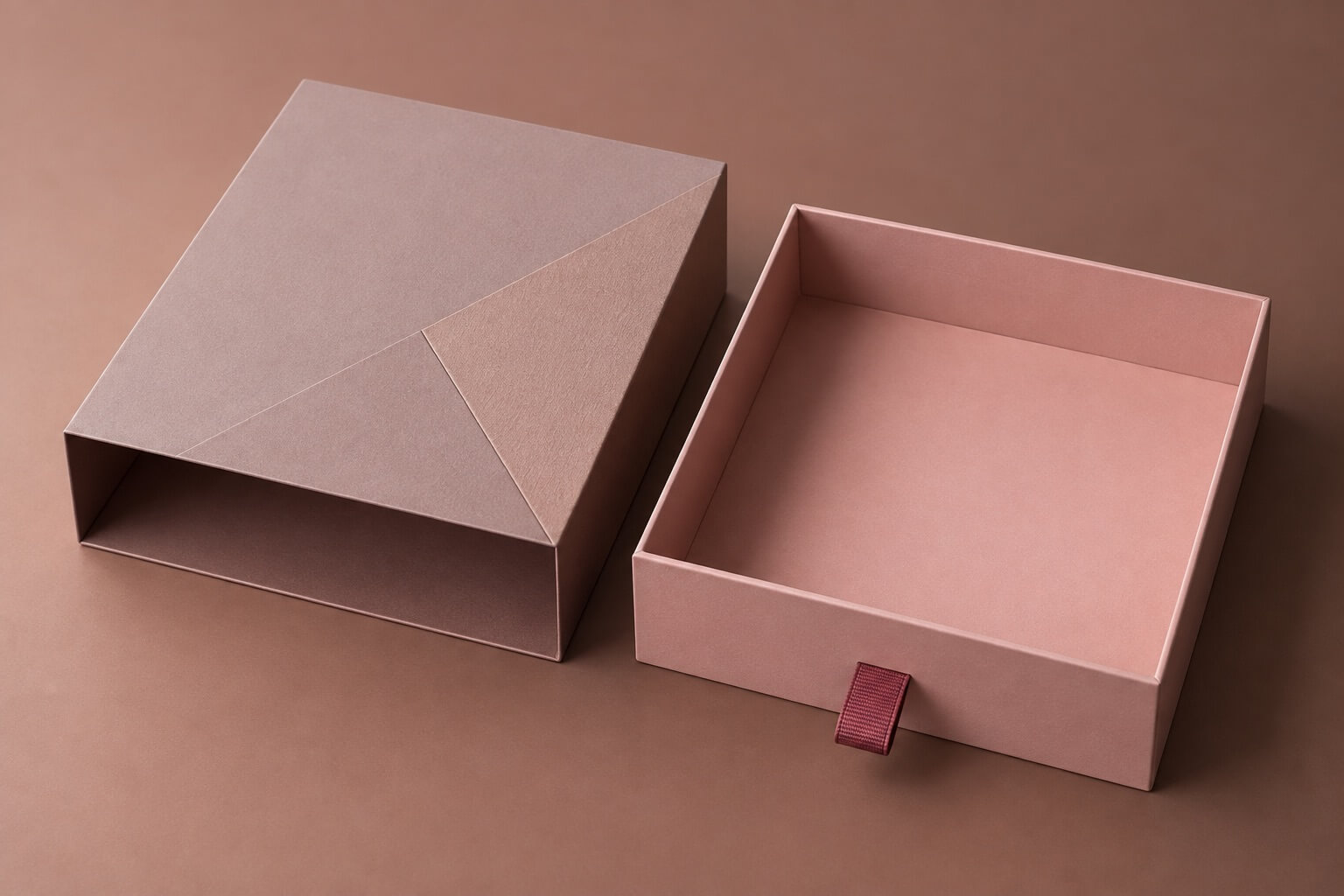
A custom packaging sleeve that is too loose can feel uncontrolled; one that is too tight may become difficult to assemble or remove. That makes the sleeve another example of why external dimensions should follow the internal structure rather than be fixed independently from it.
Different Products Expose Different Weaknesses in Box-First Design
The consequences of designing the box first are not identical for every product.
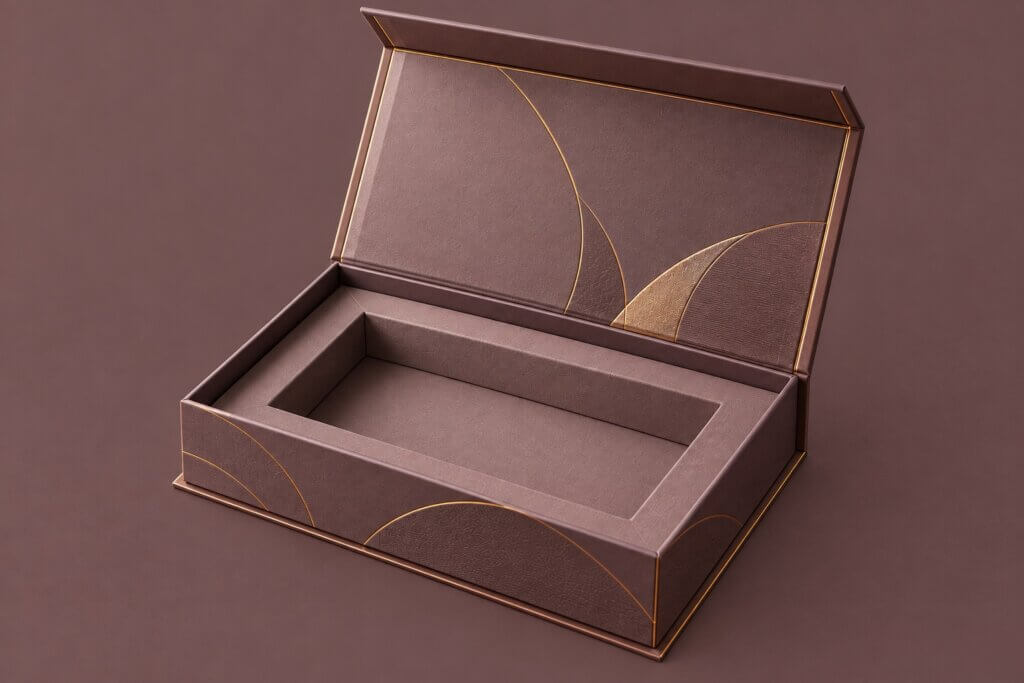
For custom packaging for jewelry, the challenge may be visual positioning rather than heavy-impact protection. A pendant, ring, or bracelet can be physically small, yet a few millimeters of unwanted movement may make the presentation look poorly controlled when the box is opened. In this type of jewelry custom packaging, the relationship among the product, insert opening, display angle, and removal method may matter more than increasing board thickness.
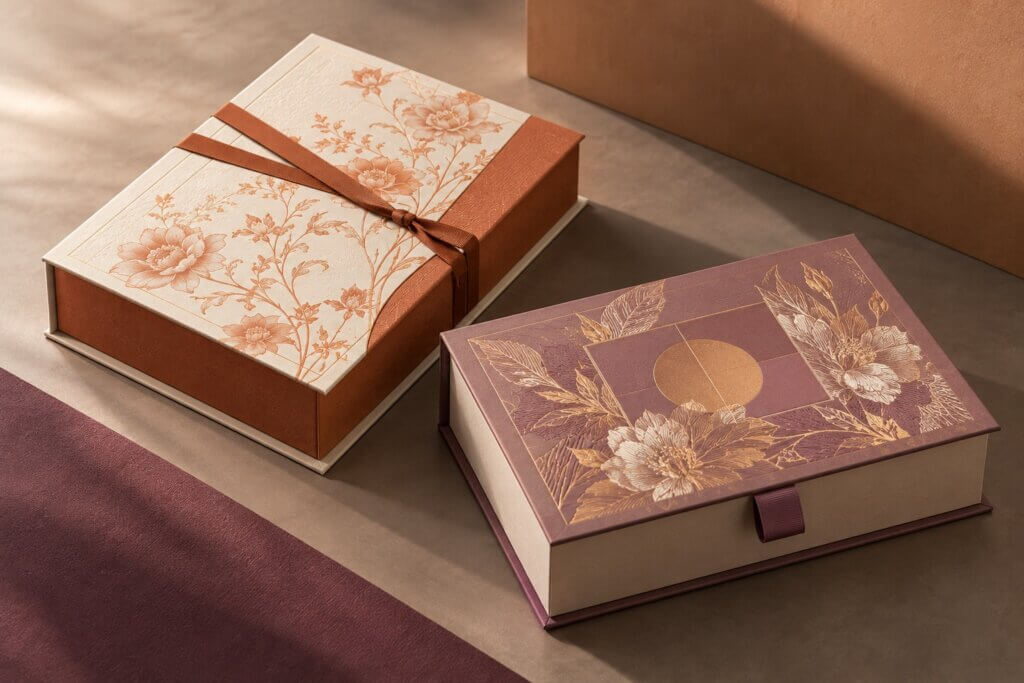
Chocolate presents a different problem. Chocolate custom packaging may need individual pieces or groups of products to remain organized while still being easy to remove. Starting with an attractive outer gift box and dividing the remaining space afterward can produce awkward compartment sizes. Designing the product layout first makes it easier to determine the tray, divider, and final box proportions together.
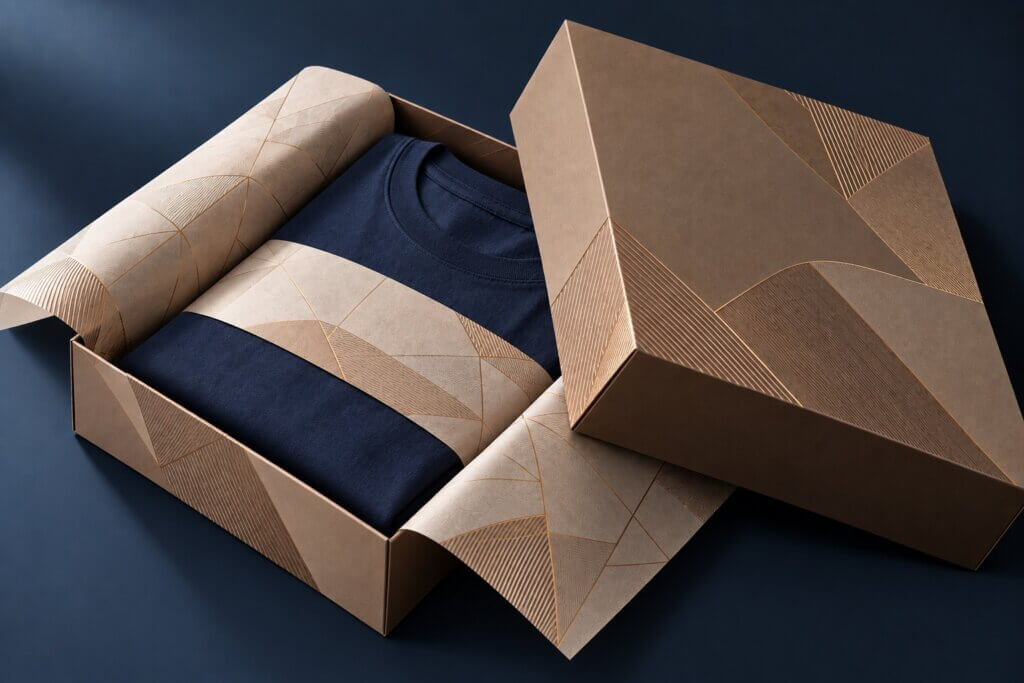
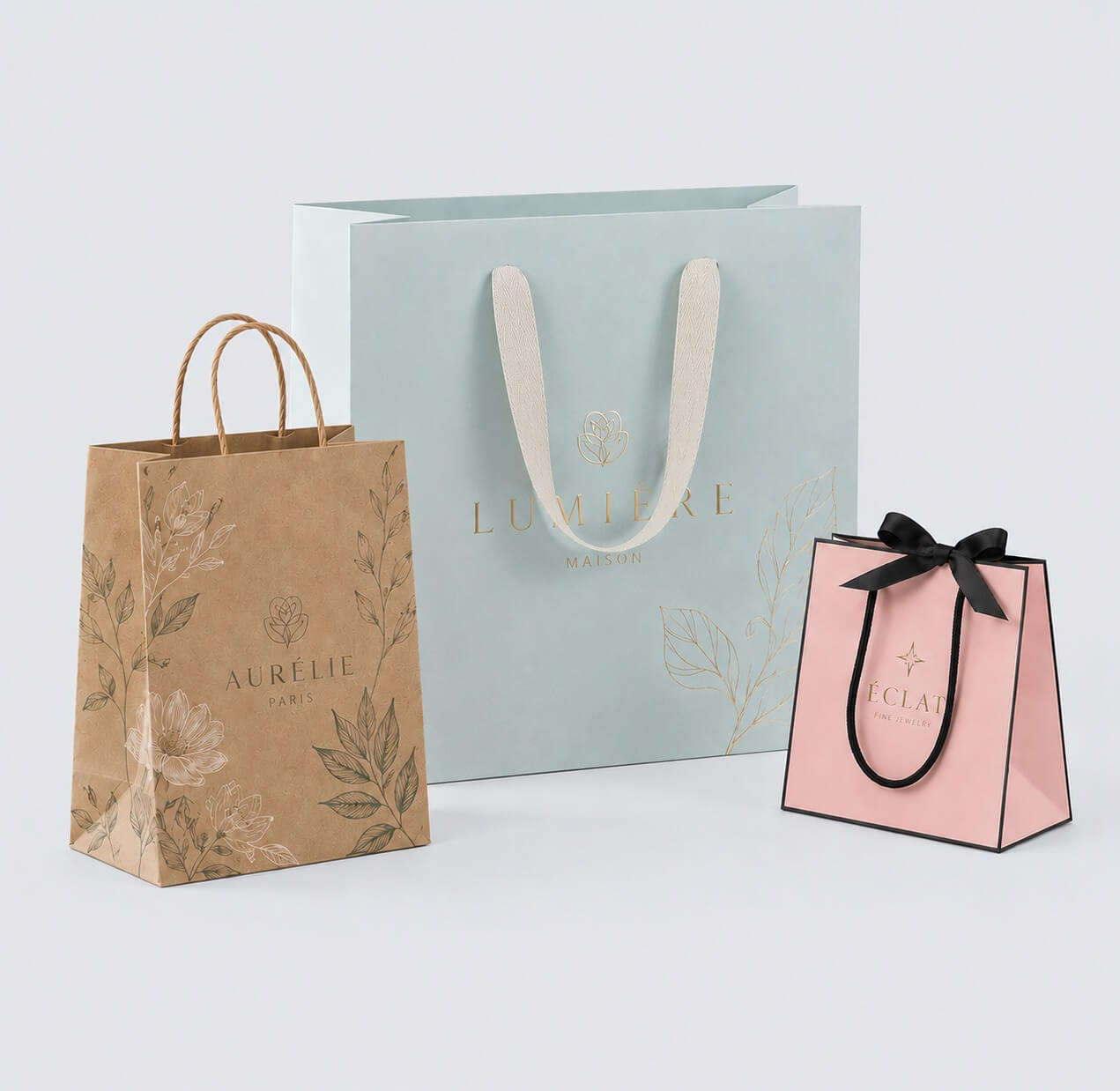
Apparel is different again. With custom packaging for t shirts, the product is comparatively flexible. The question is often not how to lock it into a precision cavity but how consistently it will be folded, how much thickness changes between sizes or fabrics, and whether the package needs to serve retail display, gifting, or shipping. In some cases, custom packaging bags for clothing may make more sense than adding a rigid structure that the product itself does not require. Demei’s custom paper bags are one example of a format intended for retail, gifting, and branded carry-out use rather than internal product restraint.
These examples point to the same conclusion without requiring the same packaging solution: the product creates the structural conditions. The box responds to them.
Product-First Design Does Not Mean Making Every Box Complicated
Designing around the product is sometimes misunderstood as adding more engineering, more insert layers, and more custom components. In practice, it can lead to a simpler package.
When the product’s actual requirements are understood early, unnecessary features are easier to remove. A product that does not need cushioning may only require positioning. A product that does not need an insert may use a correctly sized carton. A flexible apparel product may benefit more from an efficient folded dimension than from a thick rigid box.
This also helps distinguish protection from presentation. They are related, but they are not the same requirement. A premium opening experience does not automatically require foam, just as a strong shipping carton does not automatically create good product presentation.
The useful question is not, “How much packaging can we put around this product?” It is, “What does the packaging need to control?”
That question usually leads to better decisions about board grade, insert material, product orientation, opening direction, clearance, external dimensions, and finally the surface design.
A Better Development Sequence Starts With the Product
A more controlled packaging project normally begins with the physical information that can influence structure: actual product dimensions, weight, quantity per box, fragile areas, surface sensitivity, orientation, accessories, and the expected packing and shipping method.
From there, the internal arrangement can be established. The designer can decide whether the product should be held from the sides, supported from below, separated from another component, or simply prevented from shifting. Only after that does it become useful to finalize the outer structure.
For example, a product intended for parcel delivery may ultimately lead to a mailer format. A premium item that benefits from a sliding reveal may lead to a drawer structure. A lightweight retail product may remain a simple carton. The Our Packaging Types page shows these structures as different tools rather than interchangeable visual styles.
After the structure is established, artwork, finishes, foil, embossing, lamination, and other visual details can be developed around dimensions that are much less likely to change.
This order matters because structural changes made late in a project rarely remain isolated. Changing the insert can alter the cavity. Changing the cavity can alter the tray. Changing the tray can alter the sleeve or outer box. The later those changes occur, the more artwork, tooling, sampling, and production details may need to be checked again.
Can a Sample Confirm That the Packaging Will Work?
A sample can answer many important questions, but only if it is evaluated with the actual product.
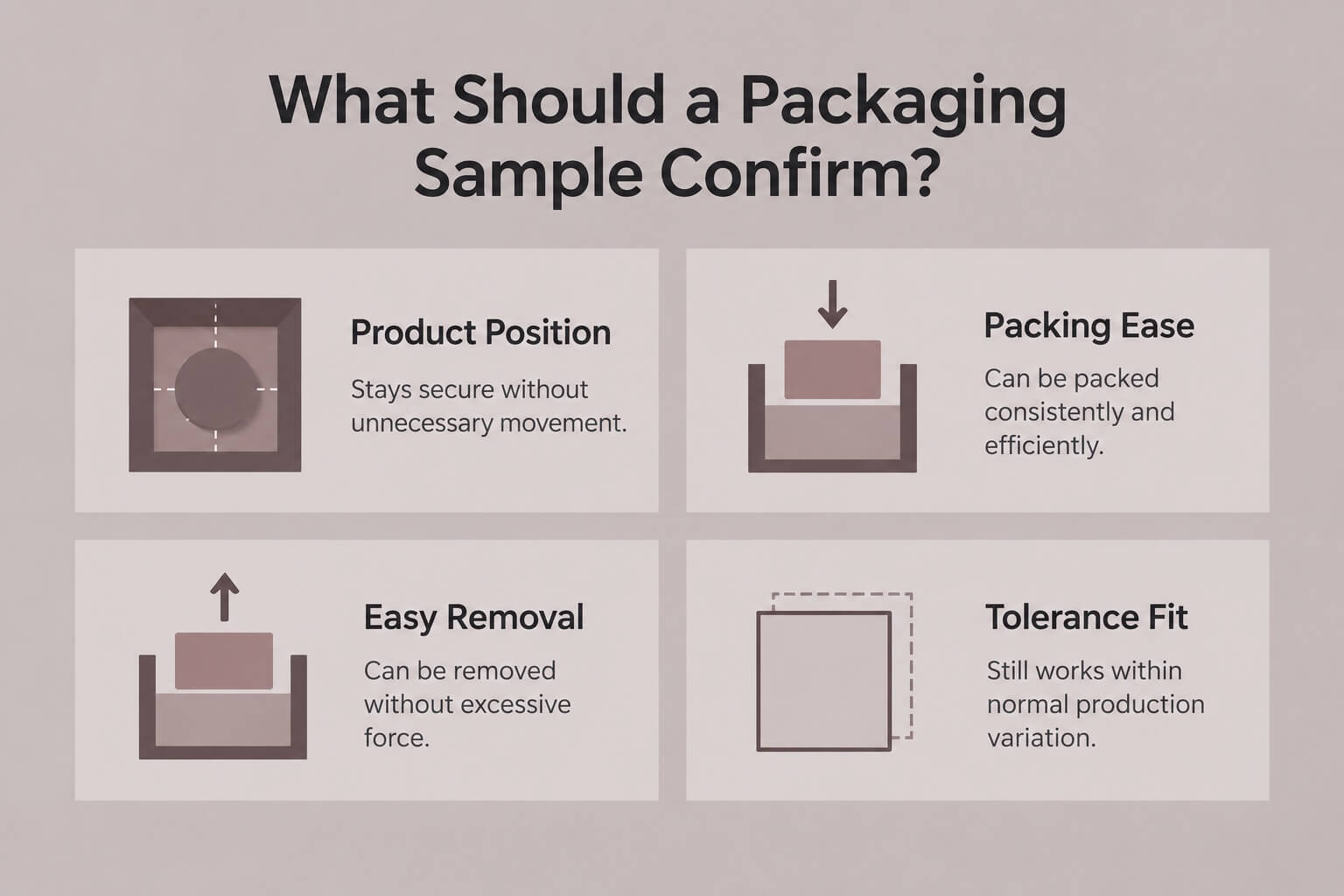
Looking at an empty prototype confirms relatively little about product fit. The useful test begins when the product is packed into the sample. Does it sit in the intended position? Can it shift when the box is handled? Can the customer remove it without pulling on a fragile component? Does an insert compress or deform under the product’s weight? Does the sleeve still move smoothly after the tray is loaded?
These questions are also why production tolerance needs to be considered before approval. A prototype should not only work once; the design needs enough tolerance to remain functional when paperboard thickness, wrapped board, die-cutting, assembly, and the product itself vary within normal production ranges.
For projects at Demei Packaging, the structural direction can be reviewed before mass production through dielines, material selection, insert development, and physical sampling. Most custom packaging projects start from 500 pieces, but the final MOQ depends on the box type, structure, materials, and finishing requirements.
The purpose of sampling is therefore not simply to approve how the package looks. It is to verify that the relationship among the product, insert, and box still works when all three become physical objects.
The Box Should Be the Outcome, Not the Starting Constraint
Good custom packaging does not begin by asking which box looks most impressive. It begins by understanding what the product asks the packaging to do.
Sometimes the answer is strong restraint. Sometimes it is separation. Sometimes it is surface protection, compact shipping, clean presentation, or simply enough controlled clearance for easy packing and removal.
Once those requirements are clear, the outer box becomes easier to define. The package is no longer a predetermined container with the product fitted into whatever space remains. Instead, the internal fit, insert, outer structure, materials, and presentation are developed as one system.
That approach does not guarantee that every package will be smaller or simpler. Some products genuinely need more structure. But when additional material or complexity is used, it is there for a reason — not because the project began with a box that the product was later forced to fit.