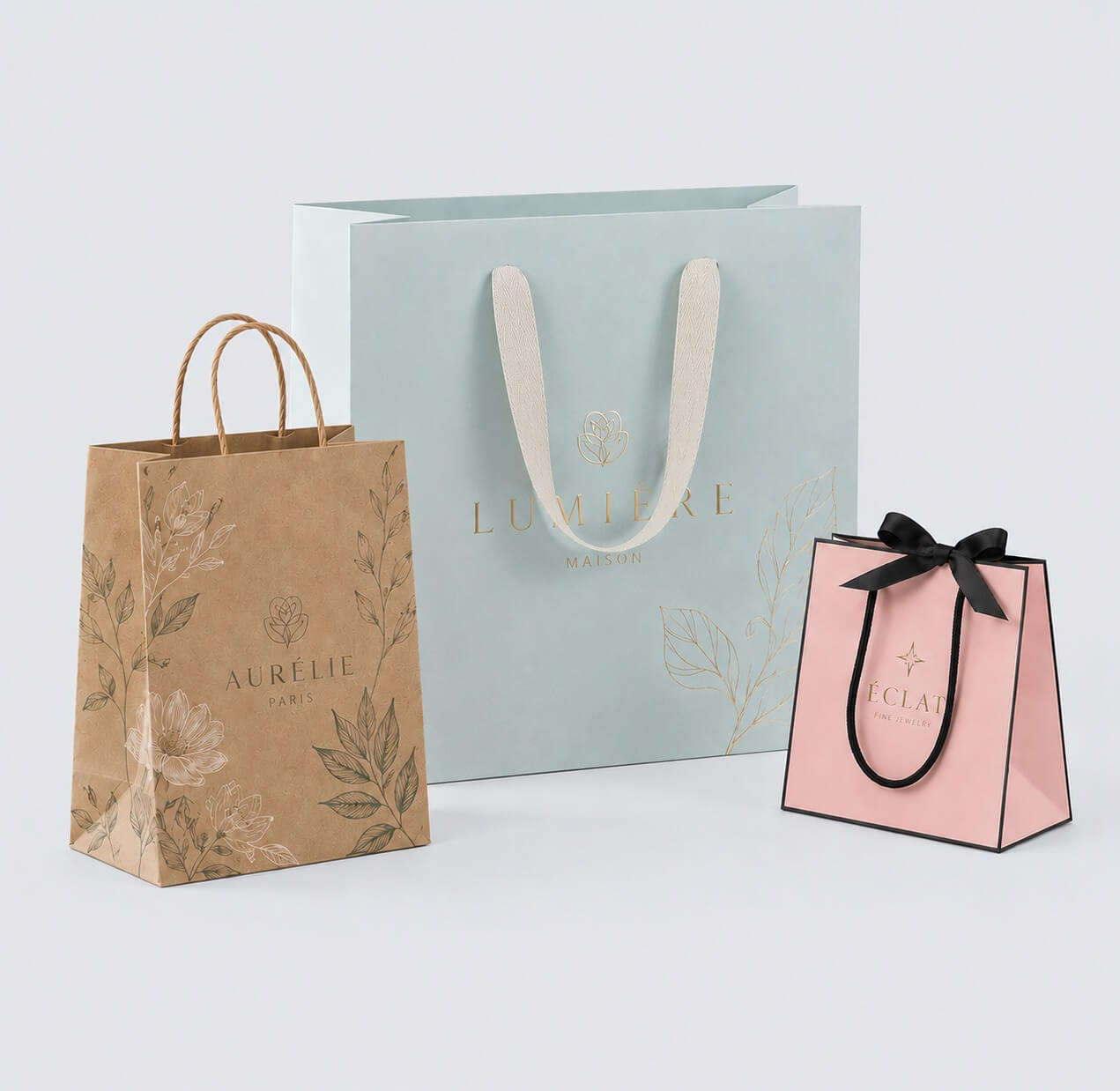

A packaging brief can look surprisingly complete. It may include product dimensions, a reference image, preferred colors, target order quantity, logo artwork, and even a list of finishes. Yet when exactly the same information is sent to several packaging manufacturers, the proposed solutions can still look and perform very differently. The reason is that a brief describes what a brand wants, but it rarely defines every engineering decision required to manufacture the package. A supplier still has to interpret board thickness, internal clearance, insert construction, wrapping method, tolerances, assembly sequence, finishing limitations, packing efficiency, and transport conditions.
Even familiar structures such as custom drawer boxes, folding cartons, or other packaging types can therefore develop in different directions after the first brief is received. This does not necessarily mean one supplier misunderstood the project. More often, it shows how much packaging development happens between the original concept and a production-ready specification. For brands comparing luxury packaging suppliers, the real difference between suppliers often becomes visible not in the first rendering or quotation, but in how each manufacturer converts incomplete information into something that can actually be produced thousands of times.
A Packaging Brief Describes the Goal, Not the Entire Construction
A brand may tell a manufacturer that it wants a premium drawer box for a 100 × 60 × 40 mm product. That defines the approximate direction, but it does not yet define the package. The manufacturer still needs to decide how much clearance should be allowed around the product, how thick the drawer walls should be, whether the sleeve needs reinforcement, whether an insert is required, how tightly the drawer should slide, and how wrapping paper and board thickness will affect the final dimensions. These are not minor details. Together, they determine how the box feels when opened, how consistently it can be assembled, and whether the product can be packed without excessive force.
Two suppliers can receive the same dimensions and make different assumptions about each of those points. One may prioritize a tighter opening feel and increase board thickness. Another may allow slightly more clearance to improve assembly consistency. A third may redesign the internal insert so the outer box can remain smaller. All three may technically be responding to the same brief, but the production logic behind their solutions is different. This is particularly common in bespoke luxury packaging, where the brief may communicate proportions, color, and presentation very clearly while saying almost nothing about hidden reinforcement, adhesive locations, internal tolerances, edge wrapping, or how the box will actually be assembled at scale.
The more customized a package becomes, the more engineering interpretation sits behind what the customer can see. This is why a reference image is useful as a visual starting point, but rarely sufficient as a manufacturing specification.
Different Manufacturers May Solve the Same Protection Problem in Different Ways
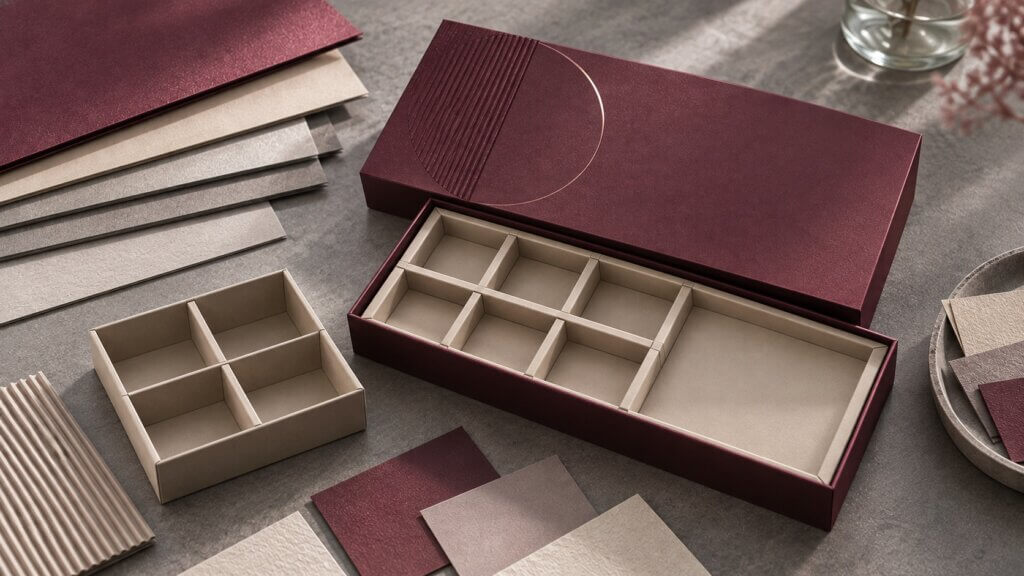
Product protection is one of the clearest areas where supplier interpretation changes the final result. Imagine a glass perfume bottle that needs to sit inside a rigid presentation box. The brief may simply say that the bottle should “fit securely,” but that instruction still leaves many structural questions unanswered. One manufacturer may use a folded paperboard insert, another may build a greyboard platform with a recessed opening, while another may redesign the internal cavity so the bottle is supported at several contact points.
That difference matters when brands compare perfume packaging manufacturers. Two packages can look almost identical from the outside while using completely different internal engineering. In perfume luxury packaging, this is especially important because a relatively heavy glass bottle creates concentrated loads inside the package. The insert is not only there to make the product look centered. It also controls movement, spreads pressure, protects the bottle from impact, and influences how force reaches the outer box during handling and transport.
The same principle applies when a brand works with a custom protective packaging manufacturer. “Protective packaging” is not one material, one insert, or one box style. The manufacturer first has to identify what needs to be controlled: movement, compression, abrasion, corner impact, surface scratching, repeated handling, or some combination of these factors. One supplier may respond by increasing material thickness, while another may achieve equal or better protection by changing the geometry and support points. This is why comparing packaging only by board thickness or the number of layers can be misleading; the more important question is whether the structure controls the actual risk.
Material Names Do Not Create Identical Specifications
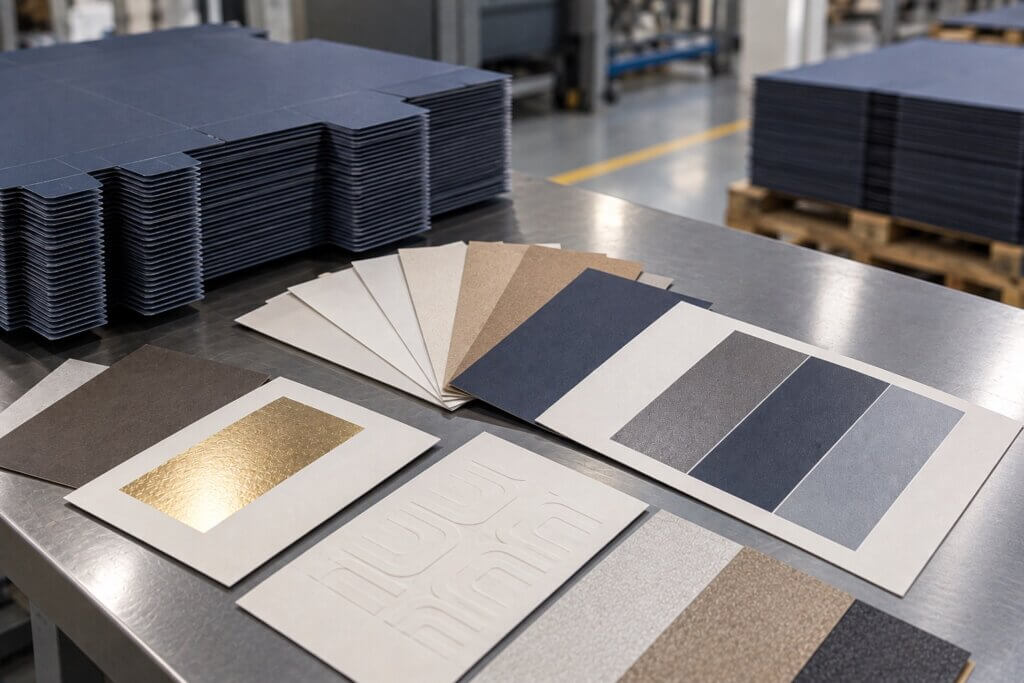
Another reason the same brief can produce different results is that material descriptions are often broader than buyers realize. Terms such as coated paper, specialty paper, kraft paper, greyboard, corrugated board, or metallic paperboard describe categories rather than one exact level of performance. Papers within the same category can differ in stiffness, surface texture, coating behavior, print response, folding performance, rub resistance, and finishing compatibility.
For example, metallic paperboard for luxury packaging can create a strong visual effect with relatively little decoration, but metallic appearance alone does not tell a manufacturer whether the sheet will score cleanly, show handling marks, accept foil reliably, or remain stable after folding and assembly. A material can look excellent as a flat swatch and still behave poorly once it becomes part of a finished structure.
The same is true for a luxury packaging box made with specialty paper. A textured sheet may create a richer tactile effect but require more care around wrapped corners and edges. A smooth dark paper may look extremely refined but reveal fingerprints, rubbing, or small production marks more easily. A sheet that works well on a folding carton may not behave the same way when wrapped around rigid board. This is why experienced manufacturers evaluate material and structure together rather than treating paper selection as a separate decorative decision.
Why Can a Sample Look Excellent but Mass Production Turn Out Differently?
This is one of the most common questions in custom packaging, and the answer usually has less to do with appearance than with repetition. A sample is often produced in very small quantities, which means each piece can receive more manual adjustment, slower assembly, and closer individual attention. Mass production introduces a different requirement: the same construction must work repeatedly across hundreds or thousands of pieces.
Die-cutting must stay stable over long runs. Wrapped edges must remain within acceptable tolerances. Inserts need to fit consistently. Adhesive application must be controlled. Different operators should be able to assemble the same structure in the same sequence. A manufacturer therefore has two jobs during sampling: first, to produce a prototype that matches the intended appearance; second, to determine whether the method used to create that prototype can realistically be repeated in production.
This is one reason suppliers sometimes modify details that are almost invisible to the customer. One manufacturer may reproduce a visual concept very literally, while another may slightly adjust internal dimensions, reinforcement, or assembly details because it expects the original construction to create problems in volume production. The second sample may look only slightly different, but its hidden structure may be more stable.
This distinction is particularly important when evaluating luxury cosmetic packaging manufacturers. Cosmetic packaging often combines large clean surfaces, specialty papers, foil stamping, embossing, multiple components, and internal inserts. The correct question is therefore not only, “Does the sample look right?” It is also, “Can the same result be produced consistently across the whole order?”
Cosmetic, Supplement, Vitamin, and Jewelry Packaging Require Different Interpretations
Industry-specific search terms can make packaging sound more standardized than it really is. In reality, the same industry may contain projects with completely different structural requirements. A supplement packaging manufacturer may receive anything from a simple folding carton around one bottle to a multi-product wellness presentation set. The phrase “supplement packaging” does not define the box; product dimensions, weight, bottle shape, number of components, retail use, and transport conditions still determine the actual construction.
The same applies to supplement packaging manufacturers working with larger kits or subscription products. Two supplement projects may use the same bottle type but require completely different packaging because one is a single retail carton and the other contains several products arranged in a gift set. A vitamin packaging manufacturer faces a similar distinction. A basic vitamin carton may be straightforward, but the requirements change once the project becomes a promotional launch box, bundled set, subscription kit, or premium presentation package.
Jewelry introduces a different set of engineering questions again. Someone searching for a custom jewelry packaging manufacturer website may initially be comparing visual styles, but rings, necklaces, earrings, bracelets, and watches require different methods of support. A ring needs accurate positioning, a necklace needs movement and tangling control, and a watch may require a larger support area. These examples all point to the same principle: the product category starts the packaging discussion, but it does not define the finished structure.
How Much Should a Manufacturer Change a Customer’s Original Idea?
A manufacturer should not redesign a project simply to make the solution look more technical or different. At the same time, reproducing every detail of a reference exactly can create problems if the original concept was developed without considering production. If a requested board thickness makes the package unnecessarily heavy, if an insert looks decorative but does not control product movement, or if a structural detail is difficult to glue consistently, those issues should be identified before mass production.
This is where manufacturing input becomes valuable. In luxury packaging cosmetics, for example, the brand may prioritize clean surfaces, restrained graphics, and a controlled opening experience. The manufacturer should preserve those visible goals while improving hidden elements such as fit, reinforcement, tolerances, insert support, and assembly efficiency.
The same logic applies to sustainable luxury packaging. Replacing a plastic tray with paper may be a positive direction, but the substitution still has to work structurally. The paper insert must hold the product securely, survive handling, remain practical to assemble, and avoid increasing the overall package size unnecessarily. Good engineering does not mean adding more layers. In many cases, it means removing unnecessary complexity while keeping the functions that matter.
Why Can Quotes From Different Manufacturers Be So Different?
When several suppliers quote what appears to be the same package, buyers often expect the prices to be directly comparable. In practice, the underlying specifications may not be identical. One supplier may include thicker board, a wrapped insert, protective packing between finished boxes, additional surface finishing, or more manual assembly. Another may use a lighter construction, a simpler insert, a different paper grade, or a more efficient production sequence.
Even a finish described using the same name may not be identical. Foil coverage, embossing depth, lamination type, printed color construction, paper grade, edge treatment, and quality-control expectations can all change cost. Unless these details are aligned, the final unit prices are not really pricing the same package.
This becomes especially important in luxury packaging wholesale or larger production runs because small differences in board usage, paper size, assembly time, or outer packing multiply across the full order. For luxury packaging for small business, the challenge can be the opposite. A structure that is efficient at 20,000 pieces may involve too much setup, tooling, or manual complexity for an initial order of several hundred. This is why a useful quotation comparison should consider the assumptions behind the price, not only the number at the bottom of the quote.
What Information Helps Manufacturers Produce More Comparable Proposals?
If several manufacturers are expected to quote the same project, a better brief should reduce unnecessary interpretation while still leaving room for useful engineering input. Accurate product dimensions are only the beginning. Product weight, photographs or physical samples, expected quantity, target market, shipping method, preferred structure, required finishes, insert requirements, and any sustainability constraints can all make the proposals more comparable.
For more complex products, it is also useful to describe what the package must actually do. Does the product need to remain upright? Is the surface easily scratched? Will multiple components be packed manually? Does the package need to survive parcel shipping, or will it remain inside a larger transport carton? Does the customer expect repeated opening and closing, or only a one-time retail opening experience?
These questions help luxury packaging suppliers distinguish between fixed requirements and areas where alternatives are possible. They also reduce the chance that two manufacturers will quote visually similar but structurally different solutions. The purpose of a better brief is not to remove the manufacturer’s engineering role; it is to make sure that any differences between proposals are intentional rather than caused by missing information.
Supply Chain Conditions Can Change the Packaging Before Production Begins
A package may perform well in a presentation setting and still create unnecessary cost or risk if it occupies too much shipping volume, requires excessive assembly, or arrives at the brand’s packing location in an inefficient format. This is where the broader idea behind a supply chain packaging manufacturer becomes relevant. Even when the finished product is a premium paper box, decisions about flat packing, master-carton configuration, insert assembly, palletization, export handling, and warehouse storage can influence the structural recommendation.
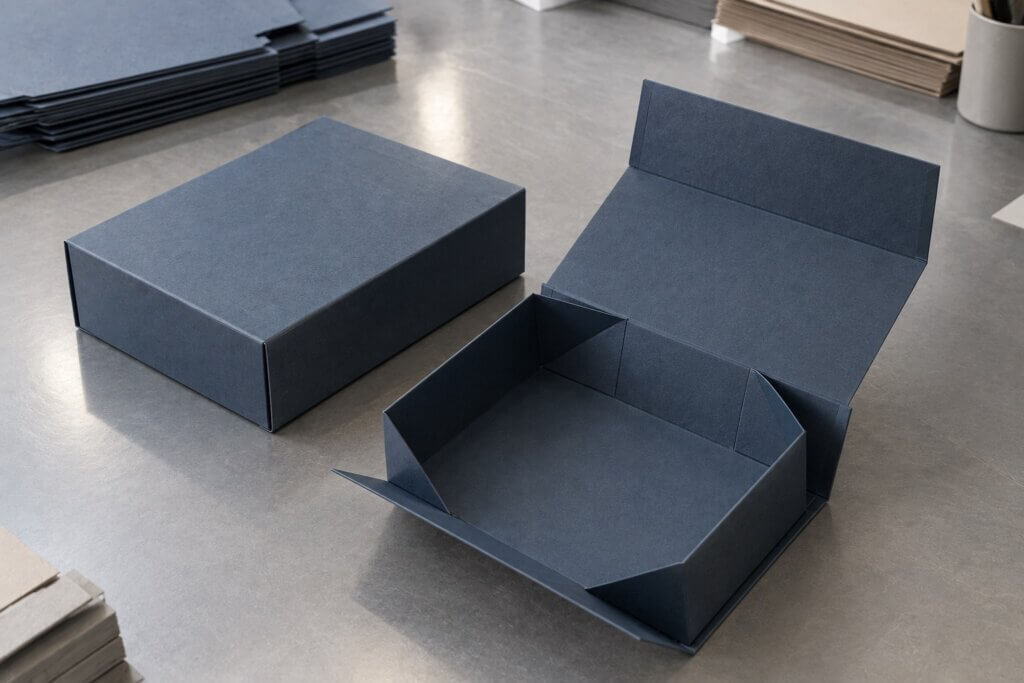
A rigid drawer box and a folding carton, for example, may both create an attractive branded presentation while behaving very differently in storage and transportation. One may arrive fully assembled and consume more shipping volume, while the other may ship flat but require more packing labor at the destination. Neither option is automatically better. The correct solution depends on where production happens, where the product is packed, how long packaging is stored, and how it reaches the customer.
For that reason, a manufacturer benefits from understanding what happens after the packaging leaves the factory. The visual reference defines only one moment in the product’s life; the supply chain defines everything that happens before that moment reaches the customer.
Not Every Industry Keyword Represents the Same Manufacturing Capability
Terms such as candy packaging manufacturers and pet food packaging manufacturers can refer to very broad categories of suppliers. Some companies specialize in primary food-contact materials, flexible pouches, barrier structures, or filling systems, while others focus on secondary paper cartons, gift boxes, retail presentation packaging, and promotional sets.
For a paper packaging manufacturer, that distinction should remain clear. A candy brand may package individual products in direct-contact wrappers and then use a paper gift box as the outer presentation package. A pet food brand may source its food-contact pouch from one specialist while using a separate paper carton or subscription-style outer package for retail or e-commerce presentation.
The industry name alone therefore does not determine whether a manufacturer is suitable. The relevant question is what part of the packaging system the supplier is expected to produce. Clear capability boundaries are more useful than trying to appear suitable for every packaging category.
A Good Brief Reduces Accidental Interpretation Without Removing Engineering Judgment
A complete packaging specification is usually the result of development rather than the starting point. The initial brief explains what the brand wants the customer to see and experience. Sampling exposes questions about fit, materials, structure, finishing, assembly, and tolerances. Production review then converts those decisions into specifications that can be repeated consistently.
This is why two manufacturers can begin with the same brief and still arrive at different results. They may use different machinery, material sources, structural methods, finishing processes, quality-control systems, assembly sequences, and approaches to production risk. Most of those differences are invisible in the original reference image.
For brands, the objective should not be to remove every decision from the manufacturer. It should be to make the important requirements clear enough that different proposals can be compared intelligently. For manufacturers, the responsibility is the opposite: not simply to reproduce what is visible in a brief, but to identify the hidden decisions required to make the package work in production.
That is where packaging development becomes more than printing and box making. The real value lies in turning a visual idea into a package that can be manufactured, packed, transported, opened, and repeated consistently across the entire order.