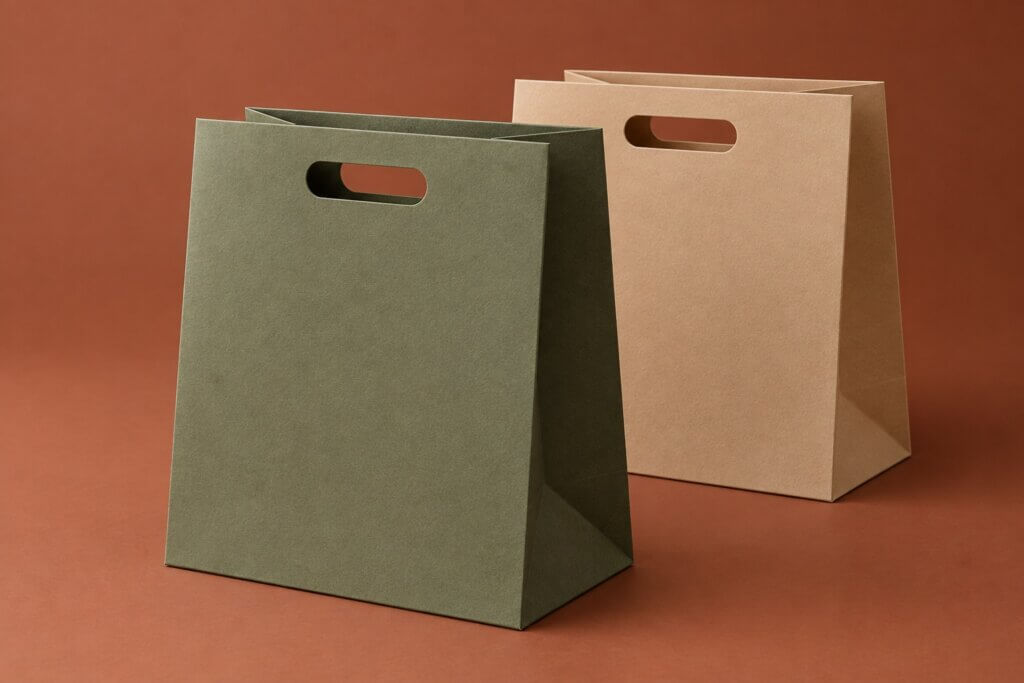

A packaging design can be fully approved and still not be ready for mass production.
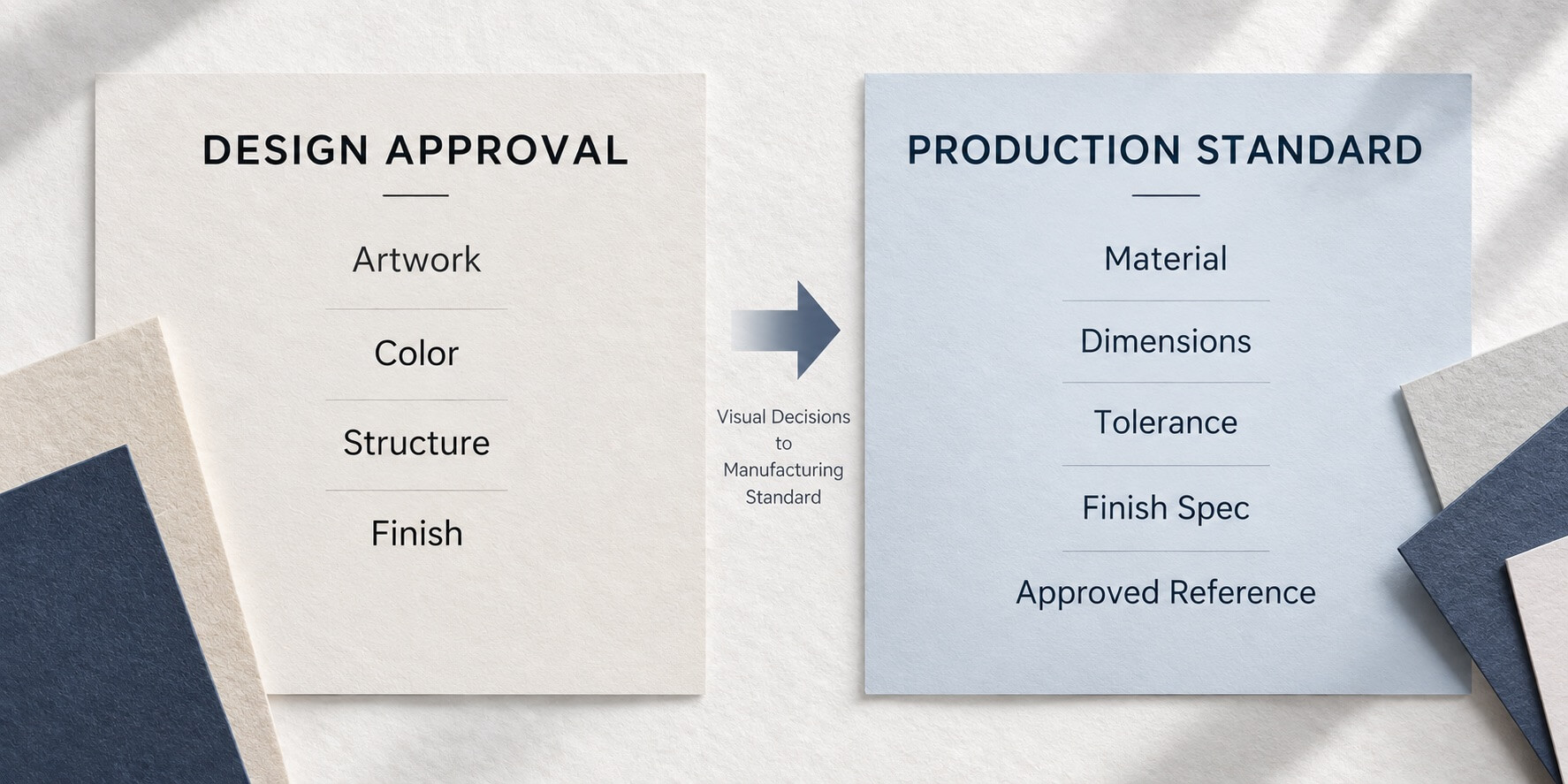
At the design stage, approval usually means that the main decisions are in place: the structure has been selected, the artwork looks correct, the brand colors are defined, and finishes such as foil stamping, embossing, or lamination have been discussed. From the brand’s perspective, it can feel as though the creative work is finished and manufacturing should begin immediately.
In practice, this is where another type of work starts. Before an approved concept can become thousands of consistent boxes, the design has to be translated into technical instructions that printing, die-cutting, finishing, gluing, wrapping, and assembly teams can actually follow. This connection between packaging design and manufacturing is especially important for custom structures, where a small change in paper thickness, artwork position, insert clearance, or finishing area can affect the finished package.
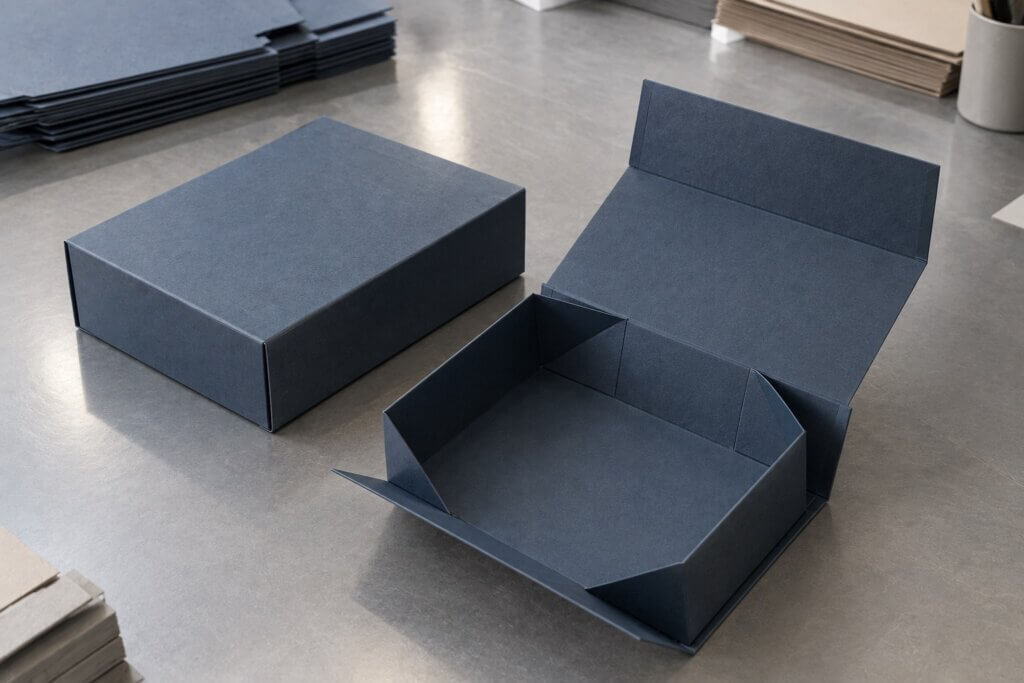
For brands developing folding cartons, the transition may involve checking panel dimensions, crease positions, glue areas, artwork alignment, and how the carton behaves when erected. Other packaging types introduce different considerations. The objective, however, is the same: turn an approved idea into a production standard that can be repeated reliably.
Design Approval and Production Approval Solve Different Problems
A useful way to understand this stage is to separate design intent from manufacturing definition. Design approval answers questions such as: Does the packaging communicate the brand correctly? Is the hierarchy of information right? Does the structure provide the intended presentation? Are the selected colors and finishes appropriate?
Production preparation has to become more specific.
A specification such as “blue paper with a gold foil logo” may be enough to communicate the intended appearance, but it is not enough to manufacture the package consistently. The paper grade and thickness need to be confirmed. The blue may come from a colored specialty paper or from printing. The foil needs a defined type and shade. Its position has to work with folds, edges, wrapping areas, or other finishes. If the package contains an insert, the relationship between the insert, the product, and the outer structure also has to be defined.
This is why design approval should be treated as a milestone rather than the end of packaging development. The next stage converts visual decisions into measurable manufacturing specifications.
The Approved Design Has to Become a Production File
One of the first steps is checking how the artwork relates to the actual packaging structure. A dieline is not simply a border placed around graphics. It defines where the material will be cut, creased, folded, glued, or otherwise converted, so artwork has to remain correctly positioned when a flat printed sheet becomes a three-dimensional package.
This is where packaging design prepress solutions become relevant. Prepress checks can include image resolution, fonts, bleed, safe areas, color separations, overprint settings, spot colors, and the alignment between artwork and the approved dieline. Special processes also need clearly defined production layers. A gold area visible in a rendering, for example, may need to become a separate foil-stamping instruction rather than part of the printed artwork.
This answers a common question: what is prepress in packaging? In practical terms, prepress is the technical bridge between an approved design and the files that production equipment can use. It does not redesign the package. Its purpose is to make sure the approved design has been correctly translated for the intended printing and converting process.
Materials and Finishes Need to Be Read as a System
Once the file is technically organized, the next question is whether the specified materials and processes work together in the physical package.
Paper is not a neutral surface. Coated paper, kraft paper, textured specialty paper, and wrapped rigid-box paper can respond differently to printing, foil stamping, embossing, lamination, and folding. Even when the artwork remains unchanged, the substrate can influence color appearance, foil definition, surface texture, crease behavior, and the way an embossed area forms.
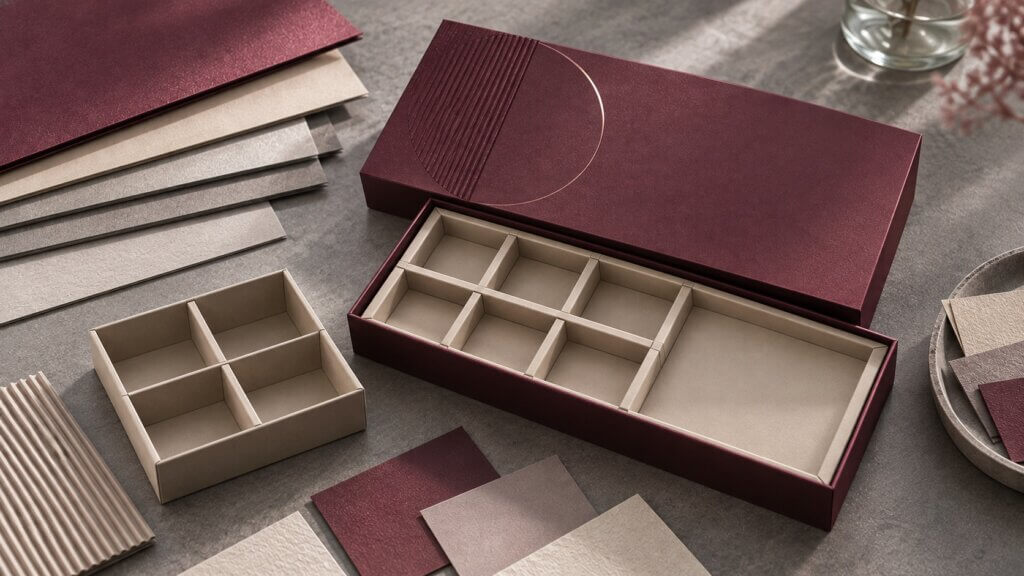
The important point before mass production is therefore not simply whether each individual specification is possible. It is whether the specifications work together. A heavily embossed packaging design, for example, has to consider the paper surface, artwork geometry, tooling, pressure, nearby folds, and the structural support behind the embossed area. Treating each finish as an isolated decoration can create problems that are not obvious in a digital rendering.
This material-and-process review should stay focused on the intended package rather than adding finishes simply because they are available.
A Correct Dieline Still Has to Work as a Physical Structure
Technical files can be dimensionally correct while the finished package still needs adjustment.
This is because digital files do not fully represent paper thickness, board compression, material spring-back, friction, adhesive buildup, product tolerances, or the way a person actually assembles and opens a package. These physical relationships become particularly important when two components need to fit together closely.
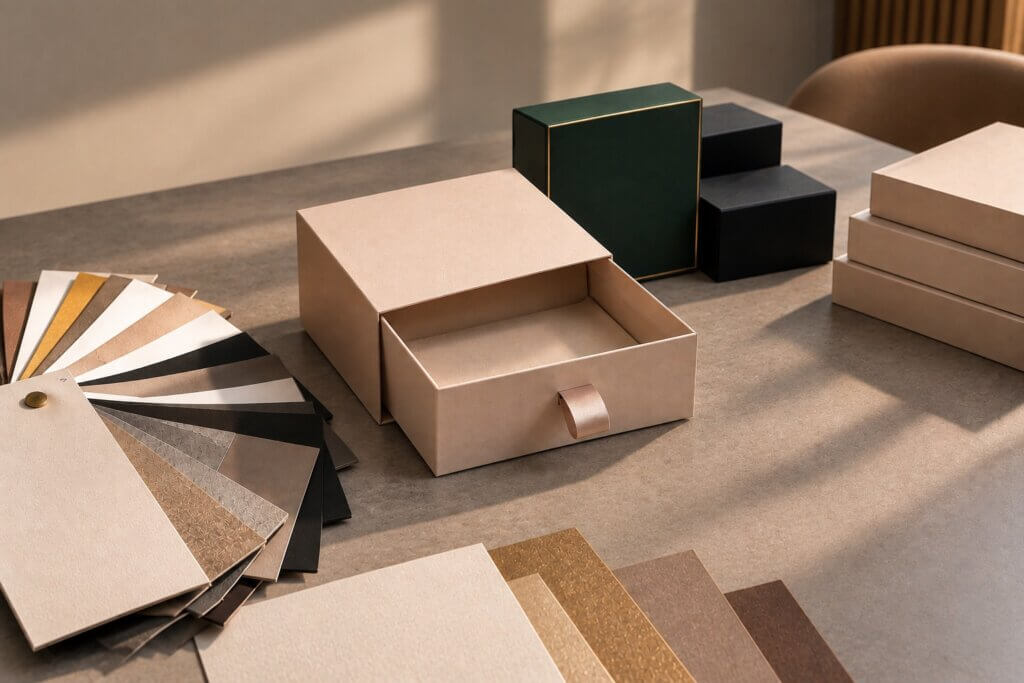
A drawer box, for example, needs enough clearance for the tray to move through the sleeve without feeling loose. A folding carton needs creases and locking features that form cleanly with the selected paperboard. An insert must hold the product securely while still allowing it to be removed without unnecessary force. A wrapped rigid box has to account for the combined thickness of board, wrapping paper, and turned edges.
This is also why the answer to “What is the difference between a dieline and prepress?” matters. The dieline defines the structural geometry; prepress prepares and verifies the artwork and production information against that geometry. Neither one, by itself, proves that every physical interaction will behave exactly as intended.
Sampling Turns Specifications Into Something You Can Evaluate
Once the structure, material direction, artwork, and finishes have been defined, a physical sample gives the team an opportunity to evaluate how those decisions work together.
The purpose of a sample is broader than checking whether the box “looks right.” Depending on the project, it can help evaluate product fit, opening resistance, insert retention, artwork placement, material feel, finishing position, assembly sequence, and the relationship between separate components.
This also answers another practical question brands often ask: Do you need a packaging proof or sample before mass production? For custom packaging, physical validation is particularly valuable when the project involves a new structure, close-fitting components, critical brand colors, specialty materials, inserts, or complex finishes. A digital approval can confirm content and layout, but it cannot reproduce every physical characteristic of the finished package.
At Demei Packaging, physical prototypes can be used to review structure, materials, artwork, and finishing before mass production. The exact sampling approach depends on the box type and project requirements.
Approval Should Create a Reference, Not Just an Email Saying “Looks Good”
The most useful outcome of the pre-production stage is a clear reference for what production is expected to reproduce.
That reference may combine an approved artwork version, confirmed material specifications, color references, finishing instructions, structural dimensions, an approved sample, and other project-specific requirements. Together, these create a more precise production target than a rendering or reference photograph alone.
Version control matters here as well. If artwork, dimensions, or finishing details continue changing after sampling, the production team needs to know which version represents the final approval. Otherwise, individually reasonable decisions can become inconsistent when different departments work from different revisions.
For the buyer, this stage is also a good point to confirm what has actually been approved. If a sample was produced primarily to verify structure, for example, it should not automatically be treated as an exact color standard unless color was part of that approval process.
Mass Production Is About Repeating the Approved Decisions
Only after the important specifications have been resolved does the project move from development into repeatable manufacturing.
The exact production sequence depends on the package. A folding carton may move through printing, surface treatment, die-cutting, stripping, folding, and gluing. A rigid box can involve additional board cutting, wrapping, mounting, assembly, and insert installation. Special finishes introduce their own tooling and registration requirements.
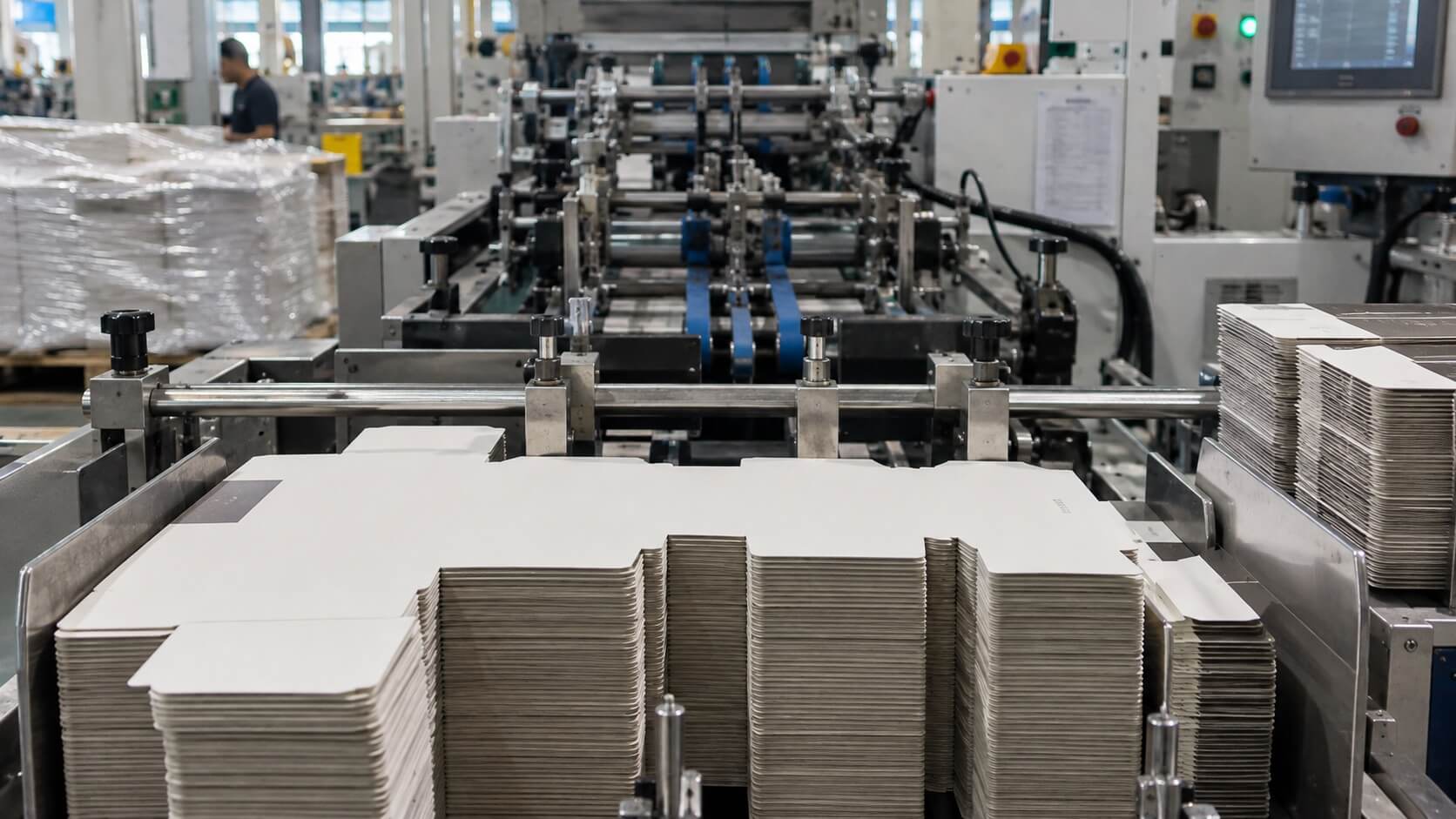
Quality control during production then asks a different question from design review: are the manufactured packages staying within the agreed standard?
That may involve checking dimensions, color, print registration, foil or embossing position, gluing, wrapping, fit, assembly, and finished appearance at relevant stages. The goal is not to recreate the design decision every time a box is made. It is to control the process closely enough that the approved decisions can be reproduced consistently across the order.
Good Packaging Development Creates Fewer Decisions on the Production Floor
The period between design approval and mass production can look like a delay if it is viewed only as preparation. In reality, its purpose is to remove uncertainty before that uncertainty becomes expensive.
A production operator should not have to decide where a logo belongs. An assembly team should not have to guess how tightly an insert should fit. A printer should not have to interpret an undefined brand color, and quality control should not have to decide what “close enough” means without an agreed reference.
That is the deeper purpose of the work between approval and manufacturing.
Design approval defines what the packaging is intended to become. Pre-production work defines how that result can be manufactured repeatedly.
When those two stages are connected properly, mass production becomes less about solving design problems and more about controlling an already defined process.