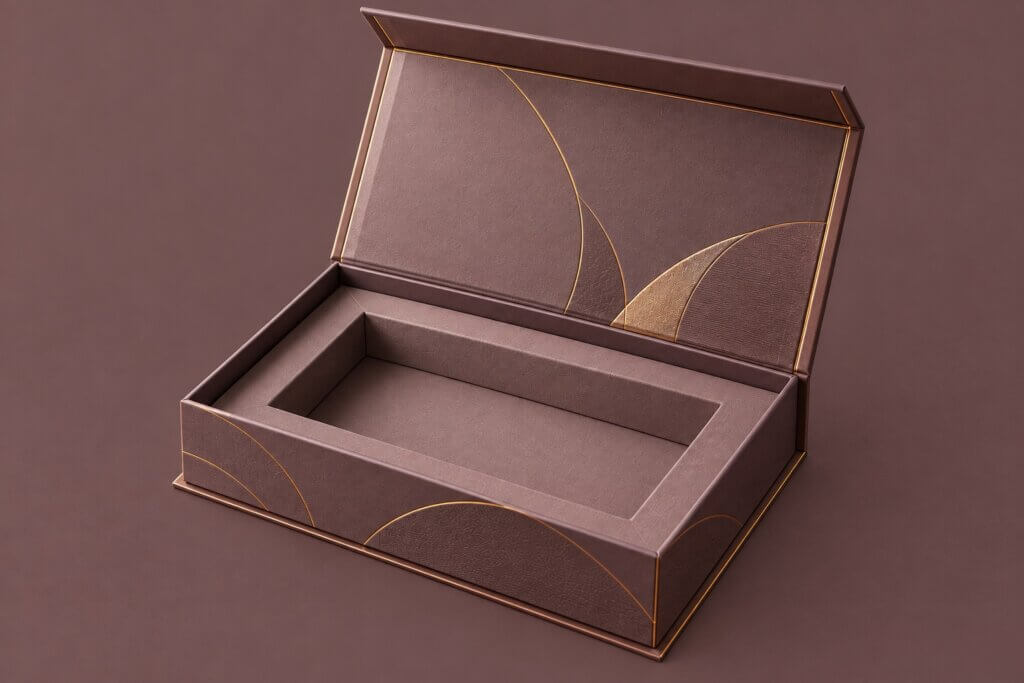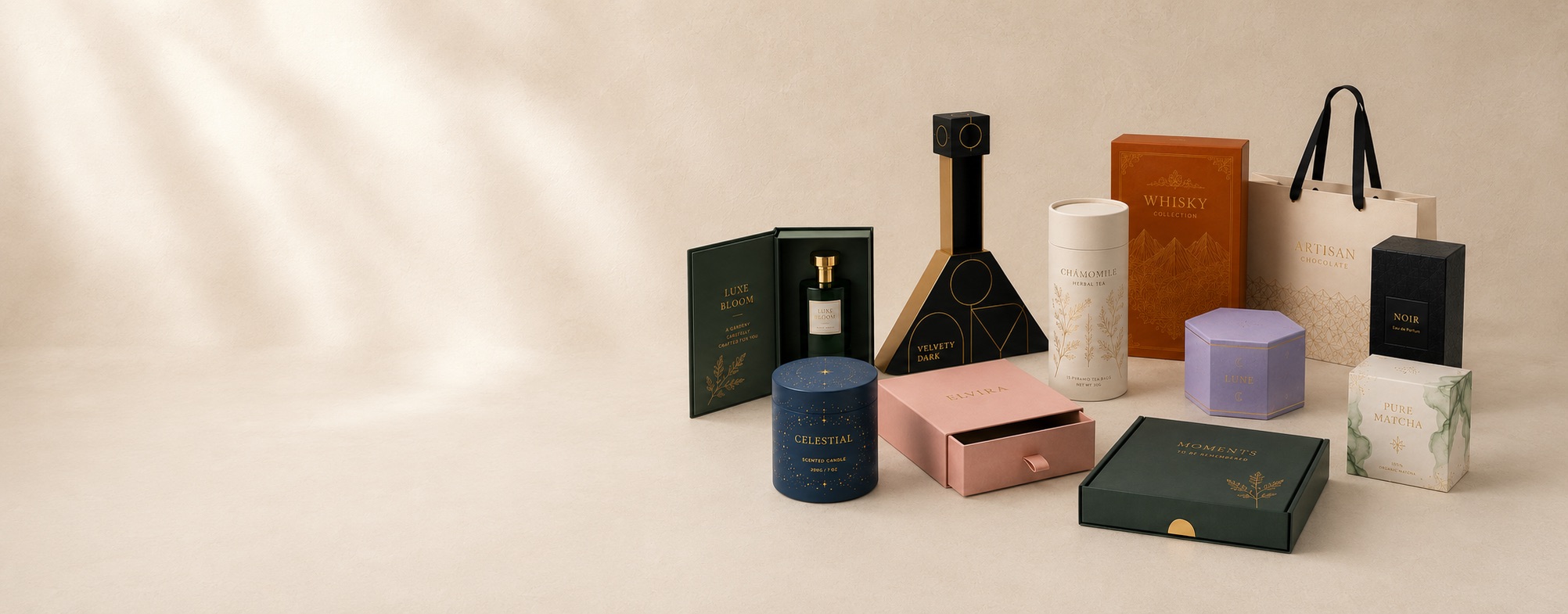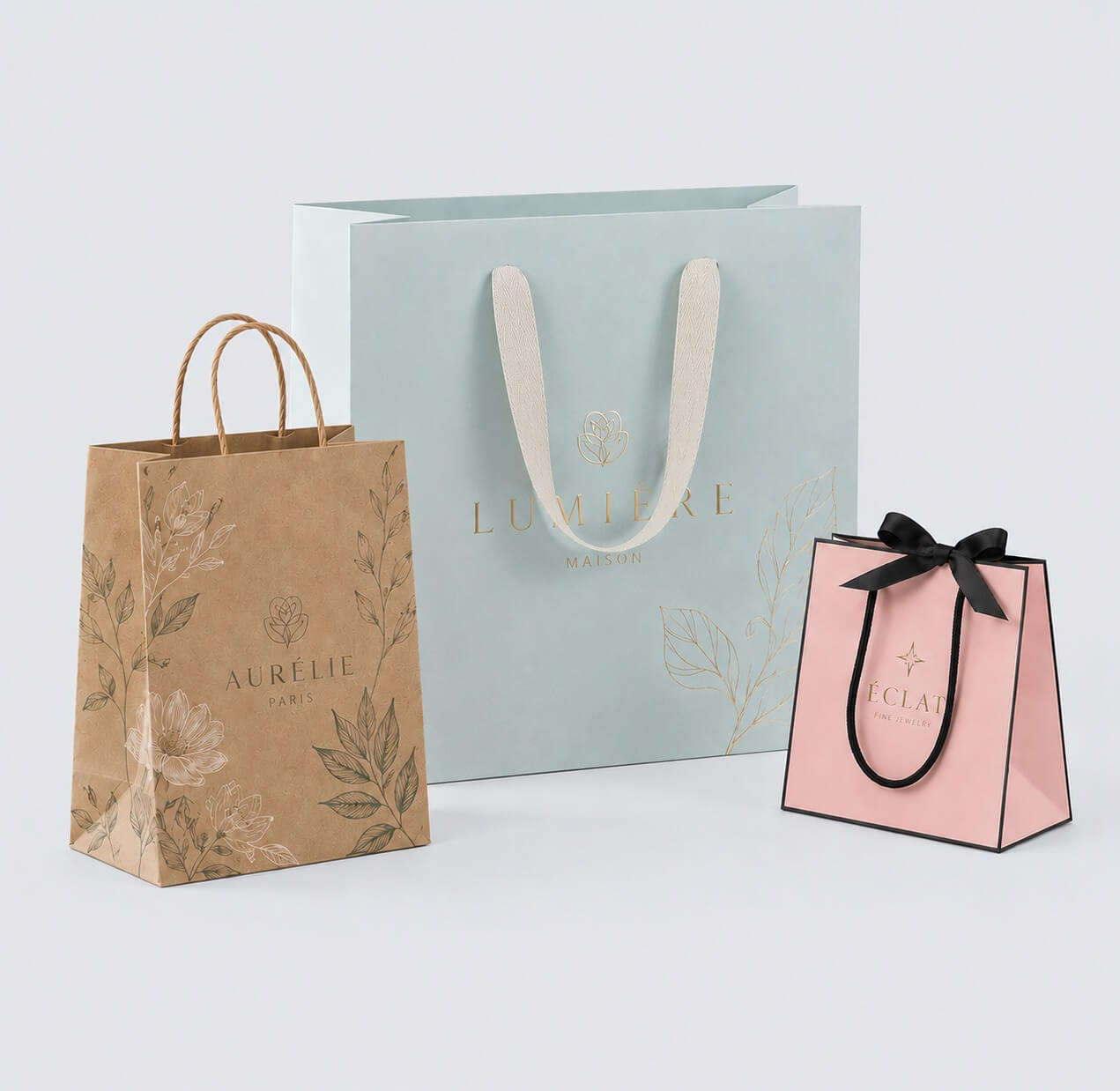

A custom box becomes more difficult to manufacture not simply because its outline looks unusual, but because changing the outline changes the relationships inside the structure. Panels meet at different angles, usable internal space changes, joints become more sensitive to dimensional variation, and materials have to behave predictably through cutting, folding, wrapping, gluing, and assembly. This is why shape boxes should be developed as structural systems rather than ordinary packaging with a different silhouette. The same principle can be seen in Foldable Rigid Box and Double Door Perfume Box structures: what customers see is the finished form, but what determines whether that form can be produced consistently is the engineering behind it.
As box shapes move from rectangles toward hexagons, triangles, hearts, seasonal silhouettes, and other non-standard forms, more structural relationships may need to remain controlled at the same time. The useful question is therefore not simply which shape looks more distinctive, but what changes mechanically when that shape has to move from a drawing to a physical sample and eventually into repeat production.
Shape Changes the Geometry Before It Changes the Appearance
Rectangular packaging has one major structural advantage: its geometry is predictable. Four main walls commonly meet at right angles, opposite dimensions are relatively easy to compare, and many established die-cutting, folding, wrapping, and gluing processes have been developed around those relationships. With hexagon boxes, six wall sections have to form one continuous perimeter, so the designer has to consider how one angle influences the next until the structure closes. A cardboard hexagon box made from folding paperboard also behaves differently from a wrapped rigid version because its crease construction, board thickness, joint design, and assembly method are different.
Triangle boxes introduce another condition. Although they may use fewer primary sides, sharper internal angles can reduce usable space and make the relationship between the product, insert, and outer walls less forgiving. A heart, tree, house, or other irregular silhouette can add curves, angled sections, or multiple board components to the same structural problem. A Christmas Tree Box, for example, should not be evaluated only by whether the outline successfully resembles a tree; the more important question is how that outline becomes board pieces, joints, usable internal space, and an assembly sequence that can be repeated.
This also gives a more useful answer to the search question “what is the shape of a box?” In packaging engineering, a box is not defined only by whether its exterior is square, rectangular, hexagonal, or another recognizable shape. Its functional geometry is created by the relationship between panels, angles, material thickness, joints, closures, and internal components.
More Angles Create More Opportunities for Tolerance to Accumulate
Once the geometry changes, dimensional tolerance becomes the next issue. Imagine several panels forming one continuous perimeter. A small deviation in cutting or creasing may appear insignificant at the first panel, but the position of the next panel depends on the previous one, and this relationship continues around the structure. By the time the final joint closes, several small variations may appear as one visible alignment problem. This does not mean every hexagon box is inherently unstable; it means structures containing several dependent angles can be more sensitive to accumulated variation than structures in which fewer dimensions interact.
Structural drawings describe nominal geometry, while production works with real materials and acceptable manufacturing tolerances. Cutting position, crease behavior, joint construction, wrapping and assembly can each influence where the finished edge finally sits. For this reason, increasing the number of sides does not create a simple mathematical increase in difficulty. What matters is how strongly one dimension or operation affects the next.
Are custom shaped boxes harder to manufacture than rectangular boxes? Often they require more structural control, but shape alone does not determine difficulty. The number of components, joining method, board construction, folding sequence, wrapping method, finishing, and acceptable tolerance may matter as much as the number of sides. A visually complex package can therefore be relatively straightforward to produce, while a simple-looking structure with very tight fitting requirements can be much more sensitive.
Outer Dimensions Stop Telling the Whole Story
After the external geometry is established, the next question is what actually fits inside it. With rectangular packaging, length, width, and depth provide a reasonably intuitive picture of internal capacity. With irregular box shapes, maximum outside dimensions can be misleading because the full width is not available across the entire interior. A shape that appears large when measured from its widest points may still contain narrow areas that contribute little useful product space.
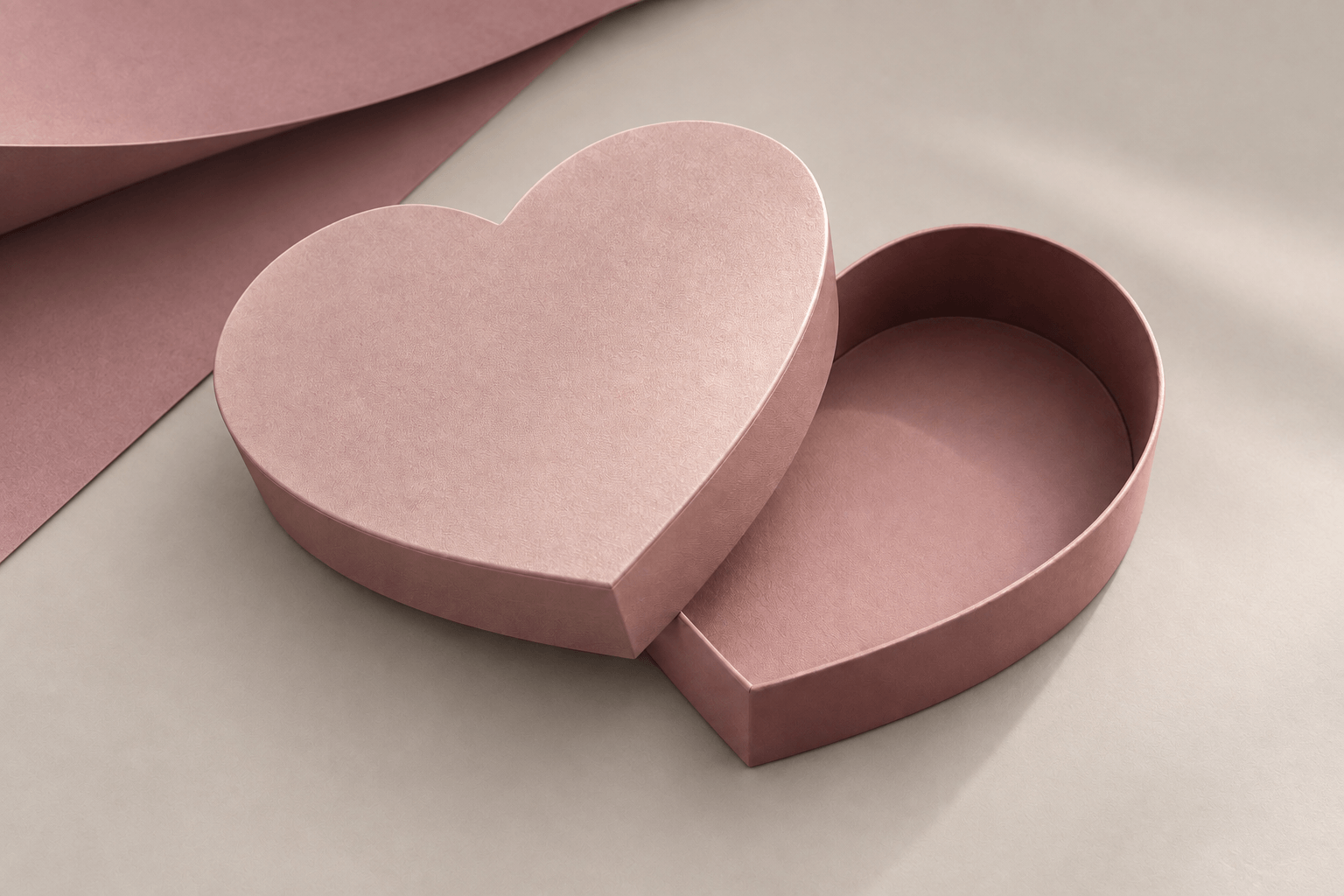
Consider chocolate in heart shape box packaging. The widest area may accommodate several chocolates comfortably, while the upper curves and lower point cannot use the same grid as a rectangular tray. A Wreath-Shaped Chocolate Box makes the relationship even clearer: once a central opening becomes part of the structure, usable space is defined by both an outer and an inner boundary. The product is no longer arranged inside a conventional cavity but around a ring-shaped area, so outside dimensions alone provide very little information about how many products can actually be packed.
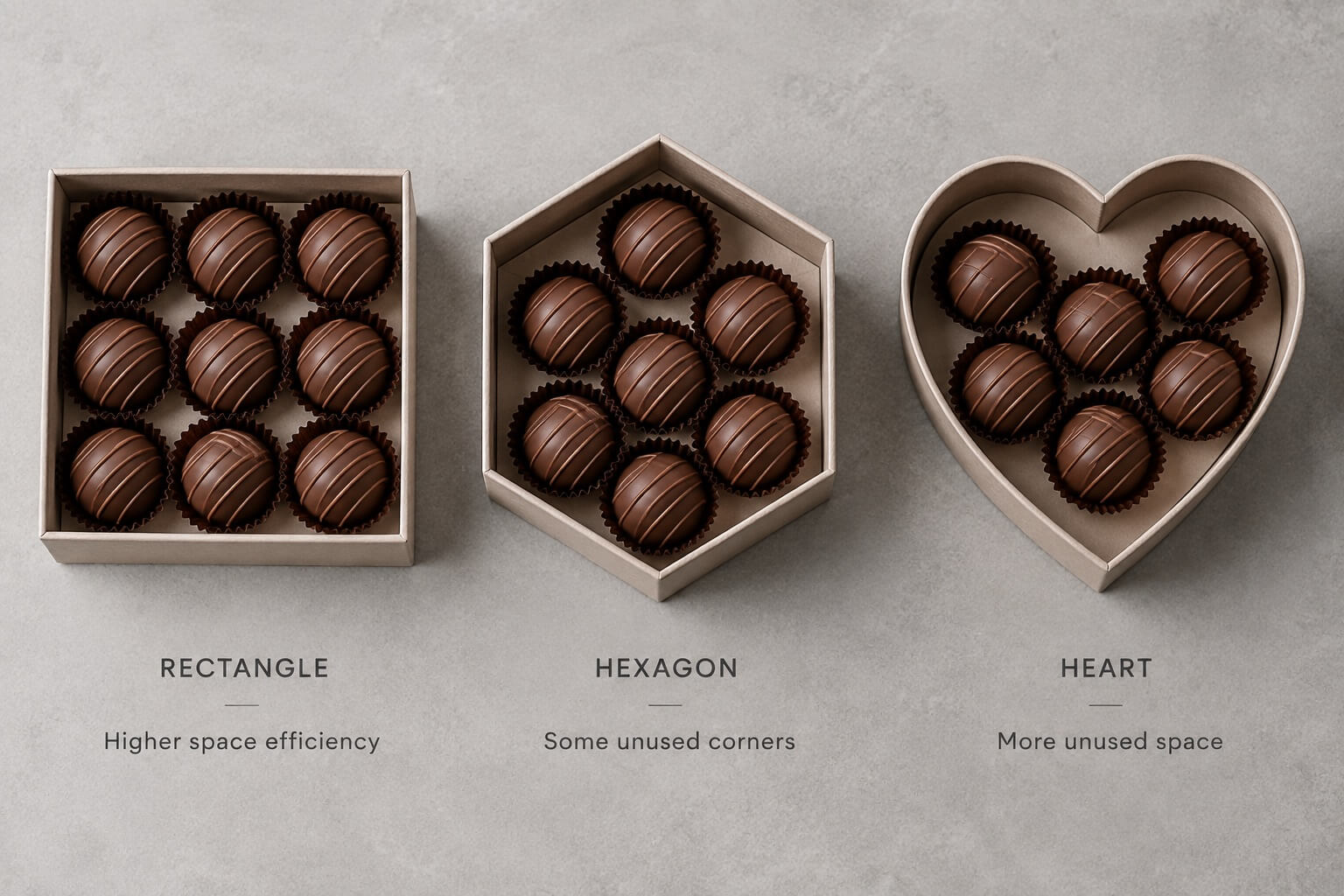
How should the dimensions of a custom shaped box be determined? A more reliable process starts with the product. Product dimensions, orientation, required clearance, insert thickness, wall construction, and removal space should be established before the exterior is finalized. The outer geometry can then be developed around those requirements. This avoids approving an attractive silhouette first and discovering later that the product requires an oversized box or an unnecessarily complicated insert.
The Insert Should Follow the Product Before It Follows the Box
Once usable internal space has been established, the insert can be developed properly. Its first job is not to reproduce the exterior silhouette but to control the product. A glass bottle may need lateral restraint and base support; confectionery may need separation, presentation, and easy removal; a multi-component gift set may require clear product positions while making sensible use of irregular spaces near angled or curved walls. These requirements should determine the insert geometry before visual symmetry becomes the priority.
A Custom Candy Box, for example, does not automatically need a complicated insert simply because the exterior is unusual. If a relatively simple paperboard tray or divider controls the products correctly, it may provide better material efficiency and easier packing than an insert designed to imitate every contour of the outer box. This distinction is important because excessive internal complexity can add components and assembly operations without improving protection or presentation.
Do custom shaped boxes always need custom inserts? No. The decision depends on product weight, fragility, movement, orientation, presentation, and shipping conditions. However, when an insert is necessary, it is generally better to develop it together with the outer structure rather than adding it after the box dimensions have already been fixed. The farther the exterior moves away from a conventional rectangle, the more important this product-first approach becomes.
Real Material Adds Thickness to Theoretical Geometry
At this point, a structure may work perfectly in a drawing, but a dieline contains lines with no physical thickness while paperboard and greyboard do. In folding cartons, board caliper and crease construction influence where a panel actually turns and how much resistance or spring-back remains after folding. In rigid structures, greyboard thickness, wrapping paper, turned edges, adhesives, and board-to-board joints introduce additional dimensions. The geometry that looked exact on screen therefore changes slightly as soon as real materials are introduced.
These effects become more important around acute angles and closely fitted components. Increasing board thickness can reduce internal clearance; changing wrapping paper can affect how material behaves around a tight corner; adding layers around an edge can influence how adjacent components meet. For some hexagon boxes, a material change that looks minor on a specification sheet can affect the final joint, insert fit, lid-to-base relationship, or visual alignment between panels.
Can the board thickness be changed after the structure has been approved? Sometimes, but it should not automatically be treated as a direct material substitution. If the structure depends on close dimensional relationships, the fit should be reviewed and, where necessary, sampled again with the new material. At this point, theoretical geometry has to become physical packaging.
A Physical Prototype Tests What a Dieline Cannot
A structural drawing can verify dimensions and a 3D rendering can communicate appearance, but neither completely reproduces how real board behaves in a finished package. A physical sample reveals whether the material folds naturally, whether wrapped edges meet cleanly, whether the product can be inserted and removed comfortably, whether the closure behaves as intended, and whether the assembly sequence is practical. It can also reveal interactions that are difficult to judge separately: an adjustment that improves exterior alignment may reduce internal clearance, while increasing clearance may change how securely the product is presented.
Can a custom shaped box be developed from a reference image? A reference image can be enough to begin structural development, but it is usually not enough to approve production. Product dimensions, intended materials, opening direction, insert requirements, artwork position, packing method, and finished size still have to be converted into measurable specifications. For more unusual structures, the reference image is best treated as a description of the desired idea rather than a complete manufacturing specification.
This is why the purpose of a prototype is not simply to prove that one attractive box can be made. It should help determine whether the structure, materials, product fit, and assembly method can work together repeatedly. Once those relationships are understood, the project can move from “possible to make” toward “suitable to manufacture.”
Shape Is Only One Source of Structural Complexity
Up to this point, the discussion has focused mainly on geometry, but unusual appearance and engineering complexity are not the same thing. Some collapsible rigid boxes look completely rectangular after assembly, yet folding zones, hinged panels, locking corners, magnets, or adhesive sections introduce relationships that do not exist in a conventional fixed rigid box. Collapsible cardboard boxes follow the same general principle: a collapsible cardboard box has to permit intentional movement during setup while becoming sufficiently stable after assembly. The difficulty comes from controlled movement rather than an unusual finished silhouette.
A similar distinction applies to boxes with window. Creating a window removes material from a structural panel, so opening size, position, distance from creases, and film attachment area can affect how the remaining panel behaves. With boxes with windows that also use non-standard geometry, the window may compete for space with angled folds or narrow structural sections. A sliding drawer box provides the opposite example: its exterior can remain completely conventional, while the clearance between tray and sleeve becomes the sensitive relationship. Too little clearance increases friction; too much can make the package feel loose.
These examples explain why packaging complexity should not be judged by silhouette alone. Shape is one variable; controlled movement, material removal, dimensional fit, component count, and assembly are others. That distinction becomes particularly important when a structure leaves the sample room and enters production.
The Real Test Begins When One Prototype Becomes Thousands
A sample maker can make small adjustments while assembling one prototype. Mass production cannot depend on manually correcting every individual box. At this stage, all of the earlier issues—geometry, tolerance, internal space, board thickness, joints, inserts, and assembly—begin to interact. Die-cut position, crease depth, wrapping alignment, adhesive placement, joint location, insert dimensions, and assembly sequence can each influence the final result. Small variations that are barely visible on individual components may become more obvious where several angled panels finally meet.
Are shaped boxes suitable for mass production? Yes, provided the structure has been developed for repeatability rather than only for prototype appearance. A well-engineered hexagonal package can be easier to control than an overcomplicated rectangular box. The sample stage should therefore verify product fit, opening and closing, removal clearance, panel alignment, structural stability, insert position, assembly sequence, and areas where different operators could interpret the assembly differently.
A successful prototype proves that the structure can be made; production engineering has to establish whether the same result can be reproduced consistently across the order. That difference is one of the most important steps between structural design and manufacturing.
Cost Comes From Operations, Not From the Word “Shaped”
Once a structure has been proven manufacturable, its cost becomes easier to understand. An unusual shape may affect material utilization, tooling, die-cutting, wrapping, gluing, assembly, inserts, packing efficiency, and quality control, but shape itself is not a fixed cost multiplier. A relatively simple triangle box produced from one efficiently nested paperboard blank may require fewer operations than a rectangular rigid gift box assembled from several wrapped components. Conversely, an irregular rigid structure requiring multiple greyboard pieces, manual positioning, complex wrapping, and a fitted insert may require considerably more work.
Are custom shaped boxes always more expensive? No. A more useful comparison is how many operations a design requires, how sensitive those operations are to tolerance, and how efficiently the structure uses material and labor. Two boxes with equally unusual silhouettes can have very different manufacturing costs if one uses a single efficient blank while the other requires several components and manual assembly.
Do custom shaped boxes require a higher MOQ? Not automatically. MOQ depends on the structure, materials, finishing requirements, production method, and economics of setting up the project. At Demei Packaging, most custom packaging projects start from 500 pieces, but the final MOQ depends on the box type, structure, materials, and finishing requirements. Cost optimization therefore makes more sense after the structure has been understood; sometimes removing one unnecessary component has a greater effect than simplifying the entire outer shape.
A Distinctive Shape Should Earn Its Complexity
The final question is not whether a brand can create an unusual box, but whether the shape contributes enough value to justify the structural relationships it introduces. A heart-shaped package can reinforce a Valentine’s Day or confectionery concept; a hexagonal structure can create a strong centered presentation for cosmetics, candles, or gift products; and a seasonal silhouette such as a Christmas Tree Box can make the package itself part of the gifting experience. In these cases, shape contributes directly to how the product is presented rather than acting only as decoration.
If the same brand effect can be achieved through artwork, opening sequence, an insert, or a simpler structural detail, however, a complicated silhouette may add manufacturing and logistics constraints without creating equivalent value for the customer. This is why custom shape boxes are better developed from the inside out: product requirements establish usable space; usable space influences the insert; the product and insert influence the exterior geometry; material turns that geometry into a physical structure; sampling verifies the relationships; and production determines whether they can remain consistent at scale.
The goal is not simply to make a box unusual. It is to make an unusual structure manufacturable.