
A paper bag does not become load-bearing only at the handle. The moment a customer lifts it, the packed product, bottom panel, gussets, side walls, top construction, handle attachment and handle begin working as one connected structure. A bag can therefore use a strong-looking cord and still perform poorly if the force reaches a weak attachment area or if the product creates concentrated pressure at the bottom.
This is the more useful way to develop custom paper bags with handles. Instead of choosing a handle first and then building the bag around it, the process should begin with the packed product and follow the load through the structure. The same principle applies whether the bag carries lightweight custom folding cartons or a more substantial custom drawer box. What matters is not only how much the contents weigh, but where that weight is concentrated and how the finished bag behaves when it is actually lifted.
That changes the first question from “Which handle looks best?” to a more useful one: where does the load go?
Start With the Packed Load, Not the Handle
Two bags with identical dimensions can require very different structures. A bag holding folded apparel may carry a relatively light, distributed load. The same bag size used for three glass skincare bottles can experience a heavier and more concentrated load, particularly where the product contacts the bottom panel.
This is why how much weight can a paper bag with handles hold? cannot be answered responsibly with one universal kilogram figure. Load capacity depends on the complete construction: paper properties, bag dimensions, bottom formation, handle geometry, attachment method, reinforcement, adhesive performance and the way the product sits inside. Even the way the customer carries the bag can change the load distribution.
The same issue appears with custom small paper bags. Small does not necessarily mean light. Jewelry may place very little demand on the structure, while fragrance bottles, candles or compact glass jars can create much greater loads within a similar footprint.
Once the real packed condition is understood, the next step is to trace the force rather than immediately increasing paper thickness or handle diameter.
Follow the Load Until You Find the Weakest Transition
When a customer lifts a shopping bag, the force enters through the handle and its attachment points while the contents continue loading the base downward. Between those areas are several structural transitions: handle to attachment, attachment to upper panel, upper panel to side wall, side wall to gusset and bottom, and finally bottom to product.
A problem at any one of these transitions can determine the usable performance of the entire bag.
That explains why can a paper bag tear even when the handle itself remains intact? The cord may be perfectly strong while the paper around a punched hole begins to elongate or tear. With another construction, the handle attachment may remain stable while the bottom opens, the side seam separates or a rigid product corner locally deforms the base. Industry references likewise distinguish handle-zone, bottom and seam failures rather than treating every broken bag as a handle-material problem.
For development, this distinction matters. A heavier cord does not repair a weak bottom. A thicker paper does not automatically correct a poorly positioned handle attachment. A stronger adhesive does not solve an unsuitable load path.
The first visible failure should therefore be treated as information about the structure, not simply as evidence that the whole bag needs to become heavier.
Handle Attachment Matters as Much as Handle Material
Once the likely load path is understood, the upper part of the bag can be engineered around the way the handle transfers force.
For punched rope or ribbon handles, the geometry around the hole matters because the load is introduced into a relatively small area. The remaining paper between the opening and nearby edges, the shape and quality of the cut, the folded top construction and any internal reinforcement all influence how that local force spreads into the panel. Reinforcement works by involving a larger area of material in carrying the load rather than asking a narrow ring of paper around the hole to do all the work.
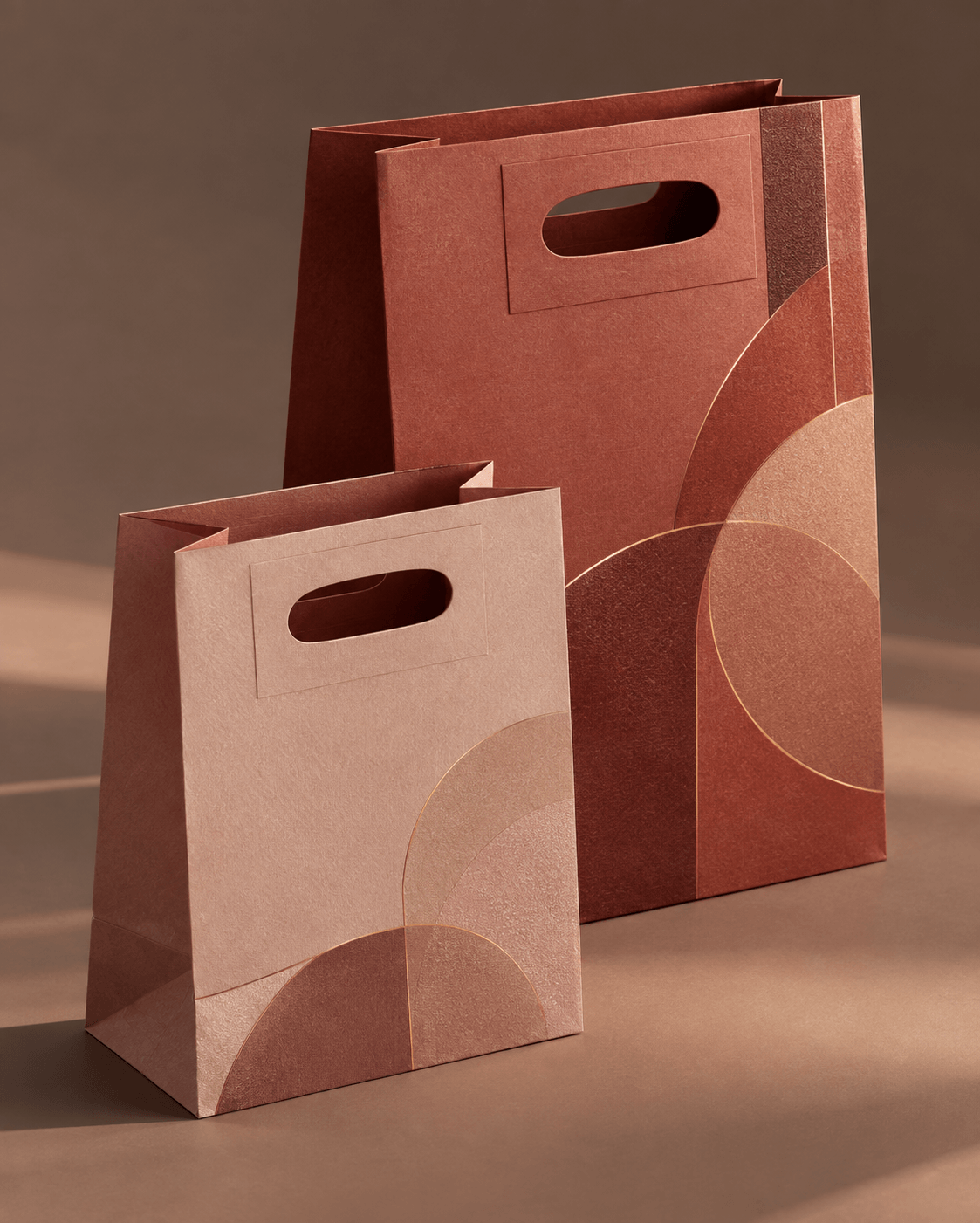
Do paper bag handles need reinforcement? Not every construction requires the same reinforcement, but it should be evaluated whenever the handle creates concentrated stress or the intended load is significant. The correct question is not simply whether a reinforcing card exists. Its position relative to the attachment, its bond to the surrounding structure and the area over which it can distribute force all matter.
This is also why a turn-top should not be viewed only as a cleaner visual finish. In some constructions, the folded upper area becomes part of the structural zone around the handle.
Only after these relationships are established does it make sense to compare handle types.
Handle Type Changes the Way Force Enters the Bag
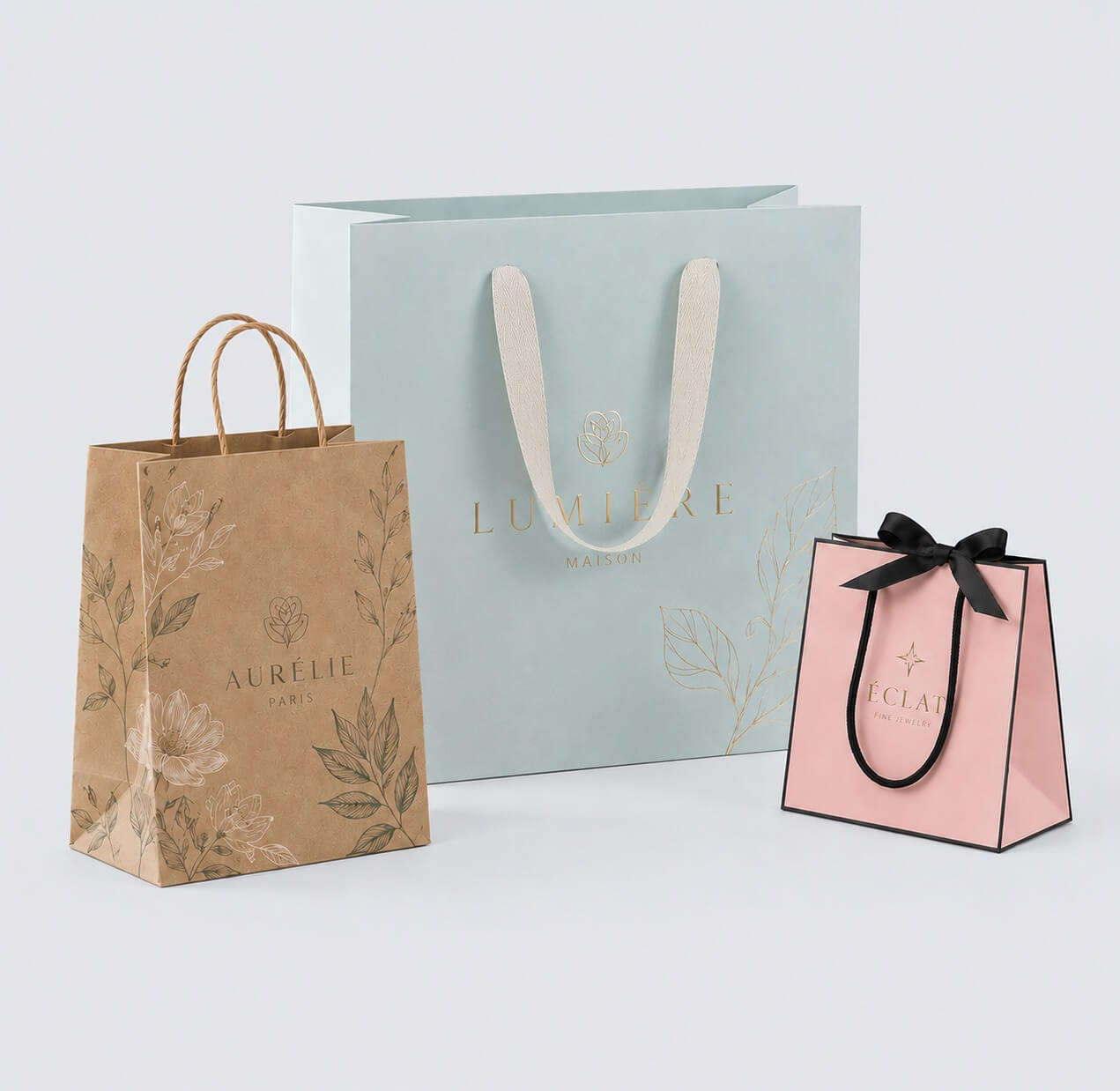
Cotton rope, ribbon, twisted paper, flat paper and die-cut handles differ in more than appearance. Their width, flexibility and attachment geometry change how the user grips the bag and how the lifting force reaches the paper.
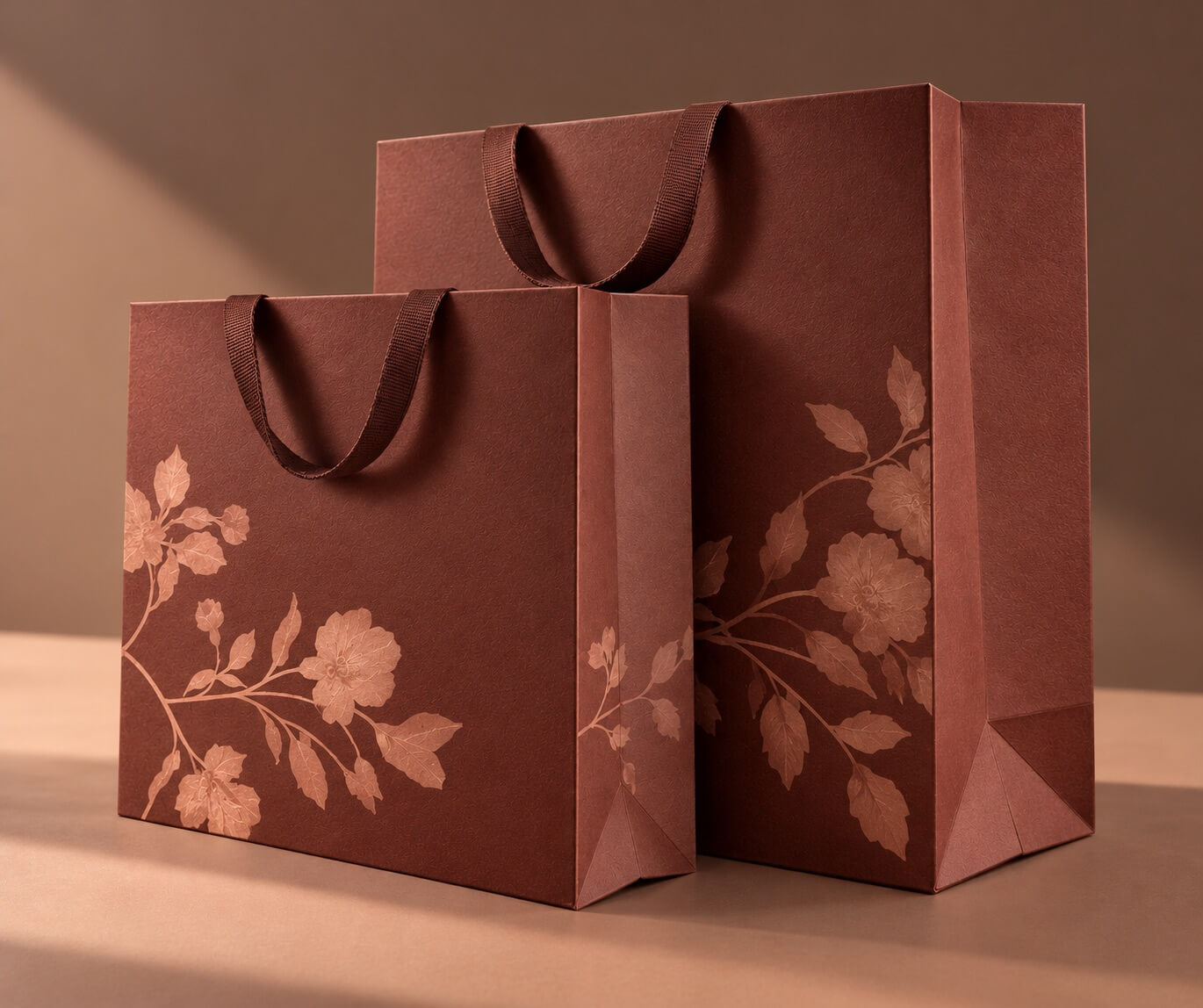
A rope passing through two reinforced holes produces a different local condition from a flat paper handle bonded over a wider area. A die-cut handle changes the problem again because the bag wall itself becomes the handhold. There is no separate cord between the customer’s hand and the paper structure.
So, which type of paper bag handle is best for heavier products? There is no useful answer based on handle material alone. A strong cord with insufficient support around its attachment can still produce premature tearing, while a less visually substantial handle may perform well when the attachment and surrounding structure are designed for the intended load.
For premium custom paper bags, the choice also affects presentation. Demei’s current paper-bag options include twisted paper, cotton tape, cotton rope, flat paper, ribbon, braided and die-cut handle configurations, alongside multiple paper and finishing choices.
But the structural decision still cannot stop at the handle. The force ultimately enters paper.
Paper GSM Is Only One Part of Structural Performance
This is where white kraft paper bags, customized kraft paper bags, custom printed brown paper bags and a textured paper bag begin to behave differently—not simply because one looks more premium than another, but because the paper becomes part of the load-bearing structure.
Does higher GSM always make a paper shopping bag stronger? No single GSM value describes all the properties that matter. Basis weight affects the amount of material per unit area, but stiffness, tear behavior, tensile properties, fiber composition, grain direction, moisture condition, coating and converting can also influence what happens when the sheet is folded, punched, glued and loaded.
This distinction is especially important around folds and cut edges. Paper is direction-dependent, and manufacturing operations change the local geometry. A flat sheet that feels substantial in the hand may behave differently after it has been creased into a gusset, folded at the top or punched for a handle.
For custom white paper bags, surface cleanliness and print reproduction may be important. Personalized kraft paper bags may place more emphasis on the natural paper character, while specialty papers can add tactile value. None of those visual categories, however, provides a load rating by itself.
Material therefore follows the load requirement rather than replacing it.
Branding Has to Work Around the Structural Zones
Once the structure and paper are defined, branding can be positioned more intelligently.
For custom paper shopping bags with logo, the front panel is not a completely unrestricted graphic surface. Handle holes, top folds, side creases and glue areas already divide the sheet into regions that behave differently during converting and use. Large graphics, foil areas or embossed details should therefore be positioned with the finished three-dimensional bag in mind.
Does lamination automatically make a paper bag stronger? It can alter surface durability, moisture response and the behavior of the laminated sheet, but it should not be used as a substitute for a properly designed load path. A laminate changes the material system; it does not eliminate a weak attachment, an inadequate bottom or an unsuitable handle geometry.
The same reasoning applies to a black paper bag or other dark, heavily printed construction. The visual result has to survive creasing, folding, handling and repeated contact around the bag’s functional areas. A finish that looks excellent on a flat proof but performs poorly at the top fold is not fully resolved packaging.
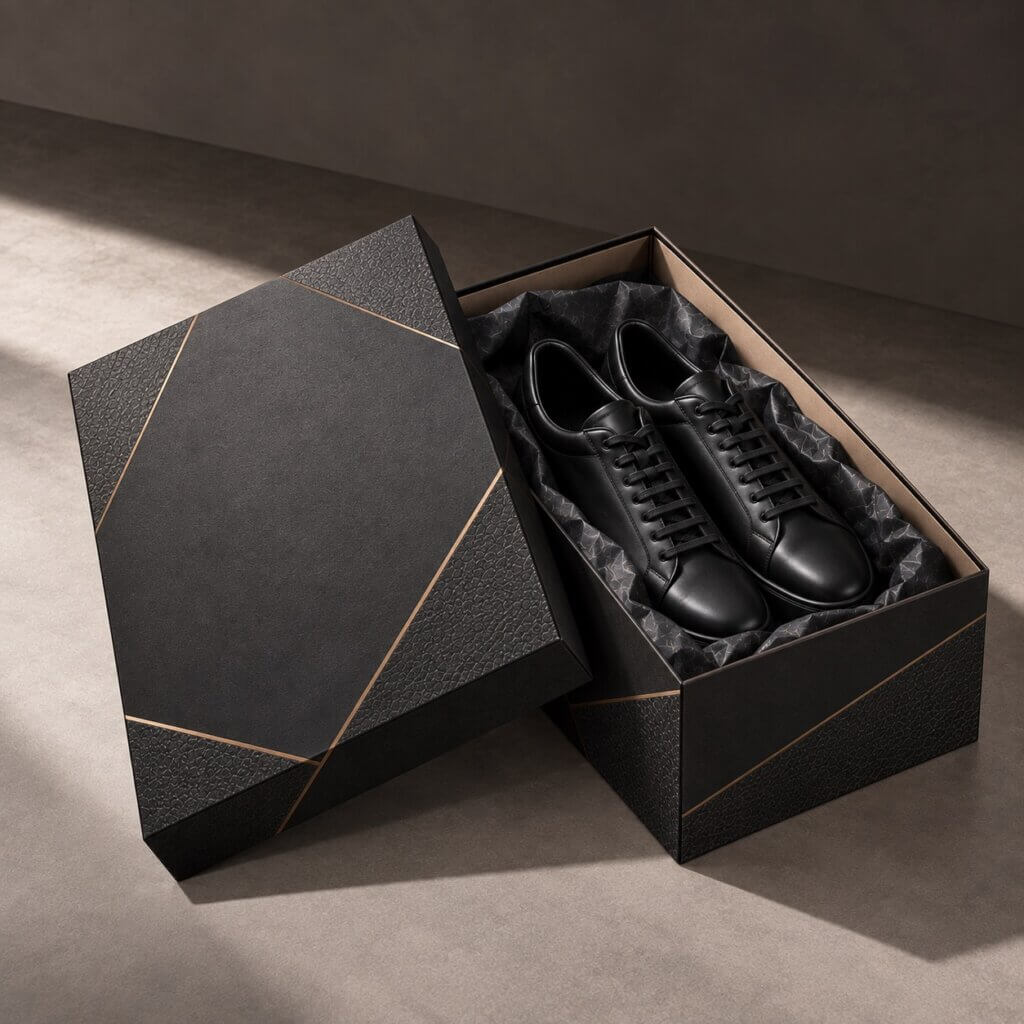
This becomes even more important when the bag carries rigid secondary packaging such as custom shape boxes. A defined box corner can introduce a concentrated load at the base in a way that soft apparel does not.
Application Changes the Load Profile, Not the Engineering Principle
Different markets change what the bag needs to tolerate.
Are paper bags with handles suitable for restaurants, bakeries and grocery use? They can be, but the requirements should be defined from the packed condition. Paper bags for restaurants, restaurant paper bags, bakery paper bags and custom paper grocery bags may prioritize efficient loading, stable bases and convenient carrying. A boutique bag may place more emphasis on handle feel, specialty paper and coordination with the retail box inside.
The engineering principle remains the same: understand the load before specifying the structure.
Food applications also require an important distinction. A carrier bag holding individually packaged bakery products is not necessarily the same thing as packaging intended for direct food contact. The material and compliance requirements should therefore follow the actual contact condition rather than the product category name alone.
By this stage, the design may look complete. It still has not been validated.
Test the Loaded Bag, Not Just the Empty Sample
An empty paper bag is useful for approving color, dimensions, artwork and general workmanship. It provides limited evidence about carrying performance.
How should a paper bag with handles be tested before mass production? The sample should be evaluated with the intended product—or a representative load that reproduces its weight and distribution. The bag should then be lifted and handled in a way that reflects actual use while the attachment zones, upper edge, side structure and bottom are observed.
The important question is not merely “Did it break?”
Look for the beginning of structural change: enlargement around a handle opening, localized wrinkling, unequal loading between left and right attachments, deformation of the top edge, bottom bowing, movement of reinforcement or pressure from a rigid product corner. These observations can identify a developing weakness before complete failure occurs.
Why is repeated handling more useful than simply hanging a weight once? Because carrying is not always a perfectly static condition. The bag is lifted from a counter, accelerated, set down, picked up again and sometimes carried with an unevenly positioned product. A development test should therefore reflect the actual performance target instead of relying on appearance alone.
Testing closes the design loop—but production introduces one final requirement.
The Design Needs a Production Window, Not One Perfect Sample
A carefully made prototype represents one combination of dimensions and assembly conditions. Production has normal variation.
Handle positions can shift slightly. Left and right handle lengths can vary. Reinforcement placement, top folds, glue coverage, gusset formation and finished bag dimensions all have manufacturing tolerances. The packed products themselves may also vary.
Why can a production bag behave differently from the approved sample? Because small variations can interact. If a handle hole moves while the reinforcement shifts in the opposite direction, the effective supported area can become smaller. If one handle is slightly different from the other, the bag may hang unevenly and concentrate more load on one side.
A robust specification therefore should not depend on every component landing at one perfect nominal position.
That is the final connection back to the article’s starting point. The purpose of custom paper bags with handles is not simply to combine an attractive bag with a strong handle. The goal is to create a load path that remains controlled from the packed product to the customer’s hand—and remains reliable when the design moves from one sample into repeatable production.
At Demei Packaging, most custom packaging projects start from 500 pieces. For paper bag development, finished dimensions, product dimensions, realistic packed weight, product arrangement, preferred handle style, paper and finishing requirements, artwork and expected use conditions provide a much stronger starting point than selecting the bag by appearance alone.