
Two products can be similar in size and still need very different packaging. A small glass bottle, a deck of collectible cards, a cosmetic tube, and a piece of jewelry may all fit inside a box of roughly the same dimensions, but they create different demands on the package once weight, movement, surface sensitivity, opening behavior, storage, and transportation are considered.
This is why effective paper packaging solutions should not begin with the question, “Which box looks right?” They should begin with what the product needs the package to control. At Demei Packaging, structures such as folding cartons and other custom packaging types can solve very different problems depending on how the structure, material, dimensions, and internal support are combined.
A packaging style is only the visible part of that system. What determines whether it works is the relationship between the product and everything around it.
The Same Outside Dimensions Do Not Mean the Same Packaging Requirement
Packaging development often begins with product dimensions, but dimensions alone describe only how much space an item occupies. They do not explain how the product behaves inside that space.
A lightweight skincare tube may tolerate a small amount of movement without damage. A glass serum bottle of the same size may require controlled clearance around the body, support beneath the base, and an insert that prevents side movement. A polished metal accessory may not be fragile in the conventional sense, yet contact with the box or another component could leave visible scratches. In each case, the outer box could remain almost identical while the internal packaging needs to change considerably.
This answers a common packaging question: does paper packaging protect fragile products? It can, but protection does not come simply from choosing thicker paper packaging materials. The important question is what type of movement, pressure, impact, abrasion, or deformation needs to be controlled.
For that reason, searching for the best protective paper packaging as if there were one universally superior structure can be misleading. Protection is always relative to the product, packing process, distribution route, and expected handling.
Product Movement Is Often the First Sign That a Structure Is Wrong
One of the most useful things to evaluate during sampling is not how the package looks when it is sitting still, but what happens when the product tries to move.
Too much internal clearance allows an item to accelerate before hitting a wall or insert. Too little clearance can create a different problem: packing becomes difficult, coated surfaces may rub during insertion, and normal production tolerances can turn a good sample into an overly tight mass-production fit.
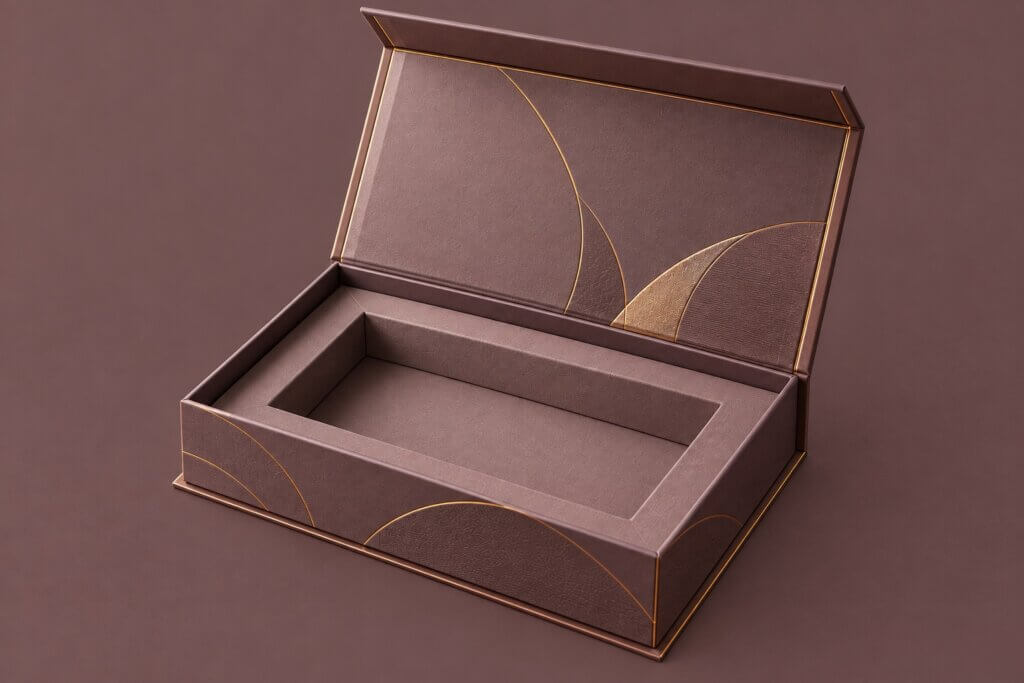
This is particularly important with inserts. A paperboard divider may be enough to organize several lightweight products, while a heavier bottle may need folded locking features or support at multiple contact points. An insert should not simply fill empty space. It should control the directions in which the product can move while still allowing practical packing and removal.
The same principle explains why packaging cannot always be scaled directly from one product size to another. Increasing the dimensions changes panel spans, leverage, compression behavior, and sometimes the way the board flexes. A structure that works well at 80 mm wide may not behave the same way at 180 mm wide even if the proportions look identical.
Shape Changes How Paperboard Carries Load
Flat, rectangular products usually interact with packaging differently from cylindrical, irregular, or highly concentrated loads.
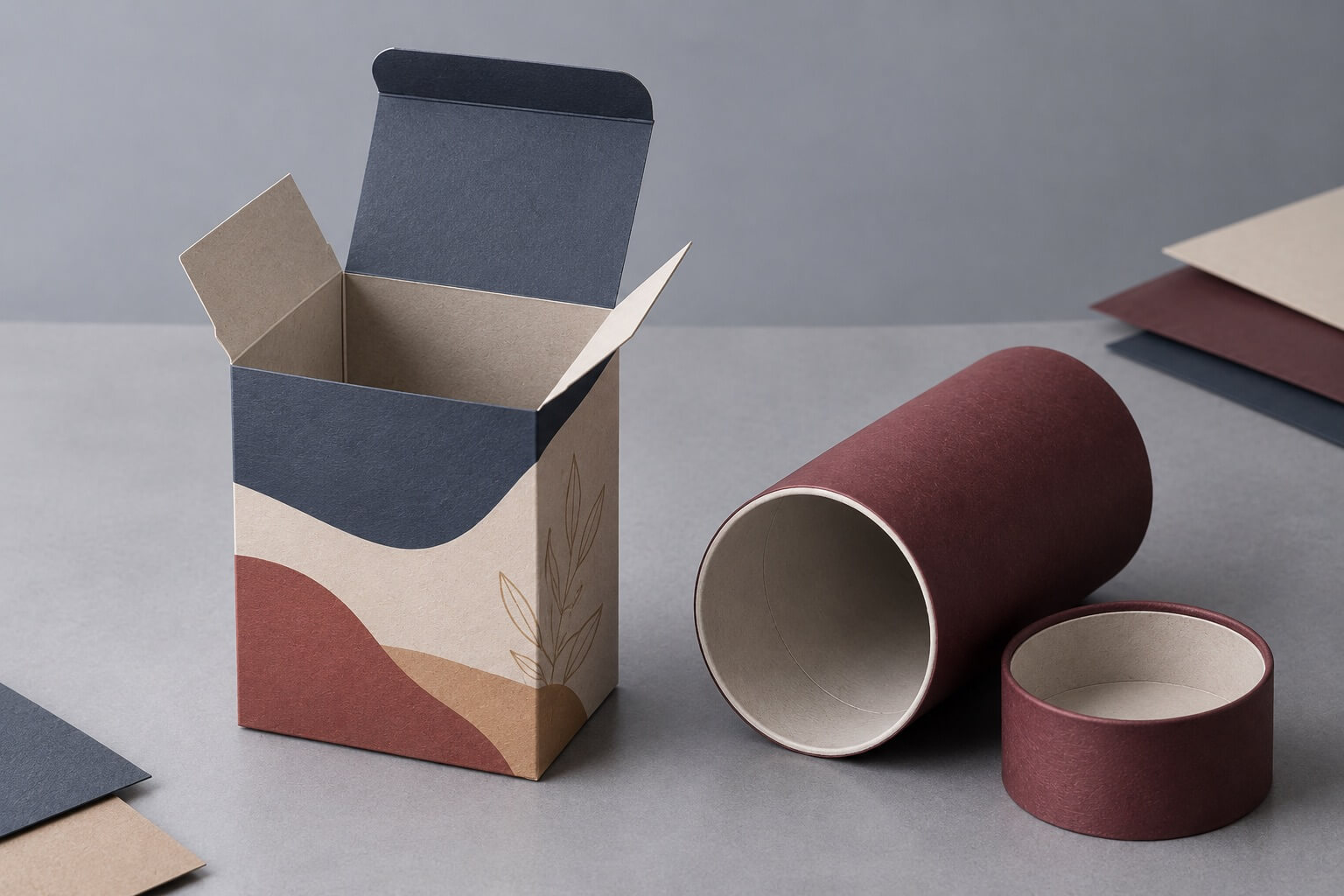
Consider pillow box paper packaging. Its curved side panels create an efficient and visually distinctive structure for lightweight accessories, small cosmetics, promotional items, or similar products. But those curved panels do not create the same stacking surface or internal geometry as a conventional rectangular carton. As product weight increases, or when a precise internal insert is required, the apparent simplicity of the pillow box can become a limitation rather than an advantage.
A paper packaging tube creates a different set of conditions. Its cylindrical wall can provide strong radial rigidity, but diameter tolerance, wall construction, lid fit, product height, and internal positioning still need to work together. This is why paper packaging tubes used for bottles, candles, cosmetics, or gift products cannot be specified from diameter alone.
Even trading card paper packaging presents its own engineering problem. Cards are light, but their corners and edges can be sensitive to movement and compression. A package designed only around the total stack thickness may still allow corner impact or excessive internal movement. Protection in this case comes from controlled fit and board stiffness rather than simply adding more material.
These examples illustrate a broader point: the product shape determines where forces enter the package, and the structure determines where those forces go next.
More Material Does Not Automatically Create More Protection
Brands sometimes respond to a protection problem by increasing board thickness. That can help in some situations, but it can also treat the wrong part of the problem.
If a bottle is moving freely inside a rigid box, increasing the greyboard thickness around the outside does not necessarily stop the bottle from striking the insert. If a folding carton is collapsing because an unsupported panel span is too large, changing the carton geometry may be more effective than simply moving to a heavier paper grade.
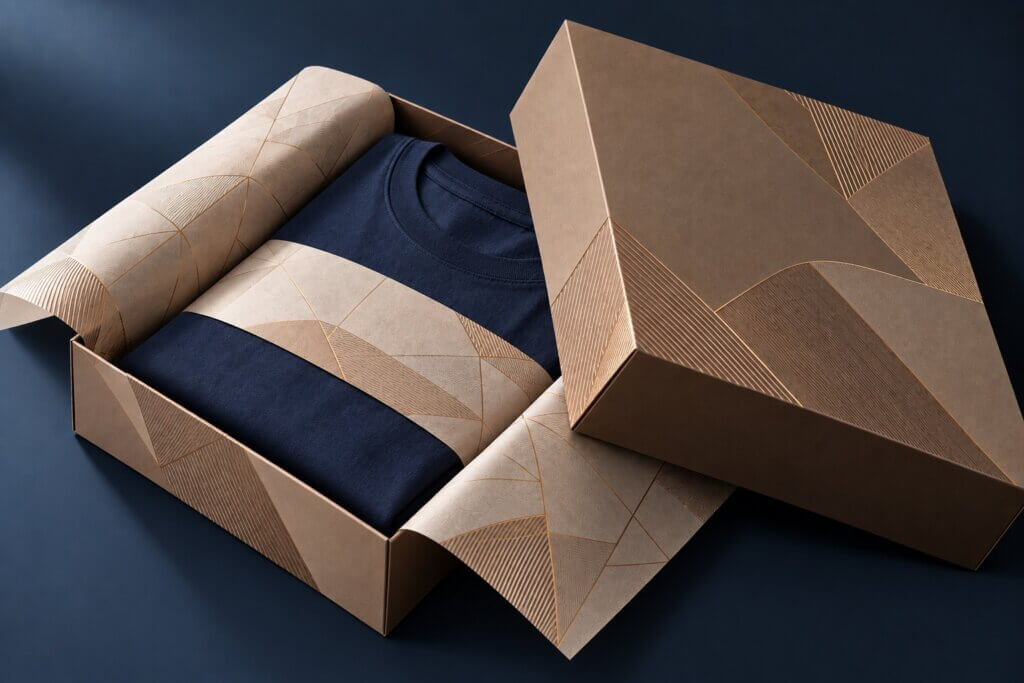
This is why paper packaging materials should be selected together with the structure rather than as a separate decorative decision. Folding carton board, corrugated board, rigid greyboard, specialty wrapping paper, and paperboard inserts perform different functions. The finished result depends on how those materials are converted, folded, wrapped, locked, glued, and supported.
A common question is whether paper packaging can replace plastic inserts. In some projects, yes. Folded paperboard partitions, corrugated supports, and engineered paper locking structures can provide effective positioning. In other projects, especially where extremely small tolerances, moisture resistance, or unusual impact requirements are involved, the entire packaging system has to be evaluated before making that substitution.
The goal is not to force every product into the same material strategy. It is to remove unnecessary material without removing necessary function.
Premium Products Still Need Practical Structural Decisions
Premium presentation does not change the basic engineering principles.
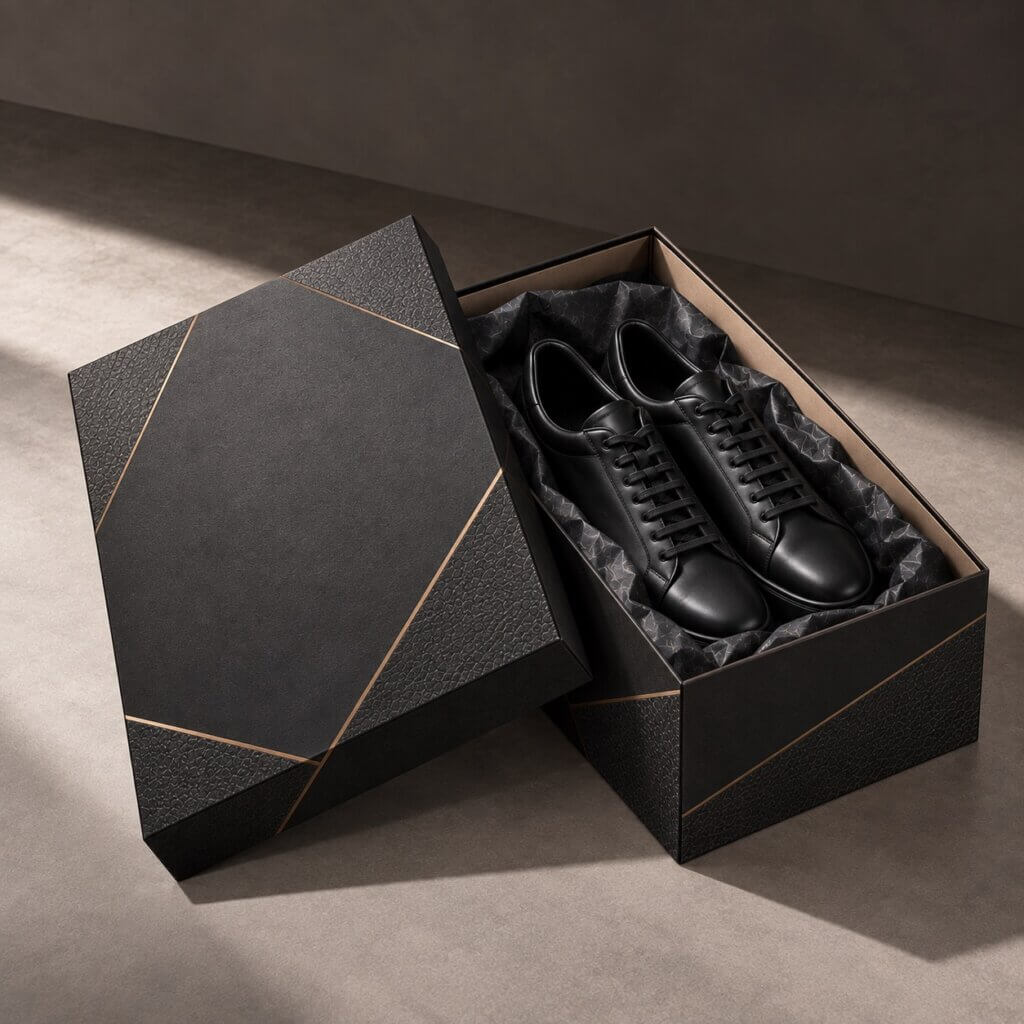
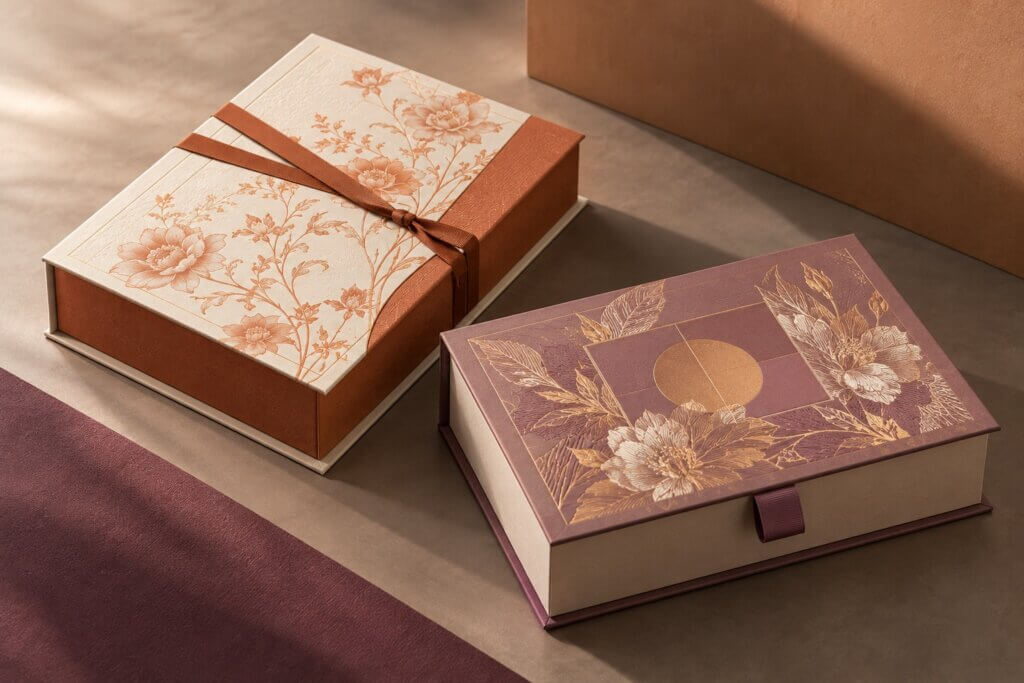
A brand comparing luxury packaging manufacturers may naturally focus on wrapped edges, foil stamping, specialty paper, opening resistance, and overall finish. Those details matter, but a successful premium box still depends on product fit, weight distribution, internal support, and repeatable production tolerances.
The same applies when working with a luxury packaging manufacturer on cosmetics, electronics, or gift sets. A heavier rigid structure can improve presentation, but it does not automatically make the internal design correct. If multiple products sit at different heights, if one component is much heavier than the others, or if accessories can migrate between compartments, the internal structure has to solve those issues separately.
This becomes especially clear in jewelry. A luxury jewelry box packaging manufacturer may need completely different internal support for a ring, necklace, earrings, bracelet, or watch even when the outer box belongs to the same visual collection. Rings need secure positioning, necklaces need control against tangling and movement, and watches often require support around a much larger contact area.
Likewise, brands searching for luxury box packaging manufacturers should consider not only how premium the box looks, but how reliably that presentation can be reproduced once real products, real packing operators, and real production tolerances are introduced.
The Packing Process Is Part of the Packaging Design
A package can protect the product well and still be unsuitable for production if it is difficult to assemble or load consistently.
This is particularly important for projects involving several folded components. If an insert has to be held in a precise position while another component is inserted, packing time increases and operator variation becomes more important. A structure with several locking tabs may be very stable once assembled but inefficient if every tab has to be manipulated manually.
Product characteristics can also change the sequence. A brand looking for a syndet soap packaging manufacturer, for example, may need to consider not just the carton dimensions but how the bar is wrapped or loaded, whether its surface can rub against printed board, and whether the packaging needs additional separation between the product and the outer carton.
The most effective structure is therefore not simply the one that survives a static sample review. It should also be practical to manufacture, assemble, load, close, pack into master cartons, transport, open, and use.
A Good Sample Tests the Relationship, Not Just the Appearance
Physical sampling becomes most valuable when it tests these relationships before mass production.
Instead of checking only print color and finishing, the sample should answer practical questions. Does the product enter without excessive force? Can it move once packed? Is removal comfortable? Does the insert stay in position? Do the panels distort under the product weight? Does the closure still work after repeated opening? Can the package be packed consistently by different operators?
These questions are also why one packaging structure cannot be assumed to work simply because it worked for another product. Small changes in weight, dimensions, center of gravity, surface finish, product count, or distribution method can move a project outside the conditions for which the original structure was designed.
The strongest paper packaging solutions are therefore not universal structures. They are structures whose materials, dimensions, inserts, and production methods have been matched to the actual product.
That distinction matters more than whether the package begins as a folding carton, rigid box, drawer box, mailer box, round box, or another paper-based format. A good package does not need to be more complicated than necessary. It needs to control the right problems, in the right places, for the product it is actually designed to hold.