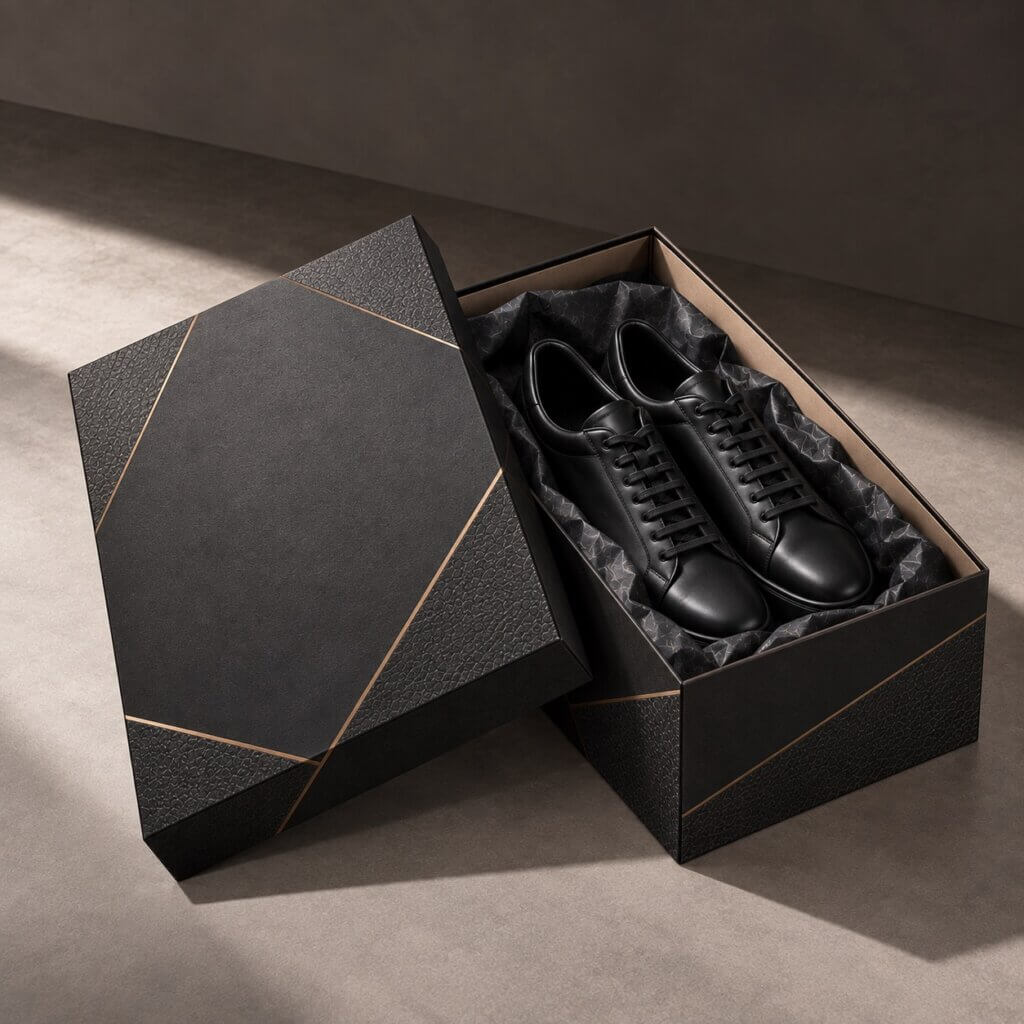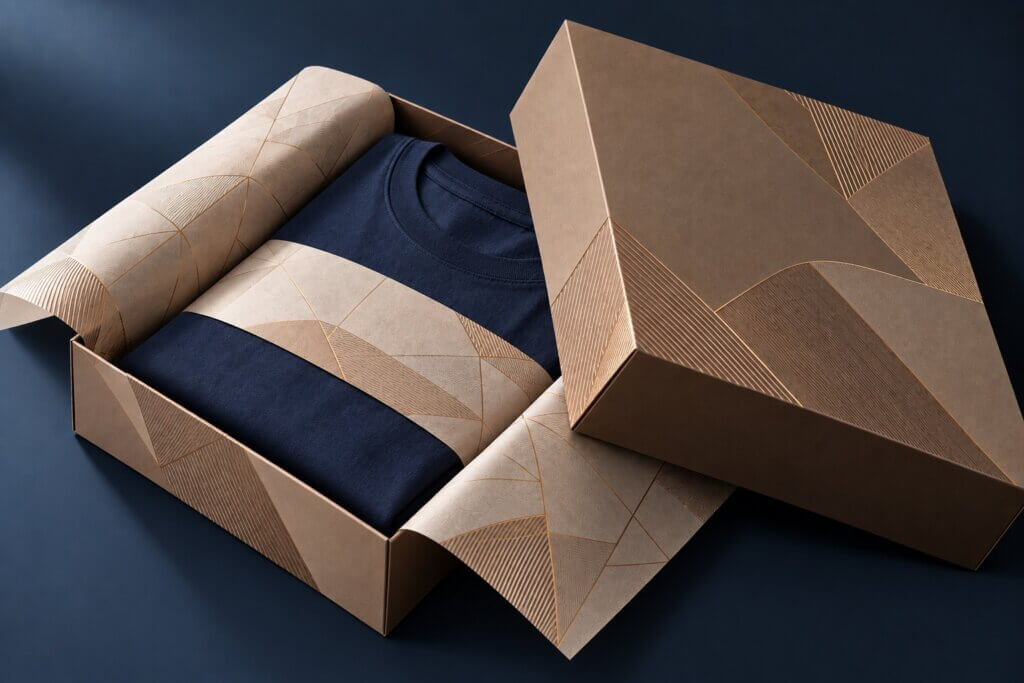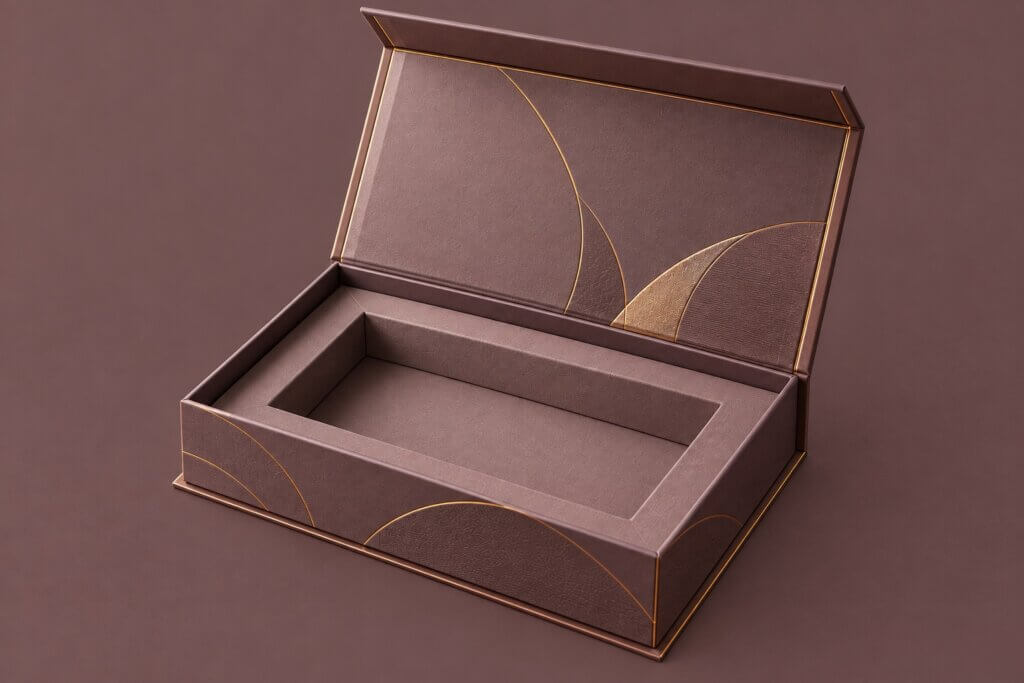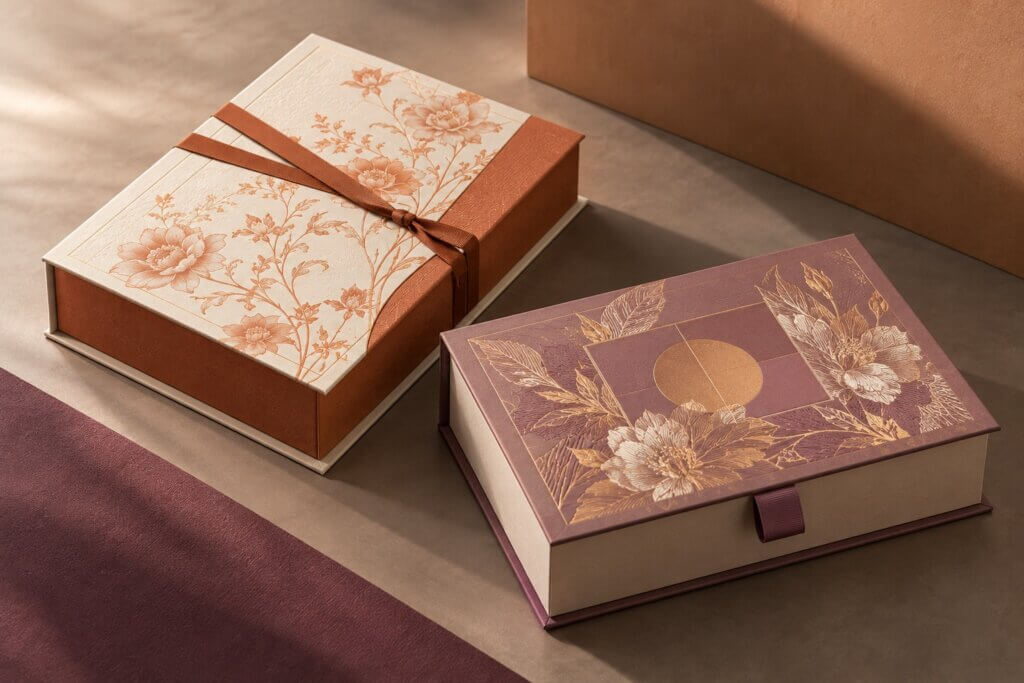

When choosing paper packaging for a premium product, terms such as rigid box, set-up box and round box often appear in the same project. They are related, but they do not describe packaging in the same way. A rigid box is defined mainly by its construction, while a round box is defined by its shape. A custom round box can therefore also be a rigid paper box.
This distinction matters because the structure affects much more than appearance. It influences product protection, lid fit, inserts, storage space, shipping volume and the way the package is assembled. Brands comparing packaging formats should begin with the product—its dimensions, weight, presentation requirements and opening experience—before deciding which box structure looks best.
For examples of cylindrical structures and different round-box configurations, see our custom round boxes.
What Is a Rigid Paper Box?
Rigid paper boxes, also commonly called rigid set-up boxes, are formed packages designed to retain their three-dimensional shape. A typical rigid box uses thick paperboard or greyboard as the structural core, with printed, colored or specialty paper wrapped over the outside. The board provides stiffness and dimensional stability, while the wrapping paper creates the visible print surface, texture and finish.
The same basic construction can produce many different structures. A rigid box with lid may use a separate top and base, while other designs use hinged covers, drawers or more specialized opening systems. This flexibility is one reason rigid packaging is frequently used for cosmetics, fragrance, jewelry, confectionery, electronics and gift sets where presentation and structural stability are both important.
Rigid packaging is different from a conventional folding carton. Folding cartons are normally printed, die-cut and creased from thinner paperboard and can usually be transported flat before erection. Rigid set-up boxes are normally already formed, which gives them greater dimensional stability but also means they occupy considerably more space during storage and transportation.
For lighter products that do not require a permanently formed structure, custom folding cartons can provide a more material- and space-efficient alternative.
How Are Custom Round Boxes Constructed?
Round boxes use a different geometry but can follow the same general rigid-packaging principle. Instead of forming four straight walls and corners, the structural board forms a cylindrical body. A conventional round rigid box generally consists of the cylindrical wall, a circular base and a separate lid, with decorative or printed paper wrapped over the structural components.
This is why round and rigid should not be treated as competing packaging categories. Round describes geometry; rigid describes construction. A white round box for cosmetics, for example, may still be manufactured using rigid board and wrapped paper in much the same way as a rectangular rigid gift box.
The curved body does, however, create different engineering and artwork requirements. Graphics have to wrap cleanly around the circumference, the vertical paper seam needs to be positioned deliberately, and the diameter of the lid must work correctly with the body. If the package includes an insert, its dimensions and product position also have to be established before the outer structure is finalized.
These decisions are easier when the structure is developed around the actual product rather than around a visual rendering. If a round format is not the best fit, buyers can compare different packaging structures such as folding cartons, drawer boxes, shaped boxes and mailer boxes before committing to production.
What Lid Styles Are Available for Rigid and Round Boxes?
The lid is particularly important in round packaging because relatively small dimensional changes can noticeably affect both appearance and opening feel. The most familiar round box lid is a separate lift-off cover that fits over the cylindrical body. Its depth can be adjusted: a shallow lid exposes more of the body, while a deeper lid covers more of the side wall and creates a different visual proportion.
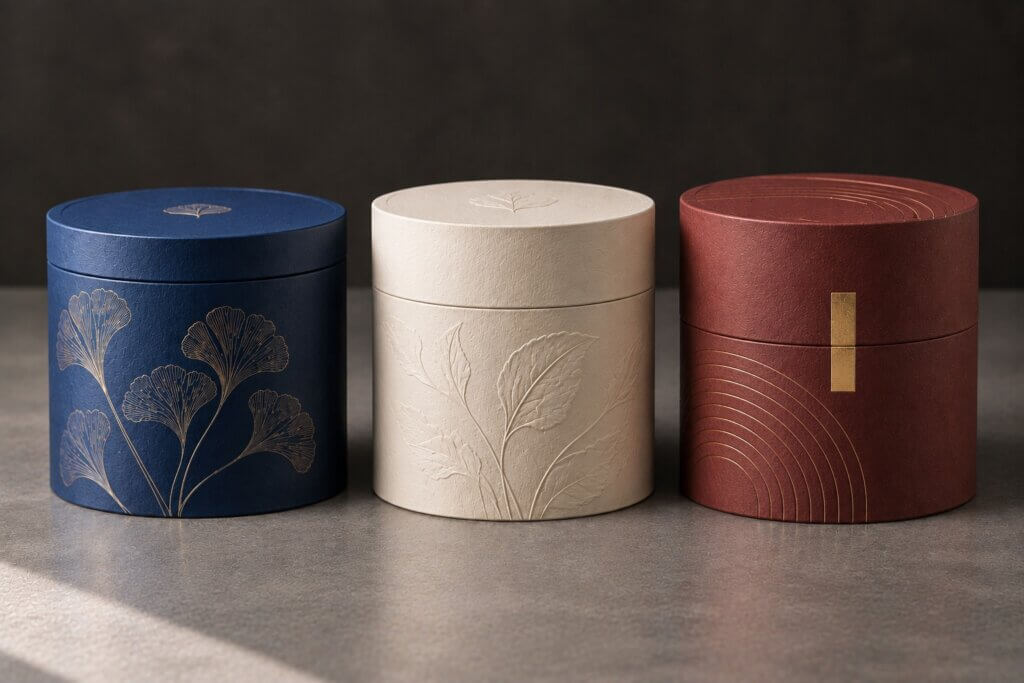
The relationship between lid diameter and body diameter also affects fit. A loose lid may lift too easily or feel uncontrolled, while an excessively tight lid can be frustrating to open. Paper thickness, wrapping material and manufacturing tolerances all contribute to this relationship, which is why the final fit should be checked with a physical production sample rather than judged only from a dieline or 3D rendering.
Rigid boxes with lids offer even more structural possibilities. Depending on the product, a manufacturer may use a conventional two-piece lid and base, a hinged cover, a magnetic closure or a flip-top construction. The best option depends on product weight, packing method, desired opening experience and production requirements—not simply on which closure looks more elaborate.
How Do Size and Proportion Affect a Round Box?
Rectangular packaging is normally specified by length, width and height. A round box is more naturally defined by diameter and height, together with the internal space required for the product and any insert. These measurements should be based on the physical product rather than chosen only to achieve a particular visual proportion.
Increasing the diameter affects more than the appearance of the box. It increases circumference, changes material consumption and affects the size of the circular components and internal insert. More importantly for B2B buyers, it also increases the three-dimensional space occupied by every finished box during warehousing and transportation. The difference can become significant when thousands of empty rigid boxes are being shipped.
Height changes the function in a different way. Tall, narrow structures can work naturally for bottles, candles and cylindrical containers, while wider and shallower formats may be better for gift sets, confectionery or products intended to be displayed horizontally. Large round boxes containing several items may also require dividers or a fitted insert so that the products do not move during handling.
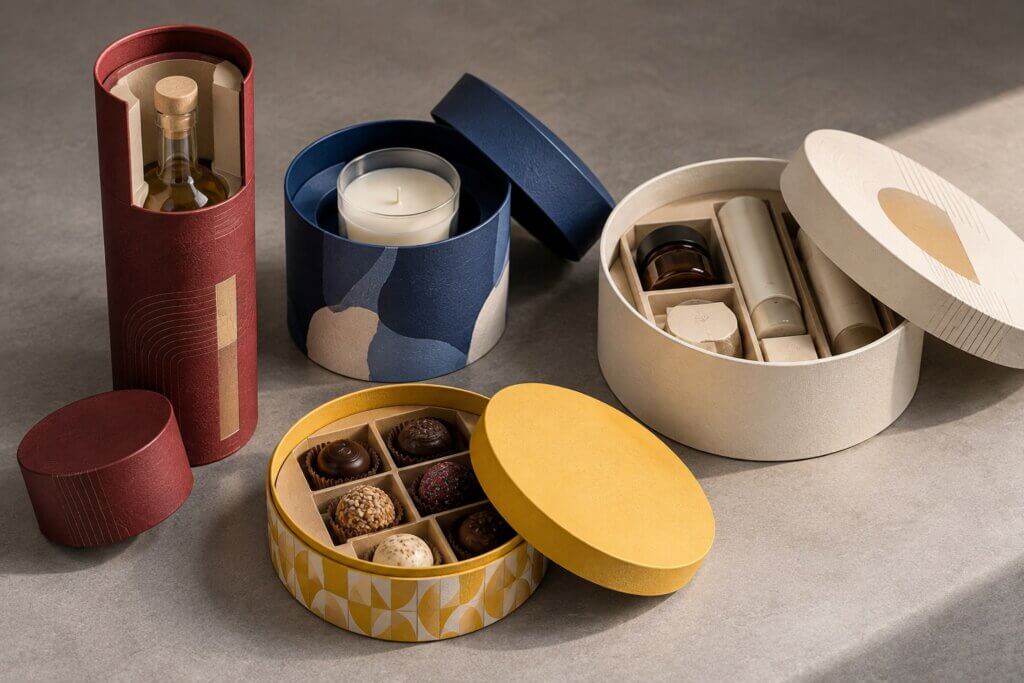
A big round box should therefore not simply be a small design enlarged proportionally. As diameter and product weight increase, the manufacturer needs to reconsider board stiffness, base construction, lid fit and internal support.
What Products Are Rigid and Round Boxes Best For?
Rigid paper boxes are useful when a product needs dimensional stability, a controlled presentation or an opening experience that is difficult to achieve with lightweight folding packaging. This makes them common for fragrance, skincare, cosmetics, jewelry, candles, confectionery, electronics and curated gift sets. The outer structure can also support paper, molded pulp, foam or other inserts when the product needs to remain in a specific position.
Round packaging works particularly well when the cylindrical shape complements the product or becomes part of the presentation. Fragrance bottles, cosmetic jars and candles are obvious examples, but the structure is also used for chocolate, gift sets and other products where a conventional rectangular box would create a very different visual impression. A big round gift box may also accommodate several smaller products arranged around a central point or within divided sections.
A round box for flowers is another recognizable application, although its requirements can differ considerably from those of beauty or confectionery packaging. The product arrangement, weight and possible exposure to moisture need to be considered before selecting the structural board and internal components. Likewise, a rigid candy box may require a suitable food-contact tray, bag or liner rather than allowing food to touch decorative wrapping materials directly.
What Should Buyers Consider Before Ordering Custom Round or Rigid Boxes?
The development process should start with the product, not with the box style. A packaging manufacturer should know the product dimensions, weight, order quantity and intended arrangement, as well as whether an insert is required. For a gift set containing several items, their positions and the way they are removed from the box should ideally be established before the external dimensions are finalized.
Material selection comes after the structural requirements are understood. The board must provide enough stiffness for the size and weight of the package, while the wrapping paper needs to support the desired printing, texture and finishing. Foil stamping, embossing, debossing and spot finishes can all be used, but they should be planned together with seams, curved surfaces and artwork rather than added as an afterthought.
Logistics is especially important when purchasing round gift boxes wholesale or ordering large quantities of conventional rigid packaging. Unlike flat-packed folding cartons, most traditional rigid set-up boxes occupy their finished volume during transportation. Larger diameters can increase freight and warehouse requirements quickly, so unit price alone does not represent the full packaging cost.
Sampling should therefore evaluate more than color. Buyers should check the lid fit, finished dimensions, insert fit, wrapping quality, seam position, finish registration and the way the real product sits inside the package. A successful custom box balances presentation, protection, manufacturability and logistics rather than maximizing complexity.
Choosing the Right Structure
Rigid and round boxes overlap, but they describe different aspects of packaging. Rigid refers primarily to construction, while round refers to geometry. Understanding that relationship makes it easier to compare packaging options without assuming that every shape requires a completely different manufacturing system.
For buyers, the practical decision starts with product size, weight, protection and presentation. Once those requirements are clear, the appropriate structure, lid fit, materials, insert and finishing process can be developed around them. The goal is not simply to create packaging that looks convincing in a rendering, but to create a box that works through sampling, production, packing, shipping and final use.