
A rigid box is often judged first by what can be seen: board thickness, surface paper, printing, opening style, or decorative finishing. From an engineering perspective, however, these visible characteristics are only part of the packaging system. The structure also determines how the product is revealed, where its mass is supported, how much movement is permitted, where concentrated loads develop, and whether the same presentation can be maintained after packing, handling, and international distribution.
This is why two customized rigid boxes with similar external dimensions and similar greyboard can perform very differently. Changes in lid depth, internal clearance, product height, insert geometry, opening direction, or wrapped-board construction can alter both presentation and protection. When comparing different packaging types, brands should therefore begin with the packed product and the intended opening experience rather than selecting an exterior shape first.
The design sequence is important. Opening determines presentation. Presentation establishes product position. Product position reveals the movements that must be controlled. Those restraint requirements establish the protection strategy. Only after that should board construction, special geometry, printing, finishing, packing, and distribution be finalized.
Opening Geometry Establishes the Product Reveal
The first structural decision is not simply whether a box has a lid. It is how the lid moves relative to the product.
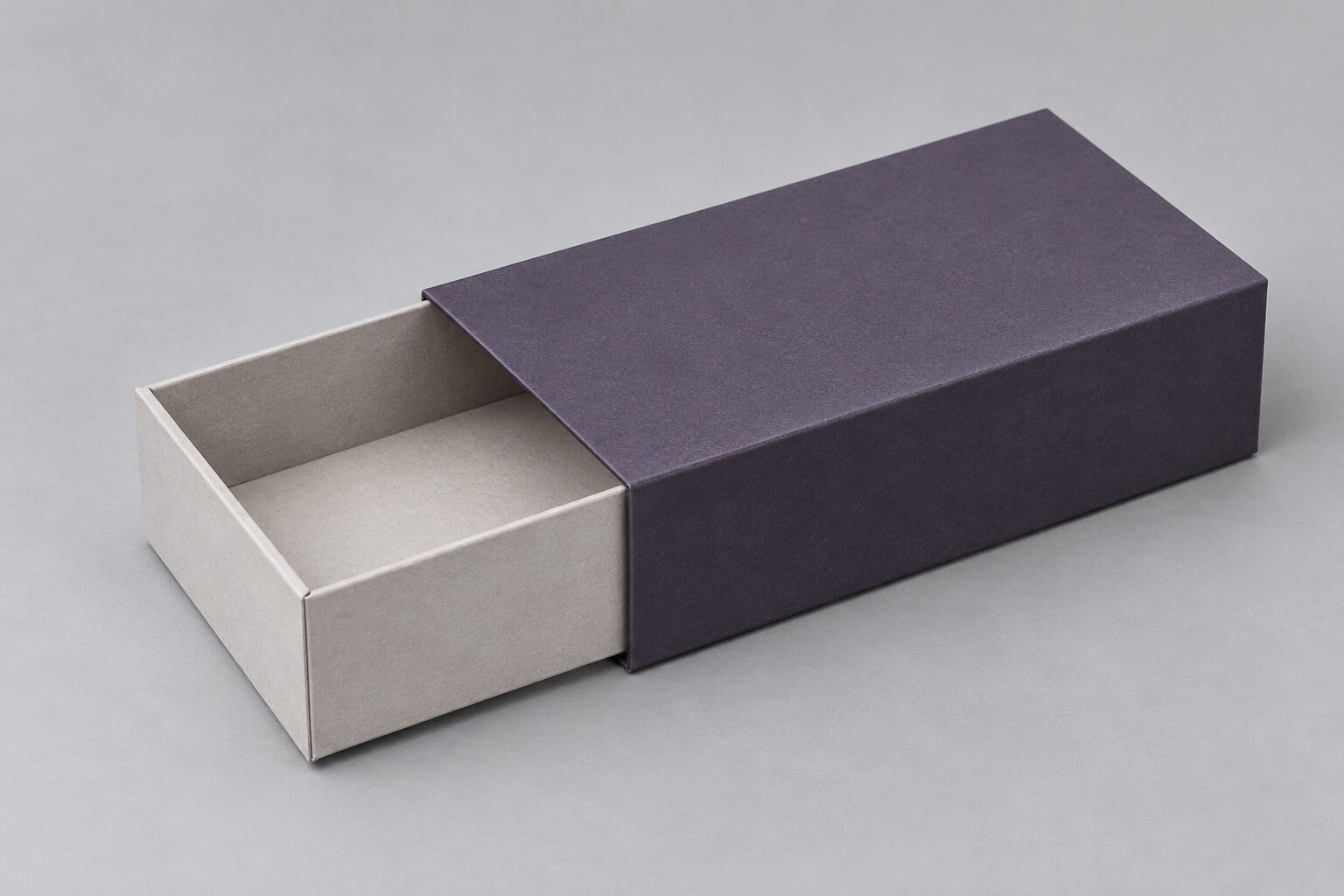
A lift-off lid removes visual obstruction vertically. A hinged structure creates a defined viewing direction. A structure with deeper lid engagement delays full product exposure because a larger portion of the base remains enclosed during the first part of the opening movement. These differences affect the reveal sequence before surface graphics or decorative finishes are considered.
Which rigid box structure gives the best product presentation? The answer depends on what needs to become visible first. A single fragrance bottle may benefit from immediate frontal exposure, while a set containing a main product, accessories, and documentation may require a more controlled visual hierarchy. In the latter case, revealing every component simultaneously can actually weaken presentation because the main product loses visual priority.
Opening geometry also affects practical access. A product positioned too close to an enclosing wall may appear visually centered but still be difficult to grip. Conversely, raising the product too high for better visibility can reduce the clearance below the lid.
The reveal therefore creates the next engineering question: once the box reaches its intended open position, exactly where should the product sit?
Product Position Converts Presentation Into a Physical Layout
Product position should be defined in three dimensions rather than by a simple top-view cavity.
The structural designer needs to consider the product’s X-Y location, installed height, orientation, center of gravity, insertion path, removal path, top clearance, side clearance, and the surfaces that are safe to support. These variables are linked. Raising a bottle 8 mm may improve presentation but reduce top clearance by the same amount. Moving it toward the center may improve visual symmetry while changing the width available for an insert wall or accessory compartment.
For a light, regular product, these compromises may be small. For a glass fragrance bottle, electronic device, ceramic container, or multi-product set, they can become critical. The heaviest component can create a local load that is very different from what the overall package weight suggests. A narrow contact area beneath that component can concentrate force into one part of an insert even if the rest of the package appears well supported.
This is where structural engineering becomes more important than simply selecting a box style. The objective is to establish a product position that satisfies four conditions simultaneously: the product looks intentional, it can be packed without excessive force, it can be removed without damage, and it leaves enough structural space to support itself.
Once this position is established, protection can no longer be discussed in general terms. The next question becomes specific: in which directions can the product leave its intended position?
Restraint Must Be Designed Around Actual Product Movement
Products inside a package do not move in only one direction. Depending on geometry and orientation, the package may need to control lateral displacement, axial movement, vertical lift, rotation, tipping, or movement between separate components.
A cylindrical bottle illustrates this clearly. A circular insert opening may restrict lateral movement but still permit rotation. A deep cavity may prevent tipping while leaving excessive vertical clearance above the bottle. An insert that holds the body tightly may create unwanted contact pressure if the bottle diameter varies between production batches.
Do rigid boxes always need inserts? No. An insert is required when the outer structure alone cannot maintain the intended product position or when multiple components need controlled separation. The engineering purpose of the insert should be defined before its material or appearance is selected.
That purpose may include locating the product, spreading its weight over a larger area, preventing product-to-product contact, protecting a fragile surface, restricting rotation, controlling removal, or maintaining a precise presentation height.
Clearance is therefore not simply “extra space.” It is an engineered variable.
If the nominal product width is 70 mm, specifying a 70 mm cavity does not necessarily create a correct fit. The final relationship may also depend on product dimensional variation, insert cutting tolerance, folded material thickness, adhesive build-up, wrapping paper, greyboard thickness variation, and assembly positioning. These variations combine as a tolerance stack-up.
A fit that looks perfect in one handmade prototype can become too tight or too loose once these variables move in different directions during volume production.
For customized rigid box development, the target should therefore be a controlled fit window rather than a single theoretical dimension.
Protection Depends on the Load Path, Not Simply on Board Thickness
Once movement has been identified, the package must control both movement and load.
This is where rigid packaging is often oversimplified. A thicker greyboard generally increases panel stiffness, but protection cannot be predicted from board thickness alone. Panel span, board density, box depth, corner construction, lid overlap, insert stiffness, product mass, and support location all influence the mechanical behavior of the finished pack.
Industry material guides commonly place rigid-box greyboard in roughly the 1–3 mm range, but they also emphasize that size, product weight, structure, insert design, and distribution conditions affect the final selection. A thicker board is therefore not automatically a better specification.
Does thicker greyboard always provide more protection? No.
Consider a heavy fragrance bottle sitting in a poorly fitted insert. Increasing the outer wall from one board specification to a thicker one may make the box feel more substantial, but it does not stop the bottle moving inside. If the bottle repeatedly impacts the cavity wall during handling, the problem is product restraint, not external panel stiffness.
Protection is better understood through the load path: where does force enter the package, how is it transferred through the insert and box body, and where does it leave?
A well-designed support system attempts to transfer load through mechanically stable areas of the product. For a glass bottle, this may mean supporting strong body regions while keeping pressure away from the pump, decorative cap, shoulder detail, or fragile edge. For an electronic device, the main unit and accessories may require independent restraint so a charger or cable pack cannot become an impact source during distribution.
The distinction also explains why “more insert material” is not automatically better. Increasing contact area in the wrong place may create pressure where none is wanted. Good protection depends on controlled contact zones and clearly defined no-pressure zones.
Before board thickness is increased, it is therefore more useful to ask whether the load path and restraint strategy are correct.
Static Fit Is Not the Same as Distribution Protection
A box that performs well while sitting horizontally on a sample table has passed only the easiest condition.
During packing and distribution, the package can be tilted, inverted, accelerated, vibrated, stacked, and repeatedly handled. These conditions expose weaknesses that cannot always be seen during a static visual review.
Protection should therefore be considered at three levels.
First is static stability: does the product remain correctly positioned when the package is stationary?
Second is handling stability: what happens when the box is picked up, rotated, opened, closed, or carried?
Third is distribution stability: what happens after repeated vibration, external compression, carton handling, and transport?
How tight should an insert fit be? Tight enough to prevent harmful movement, but not so tight that normal manufacturing variation creates difficult assembly, surface damage, excessive insertion force, or consumer frustration.
This is why preload and interference fit need to be used carefully. Controlled compression can be helpful in some materials and structures, but a paper-based insert does not behave like flexible foam. If its cavity is intentionally undersized without considering board direction, folding behavior, coatings, and product tolerance, the result may be inconsistent packing force.
A physical prototype therefore needs to be tested with the real product, not only inspected empty. Physical prototypes should therefore be evaluated with the actual product rather than inspected only as empty boxes, because this stage allows structure, material behavior, artwork position, finishing, and product fit to be checked before mass production.
Once the protection principles are understood in a conventional rectangular structure, the next question becomes more interesting: what changes when the outer geometry is circular or rounded?
Round and Rounded Structures Change the Restraint Geometry
A rectangular box gives the structural designer straight reference walls, predictable corner locations, and orthogonal dimensions. A cylindrical package removes those corner references and introduces radial geometry.
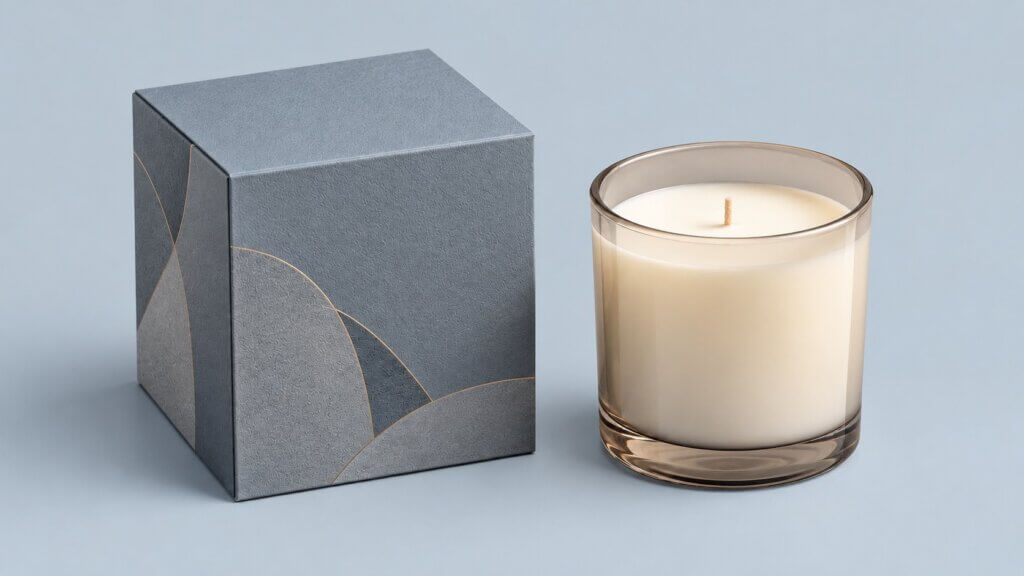
For round boxes with lids, several relationships become important: internal diameter, product diameter, radial clearance, concentric alignment, lid engagement depth, insert diameter, and seam position. A cylindrical candle, jar, or fragrance bottle may work naturally inside a round package because radial support can follow the shape of the product. An irregular product inside the same cylindrical shell may require a more complicated insert because the outer wall no longer provides convenient straight reference surfaces.
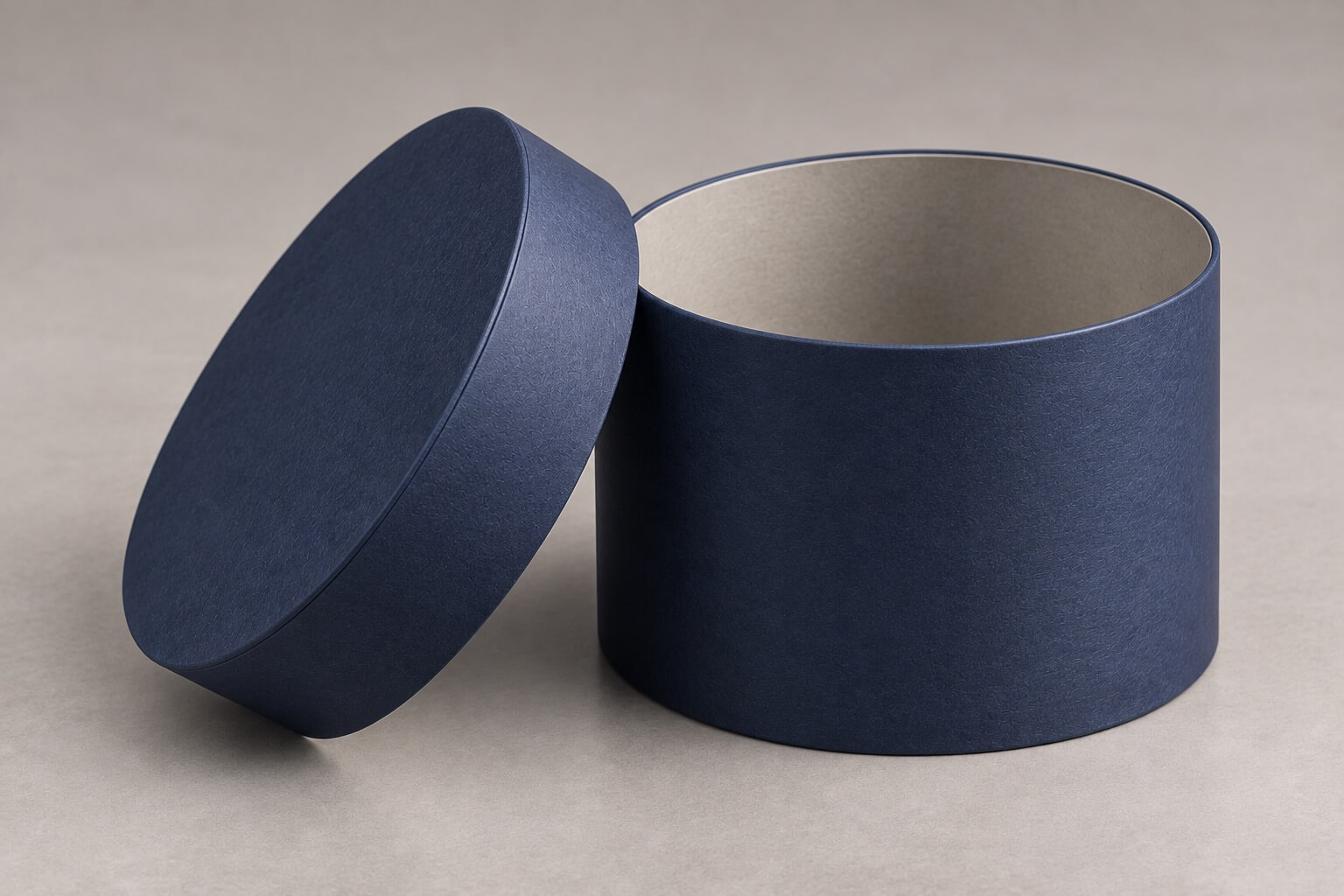
Are round boxes suitable for fragile products? Yes, provided the structure controls the same engineering variables required in any other package: movement, contact, load transfer, lid retention, and distribution protection. The round shape itself is not a protective mechanism.
This matters particularly for decorative round boxes. The uninterrupted curved surface may be chosen primarily for visual presentation, but diameter cannot be selected only from the appearance of the closed box. Increasing diameter increases internal clearance unless the insert changes with it. Reducing diameter may reduce the width available for paper-based supporting features. Lid overlap also affects the way the upper and lower parts remain concentrically aligned.
A rounded edge box should be evaluated differently again. Rounded corners do not create a true cylindrical load path. Straight wall sections remain, but usable internal area is reduced around the curved transitions. Those transitions can affect insert registration, wrap behavior, corner compensation, and the distance available between the product and outer wall.
This is why geometry should follow the product rather than the other way around.
If a rounded shape improves product fit, opening behavior, brand recognition, or presentation, it may be justified structurally. If it is chosen only as a decorative gesture, the manufacturer still needs to solve every internal support problem created by that decision.
Board Construction and Lid Fit Must Work as One Tolerance System
After product support has been established, the outer shell itself needs to be considered as a tolerance system.
In a lid-and-base rigid structure, for example, the finished fit is not controlled by a single dimension. Base dimensions, lid dimensions, board thickness, wrapping-paper thickness, adhesive layer, corner formation, and assembly accuracy can all affect the final engagement.
A lid that is too loose can reduce perceived quality and allow unintended movement. A lid that is too tight can create excessive opening force, surface rubbing, edge wear, or difficult packing.
How tight should a rigid box lid be? There is no useful universal millimeter value because the required fit changes with box size, lid depth, material construction, opening speed, and desired user experience. A shallow lid generally behaves differently from a full-depth telescoping lid because the engagement area and frictional contact are different.
The important point is that lid fit should be specified as a functional result and then confirmed by physical samples produced with representative materials.
Board thickness also enters this relationship. Increasing greyboard thickness changes wall build-up and can affect finished external dimensions, internal capacity, edge appearance, and the relationship between the lid and base. A board change late in development can therefore create more consequences than simply making the package “stronger.”
This is one reason a reliable custom rigid box manufacturer should treat board, wrap, insert, lid fit, and product fit as connected variables rather than separate purchasing specifications.
Printed Surfaces Must Be Engineered Around the Wrapped Structure
Once the physical structure is stable, artwork and finishing can be positioned with much greater confidence.
Most conventional rigid boxes use a structural board core wrapped with printed or specialty paper. This means the visible artwork is applied to a sheet that must later turn over edges, wrap around corners, form turn-ins, meet seams, and accommodate dimensional thickness.
For printed rigid boxes, this creates issues that do not exist on a completely flat printed sheet.
A logo positioned too close to an edge may visually shift once the paper wraps over the board. A foil area may cross into a region affected by folding or corner formation. Embossing positioned close to a turn-in can interfere with wrapping or appear inconsistent after assembly. Repeating patterns on cylindrical surfaces need to account for the seam and circumference rather than only the front-view artwork.
Several production allowances therefore matter:
wrap registration, turn-in allowance, seam allowance, corner compensation, foil registration tolerance, emboss or deboss safe zones, and paper grain direction.
Should artwork be finalized before the rigid box structure? Normally, no. The major structural dimensions should be stable first because changes to lid depth, box height, board caliper, shoulder position, or diameter can change the usable artwork area and finishing location.
This does not mean structural and graphic design happen independently. They should develop together, but final artwork should be locked against a confirmed production dieline or wrap layout rather than an approximate concept.
The sequence now becomes clear: product requirements establish the structure, and the structure establishes the conditions under which decoration can be reproduced accurately.
Packing Feasibility Is Part of Structural Performance
A finished sample may perform well in a meeting room but still be inefficient in production if the pack-out sequence has not been considered.
Operators need a workable insertion path. The product should not need to be twisted through an opening narrower than its natural loading orientation. An insert should remain stable when pressure is applied during product placement. Accessories should not need to be held manually in position while the lid is closed.
This introduces several practical variables: insertion force, removal force, operator access, assembly sequence, insert retention, accessory loading order, closure force, and final inspection access.
A cavity can therefore be dimensionally correct and still be operationally poor.
For example, reducing clearance may improve the visual fit after packing, but if operators must apply excessive force to insert every unit, the structure can cause slower packing, surface damage, inconsistent positioning, or deformation of paper-based insert features.
This is especially relevant in rigid boxes packaging intended for larger production quantities. The structure needs to work repeatedly, not only when a sample maker carefully assembles one unit.
The correct question is therefore not simply “Does the product fit?”
It is:
Can the product be packed, located, inspected, closed, and removed consistently without forcing the structure outside its intended tolerance?
Shipping Requires a Packaging System, Not Just a Presentation Box
After pack-out, the package moves into a different environment.
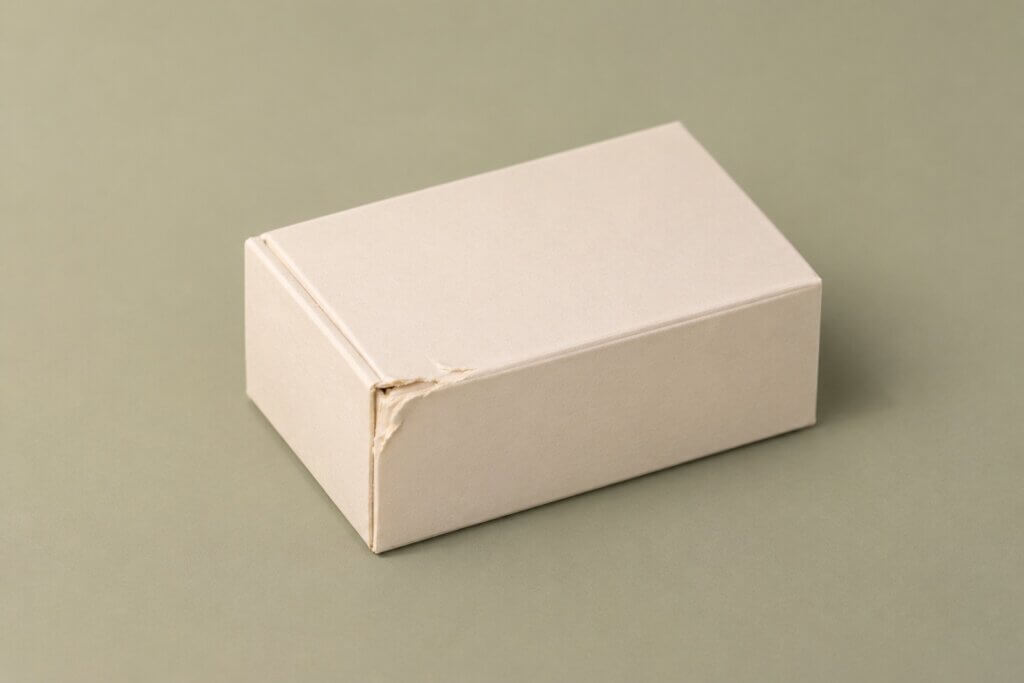
Can a rigid box be used as the shipping box by itself? It should not be assumed so simply because the walls are rigid. A presentation box may have good dimensional stiffness while its decorative wrap, printed surface, foil stamping, wrapped corners, or specialty paper remains vulnerable to abrasion, contamination, crushing, or impact during parcel distribution.
For many export projects, the rigid presentation package should therefore be treated as one layer within a larger system.
That system can include protective wrapping, inner cartons, dividers, master cartons, palletization, or other secondary packaging according to the product and distribution route.
Distribution requirements should also be evaluated against the intended destination market and logistics route. A package manufactured in China and supplied to North America, Europe, or the Middle East may pass through export consolidation, warehouse storage, sea or air freight, customs handling, regional distribution, retail fulfillment, and last-mile delivery. Differences in transport duration, handling frequency, storage conditions, secondary packaging, and final sales channels can change the mechanical and environmental conditions the package must withstand.
A box developed mainly for controlled retail replenishment does not face exactly the same distribution environment as a box shipped individually through an e-commerce parcel network.
Paper-based materials may also respond to humidity and storage conditions, which can influence dimensional fit and surface behavior. Instead of claiming that one rigid-box structure is universally suitable for international shipping, the specification should define the actual distribution system in which the package is expected to perform.
A Production Specification Should Convert Design Intent Into Measurable Requirements
By this point, the structure has progressed through a complete decision chain.
Opening geometry establishes the product reveal, which determines product position and the movements that must be controlled; these movement patterns define the restraint requirements and load path, while the resulting geometry shapes the insert and lid construction, establishes the boundaries for artwork and finishing, and ultimately determines what must be validated during pack-out and distribution.
The final step is to convert these decisions into measurable production requirements.
When brands compare rigid box manufacturers, the most useful technical discussion should go beyond external size, reference photographs, and unit price. A meaningful specification can include:
product nominal dimensions and tolerance, product weight, center of gravity when relevant, critical support areas, no-pressure zones, target product clearance, insert construction, insertion direction, removal method, board specification, lid engagement, wrapped-paper requirement, artwork datum, finishing location, acceptable appearance limits, pack-out sequence, distribution method, and approved physical reference sample.
This is where searches for rigid box custom solutions should eventually lead. Customization should not mean changing only color, logo, and external dimensions. The purpose of customization is to translate the physical product and brand presentation requirements into a structure that can be manufactured repeatedly.
What should brands evaluate before approving a rigid box for mass production? At minimum, the sample should be reviewed with the intended product inside. The review should include product position, lateral and vertical movement, insertion and removal force, lid engagement, corner condition, visible alignment, artwork position, finishing registration, insert stability, accessory separation, and fit within the intended secondary shipping configuration.
The approved sample can then become a practical reference alongside measurable production specifications. That combination is more useful than relying on subjective instructions such as “make it tighter,” “make the board stronger,” or “make it look more premium.”
A capable custom packaging manufacturer should therefore connect structural design, material selection, sample validation, printing, finishing, assembly, and quality control rather than solving each stage independently.
The best rigid box is not necessarily the thickest, most decorative, or most complex.
It is the structure in which product presentation, dimensional fit, restraint, load transfer, decoration, packing, and distribution continue to work as one system—from the first approved prototype to repeatable production.