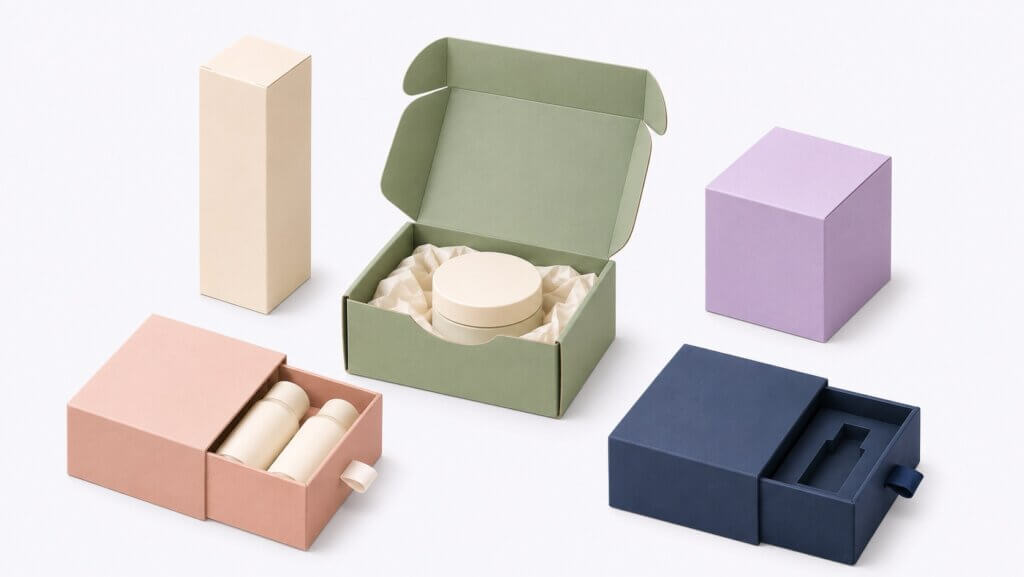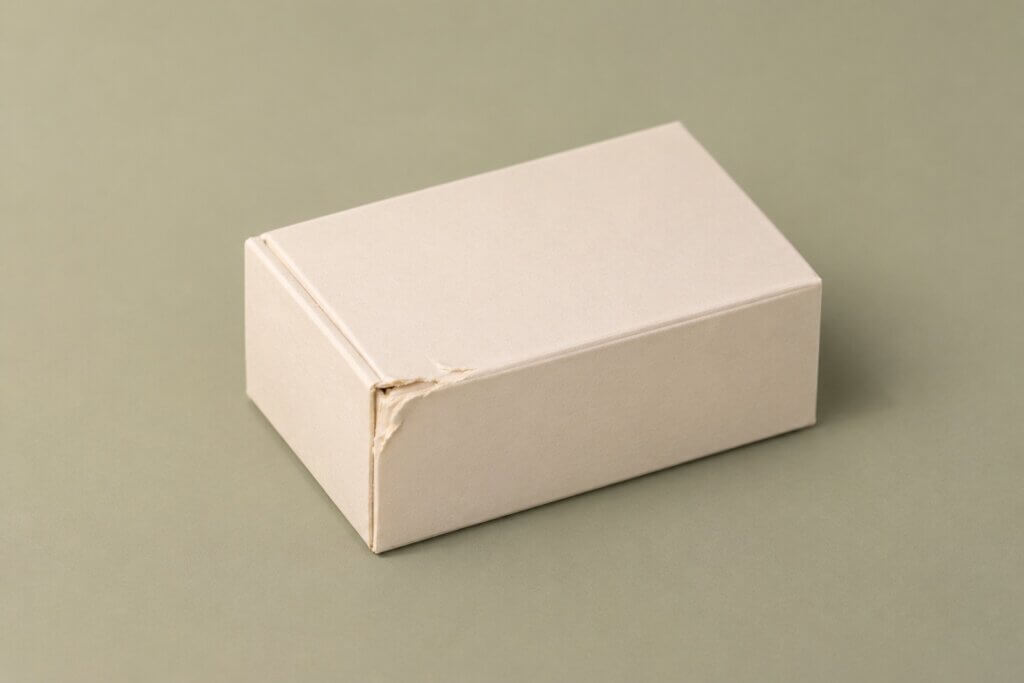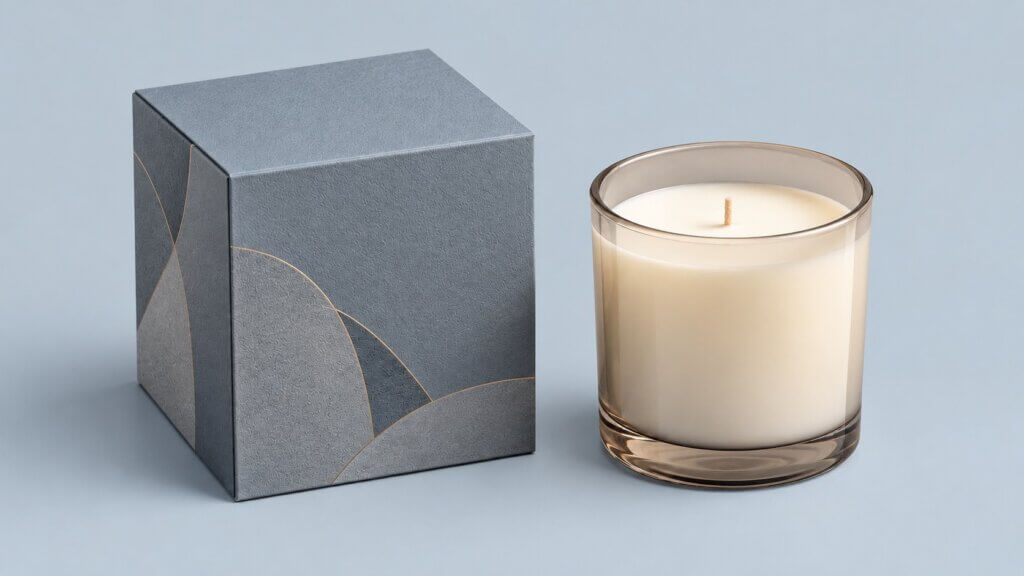

A multi-product cosmetic set should not be engineered as an empty box divided into several cavities. Once a glass bottle, serum, cream jar, pump container or accessory shares the same package, each product introduces a different mass, center of gravity, surface sensitivity and potential movement. Those differences determine how the complete pack responds when it is lifted, tilted, packed into a master carton or subjected to repeated handling.
For brands developing custom packaging for cosmetics, this means the process should begin with the packed system rather than the appearance of the empty box. Product geometry determines where support can safely be applied; mass distribution influences where loads develop; the insert controls movement and transfers those loads into the surrounding packaging structure; and the outer package has to maintain those relationships through packing, transportation and opening. For luxury custom packaging, presentation adds another requirement: the products should still arrive at the positions and heights that were intentionally designed.
The engineering objective is therefore not simply to make several products fit. It is to determine where each product can be supported, how much it may move, how forces travel through the package, and how much dimensional variation the complete system can tolerate before its function or presentation begins to change.
Begin With a Product Constraint Map, Not a Box Size
Before determining the external dimensions, each product should be mapped according to the characteristics that affect packaging performance. Length, width and height are only the starting point. Mass, center-of-gravity height, container material, closure geometry, surface sensitivity, preferred orientation and dimensional tolerance can all change how the product should be restrained. A glass serum bottle, for example, may have a mechanically stable cylindrical body but a relatively vulnerable dropper assembly. A cosmetic jar may tolerate contact around its sidewall while a decorated lid should remain clear of continuous rubbing.
This makes the common question “What packaging is best for cosmetics?” difficult to answer by naming one box style. A more useful approach is to identify three types of product area: support zones that can safely receive load, restraint zones that can control movement, and sensitive zones where concentrated contact should be avoided. A tall pump bottle may need restraint around the body rather than the pump; a square jar can often use several flat surfaces for positioning; and a sprayed glass bottle may need clearance around decorated areas even if those areas appear convenient for locating the product.
This distinction matters because a cavity that follows the silhouette of a bottle accurately is not necessarily a well-engineered cavity. The outline determines whether the product fits; the contact strategy determines how the product behaves once the package starts moving.
Product Layout Should Establish a Predictable Load Path
Once safe support and restraint regions are understood, the products can be positioned as a system. Weight distribution matters at this stage, but “put the heaviest product in the center” is not a universal engineering rule. The more useful question is where the load from that product travels after it enters the insert. Under static conditions, product weight passes through contact areas into supporting panels and eventually into the outer structure. During a drop, abrupt stop or other dynamic event, that load can become concentrated in a much smaller region.
Consider a heavy glass jar supported by a raised paper platform. If folded walls sit directly below its primary contact area, the load can travel relatively efficiently toward the base. If the same jar sits near the center of a wide unsupported horizontal panel, the panel may deflect even when the paperboard itself appears reasonably thick. This is why structural geometry can be more important than simply specifying heavier material.
It also provides a more useful answer to “How should multiple cosmetic products be arranged in one box?” Products should be positioned so that important masses have credible load paths while the desired visual hierarchy is preserved. A tall lightweight bottle may require stronger lateral control because its center of gravity is higher, while a short dense jar may require more vertical support. In cosmetic custom packaging, visual symmetry can therefore be a presentation objective, but it should not be treated as evidence of structural balance.
The Insert Should Control Movement, Not Simply Grip the Product
After product position and load paths are established, insert development becomes a problem of controlled movement. A product inside a package can move laterally, vertically and longitudinally, and it can rotate around different axes. Not every small movement has to be eliminated, but movement that can create damaging impact, product-to-product contact, scuffing or unacceptable presentation changes needs to be limited.
This is a more precise way to answer another common question: “Does cosmetic packaging need an insert?” Not always. If the outer structure already limits movement adequately, adding another component may provide little benefit. But multi-product sets containing glass containers, products of different heights or sensitive finishes often need additional restraint because the outer box alone cannot control each item independently. Demei’s custom inserts include paperboard and corrugated options, with the appropriate system selected according to protection and presentation requirements.
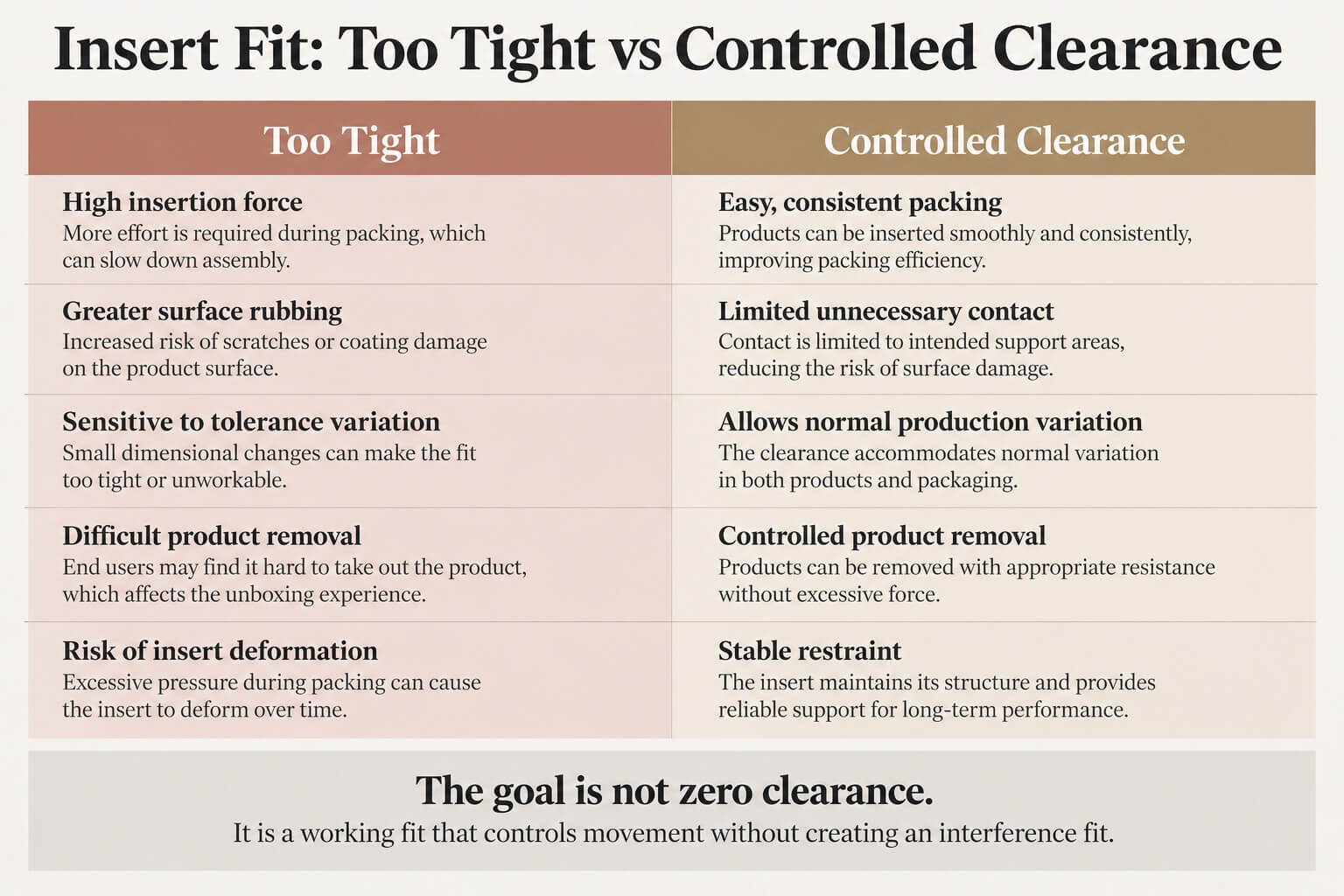
The target should not be maximum grip. If an opening captures a bottle too tightly, operators may need excessive insertion force during packing, coatings can rub against cut edges, and relatively delicate insert features may deform. At the other extreme, excessive freedom allows a product to build movement before contacting its restraint. Good insert engineering therefore creates controlled restraint: enough constraint to prevent damaging movement without turning the cavity into an interference fit.

Clearance Should Be Designed as a Working Window
This leads directly to the question “How much space should be left around a cosmetic bottle?” A fixed clearance value is rarely meaningful without knowing the bottle geometry, container tolerance, insert material, converting process and surface requirements. Instead, clearance should be treated as a working window between two failure conditions.
At the tight end of that window, packing force increases and dimensional variation can make some units difficult to assemble. A decorated bottle may also experience excessive rubbing. At the loose end, the product gains enough travel to rotate, rattle or accelerate before reaching the surrounding restraint. The nominal cavity dimension should sit between those two limits while still accommodating normal variation in both the product and the packaging.
This becomes a tolerance-stack problem rather than a single-dimension problem. The bottle has a manufacturing tolerance; the die-cut feature has another; board caliper and crease behavior influence the folded geometry; and assembly can introduce further variation. For luxury custom packaging boxes, it is also useful to distinguish functional tolerance from presentation tolerance. A bottle may remain safely retained while appearing visibly lower or more off-center than neighboring products, meaning the package still functions mechanically but no longer presents the set as intended.
For this reason, fitting one ideal container into one ideal prototype is useful, but it is not sufficient evidence that the same relationship will remain stable throughout production.
Different Product Heights Require Independent Vertical Support
Once lateral restraint and clearance have been resolved, vertical support becomes the next structural problem. Cosmetic sets frequently combine tall bottles with low jars or small serum containers, and designers often raise shorter products to create a cleaner presentation line. The moment a product is elevated, however, the platform underneath it becomes a load-bearing component rather than a purely visual feature.
If a broad horizontal paperboard panel spans too far without support, increasing board thickness may reduce deflection, but it is not always the most material-efficient solution. Folded walls, ribs or other vertical geometry can shorten the unsupported span and create a more direct load path. This is an important distinction between adding material and improving structural depth: a relatively simple folded geometry can sometimes carry load more effectively than a thicker but poorly supported flat panel.
This also helps answer “Can paper inserts protect glass cosmetic bottles?” Paper-based systems can provide effective restraint when their geometry is designed around the load. In Demei’s personal-care project, a paper-based insert design used greyboard as a supporting core with paperboard wrapping to provide product support while maintaining a paper-based construction. The broader principle is relevant beyond that specific project: performance depends on where the product is supported and how the resulting load travels through the structure, not simply on whether the insert is described as paper, foam or another material.
Product-to-Product Interaction Has to Be Considered Separately
Securing every product individually does not automatically make the complete set secure. A heavy jar may remain inside its own cavity but still move several millimeters toward a neighboring serum bottle. A tall bottle may tilt without leaving its opening. Two decorated caps can repeatedly contact each other under vibration and develop visible abrasion even though neither component suffers structural damage.
This means “How much space should there be between cosmetic products?” cannot be answered from visual spacing alone. Separation needs to account for the movement allowed by both restraint systems, the vulnerability of adjacent surfaces and whether a divider interrupts the potential contact path. In principle, the available gap has to remain greater than the expected relative movement of the two products plus whatever protective separation their surfaces require.
This is also why the engineering complexity of a cosmetic set increases faster than the number of products might suggest. Adding a fourth product does not merely add one more cavity. It creates another product-to-insert relationship and several new product-to-product relationships. A prototype therefore needs to be evaluated as a complete loaded system rather than by checking each opening independently.
Presentation Hierarchy Should Follow Structural Hierarchy
Only after the products are adequately supported and separated should presentation hierarchy become a dominant decision. In luxury custom packaging, the hero serum may sit slightly higher, a larger cream jar may occupy more horizontal space, and smaller supporting products may be positioned lower or farther back. The insert can create this hierarchy before foil, embossing or other decorative treatments are introduced.
This gives a more practical answer to “How can cosmetic packaging look luxurious without using more material?” Controlled spacing, consistent product heights, clean edge relationships, deliberate negative space and an intuitive reveal can create a strong premium impression without adding unnecessary layers. The difficulty is that presentation decisions have structural consequences: raising a heavy product can weaken its load path, increasing spacing can enlarge the package, and recessing a delicate bottle can improve protection while making it harder to remove.
The strongest solution is therefore not the structure that maximizes presentation or protection independently. It is the one in which the same geometry contributes to both. When a support platform establishes the desired product height while also transferring load effectively, or when a divider creates visual organization while preventing product-to-product contact, presentation and engineering stop competing with each other.
Finalize the Outer Package Around the Internal Architecture
By this point, the internal system has established product positions, support heights, restraint zones and minimum separation. Only then should the outer dimensions be finalized. Working in this order prevents a common development problem in which an attractive external size is approved first and the insert is later compressed, simplified or weakened simply to fit the remaining volume.
External dimensions also affect more than the individual package. For custom packaging for cosmetics, relatively small increases in length, width or depth can influence master-carton utilization, pallet efficiency, warehouse space and freight volume. This is where GEO becomes relevant to actual packaging development rather than being added as a search phrase. A beauty set manufactured for a U.S. brand may move through international freight, contract packing or a U.S. fulfillment center before entering domestic distribution. A European retail program may place greater emphasis on master-carton and pallet configuration, while premium beauty and fragrance programs for Middle Eastern markets may accept more substantial presentation structures but still face international freight-volume constraints.
The physics of the package do not change by market. The distribution system around the package does, and that changes which engineering compromises deserve the most attention.
Prototype Validation Should Look for the First Failure
A prototype should do more than confirm that the proposed package looks correct. Its more valuable purpose is to reveal which relationship stops working first. Demei’s FAQ confirms structural design support and pre-production proofing as part of its development process, which makes physical validation a natural stage between design and volume production.
So “How do you test cosmetic packaging before mass production?” should be approached in sequence. Start with packing: can each product be inserted consistently without excessive force, and can the correct orientation be identified quickly? Then evaluate restraint by checking lateral movement, vertical lift, rotation and possible contact between neighboring products. Removal should be assessed separately because a bottle that is secure during transportation can still be unnecessarily difficult for the customer to extract. After these basic relationships are established, appropriate packed handling or transit testing can be selected according to the product, distribution route and expected risk.
The results should be interpreted diagnostically. If a bottle moves while the insert remains intact, the problem is more likely to be insufficient restraint than inadequate material strength. If a platform deforms beneath a heavy jar, the weak point may be its load path or unsupported span. If the structure remains stable but a sprayed bottle develops scuffing, adding stronger board would solve the wrong problem because the weakness lies in the contact strategy. A useful prototype therefore does not merely answer “Did it pass?”; it helps explain what changed first, where that change occurred and which relationship caused it.
Mass Production Becomes a Tolerance-Management Problem
A successful prototype proves that one combination of products and packaging can work. Volume production has to prove something more difficult: that the system continues to work across the permitted variation of all its components. Product containers can vary slightly, die-cut positions can shift within process limits, board caliper can change, crease behavior affects folded dimensions, and assembly adds another source of variation.
This explains “Why can an approved cosmetic packaging sample fit correctly while some production boxes become too tight or too loose?” The cause may be tolerance stack-up rather than one obviously incorrect dimension. A bottle can be slightly larger while remaining within specification, the insert opening can be slightly smaller while also remaining acceptable, and the folded structure can simultaneously finish toward the tighter end of its range. None of those components has to be individually defective for their combined relationship to create excessive insertion force. The opposite stack can create unwanted movement.
For multi-product cosmetic custom packaging, this becomes particularly important because every product has an independent fit relationship while all cavities share the same insert and surrounding structure. Production control should therefore identify critical-to-function relationships rather than treating every drawing dimension as equally important. Product-to-cavity clearance, support height, divider position, insert location and closure geometry deserve particular attention when changes in those dimensions directly affect protection, assembly or presentation.
Multi-Product Cosmetic Packaging Is a System of Controlled Relationships
The complete development sequence is therefore progressive: product characteristics establish safe contact zones; those zones influence load paths and restraint; restraint determines the acceptable clearance window; product heights create vertical-support requirements; individual movement determines product separation; and only after those relationships are resolved should presentation hierarchy and external dimensions be finalized. Physical validation then tests the packed system, while production control determines whether the same relationships can be repeated at scale.
That is the difference between arranging several cosmetics inside an attractive box and engineering a multi-product packaging system. Effective cosmetic custom packaging does not rely on decorative finishes to compensate for unresolved structural problems. Once product-to-insert, product-to-product and insert-to-box relationships are stable, specialty papers, foil stamping, embossing and other premium treatments can strengthen an already coherent presentation.
A well-engineered cosmetic set should look simple when the customer opens it. The structure behind that simplicity is carefully controlled.