
Choosing the right box structure is one of the earliest decisions in a custom packaging project, but its impact goes far beyond how the package looks.
The structure determines how the product is held and protected, how customers open the package, how much material is required, and how efficiently the box can be manufactured, assembled, stored, and shipped. A concept may look impressive in a rendering but become inefficient in production if it requires too many components, leaves unnecessary empty space, takes too long to assemble, or fails to keep the product secure.
At the same time, simpler is not always better. A glass perfume bottle, a skincare set, a small electronic device, and a piece of apparel all have different requirements for protection, presentation, and handling.
The right structure is the one that makes sense for the product, the brand, the manufacturing process, and the supply chain—not simply the one that looks the most elaborate.
Start With the Product, Not the Box
Many packaging projects begin with reference images. A brand sees a drawer box, magnetic rigid box, or unusual opening mechanism and wants to create something similar. References are useful for establishing a visual direction, but they should not determine the structure before the product requirements are understood.
Start with accurate product dimensions, weight, shape, and fragility. Consider how many items will be packed together and whether accessories, cables, bottles, or other components need to be separated. A 100 ml glass fragrance bottle, for example, has very different structural requirements from a lightweight skincare tube, even if their external dimensions are relatively similar.
How the product will be sold and distributed also matters. Packaging designed mainly for retail display may prioritize shelf presentation and packing efficiency. A package that will travel through an e-commerce network may need to withstand more impact, vibration, compression, and repeated handling.
Before developing a dieline, it is useful to establish the basics:
Product dimensions and weight
Number of products or components
Fragile areas or surfaces that need protection
Retail, e-commerce, gift, or other intended use
Desired opening experience
Approximate order quantity
Storage and shipping requirements
The more accurate this information is at the beginning, the less likely the structure will need major changes later.
Different Box Structures Solve Different Problems
There is no single paper packaging structure that works for every product. In many cases, the better question is not “Which box looks more premium?” but “Which structure makes the most sense for this product and how it will be used?”
Folding Cartons
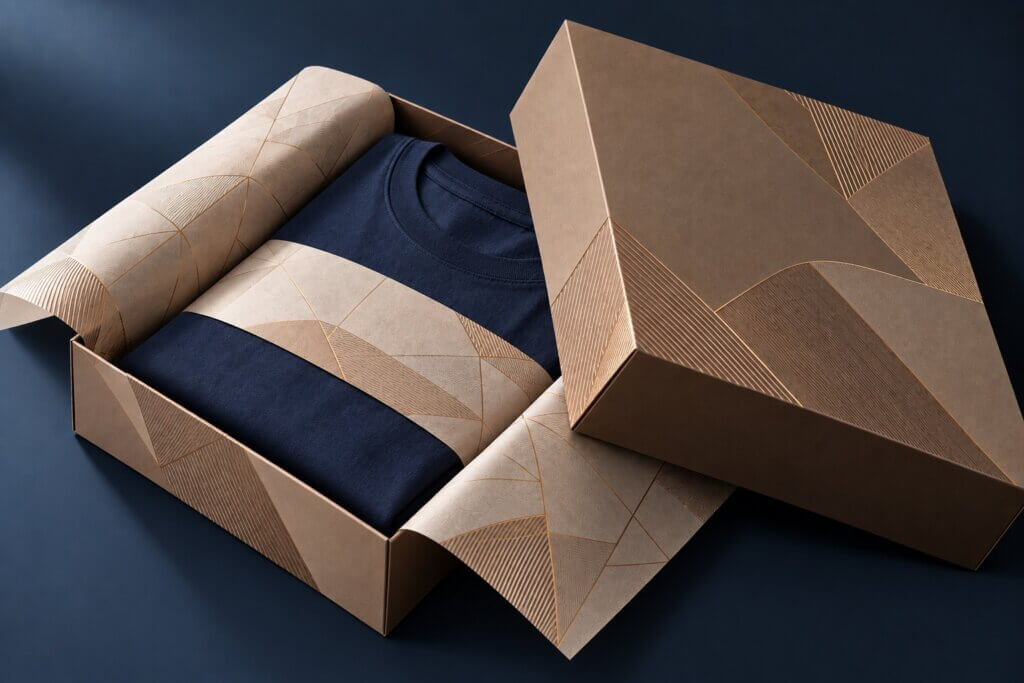
Folding cartons are typically made from paperboard and supplied flat before assembly. They are widely used for cosmetics, skincare, food, supplements, personal care products, and many lightweight consumer goods.
One of their main advantages is efficiency. They use material relatively economically, take up little space during transportation, and can be produced and assembled efficiently at scale. Beyond basic tuck-end cartons, structures can incorporate auto-lock bottoms, windows, internal panels, locking tabs, or folded paperboard inserts.
If a product does not require the strength of a rigid box, choosing heavy rigid construction purely to make the packaging feel more substantial may not be necessary. With appropriate proportions, paper selection, printing, and finishing, a folding carton can still achieve a refined presentation.
Rigid Boxes
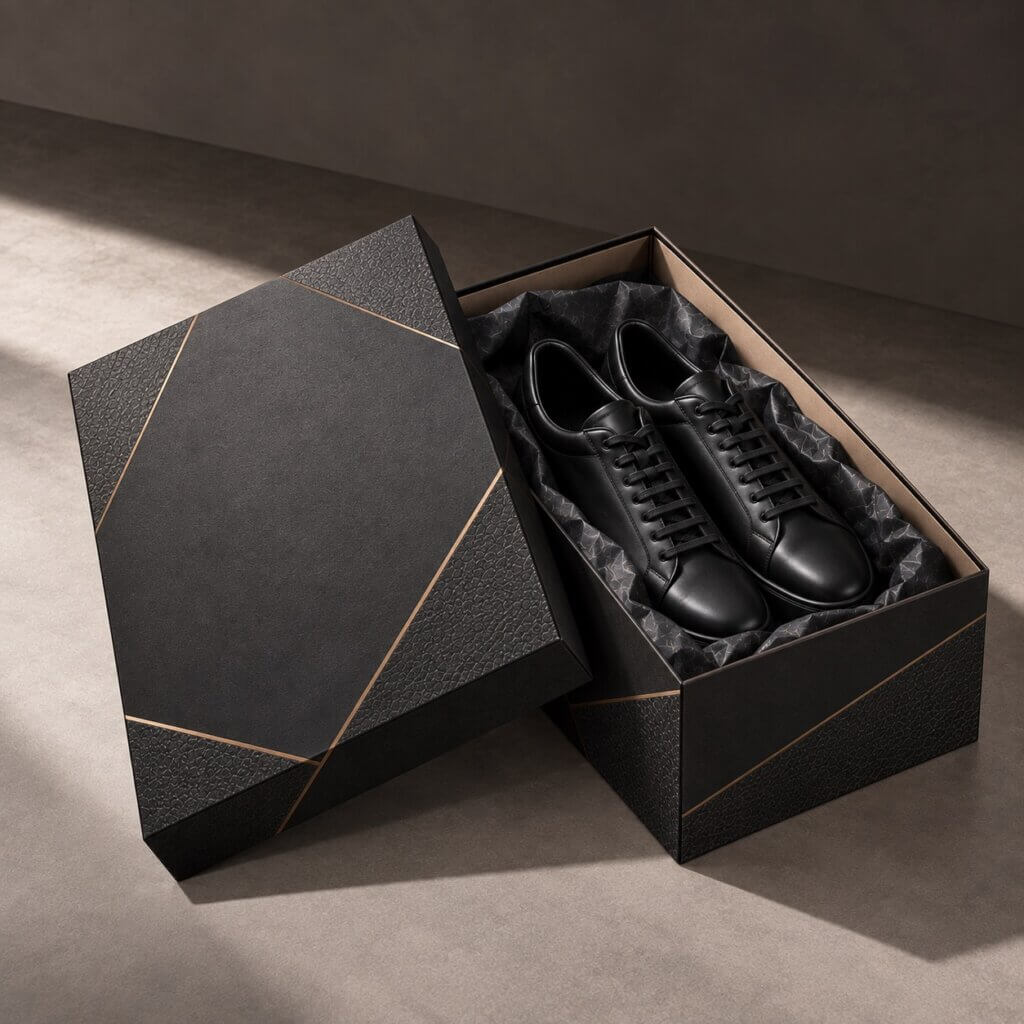
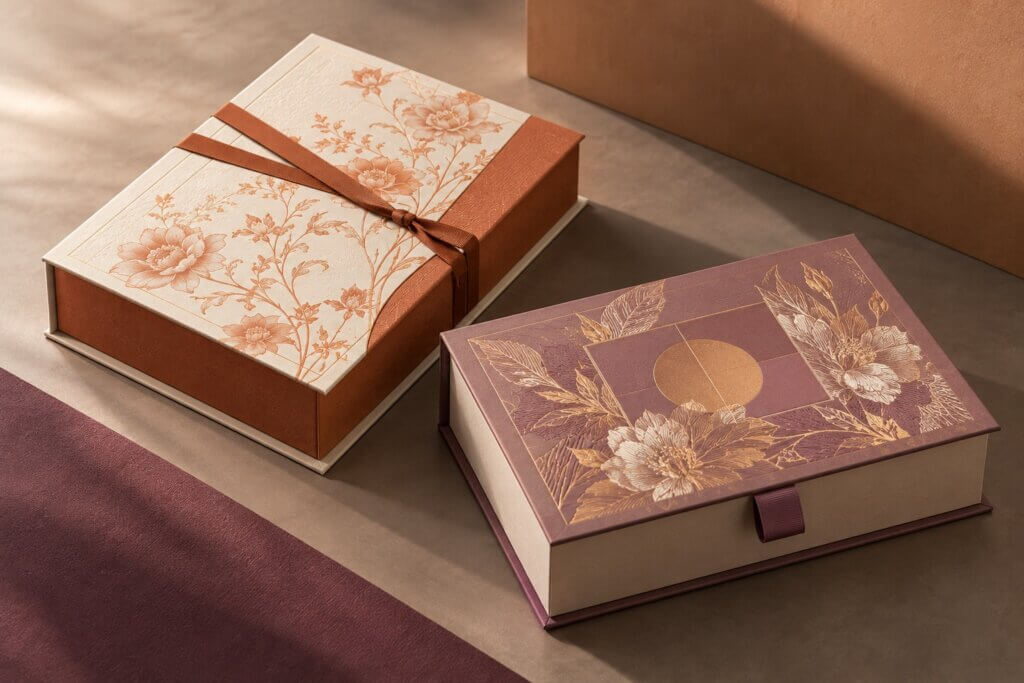
Rigid boxes are common for fragrances, jewelry, premium cosmetics, electronics, confectionery, and gift products. They are generally made from thick board wrapped with printed or specialty paper and are supplied already formed.
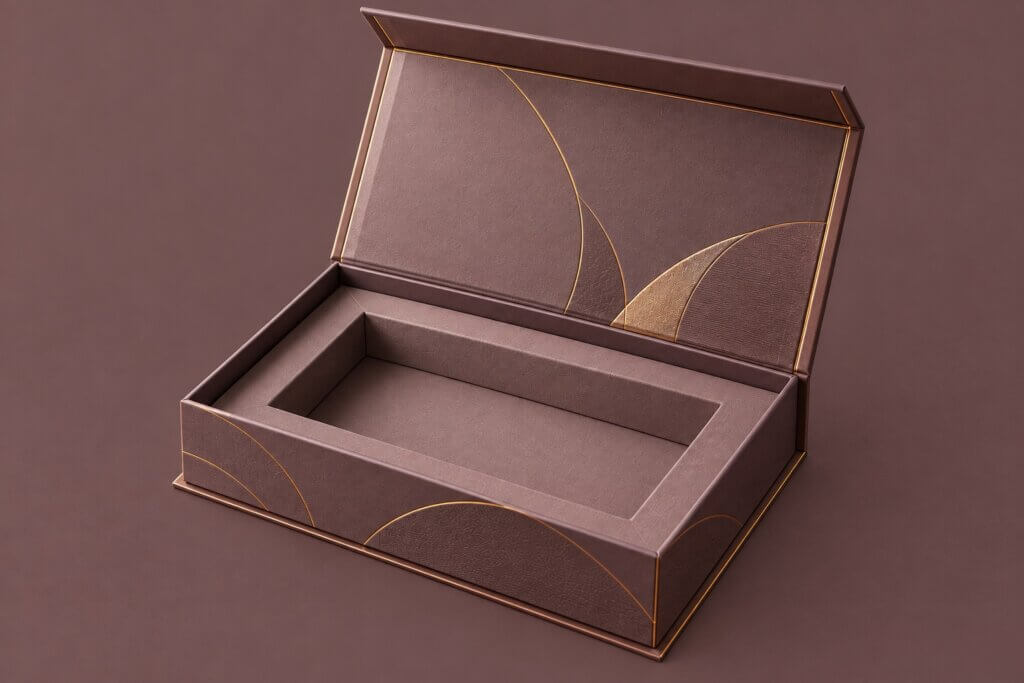
Lift-off lid boxes, book-style boxes, and other rigid constructions can create a more substantial feel and a slower, more controlled opening experience. They can also provide greater structural strength than many folding cartons.
Those advantages come with trade-offs. Rigid boxes typically use more material, involve more manufacturing and assembly steps, and occupy considerably more shipping space because most conventional rigid structures cannot be flattened.
The decision should come back to the product. If the added presentation, protection, or reuse value supports the positioning of the product, the additional material and production requirements may be justified. If the only objective is to make the package thicker and heavier, it is worth considering whether a rigid structure is actually necessary.
Drawer Boxes
Drawer boxes consist of an outer sleeve and an inner tray that slides outward. Depending on the application, they can be constructed from rigid board or folding paperboard.
What makes this structure interesting is not simply that it feels “premium.” It changes the way the product is revealed. Instead of removing a lid and immediately seeing the contents, the customer gradually exposes the product by pulling out the inner tray. This works particularly well for jewelry, confectionery, cosmetics, small electronics, and gift products.
In production, the clearance between the sleeve and drawer is critical. Too much clearance makes the box feel loose; too little can create friction and make the drawer difficult to open. Board thickness, wrapping paper, lamination, and normal manufacturing tolerances all influence the fit.
This is why even a drawer box that looks straightforward on screen may require dimensional adjustments during prototyping.
Corrugated and Mailer Boxes
When packaging needs to provide more transportation protection, corrugated structures are often more appropriate than standard paperboard.
Mailer boxes are commonly used for e-commerce products, subscription boxes, electronics, kits, and other products that need additional strength. With the right structure, the same package can provide shipping protection and serve as the branded presentation box when it reaches the customer.
Corrugated board, however, behaves differently from thin paperboard. Flute thickness affects folds, internal dimensions, tabs, and locking features. A dieline designed for a thin folding carton cannot simply be transferred to corrugated material and expected to perform in the same way.
Changing the material often means adjusting the structure as well.
When Is a Custom Structure Worth It?
Unusual shapes, multi-panel constructions, pop-up elements, and alternative opening mechanisms can make packaging more memorable, but a custom structure works best when it serves a clear purpose.
Perhaps it improves how the product is displayed. It may create a more deliberate opening sequence, hold several components in position, or allow the package to become a display after opening.
Problems tend to appear when structural complexity is added only to make a box look different. Every additional panel, component, glue point, and assembly step introduces another production consideration. Something that looks clever in a rendering may become unnecessarily difficult to manufacture across thousands of units.
Complexity itself is not a measure of good packaging design. A simple structure with well-considered proportions, product placement, and opening details can often be the more successful solution.
More Material Does Not Always Mean Better Protection
It is easy to assume that thicker board and more packaging automatically make a product safer. In practice, that is not always true.
Consider a glass bottle with too much room inside its box. Even if the outer structure is very strong, the bottle can continue to move and strike the inside walls during transportation. In this situation, controlling movement and absorbing impact may be more important than simply increasing the thickness of the outer box.
This is where the insert becomes important.
Folded paperboard can form platforms, cavities, dividers, and locking features for lightweight products. Corrugated inserts provide additional strength and cushioning. Molded pulp can create shaped support using fiber-based materials, while engineered folded-paper structures can secure several components without relying on plastic trays.
Over-engineering creates its own problems. A larger box, heavier board, and excessive cushioning increase material consumption, package dimensions, warehouse space, and freight costs.
Instead of asking how much more protection can be added, ask how much protection the product actually needs for the way it will be handled and distributed.
Design the Box and Insert Together
A common approach is to finalize the outer box first and then find an insert that fits inside it. For products that require precise positioning, this order can be limiting.
Insert height, clearance between the product and the box walls, finger access for removing the product, and the arrangement of multiple components can all affect the dimensions of the outer box. Once those dimensions are fixed, there may be very little room left to improve the internal structure.
Take a small electronics package containing a device, cable, and adapter. The goal is not simply to fit all three pieces inside the box. They need to remain in place during transportation, and when the package is opened, the arrangement should make sense immediately.
A fragrance gift set presents a similar challenge. Bottles and accessories may have different heights and shapes. Giving every item an identical cavity may technically hold the products, but it may not produce the best presentation or make them easy to remove.
Whenever possible, the insert and outer box should be developed as one packaging system rather than as two unrelated components.
The Opening Experience Does Not Need to Be Complicated
Opening style has a real effect on how a customer experiences packaging, but there is no opening mechanism that is automatically more premium than another.
A straightforward tuck-end carton may be ideal when quick access and packing efficiency matter. A lift-off lid can slow down the reveal of a gift product. A drawer creates controlled movement, while a hinged box can keep the product displayed after opening.
Small details often make a bigger difference than elaborate mechanisms. A thumb notch can make a drawer easier to pull. Finger clearance around an insert can prevent customers from struggling to remove a product. A well-positioned locking tab can keep a carton securely closed without additional adhesive.
Good opening design should feel intuitive. If the customer has to study the box to work out how to get inside, the structure may be adding complexity without improving the experience.
A Good Rendering Is Not the Same as a Production-Ready Structure
There is an important point where packaging design moves from visual concept to physical manufacturing.
A 3D rendering does not have to deal with board thickness, paper tension, folding resistance, wrapping tolerances, or manual assembly. Two components can fit perfectly on screen, while normal variations in board and wrapped-paper thickness may cause the same parts to bind during production.
Very narrow folds may look clean digitally but prove difficult to fold and glue consistently. Tight openings can become even tighter after wrapping or lamination. A closure that works once on a presentation sample may not perform consistently across a full production run.
Finishing processes also interact with the structure. Foil stamping and embossing need to be positioned with folds and edges in mind. Heavy ink coverage around folding areas may require attention to prevent visible cracking. Lamination and specialty papers can also change the way a material folds or behaves around edges.
Structural engineering should therefore happen before the graphic design is completely locked. Once the dieline and physical construction are established, artwork and finishes can be developed around the realities of that structure.
At Higher Volumes, Assembly Time Starts to Matter
A prototype that takes three minutes to assemble may not seem problematic. Multiply those three minutes across 30,000 boxes, and the situation looks very different.
Every component that needs to be folded, positioned, glued, or manually aligned adds production time. A complicated insert may also slow down product packing if workers need to check its orientation or perform several steps before placing the product.
This does not mean large orders must use basic structures. It means assembly needs to be considered more carefully as volume increases. Sometimes a locking feature can replace a glue point. Two separate components may be redesigned as one. A bottom structure may be changed to speed up packing, depending on the product and production setup.
At scale, a few seconds per box can become a meaningful production cost. Assembly efficiency is therefore part of structural design, not simply a factory issue that comes later.
Do Not Wait Until the Box Is Finished to Think About Shipping
Packaging takes up space long before a customer opens it.
Folding cartons, paper bags, and many corrugated boxes can be transported flat, making them relatively efficient to store and ship. Conventional rigid boxes are usually transported in their finished form, which means the empty space inside each box is effectively being shipped as well.
For internationally sourced packaging, this difference can become significant.
Even small dimensional adjustments can matter. Reducing the height or width of a package by a few millimeters may have little effect on the customer experience but allow more units to fit into an export carton. Across tens of thousands of boxes, that can affect carton quantities, pallet utilization, and container space.
Some rigid boxes can be designed as collapsible structures, trading additional assembly at the destination for reduced shipping volume. Whether that makes sense depends on order quantity, labor, shipping distance, and the intended positioning of the product.
Before approving the structure, ask a simple question: How will these boxes actually be packed into the shipping carton?
It often reveals costs that are invisible in a rendering.
Build a Blank Prototype Before Spending Too Much Time on the Finish
Once the basic structure is developed, it is not always necessary to move immediately to a fully printed and finished sample.
A blank structural prototype can answer many of the most important questions first. Put the actual product inside. Open and close the package several times. Remove the product and put it back. Hold the box, turn it over, and gently move it to see whether the contents shift.
Check whether tabs are easy to use, whether a drawer moves smoothly, whether the insert is too tight, and whether there is enough space to remove the product naturally.
For a new custom structure, needing a second prototype does not mean the design has failed. It is a normal part of packaging development. A few millimeters of clearance, a small change to the angle of a locking tab, or an adjustment to insert height may barely register on a screen but make a noticeable difference in physical use.
It is much easier to make these changes at the blank-sample stage than after printing, foil stamping, embossing, or other finishes have already been applied.
One Last Question: Does the Structure Actually Suit the Product?
Before approving production, look at the package as a complete system rather than checking the box, insert, and artwork separately.
Is the product stable once it is packed? Is there unnecessary movement or empty space? Can a customer open the package and remove the product naturally? Does the material provide enough strength for the product weight? Can the structure be manufactured consistently? Is the assembly process reasonable for the intended production quantity? And once the finished boxes are placed into export cartons, is the available space being used efficiently?
There is no need to build a complicated scoring system around these questions. Putting the real product into a physical prototype and walking through the complete packing and opening process will often expose structural issues very quickly.
If a design only works with extremely tight tolerances, extensive manual adjustment, or excessive material, it is worth reconsidering before mass production—even if the presentation sample looks excellent.
Final Thoughts
The most suitable packaging structure is rarely the most complicated, the thickest, or the most expensive one.
It needs to fit the product first. The product should remain where it belongs, vulnerable areas should receive appropriate protection, and the customer should be able to open and use the package naturally. At the same time, the structure has to work with real materials, normal manufacturing tolerances, assembly requirements, storage conditions, and transportation.
Some of these differences seem insignificant when only one prototype is sitting on a table. At quantities of several thousand or tens of thousands, an unnecessary component, a few millimeters of wasted space, or several extra seconds of assembly can become a measurable cost.
That is why structural decisions are best made early. Work from the actual product, develop the outer box and insert together, test the structure physically, and consider production and shipping before locking the design.
A good box structure does not need to prove how clever it is. If the product fits properly, production is consistent, shipping is efficient, and opening the package feels natural, the structure is already doing its job.