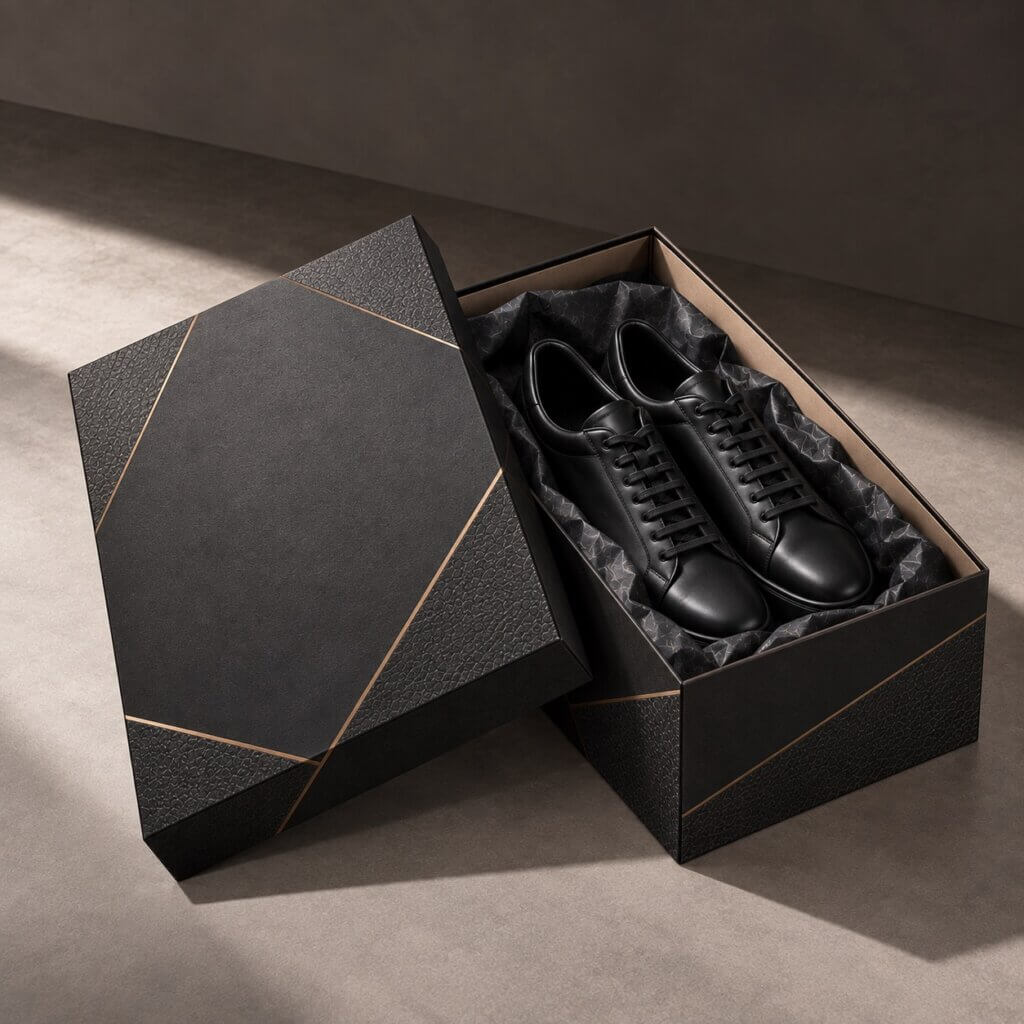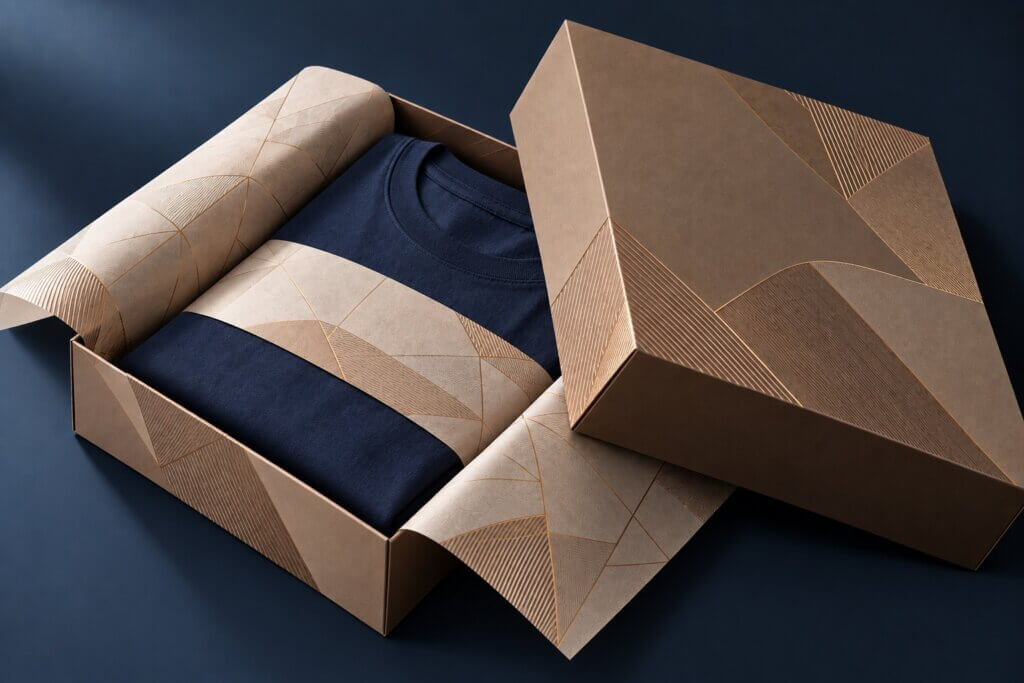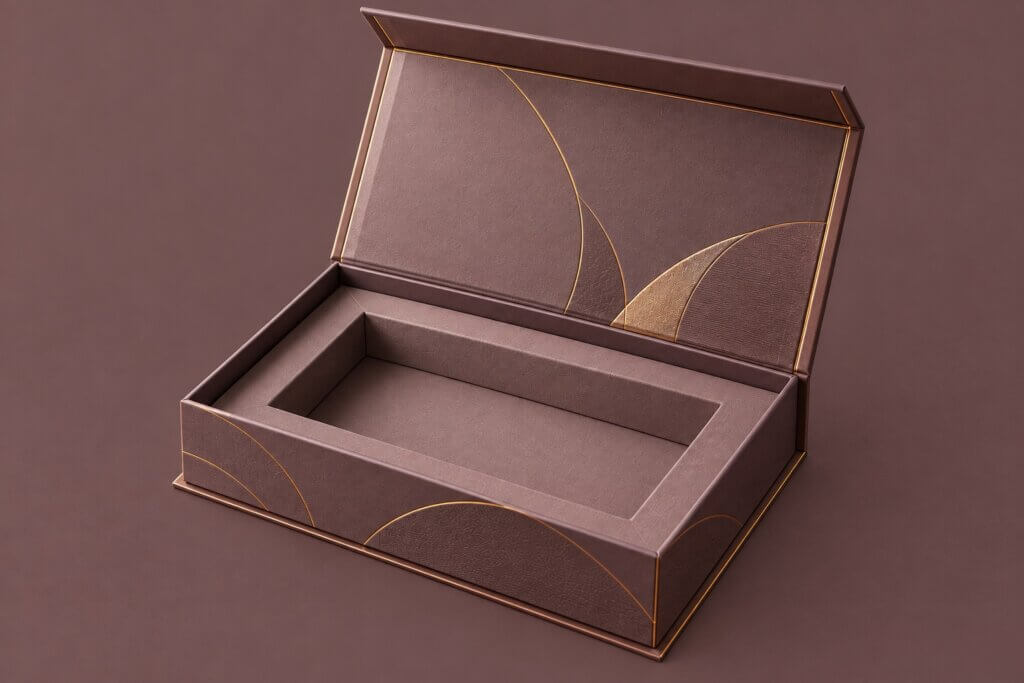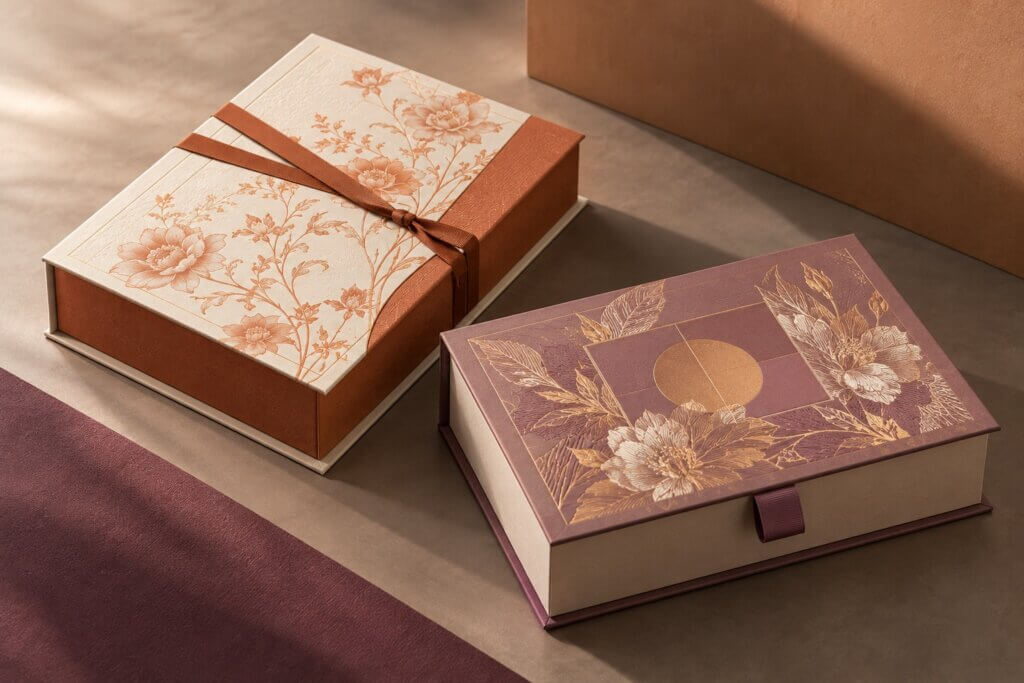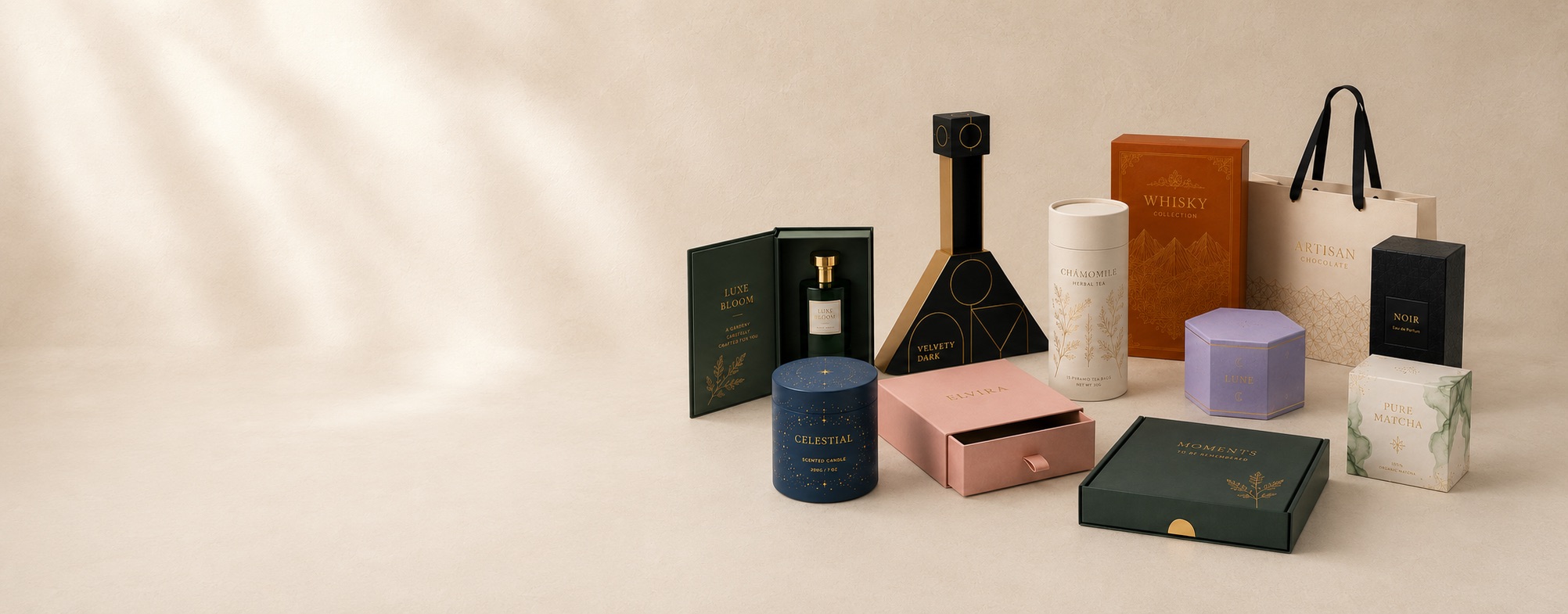

A different box shape can make a product more noticeable, but being different is not enough reason to change the structure. A hexagon box introduces six sides instead of four, and that affects more than appearance. The relationship between the product and the box changes, as do the insert, opening method, artwork layout, assembly process, and sometimes the way the finished packaging is packed for transport.
For brands developing custom shape boxes, the practical question is therefore not whether a six-sided package looks more distinctive than conventional square boxes. It is whether the shape creates enough value for the product to justify the structural changes behind it. A candle or round perfume bottle, for example, may interact naturally with a polygonal package, while a wide rectangular product may gain very little from the same geometry. Brands comparing this approach with custom round boxes or more conventional custom folding cartons should start with the product rather than the outline of a reference box.
Start With the Product, Not the Number of Sides
What products are suitable for a hexagon box? Products with relatively compact footprints are often easier to adapt, especially when the brand wants the package to be viewed from several sides. However, suitability should be judged from the packed product rather than from the product category alone. A tall glass fragrance bottle needs different support from a lightweight candle, even if both fit inside boxes with similar external dimensions.
This is also why a shape box should not be selected only from a photograph. A heart shape box, house shaped box, and six-sided package may all provide distinctive silhouettes, but each creates a different internal boundary. The farther that boundary moves away from the geometry of the product, the more attention may be required inside the package.
The Real Comparison Is Not Hexagon Versus Square—It Is Product Versus Structure
Once the product is defined, the comparison with a square structure becomes more useful. A rectangular product normally fits efficiently inside a rectangular package because its major surfaces can follow the walls of the box. A round product behaves differently: placing it inside a square package naturally leaves space around the corners. A six-sided structure changes where that unused space appears and can sometimes create a more visually balanced relationship around the product.
But does a hexagon box use less material than a square box? Not necessarily. A closer-looking fit does not automatically mean lower material consumption. The answer depends on the internal dimensions required around the product, the board or paperboard construction, the lid and base design, seams, turn-ins, inserts, and how the components are laid out during production. Comparing only the finished outside dimensions can therefore be misleading.
The better question is whether changing the shape improves something useful: presentation, product orientation, shelf distinction, gifting value, or the way the package opens around the product. If those benefits are small, a square structure may remain the simpler solution.
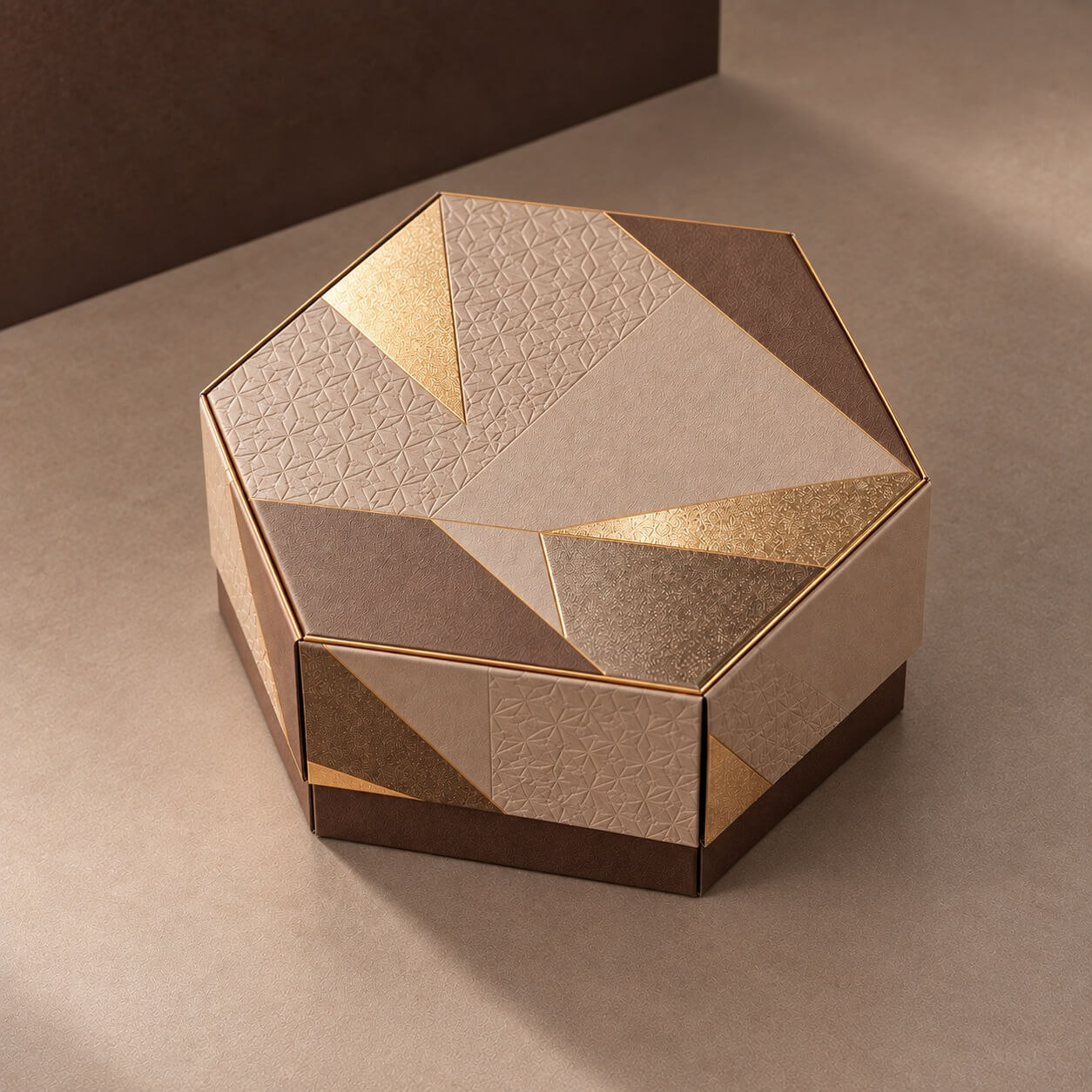
A Distinctive Shape Still Has to Work After the Lid Opens
This is where the decision moves from exterior appearance to product presentation. A hexagon gift box can create a strong first impression because the customer sees several angled faces rather than a conventional front-and-side arrangement. Artwork can travel around the structure, or individual panels can be used to control how information is revealed as the package turns.
However, the product still needs to appear intentional when the lid is removed. If a rectangular bottle sits loosely in the middle of a six-sided cavity, the outer shape may look considered while the inside looks unresolved. The insert therefore becomes part of the decision rather than an accessory added at the end.
Does a hexagon box need a custom insert? Not always. A product that already fits securely may require little or no additional support. Fragile, heavy, multi-component, or noticeably smaller products are more likely to need a paperboard insert, divider, molded component, or another positioning structure. The objective is not to fill every empty area. It is to control movement at the points that matter while keeping the product easy to remove.
For projects where the opening experience depends more on sliding presentation than on the outer silhouette, custom drawer boxes may offer a more direct structural solution. This is why choosing the box family before understanding the product can lead to unnecessary complexity.
A Template Is a Starting Geometry, Not a Production Specification
After the general structure is selected, a hexagon box template can help visualize the basic relationship between the six panels, folds, joints, and closure areas. However, a downloadable or generic hexagonal box template should not be treated as a production-ready dieline. Commercial packaging has to account for the actual finished dimensions, material thickness, closure method, seam position, insert requirements, converting process, and the tolerances needed for reliable assembly. A template can explain the geometry, but the production dieline has to be developed around the actual product and manufacturing method.
A production dieline has to reflect the actual construction. A folding-paperboard version may use connected panels, scores, tabs, and glued seams, while a rigid wrapped version can require separate board components and covering paper. Even two boxes with the same finished dimensions may therefore use completely different flat layouts.
Can a template for a square box simply be converted into a six-sided structure? Usually not. Adding two panels changes more than the outline: panel widths, joint position, closure geometry, material thickness, insert dimensions, artwork transitions, and the way the package is formed all need to be reconsidered. For a brand, the more useful starting information is the product size, desired finished dimensions, material direction, opening style, order quantity, and reference appearance. The production dieline should then be developed around those requirements rather than adapted mechanically from an existing square-box template.
Wrapping Means Two Different Things—and the Difference Matters
What does “how to wrap a hexagon box” actually mean? For gift wrapping, it usually means covering an already finished box with decorative paper or ribbon. In packaging manufacturing, however, wrapping can describe a very different process: applying the outer paper to a formed rigid-board structure. The distinction matters because the first process decorates a finished package, while the second is part of how the package itself is constructed.
For a wrapped rigid structure, covering paper becomes part of the manufactured box. Six sides introduce more transitions around the perimeter than a conventional four-sided structure, so the position of seams, paper turn-ins, corner treatment, registration, and the way the covering paper follows the board structure have to be considered together. This becomes especially important when artwork crosses several faces or when foil, embossing, or another finish needs to remain visually aligned.
Is a hexagonal box harder to wrap than a square box? For some constructions, yes, because additional faces and corners create more locations where alignment has to be controlled. But the degree of difficulty depends strongly on the construction. A folding carton and a wrapped rigid gift box should not be treated as the same manufacturing problem simply because both finish in a six-sided shape.
That distinction is important for brands: choose the manufacturing method first, then develop the artwork and finishing around the actual structure—not around a generic online template.
Packing Efficiency Can Matter More Than the Shape Itself
By this stage, a six-sided package may look good, fit the product, and have a workable dieline. The next question is whether it remains practical when hundreds or thousands of units need to be packed.
Is a hexagon box difficult to assemble? It depends on how it is built. A pre-assembled rigid structure shifts more of the forming and assembly work to the packaging manufacturer, but the finished boxes occupy substantially more storage and transport volume than structures that can be shipped flat. A folding structure may travel flatter, but more forming or locking may be required at the packing line. If every unit requires several additional hand movements before the product can be inserted, a small structural difference can become significant over a large order.
This is why a sample should be evaluated as a packing process, not only as a finished object. Someone should actually form the box if required, place the insert, load the product, close the package, and repeat the sequence. The useful questions are simple: Does the insert locate quickly? Can the product be loaded without forcing it? Does the lid naturally align? Can operators recognize the correct orientation? Does the structure remain consistent after repeated assembly?
A package that looks impressive on a presentation table but slows the packing line may not be the most practical choice.
Cost Depends on What the Shape Changes
Is a hexagon box more expensive than a square box? It can be, but there is no useful universal percentage. Shape alone does not determine the final price. Material area, board construction, number of components, die-cutting, wrapping or gluing operations, inserts, finishing, assembly labor, order quantity, packing method, and shipping volume can all change the cost.
A relatively simple six-sided folding carton may be easier to produce than a highly finished square rigid box. Conversely, a complex hexagon gift box with a separate lid, fitted insert, specialty wrapping paper, foil, and extensive manual assembly can require substantially more work than a basic square carton. The correct comparison therefore keeps the product, presentation level, materials, finishes, and quantity as similar as possible and changes the structure being evaluated.
The same principle applies to shipping. Is a hexagon box suitable for shipping? Yes, but the retail or gift box should not automatically be treated as the shipping container. Protection during distribution depends on product fragility, primary package strength, void space, outer cartons, packing arrangement, and the distribution environment. Unusual retail geometry may also affect how efficiently finished units fit into a master carton, so transport should be reviewed before dimensions are finalized rather than after production.
So, When Does a Hexagon Box Make Sense?
By the time these decisions are considered in sequence, the choice becomes much clearer. A six-sided structure makes sense when its shape contributes something useful to the complete package—better visual framing of the product, stronger shelf distinction, a more appropriate gift presentation, or a geometry that works naturally with the product and opening experience.
A conventional square structure remains valuable for the opposite reason: it is familiar, space-efficient for many rectangular products, straightforward to pack, and compatible with a wide range of production methods. Choosing one does not mean the design is less creative. It means the structure is doing what the product requires.
The practical decision is therefore not “Which shape looks more premium?” It is: What does changing the shape improve, and what does it require us to change elsewhere? If the answer is meaningful enough to justify changes to the insert, dieline, wrapping, assembly, and logistics, a hexagon box can be a strong packaging direction. If the benefit is mainly novelty, a simpler structure may give the brand more room to invest in materials, printing, finishing, or the opening experience instead.
At Demei Packaging, most custom packaging projects start from 500 pieces. Before production, the structure can be developed around the actual product, followed by material selection, dieline development, sampling, and testing so that the approved concept is practical to reproduce at scale.