
China is one of the world’s major manufacturing bases for custom packaging, offering buyers access to a wide range of materials, box structures, printing methods, finishes, and production capabilities, But finding a supplier is only the beginning.
For brands, importers, distributors, and procurement teams, successful packaging sourcing depends on much more than comparing unit prices. Material specifications, structural design, sampling, quality control, minimum order quantities, lead times, shipping methods, and communication can all affect the final cost and quality of a packaging project.
A quotation that looks inexpensive at first may become costly if the packaging requires redesign, arrives with inconsistent colors, takes up excessive shipping space, or fails to protect the product properly.
This guide explains how to source custom packaging from China step by step—and what buyers should evaluate before placing a production order.
Start With a Clear Packaging Specification
Before contacting packaging manufacturers, define what you actually need.
One of the most common sourcing problems is requesting quotations with incomplete information. For example, asking for a price for “5,000 custom gift boxes” leaves too many variables unanswered, A useful packaging specification should include:
Box style or preferred structure
Finished dimensions
Product dimensions and weight
Material requirements
Printing colors
Surface finishes
Insert requirements
Order quantity
Delivery destination
Target completion date
If you already have artwork, dielines, reference photos, or an existing packaging sample, provide them as well.
However, you do not necessarily need to know every technical detail before contacting a manufacturer. An experienced packaging supplier should be able to recommend suitable paper grades, board thicknesses, inserts, and structures based on the product and intended use.
For example, a lightweight skincare carton and a rigid perfume gift box have very different structural and material requirements. Providing the product itself—or accurate dimensions and weight—allows the supplier to develop a more appropriate packaging solution.
Choose the Right Type of Packaging Supplier
Not every packaging supplier in China offers the same capabilities, Some companies specialize in folding cartons, while others focus on rigid boxes, corrugated packaging, paper bags, tubes, or specialty structures. Some suppliers primarily handle trading and outsource production, while manufacturers may control printing, finishing, assembly, and quality inspection directly, The right supplier depends on your project.
If you are sourcing several packaging formats—for example, rigid boxes, folding cartons, paper bags, and inserts—it may be more efficient to work with a supplier that can coordinate multiple production processes.
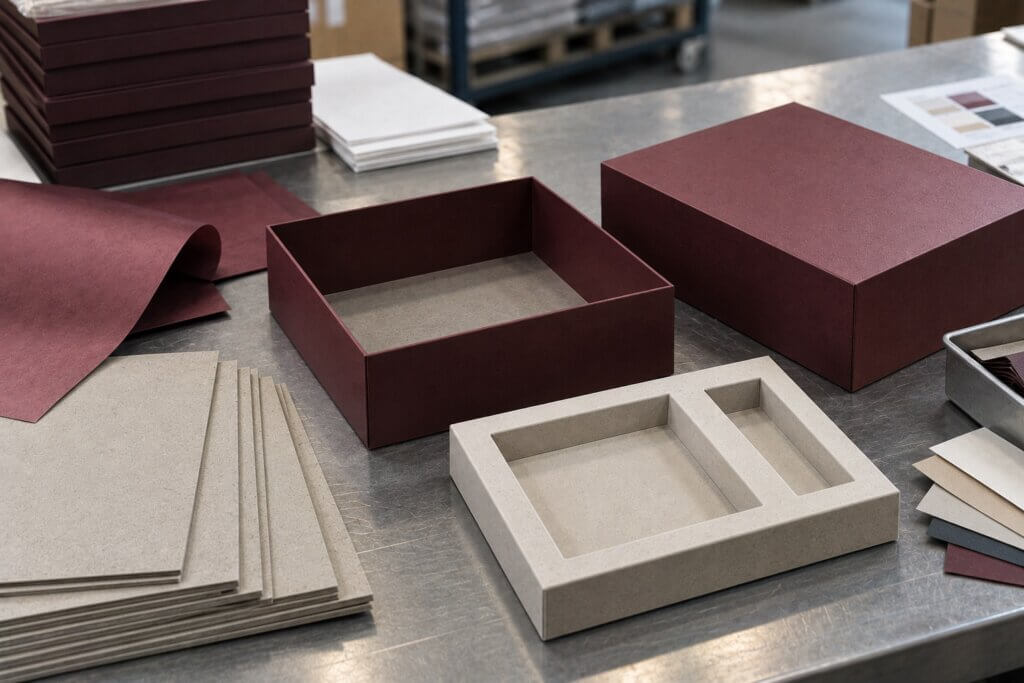
For structurally complex packaging, engineering capability becomes particularly important. A supplier that can adjust dielines, test opening mechanisms, develop paper inserts, and evaluate assembly efficiency can help solve problems before mass production begins.
When evaluating a potential supplier, consider questions such as:
What packaging types do they manufacture regularly?
Can they provide structural design support?
What printing and finishing processes are available?
Can they produce custom paper inserts?
What quality control procedures are used?
Do they have experience with export packaging?
Can they provide relevant certifications when required?
A supplier that fits your actual packaging category is often more valuable than one that simply offers the lowest initial quotation.
Understand What Affects the Packaging Price
Custom packaging prices can vary significantly between suppliers, but the difference is not always simply a matter of profit margin.
Several variables determine the final manufacturing cost.
Materials
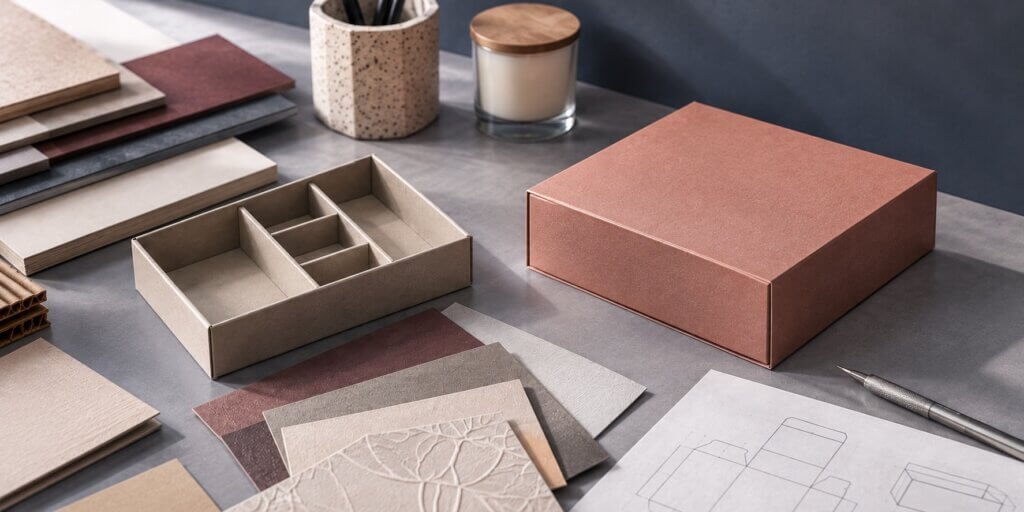
Paperboard type, thickness, specialty paper, corrugated flute, rigid board, and insert material can all change the price.
Using heavier material does not automatically mean better packaging. The goal should be to select enough strength for the product, distribution environment, and desired presentation without unnecessary material consumption.
Box Structure
A standard folding carton is generally simpler to manufacture than a multi-component rigid box.
Structures involving drawers, multiple panels, complex closures, compartments, or unusual shapes may require additional tooling, assembly, and labor.
Printing and Finishes
Standard printed packaging can often be produced efficiently at scale. Additional processes such as foil stamping, embossing, debossing, spot UV, specialty coatings, textured paper, or multiple finishing operations add production steps.
The important question is not whether to eliminate finishes, but whether each finish contributes enough visual or functional value to justify its cost.
Quantity
Custom packaging usually has setup costs before production begins. These may include printing setup, tooling, die-cutting preparation, color adjustment, and machine setup.
As the order quantity increases, these fixed costs are distributed across more units, which can reduce the unit price.
This is why a quotation for 10,000 boxes may have a significantly lower unit cost than one for 500 boxes—even when the packaging specification is identical.
Request Comparable Quotations
Receiving three quotations does not automatically mean you have three comparable prices.
Supplier A may quote a box using one paper thickness while Supplier B uses another. One quotation may include an insert, while another excludes it. Different suppliers may also use different packing methods or finishing specifications.
Before choosing a supplier based on price, make sure the quotations are based on the same requirements.
Compare:
Finished box dimensions
Material type and thickness
Printing method
Surface treatment
Special finishes
Insert material and structure
Quantity
Individual packing requirements
Export carton specifications
Tooling charges
Sample charges
Production lead time
Shipping terms
This makes it easier to identify why prices differ.
The lowest unit price is not necessarily the lowest procurement cost. Packaging defects, poor packing efficiency, delayed production, or expensive freight can easily offset a small saving in manufacturing price.
Always Develop and Approve a Sample
For custom packaging, sampling is one of the most important stages before mass production. A digital rendering can show the visual concept, but it cannot fully demonstrate board stiffness, paper texture, opening resistance, insert fit, foil appearance, or structural performance.
Depending on the project, sampling may happen in several stages.
Structural Sample
A blank or digitally cut structural sample can be used to test dimensions, folding, opening, product fit, and insert design.
This is particularly useful when the packaging structure is new.
Printed Sample
A printed sample allows the buyer to evaluate artwork placement, colors, text, coatings, and overall appearance.
Production-Representative Sample
For higher-value or technically demanding projects, a sample closer to the intended mass-production specification may be required to confirm materials and finishes.
Before approving a sample, check more than appearance. Place the actual product inside the packaging. Open and close it repeatedly. Check whether the product moves. Examine corners, folds, glued areas, and surface finishes under different lighting conditions.
Changes are much easier—and usually much less expensive—to make during sampling than after thousands of boxes have been manufactured.
Evaluate Quality Beyond the First Sample
A good sample is important, but mass-production consistency is equally important. Packaging production involves multiple processes. Printing, lamination, foil stamping, die cutting, mounting, gluing, assembly, and packing can introduce variation.
For this reason, buyers should understand how the supplier manages quality during production.
Depending on the packaging type, inspection may include:
Dimensions and tolerances
Material specifications
Print registration
Color consistency
Surface scratches or marks
Foil stamping position
Embossing or debossing alignment
Glue quality
Box opening and closing
Insert fit
Carton packing quantities
For branded packaging, color consistency deserves particular attention. Colors displayed on a monitor do not necessarily reproduce identically in print, and different substrates can influence the final appearance. Where color accuracy is important, communicate the required color standard during sampling and establish an approved physical reference whenever practical.
Consider MOQ and Order Quantity Carefully
Minimum order quantity, or MOQ, is an important consideration when sourcing custom packaging.
Custom production requires setup, Printing machines need preparation, dies may need to be produced, materials need to be ordered, and finishing processes need to be scheduled, This makes extremely small production runs less economical, However, ordering the largest possible quantity simply to achieve a lower unit price can also create problems.
Packaging occupies warehouse space. Artwork may change. Product specifications may be updated. A seasonal design can become obsolete. A brand may also discover that its packaging needs improvement after the first production run.
Instead of focusing only on the lowest unit price, consider:
Unit cost + expected consumption + storage + freight + risk of obsolete inventory.
For growing brands, a moderate initial production quantity can sometimes be more economical overall, even if the unit price is slightly higher. For established products with predictable demand, larger production runs may offer meaningful savings.
The right order quantity is therefore a purchasing decision, not simply a pricing decision.
Plan Production Lead Time Before You Need the Boxes
Packaging is often one of the final components required before a product can launch or ship, That makes delays particularly expensive.
Custom packaging production involves more than printing. Material preparation, printing, surface finishing, die cutting, mounting, assembly, inspection, and export packing all require time, Complex rigid packaging usually involves more production stages than a simple folding carton, Buyers should therefore work backward from the required delivery date.
Your schedule should account for:
Structural development
Artwork confirmation
Sampling
Sample approval
Mass production
Quality inspection
Export packing
International transportation
Customs clearance and local delivery
Do not assume that “production lead time” includes all of these stages, Ask your supplier exactly when the production clock starts. In many cases, production begins only after artwork, samples, specifications, and payment terms have been confirmed.
Building extra time into the schedule also gives both buyer and supplier more flexibility if an unexpected issue appears.
Optimize Packaging for International Shipping
Manufacturing price is only one part of the total packaging cost, International freight can substantially affect the landed cost, particularly for packaging that occupies a large amount of space, This is where structural design becomes a sourcing issue as well as a design issue.
Whenever possible, folding cartons, corrugated boxes, and paper bags can be shipped flat. Certain rigid packaging structures can also be designed to collapse before assembly, A packaging structure that costs slightly more to manufacture but occupies significantly less shipping volume may produce a lower total landed cost.
When evaluating packaging for international sourcing, consider:
Shipping volume
Gross weight
Units per export carton
Pallet efficiency
Container utilization
Risk of damage during transportation
Assembly requirements after delivery
Packaging should therefore be optimized not only around the product, but around the entire supply chain.
Choose the Right Shipping Method
The appropriate shipping method depends on quantity, packaging volume, destination, and deadline.
Air Freight
Air freight is useful for urgent orders, samples, or relatively small shipments, but it can become expensive for bulky packaging.
Sea Freight
For larger production orders, sea freight is generally more economical, especially when packaging can be packed efficiently.
However, buyers need to account for longer transit times and destination handling.
Express Courier
International courier services can be practical for prototypes, samples, and small quantities where speed and convenience are more important than freight cost per unit. In some projects, buyers may use more than one shipping method.
For example, a small portion of an order can be sent by air to meet an urgent launch date while the remaining quantity travels by sea.
Planning this before production can prevent expensive last-minute shipping decisions.
Protect Yourself With Clear Specifications and Approvals
Many sourcing disputes begin because the buyer and supplier have different interpretations of what was ordered.
A photograph or message saying “same as sample” may not be enough for a complex custom package.Before mass production, important specifications should be documented clearly.
These can include:
Dimensions
Material
Board thickness
Artwork version
Printing colors
Surface finishes
Foil color
Insert structure
Packing method
Approved sample
Quantity
Inspection requirements
Any changes made after sample approval should also be documented, This creates a clear reference for both parties and reduces the risk of misunderstandings during production.
For repeat orders, maintaining an approved packaging specification becomes even more valuable because future production can be compared against the same standard.
Think Beyond the First Order
The best packaging supplier relationship is rarely built around a single purchase order.
As a product line grows, packaging requirements often become more complicated. A brand may introduce new SKUs, sizes, markets, seasonal versions, or sustainability requirements, A supplier that already understands the brand’s materials, colors, quality expectations, and structural preferences can make future projects more efficient, This does not mean buyers should stop evaluating performance.
After each production run, review:
Was the quality consistent?
Was production completed on schedule?
Were problems communicated early?
Did the packaging perform well during shipping?
Was assembly efficient?
Was there unnecessary material or empty space?
Can the next order be improved?
Good sourcing is a continuous optimization process, A box that worked for 1,000 units may not be the most efficient solution when annual demand reaches 100,000 units. At higher volumes, structural redesign, material optimization, automated assembly, or different shipping configurations may generate meaningful savings.
Final Thoughts
Sourcing custom packaging from China can provide access to extensive manufacturing capabilities, materials, printing technologies, finishes, and custom structures. But successful sourcing requires more than finding a factory and negotiating the lowest unit price.
Start with clear specifications. Choose a supplier with relevant manufacturing and engineering capabilities. Develop physical samples before production. Compare quotations on the same basis. Establish quality requirements, plan realistic lead times, and consider international freight when evaluating the total cost.
Most importantly, evaluate packaging as part of your complete supply chain.
The most effective packaging solution is not necessarily the cheapest box to manufacture. It is the solution that achieves the right balance between presentation, protection, production efficiency, quality consistency, shipping efficiency, and total procurement cost, When these factors are considered early in the sourcing process, buyers can reduce unnecessary costs while building packaging that performs reliably from production line to final delivery.