
For a small business, packaging procurement often begins with a simple request: box size, quantity, logo, and target price. But that information is rarely enough to determine whether a package will work efficiently once products begin moving through packing, storage, parcel delivery, and repeat ordering.
The more useful approach is to treat custom shipping boxes for small business as part of a complete packaging system. Before choosing board grade or printing, a buyer should define what is being shipped, how different SKUs are packed, how the package will be handled, and which packaging components are actually customer-facing. Working with an experienced custom packaging manufacturer can then turn those commercial requirements into measurable structural and production specifications.
This distinction becomes increasingly important as a small business grows. A brand may begin with one shipping carton but later introduce retail bags, gift packaging, seasonal formats, or premium presentation boxes. A well-planned packaging development process should therefore solve the immediate shipping requirement without creating unnecessary complexity for future packaging orders.
Start With the Complete Packed Configuration
The first question should not be “What box size should we order?” It should be “What exactly will be inside the package when it leaves the packing station?”
A product measuring 180 × 70 × 45 mm does not necessarily require an internal box size of 180 × 70 × 45 mm. Retail packaging, accessories, instructions, protective paper, inserts, and functional clearance all contribute to the packed dimensions. Product weight, center of gravity, fragile surfaces, orientation, and the possibility of several products being packed together also affect how loads are transferred into the box panels during handling.
This is why the common question “What size shipping box does a small business need?” cannot be answered reliably from the bare product dimensions alone. The internal dimensions should be derived from the complete packed configuration, while the external dimensions result from the selected material construction and structural design.
The same principle applies when considering a carton mailer box. Two structures with similar finished dimensions can behave differently if their board construction, crease positions, locking geometry, or product support are different. The objective is not simply to eliminate every millimeter of empty space; sufficient clearance is still needed for efficient loading and realistic production tolerances.
Decide Whether Different SKUs Should Share the Same Shipping Format
Once the packed configuration is established, the next decision concerns SKU rationalization.
Can several products use the same shipping box? Yes, when their packed dimensions, weights, and protection requirements are sufficiently compatible. A shared format can reduce the number of packaging SKUs a business needs to purchase, store, count, and reorder. This can be particularly valuable for smaller companies with limited warehouse space.
However, excessive standardization creates another type of inefficiency. If a small product is repeatedly packed into an oversized common box, the business may consume more void fill, increase parcel volume, spend more time positioning the product, and potentially reduce protection because the contents can move during transit.
The correct decision is therefore not “one box per product” versus “one box for everything.” It is to identify sensible SKU families based on packed dimensions and handling requirements. That creates a packaging range with enough standardization to control inventory without forcing incompatible products into the same structure.
Define the Fulfillment Process Before Finalizing the Structure
After determining what goes inside the package, the buyer should examine what happens at the packing station.
A business shipping 30 orders per day can tolerate different assembly requirements from one processing several hundred orders across multiple SKUs. The number of folds, locking-tab engagement, need for tape, placement of protective materials, label area, and ease of closing all affect packing time. A structure that feels acceptable when assembled once during development may become inefficient when the same operation is repeated throughout a working day.
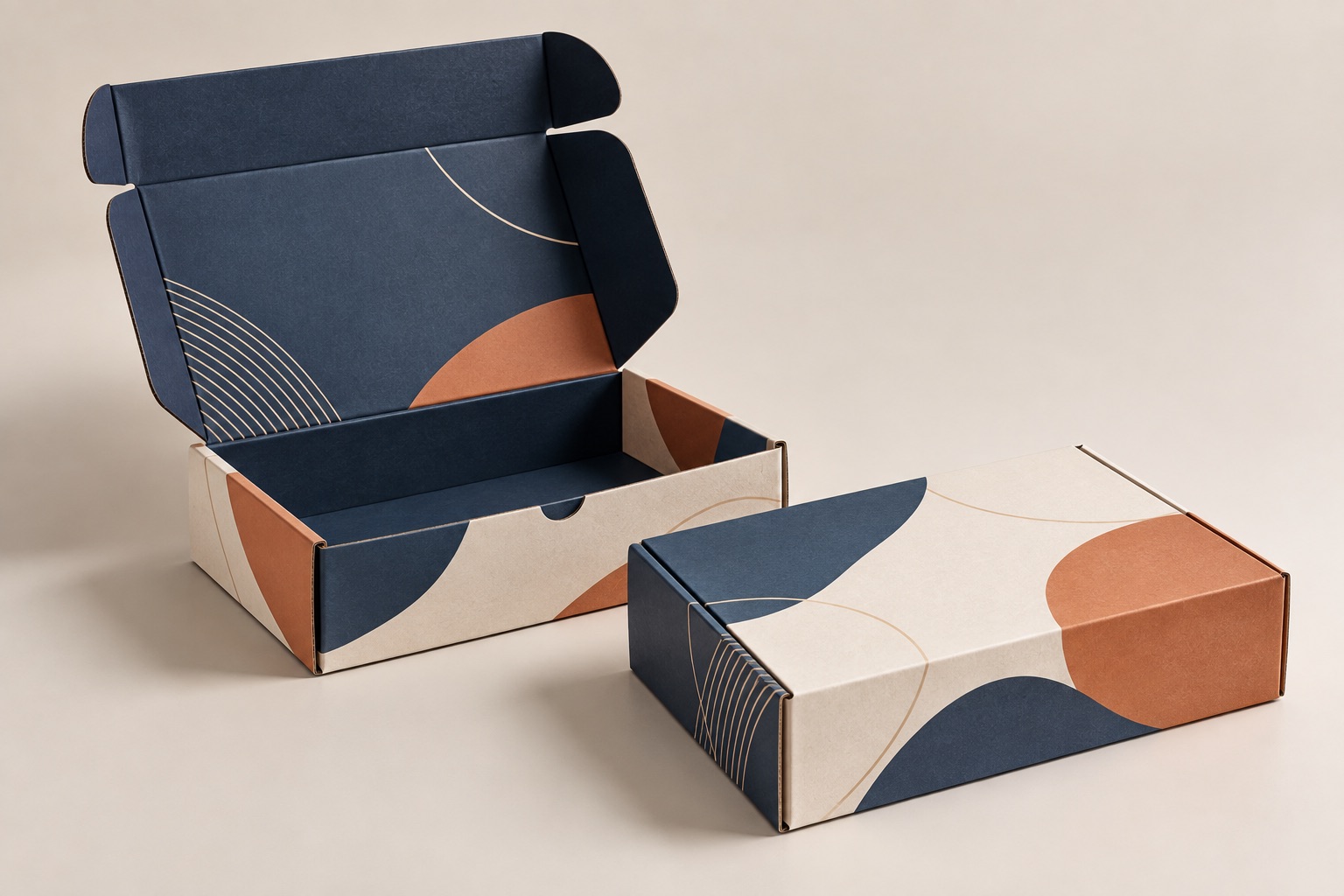
This operational context should also influence custom printed postal boxes. Exterior graphics have to coexist with shipping labels, tape, abrasion zones, and handling marks. Interior printing may provide a more controlled unboxing experience without covering every external panel, while a simple one- or two-color exterior may be sufficient for a package whose primary job is transportation.
Brands looking to print custom mailer boxes should therefore specify more than the logo itself. Artwork coverage, number of colors, inside versus outside printing, color references, finishing, barcode or label zones, and areas that cross creases or structural joints should be established before artwork approval.
Let the Distribution Route Define the Required Performance
Only after the packed product and fulfillment method are understood should the discussion move to material strength.
A direct-to-consumer parcel can encounter stacking, vibration, compression, drops, conveyor handling, and repeated transfers. A box moving mainly between a brand’s own warehouse and retail stores experiences a different distribution environment. Export shipments introduce another layer because the individual package may spend significant time inside master cartons and international freight networks.
For buyers in North America, Europe, the Middle East, or other overseas markets sourcing packaging from China, the package therefore has two journeys to consider: the finished packaging must first reach the packing location efficiently, and the packed product must then survive its own distribution route.
Board selection should respond to those conditions. Flute profile, liner combination, finished dimensions, panel geometry, product weight, and closure design work together; specifying one characteristic in isolation does not guarantee performance. More material is not automatically safer, just as reducing material is not automatically more sustainable. The appropriate specification is the one that provides the required performance with controlled material use.
This is where structural engineering becomes more useful than selecting a box from appearance alone.
Separate Shipping Packaging From the Rest of the Brand’s Packaging System
As the business grows, another question becomes important: Does every packaging component need to perform the same job?
Usually not.
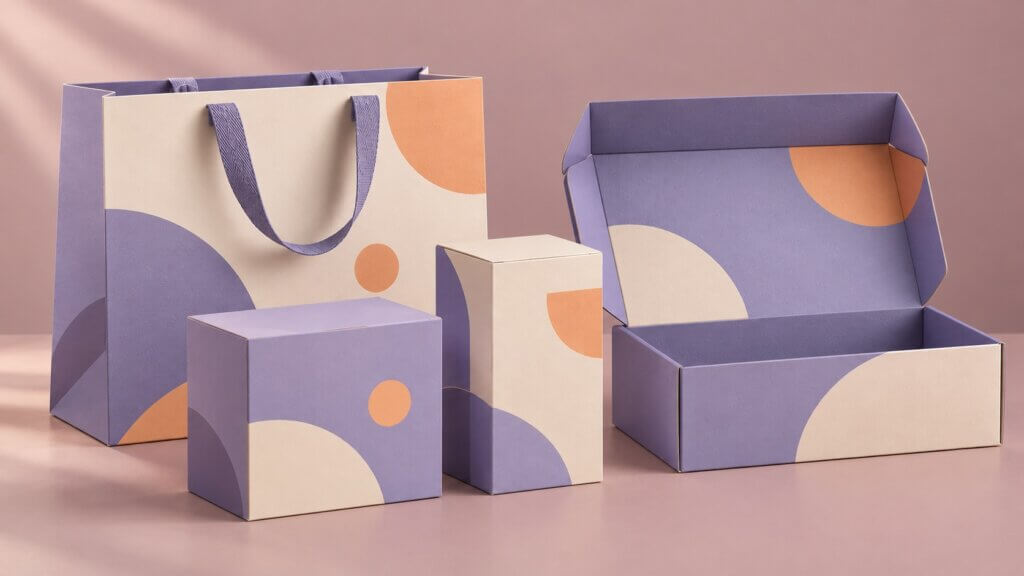
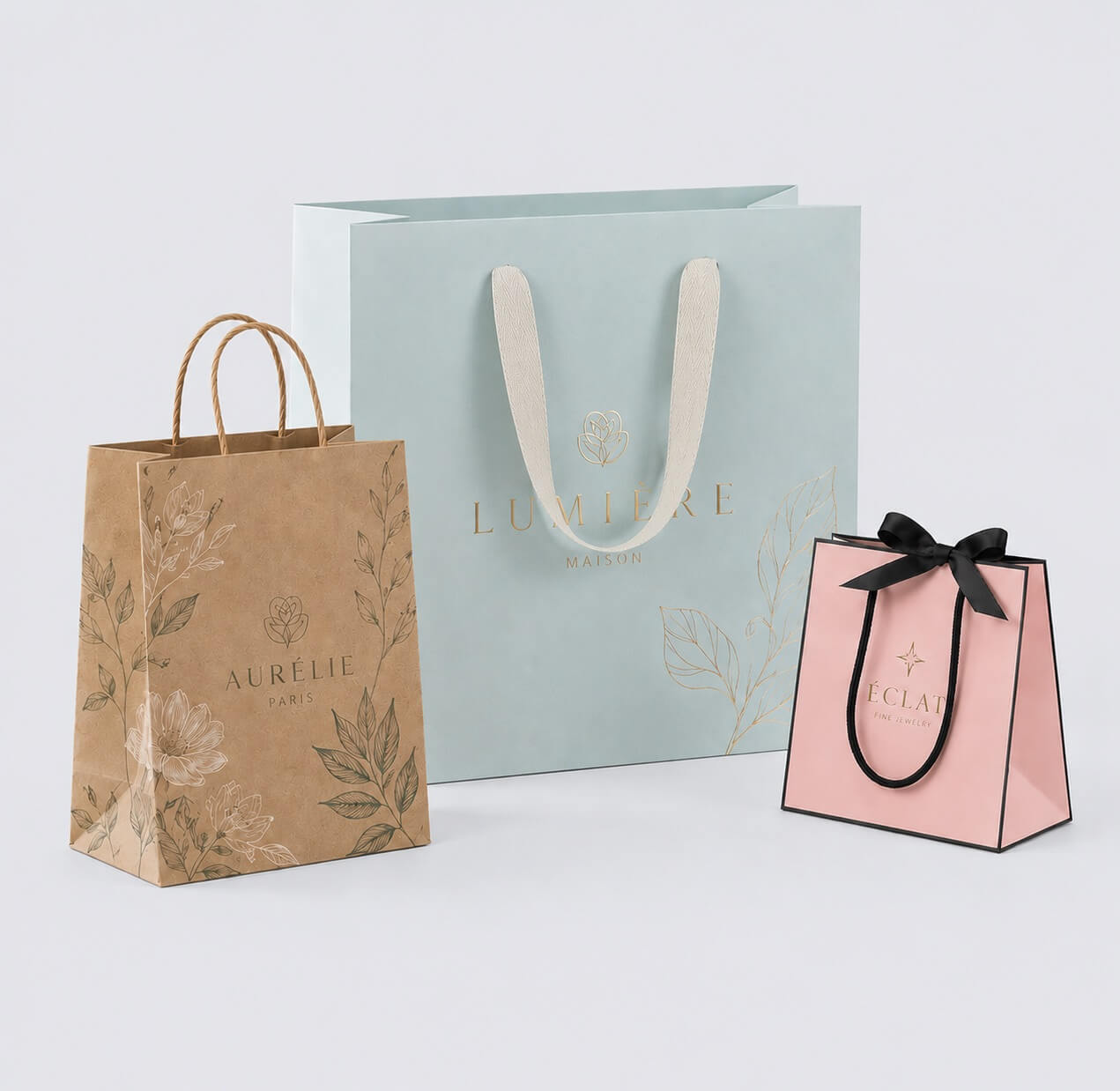
The shipping box primarily manages distribution and fulfillment. Customer-facing packaging may have a different purpose. For a retail or event-based brand, custom printing on paper bags may focus more on print appearance, handle strength, fold quality, and brand presentation than parcel resistance. Personalized paper shopping bags may be required for physical stores, while custom kraft bags with logo can provide a simpler branded format for takeaway, retail, or promotional use.
The specifications still need to be precise. A kraft paper bag with design should account for side gussets, top turnover, handle attachment positions, and the way artwork changes when the bag is folded into its final form. Similarly, kraft paper bags for packaging should not be selected only by paper weight; bag dimensions, bottom construction, handle type, product load, and reinforcement can all affect actual performance.
For events or campaigns, promotional paper bags introduce another consideration: the required quantity and artwork lifespan may be very different from evergreen packaging. This can justify a different production specification even when the dimensions appear similar.
Keeping these functions separate prevents a common sourcing mistake: trying to make one packaging format satisfy transportation, retail presentation, gifting, and promotion simultaneously.
Treat Premium and Non-Rectangular Packaging as Separate Engineering Problems
The same principle applies when a small business expands into gift sets or premium product lines.
Customized rigid boxes are normally evaluated around presentation, dimensional consistency, wrapping quality, opening behavior, and product support rather than the same performance criteria used for a corrugated shipper. A search such as rigid box custom may sound like another request for a branded box, but from a manufacturing perspective it introduces different converting processes, materials, tolerances, assembly requirements, and freight-volume considerations.
Round structures require their own specifications as well. Round boxes with lids depend on the relationship between lid diameter, base diameter, wrapping-paper buildup, roundness, lid depth, and friction. A rounded box should not automatically be specified like a rectangular box simply because the internal volume is similar.
Even the term rounded edge box can describe a visual requirement rather than a complete manufacturing specification. If rounded corners or edges are important to the brand, the buyer should clarify the intended construction rather than relying on the wording alone.
This is why a growing business benefits from creating specifications by packaging function and structure instead of maintaining a list that contains only finished dimensions and artwork names.
Convert the Requirements Into Production Specifications
Once each package has a defined role, commercial requirements can be translated into manufacturing information.
For a shipping box, this normally means confirming the packed product, internal or finished dimensions, material construction, structural style, closure, print coverage, artwork version, finishing requirements, quantity, packing method, and any critical tolerances. If inserts or protective components are required, they should be evaluated together with the product rather than specified independently.
This naturally answers another common search question: “What information does a packaging supplier need to provide an accurate quote?”
A useful RFQ should include product dimensions and weight, packed configuration, expected quantity, packaging function, approximate dimensions or an existing sample, print requirements, destination, target delivery date, and any special structural or material requirements. Reference photographs are useful for communicating direction, but photographs alone cannot define dimensions, materials, tolerances, or performance.
Demei’s custom packaging FAQ similarly notes that MOQ depends on packaging type, structure, and finishing, and that physical prototypes can be used to review structure, materials, artwork, and finishing before mass production.
Compare Total Packaging Cost, Not Only Unit Price
Only after the specification is reasonably stable does price comparison become meaningful.
Buyers searching for cheap custom mailer boxes may naturally focus on unit price, but a lower box price can create costs elsewhere. Oversized packaging can increase void fill and storage volume. A complicated structure can increase packing labor. An unnecessarily elaborate print specification can add production cost without improving the customer’s experience. Conversely, reducing material without considering product load can increase damage risk.
For this reason, small businesses should evaluate the practical packaging cost as a combination of the box, protective components, packing labor, storage, inbound freight, expected waste, and operational efficiency.
This also explains why “Are custom boxes cheaper at higher quantities?” requires a qualified answer. Increasing volume can reduce the unit impact of setup and other fixed production costs, but an oversized purchase can tie up cash, occupy warehouse space, and create obsolete packaging if the product or artwork changes.
The economically appropriate order quantity is therefore not necessarily the quantity with the lowest quoted unit price.
Match Order Quantity to Consumption and Replenishment
The next step is to connect price with inventory.
A buyer should estimate monthly consumption, seasonal variation, available storage, number of packaging SKUs, artwork stability, and replenishment lead time before selecting an order quantity. This is particularly important for small businesses because packaging inventory can grow faster than expected when every product, promotion, and sales channel receives a separate format.
What is the minimum order quantity for custom packaging? There is no meaningful universal answer because structure, material, printing, finishing, and production method affect the practical minimum. Demei currently states that most custom packaging projects begin at around 500 pieces, with the final MOQ confirmed according to the project requirements.
For international sourcing, lead time should also be separated into development, sampling, mass production, and transportation rather than treated as one number. Demei currently lists physical sampling at approximately 3–7 days and mass production at approximately 10–25 working days, with shipping time depending on destination and transport method.
This makes reorder planning part of the original specification rather than something considered only when inventory is almost exhausted.
Use the Prototype to Verify the System, Not Just the Appearance
Before production, the sample should answer functional questions.
Do small businesses need a sample before mass production? When fit, structure, print position, finishing, or product protection matters, a physical prototype provides information that a screen proof cannot. The actual product can be loaded to evaluate clearance, movement, closure, panel behavior, artwork position, label placement, and the sequence required to pack the order.
For shared packaging formats, the same sample should be tested with every intended SKU combination. A structure should not be considered standardized simply because one product fits.
The prototype therefore acts as a bridge between design intent and production specification. Approval should record what has actually been accepted—dimensions, material, structure, artwork and finishing—so that the production team is working toward a defined reference rather than an impression.
Finish With an RFQ That a Manufacturer Can Actually Engineer
By the time the project reaches quotation, the buyer should be able to describe more than “500 branded boxes in this approximate size.”
A production-ready RFQ should identify the product and packed configuration, dimensions and weight, intended packaging function, expected quantity, material or performance expectations, artwork coverage, finishing, destination, target timing, and whether structural development or sampling is required.
That information allows the manufacturer to identify technical gaps, recommend alternatives, and quote against a defined scope. It also makes later quotations easier to compare because suppliers are responding to the same requirements rather than making different assumptions.
For custom shipping boxes for small business, this is the real objective of specification development. The box is only one component. The complete decision connects product fit, SKU strategy, fulfillment, distribution, manufacturing, printing, inventory, cost, and replenishment.
A good packaging specification should continue to work after the first sample looks right—when the business has packed its hundredth order, placed its next production run, and added new products to the range.