
Searching for custom packaging often begins with only a few words. A buyer might type custom boxes for cosmetics, custom boxes with inserts, or custom boxes for candles into Google because those phrases describe the immediate need well enough to begin looking. The problem is that a useful search phrase is rarely a useful manufacturing brief.
A packaging supplier eventually needs to know much more than the phrase that brought the buyer to the website. The product, dimensions, quantity, sales channel, material direction, internal arrangement, printing requirements, finishes, shipping method, and expected level of presentation all influence what should actually be quoted. Turning a broad search into a better supplier brief is therefore less about adding technical vocabulary and more about progressively removing uncertainty.
This distinction matters whether the final solution becomes custom folding cartons, custom drawer boxes, custom round boxes, or custom mailer boxes. Demei’s Our Packaging Types page organizes these structures around different product and market needs rather than treating every “custom box” as the same solution.
A Search Term Tells the Supplier Where the Buyer Is Starting, Not Where the Project Should End
A buyer may begin with custom boxes for gifts, custom boxes for clothing, or custom boxes with window, but each phrase describes only one part of the project. It may identify the product category, the intended presentation, or one structural feature, while leaving dimensions, quantity, materials, inserts, finishes, and delivery requirements undefined.
This is why a search phrase should be treated as a starting point rather than a manufacturing specification. The purpose of a supplier brief is to add the missing information gradually until the manufacturer can understand not only what kind of box the buyer has in mind, but also what the finished packaging needs to accomplish.
Practical sourcing preferences can still matter. Short lead times, local warehousing, face-to-face communication, or domestic freight may influence which supplier a buyer chooses, but those factors should be considered separately from the packaging specification itself. A nearby supplier is not automatically the right manufacturer for a project that requires a particular structure, insert, finish, or production capability.
This is why the first improvement to a sourcing brief is to separate supplier-selection preferences from the actual packaging specification. Manufacturing capability, MOQ, tooling, production method, finishing options, and unit economics may matter more to the final result than the way a buyer first discovered the supplier.
Reference images can still be useful, but they should communicate visual or structural direction rather than replace the specification itself. A manufacturer still needs product dimensions, quantity, material expectations, structural requirements, and finishing details before the project can be quoted and developed accurately.
Product Category Is Usually the First Useful Layer of Detail
Once supplier-selection preferences are separated from the packaging specification, the next useful question is simple: what is actually being packed? Product category gives the supplier an initial frame of reference, but it still needs to be translated into physical information before a structure can be recommended accurately.
A request for custom boxes for chocolate already gives more useful direction than a generic request for custom boxes, because chocolate packaging may involve bars, individual pieces, assortments, retail packs, or gift sets. Each of those formats can require a different internal layout, divider arrangement, box depth, or presentation method. The keyword identifies the category, while the brief needs to explain the specific product configuration.
The same applies to custom boxes for bakery and custom boxes for baked goods. These phrases narrow the application, but the supplier still needs to know whether the package is for cookies, pastries, cakes, or several products together; whether the food is separately wrapped; and whether the box is intended for retail display, takeaway, gifting, or transport. Custom boxes for food is broader still, so product format and packing conditions become even more important before materials, windows, coatings, or internal components are discussed.
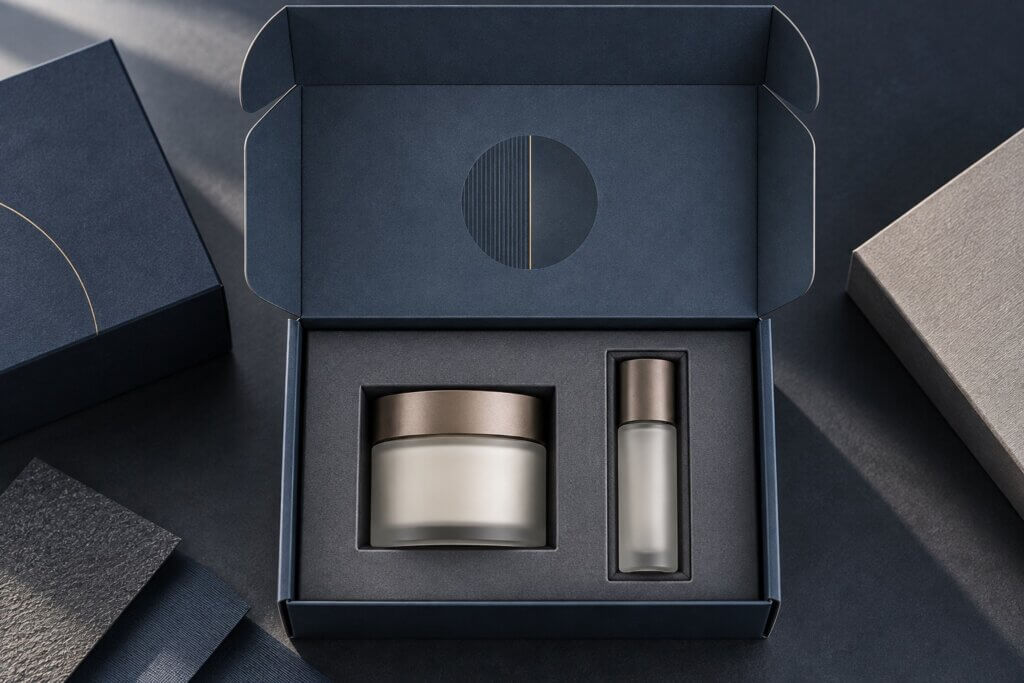
Other categories create different starting conditions. Custom boxes for cosmetics may need to accommodate bottles, jars, tubes, applicators, or multi-piece sets. Custom boxes for candles may involve a relatively heavy glass vessel. Custom boxes for clothing usually need to account for folded dimensions and presentation rather than a tightly fitted cavity, while custom boxes for gifts may place more emphasis on opening sequence and overall presentation.
The buyer does not need to determine the final engineering solution before contacting a supplier. The useful step is simply to describe the product precisely enough that the manufacturer can move from a broad category to an actual packaging requirement.
What product information should be included in a custom box request?
At minimum, the brief should identify the product, finished product dimensions, approximate weight, quantity per box, the number of components, and how the product will be sold, packed, or shipped. If the product has fragile areas, an unusual shape, a surface that scratches easily, or accessories that need to be packed together, those details should also be mentioned early because they can influence the box structure and internal layout.
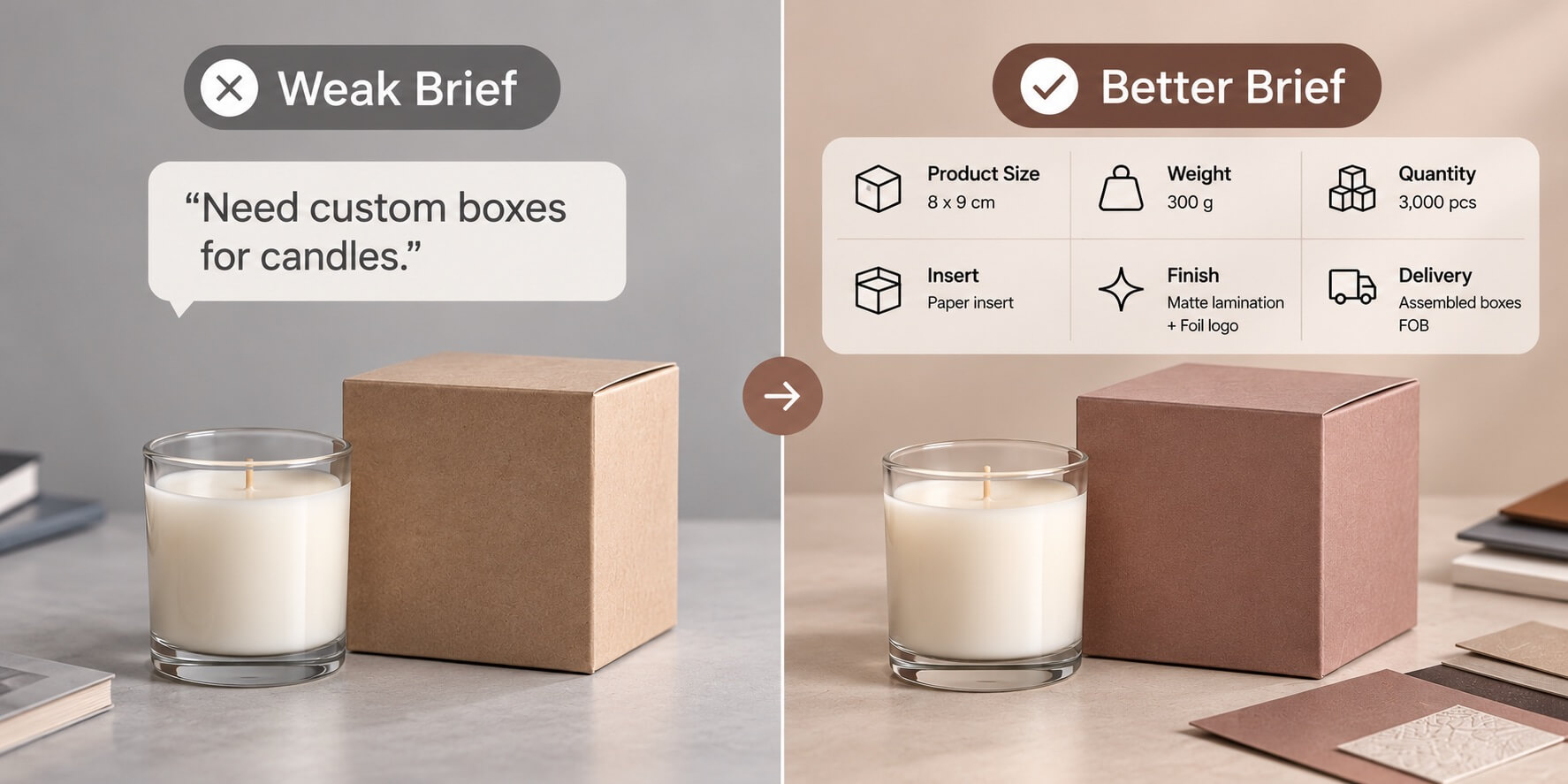
Photos are useful for understanding the product visually, but accurate dimensions become more important once the supplier starts developing the structure. A physical sample can be even more valuable for products with irregular shapes or multiple components because it allows the manufacturer to evaluate fit, orientation, and possible insert arrangements more realistically.
A brief with clear physical information usually leads to a more useful quotation than one built around broad descriptions such as “premium,” “luxury,” or “unique.” Those words can describe the intended result, but they do not tell the supplier what needs to be manufactured.
The Next Layer Is Function: What Must the Box Actually Do?
Once the product is clear, the next step is to describe what the packaging needs to do. A buyer searching custom boxes with inserts has already identified an internal requirement, but the supplier still needs to know whether the insert is intended to position the product, separate components, support weight, reduce movement, or improve presentation. The same applies to custom boxes with foam inserts. Specifying foam is useful, but explaining why foam is being considered is even more useful because the required cushioning, cavity depth, density, and removal space depend on the product itself.
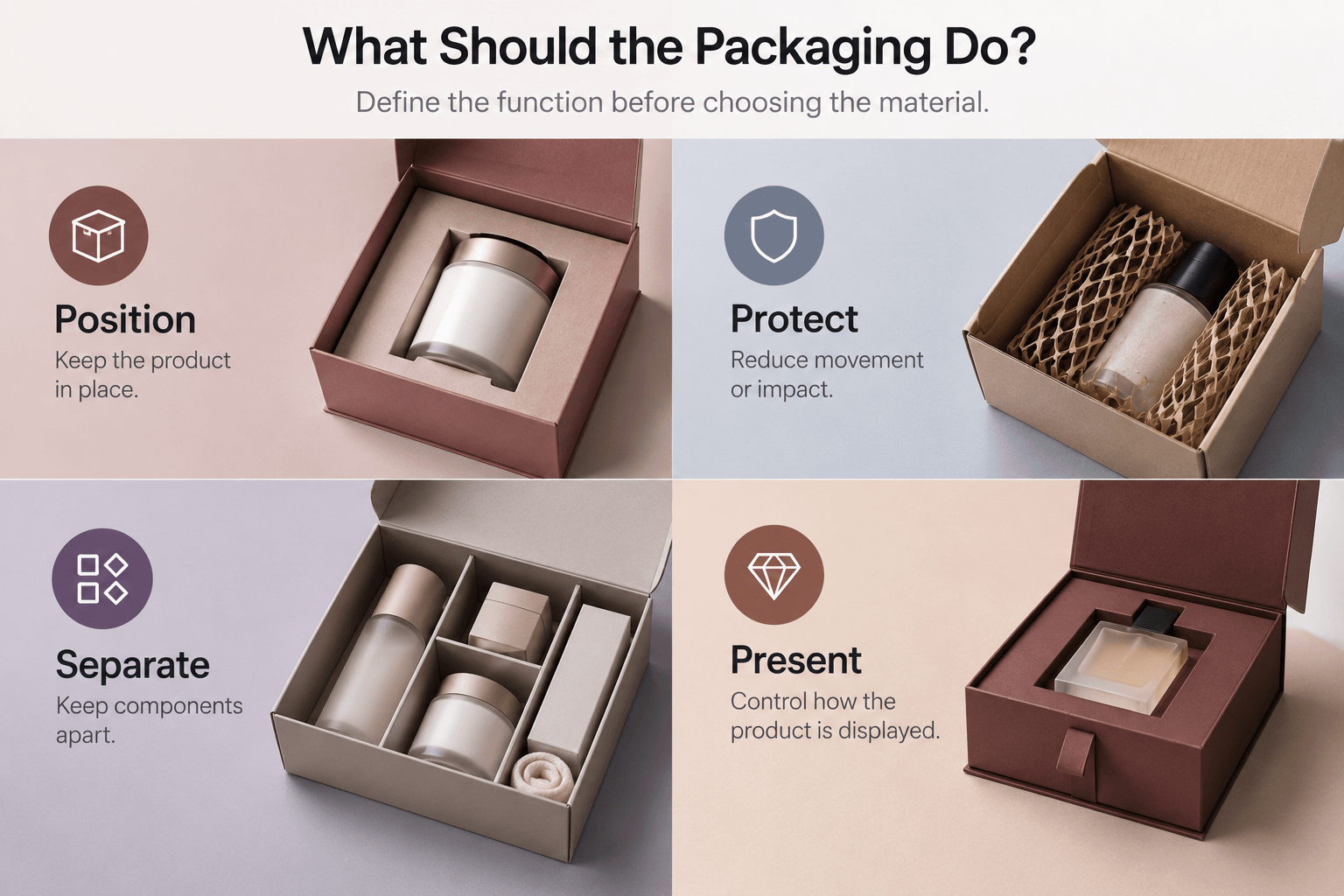
A search for custom boxes foam inserts usually reflects the same underlying requirement, but the manufacturing brief should move beyond the search wording and define the actual function. A stronger brief describes the problem before locking the material. Instead of writing only “foam insert required,” the buyer can explain the product weight, fragile areas, desired product position, and whether the customer needs easy finger access. That gives the supplier enough information to confirm whether foam is appropriate or whether paperboard, corrugated board, molded pulp, or another insert structure could achieve the same result.
Windows and Closures Should Be Described by Purpose, Not Just Style
Features such as windows and magnetic closures are most useful in a brief when their purpose is clear. For custom boxes with window, the supplier needs to know what should remain visible and how much of the product should be exposed. A bakery may want customers to see the product surface, while a cosmetic brand may only want the bottle color or one branding area visible. The window size, position, film requirement, and relationship to the product or insert can then be developed around that goal.
The same principle applies to custom boxes with magnetic closure. The important question is not simply whether magnets should be added, but whether the closure is intended for repeated opening, gift presentation, a particular opening direction, or a more controlled closing feel. In requests for luxury custom boxes, these details matter even more because “luxury” may refer to structure, paper, finishing, opening experience, or presentation rather than one specific box style.
Describing the intended effect gives the manufacturer more useful direction than simply naming a feature. A window requested for product visibility, for example, may need to be positioned very differently from one added mainly as a decorative element.
Material Words Are Useful, but They Still Need Context
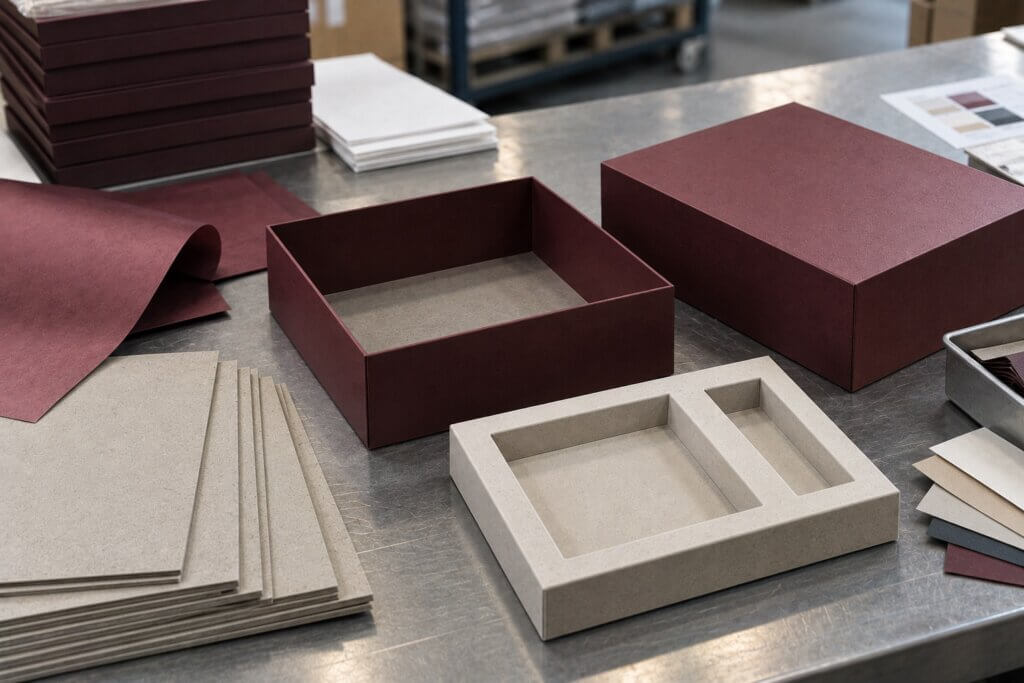
Searches such as custom boxes cardboard suggest that the buyer is already thinking about a paper-based solution, but “cardboard” is still too broad to function as a production specification. In practice, the supplier may need to distinguish among folding carton board, corrugated board, or rigid greyboard wrapped with printed paper, depending on the product, quantity, presentation, and shipping requirements.
The buyer does not need to know the exact technical board name before contacting a supplier. It is often more useful to describe the desired rigidity, appearance, packing condition, and budget direction so the manufacturer can recommend an appropriate construction. A lightweight cosmetic carton and a heavy candle gift box may both be described casually as cardboard boxes, but the structures behind them can be very different.
Finishing should be described in the same way. Instead of listing “matte, foil, embossing” without context, the brief should indicate where the finish is expected and what visual effect it should create. “Foil logo on the lid with a lightly embossed background” is much more useful than a broad request for a “premium gold finish.”
A Better Brief Also Explains How the Packaging Will Be Sold and Delivered
The sales channel changes how a supplier interprets the request. A package for a retail shelf may need a strong front panel, clear product identification, or product visibility. A package shipped directly to consumers may place more emphasis on transport protection and packing efficiency. A gift box may prioritize presentation even if it occupies more volume.
Sales channel can also turn the same product into very different packaging requirements. A 12-piece chocolate gift assortment, a supermarket bar, and a seasonal corporate gift may all belong to the same product category, yet the structure, insert, artwork, finish, packing method, and quantity can be completely different.
For Demei, the custom mailer boxes category is specifically intended for e-commerce fulfillment, while folding cartons are positioned as lightweight retail packaging and drawer boxes as more presentation-oriented structures. Those distinctions are useful when turning a broad search into a more precise brief.
Quantity, Deadline, and Packing Method Should Be Included Earlier Than Most Buyers Expect
Two briefs can describe the same product and still require different solutions if the order quantities are very different. Quantity influences production method, tooling economics, material purchasing, packing labor, and sometimes the structure itself.
The deadline also matters. A project for a planned product launch can allow time for structural development and sampling. A replacement order for an existing box may move much faster if specifications and approved files already exist.
Packing location is another useful detail. If boxes are shipped flat and assembled later, the structure may need to prioritize easy erection. If the factory packs the finished product directly, a more assembled structure may be acceptable. If the boxes will be stored before use, storage volume becomes relevant.
At Demei Packaging, most custom packaging projects start from 500 pieces, but the final MOQ depends on the box type, structure, materials, and finishing requirements. Including approximate quantity in the first request therefore makes the initial recommendation and quotation more useful.
What Should a Good Supplier Brief Actually Contain?
A good brief does not have to be a technical document. Its purpose is simply to remove the most important unknowns in a logical order. Even a short brief can be highly useful when the information is specific and organized, because the supplier can understand the product, quantity, structural direction, internal requirements, finish expectations, and delivery conditions without having to guess what the buyer means.
For example:
Product: 150 g chocolate assortment, 12 pieces
Quantity: 3,000 boxes
Market: retail gifting
Structure: two-piece paper box or drawer-style structure
Interior: paperboard divider for 12 pieces
Window: not required
Finish: matte printed paper with one foil logo
Delivery: assembled boxes, product packed locally
That brief gives a supplier far more useful information than simply searching custom boxes for chocolate and sending three reference images.
Does a Buyer Need to Know the Exact Box Style Before Asking for a Quote?
No. In many cases, it is better to describe the product and commercial requirements accurately than to force the project into a box style too early.
Demei’s Packaging Types page explicitly invites buyers to describe what they are packaging so the appropriate structure, finish, and insert can be recommended. That is a more useful starting point when the buyer is unsure whether the project should become a folding carton, drawer box, mailer, round box, shaped box, or another structure.
This is also why a search term and a supplier brief should not be treated as the same thing. Search terms help buyers discover options; briefs help manufacturers make decisions.
From Search Language to Manufacturing Language
A search term is useful because it helps a buyer enter the market. A supplier brief has a different job: it turns that initial idea into information that can be compared, quoted, sampled, and manufactured.
The progression is straightforward. Start with the product category, then add dimensions and weight, define what the packaging must do, specify any important insert, window, closure, or finish requirements, explain the sales and shipping environment, and finally include quantity and timing. Once those layers are clear, terms such as custom boxes for food, custom boxes for cosmetics, custom boxes with magnetic closure, or luxury custom boxes stop being vague search phrases and become useful parts of a manufacturing requirement.
A better brief does not need to sound more technical. It simply needs to leave less room for guesswork. That makes the inquiry easier to quote, easier to sample, and more likely to move forward with a structure, material, and production direction that already match the actual project.