
When a folding carton feels too soft, flexes more than expected, or loses some of its shape after the product is packed inside, increasing the paperboard thickness can seem like the most obvious solution. In some projects, that does help. But thickness is only one part of the material specification, and it cannot explain by itself how a finished carton will perform after printing, die-cutting, creasing, folding, gluing, packing, storage, and transportation. A heavier board can improve certain characteristics while leaving the actual structural problem unchanged, and in some cases it can introduce new difficulties around folds, closures, or tight-fitting areas.
For brands developing folding cartons, it is more useful to treat paperboard as one part of a complete packaging system. A Tuck-End Folding Carton for a lightweight skincare tube, a Custom Cosmetic Carton for a glass bottle, and a Gable Carton Box carrying several items may all be made from paperboard, but the material is being asked to perform very different jobs. Product weight, panel dimensions, bottom construction, grain direction, creasing, openings, inserts, printing, and finishing can all change the result. This is why selecting folding carton materials should not begin and end with a number such as 300 gsm or 350 gsm. The more useful question is what the board needs to do once it becomes a specific carton around a specific product.
GSM, Caliper, and Stiffness Are Not the Same Thing
The first step is to separate three properties that are often treated as though they describe the same thing. GSM describes the mass of paperboard per unit area, while caliper describes its physical thickness and stiffness describes how strongly the board resists bending. These characteristics can influence one another, but they are not interchangeable. Two paperboards with similar grammage can have different calipers because their fiber composition, density, coatings, and internal construction are different. Conversely, two boards with similar physical thickness can have different weights and bending resistance. Paperboard specifications therefore need to consider more than a single basis-weight number when the finished carton has a structural role to perform.
This distinction also helps answer a common material question: what is the difference between GSM and paperboard thickness? GSM tells us how much material exists over a given area; it does not directly tell us how that material has been constructed or how thick it will be. A board with relatively high bulk may achieve useful caliper without increasing mass in the same proportion, while a denser board may carry more mass per square metre without feeling proportionally thicker. Stiffness adds another layer because the resistance to bending depends on more than the weight printed on a material specification. For paperboard cartons, these differences become particularly important when a small material sample is converted into a much larger three-dimensional structure.
Once GSM, caliper, and stiffness are separated, the familiar assumption that a higher GSM must mean a stronger carton also becomes less reliable. Within the same board family and comparable construction, increasing grammage can increase certain physical properties, so moving to a heavier board may indeed improve a particular carton. Across different board grades and structures, however, GSM is not a universal strength rating. A heavier board that is relatively flexible may not create the same finished result as a lighter board with a different stiffness profile, and neither material can be judged properly without knowing the dimensions and structural demands of the carton it will become.
Carton Performance Starts With the Product, Not the Paper Specification
Once paper weight is separated from finished-carton performance, the next question should not immediately be “Which board should we use?” It should be “What does the package actually need to carry?” Consider a lightweight skincare tube, a compact electronic device with accessories, and a glass fragrance bottle. Their external dimensions may allow all three products to use relatively similar folding-carton formats, yet the structural demands can be very different. The tube may require little internal support, the electronic product may need a paperboard insert to control movement and separate components, while the glass bottle can place a more concentrated load on the bottom and may require support that limits both movement and vertical loading.
This is why choosing the right paperboard for a folding carton normally starts with the product rather than the requested paper weight. Product weight is important, but it is only the beginning. Shape, center of mass, fragility, primary packaging, internal clearance, filling method, stacking, storage, transportation, and retail conditions can all affect what the carton needs to do. A custom folding carton box for a lightweight retail item may perform very well with a moderate board specification, while a visually similar carton containing a heavier product may require a different board, stronger bottom construction, internal support, or several of these changes together. “Strong enough” is therefore not a fixed property attached to one GSM value; it only becomes meaningful when the product and its use conditions are known.
Transportation makes this relationship even more important. A retail carton that is packed closely into a well-designed corrugated shipping case is not being asked to perform the same job as a package that must tolerate more handling or unsupported stacking before reaching the customer. Humidity and storage conditions can also influence paper-based materials, while automatic packing equipment may create different requirements from manual filling. The right material specification therefore comes from understanding the complete packaging environment rather than choosing the thickest paperboard that fits within the budget.
Once those product conditions are defined, the next question becomes much more useful: where does the product weight actually go once it is inside the carton?
Structure Determines How Paperboard Carries the Load
A flat sheet of paperboard and a finished carton do not carry force in the same way. After die-cutting and folding, the sheet becomes a connected system of panels, creases, flaps, tabs, closures and sometimes inserts. Some areas primarily create the visible surfaces of the package, while others keep the carton square, resist bending, support the product or transfer force into adjacent panels. A lightweight product in a conventional tuck-end structure may place relatively little demand on the bottom closure, while replacing it with a heavier bottle can make the same area much more important. Adding a fitted paperboard insert can redistribute part of that load, and changing the bottom construction can alter the load path again.
The important engineering question is therefore not simply “How thick is the paperboard?” but “How is the structure using the paperboard?” That distinction matters because changing material is only one way to improve performance. If a carton feels weak because a large panel is unsupported, increasing the board weight may help, but changing the panel proportions or adding appropriate internal support may address the cause more directly. If the bottom is the critical area, increasing the weight of every panel can add material where it provides little benefit. This is where material selection and structural design begin to overlap: the board provides the physical properties, while the structure determines where and how those properties are used.
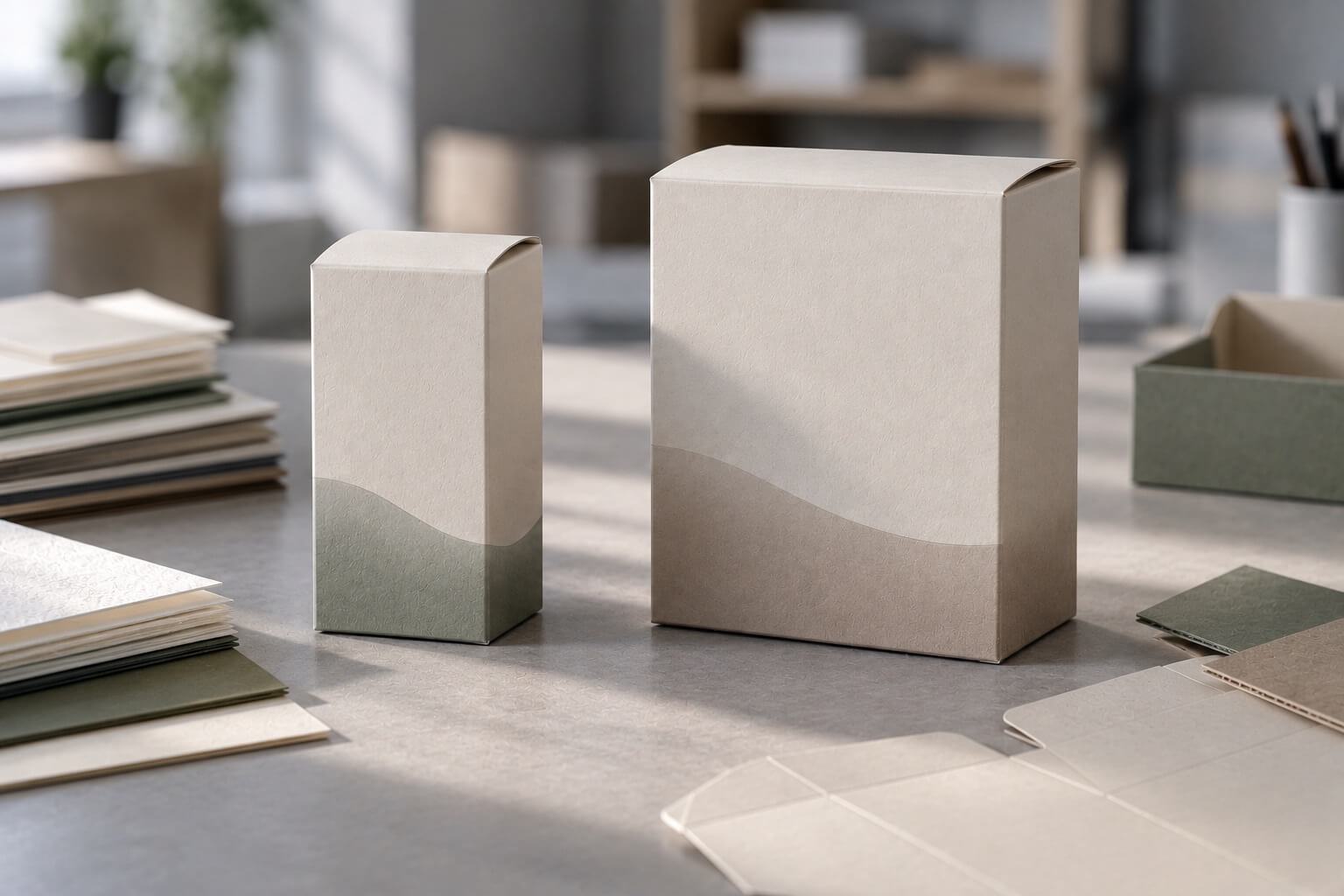
Panel dimensions are part of the same relationship. A small sample cut from a sheet can feel very stiff in the hand, yet the same material can flex noticeably more when it becomes a wide carton panel with a larger unsupported span. This is why a compact carton with narrow faces may feel surprisingly rigid while a larger carton made from exactly the same board feels more flexible. Nothing has changed in the GSM or board grade; what has changed is the geometry through which the material has to work.
Window structures make this especially easy to understand. A Custom Window Carton removes part of a continuous paperboard panel so the product can be seen. The remaining material around the opening still has to maintain the carton geometry, which means window size, shape, position, surrounding panel width, and proximity to important folds all matter. A small opening positioned away from a structural edge may have little practical effect, while a large window close to an edge can change the panel behavior more noticeably. With a Hexagon Window Carton, several narrower faces cooperate to form the finished shape, creating a different relationship between material and geometry. The same paperboard specification therefore cannot be expected to behave identically in every carton structure.
Grain Direction and Creasing Change How the Board Behaves
Even after product weight and structural geometry have been defined, paperboard does not behave identically in every direction. The papermaking process creates a directional fiber orientation, producing differences between the machine direction and cross direction that can influence stiffness, dimensional behavior, and folding response. For cartons with long panels, narrow side walls, or important structural folds, the orientation of the blank on the sheet can therefore affect both how the panels feel and how certain folds form. Grain direction should not be reduced to a simple rule that one orientation is always correct, because a carton can contain important folds in more than one direction and the production layout must also consider sheet dimensions, printing, nesting efficiency, and material utilization.
This creates a practical manufacturing balance. A grain orientation that appears desirable from a structural perspective may reduce the number of carton blanks that fit efficiently on a press sheet, increasing material consumption. A layout optimized only for sheet yield, on the other hand, may create a less desirable relationship between important folds and the paperboard direction. Packaging engineering often involves finding an acceptable balance among structural performance, converting behavior, manufacturing efficiency, and cost rather than maximizing one variable without considering the others.
Grain direction becomes especially relevant when the board reaches the creasing stage. A folding carton does not simply bend along a printed line; during converting, a controlled crease is created so the board can deform in a predictable region. Board caliper, internal construction, grain orientation, crease geometry, tooling, moisture condition, and surface treatment can all influence how cleanly that fold develops. This is why moving to a thicker board without reviewing the crease conditions can sometimes create a new problem instead of solving the original one. The fold may become bulky, the panel may spring back, or the outer surface may show whitening or cracking if the material cannot deform appropriately around the crease.
For folded carton packaging, a good crease is therefore more than a visible line. It functions as a controlled folding zone that allows the board to reach the intended geometry while maintaining acceptable surface quality and structural behavior. This becomes more demanding in a Custom Die-Cut Carton or Custom-Shaped Folding Carton, where narrow tabs, short panels, angled folds, cut-outs, or several closely positioned creases can leave less room for variation. In these structures, making the board thicker without reconsidering the crease and conversion conditions can make manufacturing more difficult rather than making the finished carton better.
The Board Entering Conversion Is Not Always the Board You Started With
So far, it would still be easy to imagine paperboard as a plain structural sheet. Most commercial folding cartons, however, have already been printed and may have received varnish, lamination, foil stamping, embossing, or other surface treatments before the final folding and gluing stages. These processes are primarily selected for visual and tactile reasons, but the treated surface still has to pass through die-cutting, creasing, and folding. The material entering conversion is therefore not always behaving exactly like the untreated sheet originally evaluated from a paper sample.
For printed folding cartons, the effect can be particularly visible around structural folds. A minor surface disturbance that is difficult to notice on an unprinted white board can become much more obvious when the same crease passes through a dark solid area. Lamination introduces another surface layer that has to bend with the board, while embossing positioned very close to a structural crease can place two different forms of material deformation near one another. These effects do not mean that printing or finishing automatically makes a carton weaker. They mean that the paperboard, graphics, finishing, and converting conditions should be evaluated as a connected system rather than as separate approvals.

This is also where “thicker” and “more premium” begin to separate. A Luxury Folding Carton Box can benefit from a substantial material feel, but dimensional accuracy, panel flatness, clean folds, print consistency, surface quality, and precise assembly can be just as important. An unnecessarily heavy board can make small tuck flaps harder to insert, create bulkier fold areas, change tight structural clearances, and require adjustments to tooling. A Flower Shaped Folding Carton makes this particularly clear: when several decorative panels and folds need to meet accurately, foldability and crease control may be as important as stiffness. Premium performance is better understood as coordination among material, structure, graphics, finishing, and manufacturing accuracy—not as a race toward the highest possible GSM.
Board Grade Matters as Much as the Number on the Specification
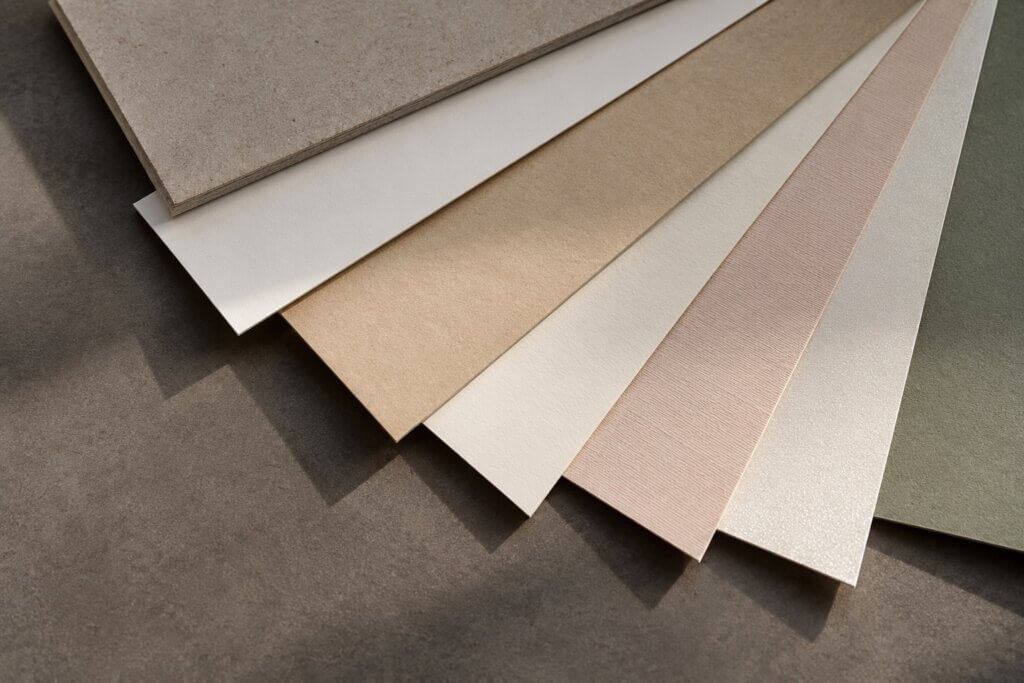
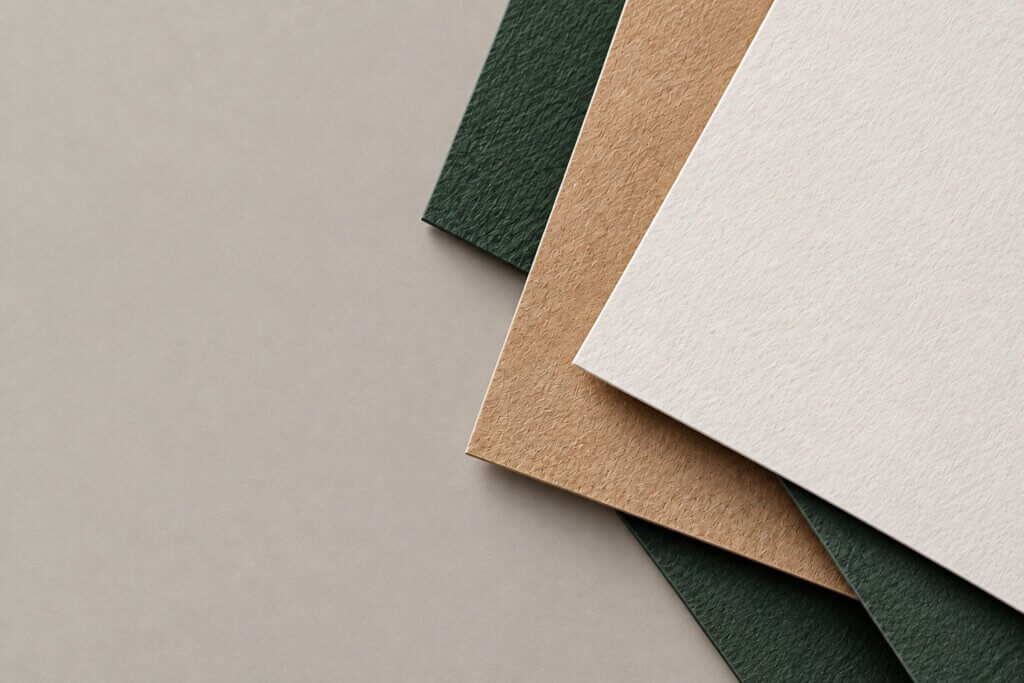
There is one more reason that two cartons marked with the same GSM can behave differently: paperboard itself is not one uniform material. Folding carton production can use different board families and constructions, including SBS, FBB, recycled paperboard, and unbleached kraft-based grades. Their fiber composition, ply construction, surface characteristics, stiffness-to-weight relationship, printability, and converting behavior can differ, even when the nominal grammage looks similar on a quotation or material specification.
This does not mean that one board grade is universally better. A smooth white printing surface may be important for cosmetics or other packaging where fine graphics and controlled color reproduction matter. Another board may provide a useful stiffness-to-weight relationship for a different structure, while an unbleached appearance may be intentionally selected for the brand direction. Recycled-content requirements, food-contact considerations, exposure to moisture, finishing processes, market expectations, and regional material availability can further change the choice. The appropriate board is the one whose properties fit the actual package, not simply the grade with the highest weight or the most premium-sounding name.
For buyers, the practical implication is important: “350 gsm paperboard” is not a complete material specification. If two suppliers quote different board grades at the same nominal grammage, the resulting cartons should not automatically be expected to have identical caliper, stiffness, print response, crease behavior, or hand feel. This is also why comparing folding-carton quotations only by GSM and unit price can hide meaningful differences in what is actually being supplied. Material grade, physical properties, structure, and expected finished performance need to be understood together.
By this stage, the logic has moved from a single material number to a much broader system. The product determines the performance requirement; the structure determines how the board carries the load; panel dimensions and grain direction influence how that material behaves; creasing turns the sheet into a foldable structure; and printing or finishing changes the condition in which the board enters conversion. A specification sheet can describe many of these variables, but it still cannot show exactly how they will work together in the finished package.
That is where a physical sample becomes valuable.
Physical Sampling Turns Material Data Into Packaging Evidence
A physical carton sample brings the previous decisions together for the first time. Instead of evaluating paperboard as an isolated material, the team can evaluate how it behaves with the actual panel dimensions, folds, closures, openings, insert geometry, product weight, graphics, and finishing. Does the carton remain square after erection? Does a large front panel bow once the product is inserted? Does the bottom remain stable when the package is lifted? Does the tuck flap close naturally? Does a window noticeably reduce the stability of an adjacent panel? Do heavily printed areas remain acceptable around important folds? These are finished-package questions, and they cannot all be answered by comparing GSM, caliper, or stiffness values on a material data sheet.
Not every early prototype needs to use the final production board. When the purpose of a first structural mock-up is simply to verify dimensions, product fit, opening direction, or basic assembly, a substitute material can be sufficient. But once the sample is being used to approve material behavior—particularly for a heavier product, a large unsupported panel, an unusual window, tight structural clearances, or demanding finishing—the sample needs to be sufficiently representative of the intended production specification for the evaluation to be meaningful. Otherwise, a carton can be structurally correct in dimensions while still leaving important material-performance questions unanswered.
Sampling is therefore the point where the earlier decisions stop being separate assumptions. Product, structure, paperboard, grain direction, creasing, printing, and finishing are finally evaluated as one physical package. The purpose is not simply to produce something that looks close to the final carton, but to determine whether the selected specification behaves as expected before that specification is repeated at production scale.
A Folding Carton Manufacturer Needs More Than a GSM Number
Once these relationships are understood, it becomes clearer why a folding carton box manufacturer normally needs more information than a requested paper weight before making a useful material recommendation. Finished carton dimensions are important, but so are the actual product dimensions and weight, carton style, internal fit, printing coverage, surface finishing, windows, inserts, filling method, order quantity, transportation conditions, and any specific performance requirement. These details are not collected simply to make an inquiry more complicated; they help determine whether the requested board is appropriate for the job the carton is expected to perform.
A buyer may, for example, ask to reuse the same paperboard from a previous project. If the new carton is significantly larger, contains a heavier product, or introduces a large window, repeating the previous GSM may not reproduce the same physical result. Likewise, changing from a simple printed carton to one with additional surface treatments can introduce different converting considerations even when the basic dimensions remain unchanged. In another project, the requested board may already be entirely appropriate, and the manufacturer only needs to confirm it through structural and sample validation.
This is why experienced folding cartons manufacturers do more than match a paper number to a price. The role of a manufacturer of folding cartons is to translate product requirements, structural conditions, visual expectations, and manufacturing constraints into a specification that can be produced consistently. Sometimes the conclusion is to increase caliper or use a different board grade. In other cases, the more effective solution may be to change the bottom structure, reduce an unsupported span, adjust a window, add internal support, or revise another part of the package instead of simply adding paper weight.
Paperboard thickness remains an important specification because it affects fold geometry, structural clearances, hand feel, tooling, packing density, and many other production details. The mistake is not measuring thickness; the mistake is expecting thickness to explain performance that actually comes from the entire carton system. If a carton needs greater rigidity, the answer may involve caliper, board grade, stiffness, grain orientation, panel geometry, bottom construction, internal support, or several smaller adjustments working together. If the real problem is folding behavior, adding thickness may even move the specification in the wrong direction.
So instead of beginning a project only with “How thick should this folding carton be?”, a more useful question is:
“What does this paperboard need to do after it becomes this specific carton around this specific product?”
Once that question is answered, GSM and thickness become meaningful engineering specifications rather than shortcuts for judging packaging quality. The result is not simply a heavier carton on a specification sheet, but a package better matched to the way it will actually be printed, converted, packed, transported, and used.