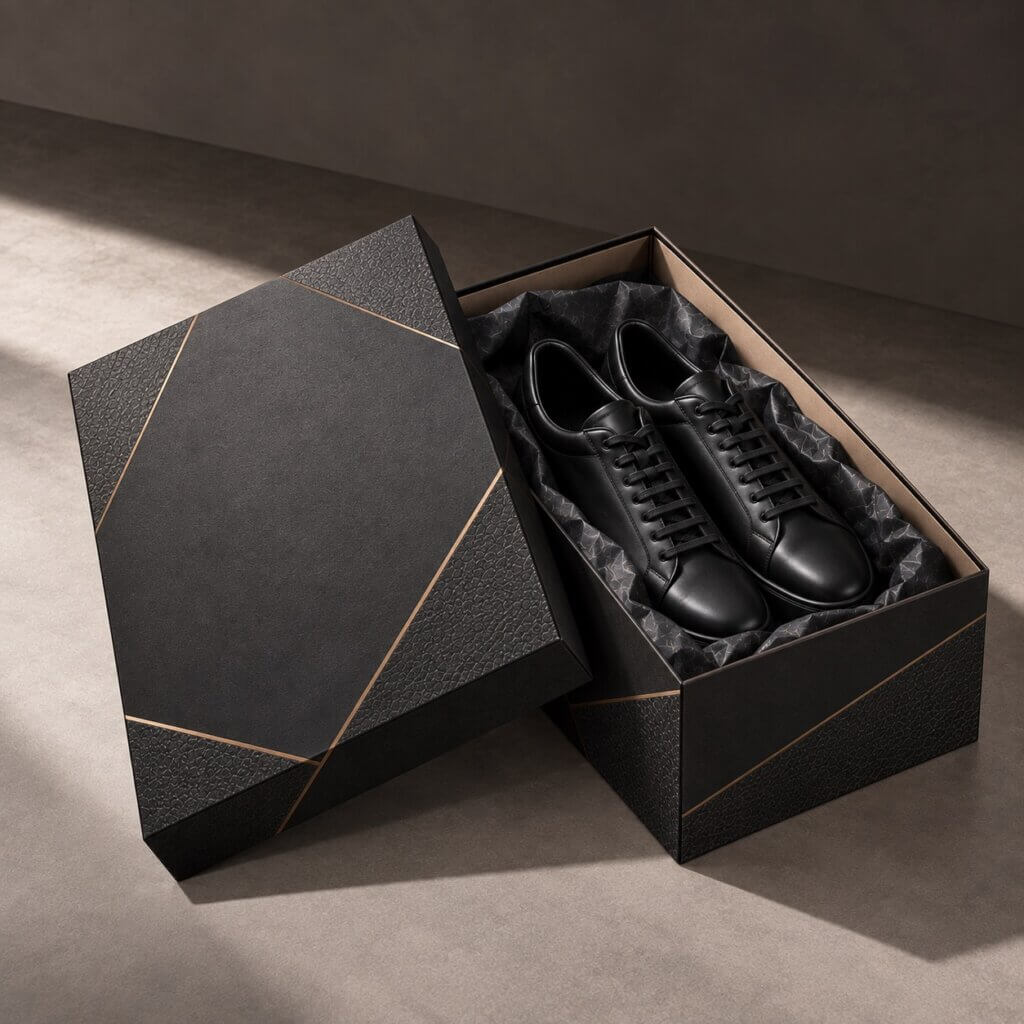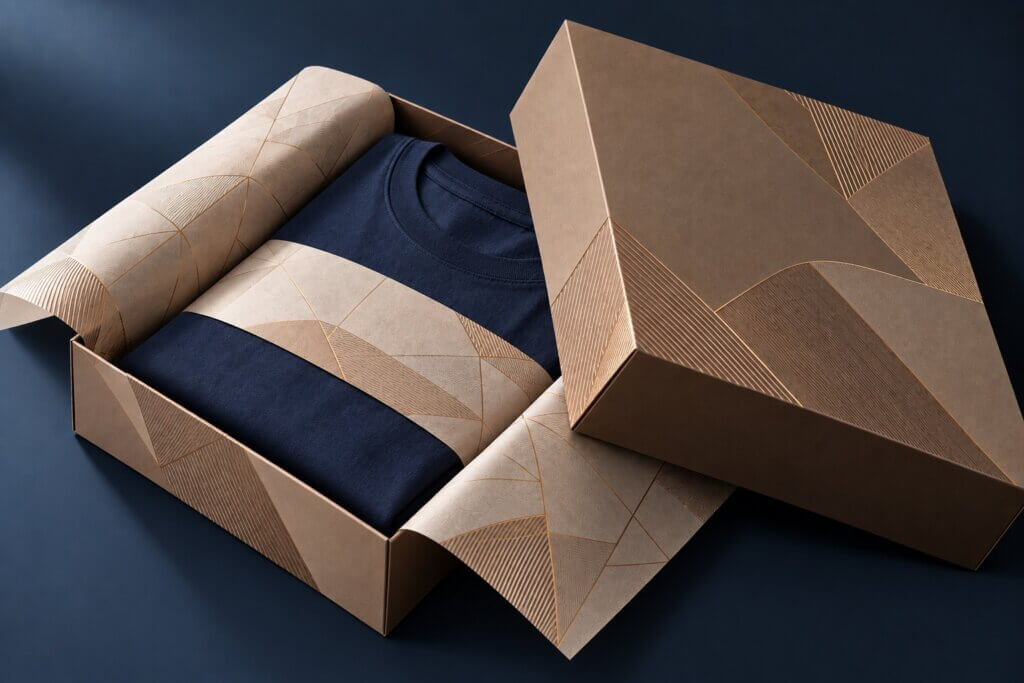

A luxury box can feel substantial without making every component equally heavy. In fact, increasing board thickness across an entire package is often a poor substitute for understanding how the structure actually carries the product. The base may receive concentrated loads from an insert, a wide lid may need enough stiffness to resist visible bowing, and a tall side wall may depend more on geometry and corner accuracy than on another layer of material. These are different structural conditions, even though they exist within the same box.
For luxury custom boxes, reinforcement therefore begins with a more useful question than “How thick should the board be?” The first task is to identify where forces enter the package, how they travel through the internal components, and where the structure has enough support—or lacks it. That principle applies differently to custom drawer boxes, custom round boxes, custom shaped boxes, and custom folding cartons because each construction transfers and resists loads in a different way.

The objective is not maximum material. It is sufficient structural performance in the correct locations.
Start with the Product, Not the Board Thickness
Before deciding whether a rigid box needs reinforcement, it helps to separate product weight from box weight. A package may feel heavy because it uses thick greyboard, but that does not tell us whether the board is supporting the product efficiently. What matters is the path the product load takes after the item is placed inside.
Consider a glass bottle held in a folded paperboard insert. The bottle first transfers its load into the surfaces touching it. Those forces then travel through the insert walls, locking tabs, platforms, or support feet until they eventually reach the base and surrounding box structure. If only two narrow insert walls touch the base, the load can become concentrated in those areas. If the insert has a wider supporting footprint, the same product weight can be distributed differently without changing the outer box at all.
This is why the question “Does thicker cardboard make a box stronger?” has no useful yes-or-no answer without structural context. Greater board thickness can increase stiffness, but stiffness in a panel that carries little meaningful load may not solve the actual weakness. Product weight, finished dimensions, panel span, board properties, insert geometry and expected handling conditions need to be considered together.
The Base Is Part of a Load-Bearing System
Once the load path is understood, the base becomes easier to evaluate. In many rigid gift boxes, it is not simply a flat panel under the product. It is the final receiving surface for forces that have already passed through the product and insert.
This distinction becomes important with heavy or concentrated products. A bottle, jar or electronic device may occupy only a small part of the available base area. If its insert transfers most of the load through a few narrow contact zones, local deformation can become more relevant than the average weight across the box. In that situation, changing the insert footprint, adding an appropriate supporting platform, or modifying how the load reaches the base may be more effective than increasing the thickness of every greyboard component.
That also explains why two boxes made from similar board can behave differently after loading. The difference may come from the internal support system rather than the outer shell. When evaluating whether a rigid box is strong enough, the empty structure tells only part of the story; the product, insert and outer box form one load-bearing system.
Panel Size Changes the Structural Requirement
After the main vertical load path has been established, the next consideration is unsupported span. This is particularly important in larger boxes because increasing a panel’s width or length changes its behavior even when the material specification remains unchanged.
A large lid panel, for example, can show visible bowing or local deflection more readily than a compact lid made from the same board. A long side wall may also respond differently to pressure during handling because there is more unsupported distance between its stabilizing edges. This is one reason larger rigid boxes do not automatically require thicker greyboard everywhere. The structural requirement depends on which panel has become vulnerable and what is causing that vulnerability.
Geometry can change the situation further. Rectangular boxes transfer forces through relatively predictable walls and corners, while polygonal or irregular structures introduce different panel lengths, joint angles and transitions. A weak region may occur where geometry changes rather than where the package looks visually largest. Reinforcement should therefore follow the actual unsupported area and expected force direction, not simply the overall dimensions printed on a specification sheet.
Corners Depend on Construction Accuracy as Much as Material
It is tempting to treat corners as another location that can simply be made thicker, but rigid-box corners behave differently from broad unsupported panels. Their stability depends heavily on how accurately separate board components are cut, joined, wrapped and assembled.
If a joint is poorly formed, thicker board does not automatically produce a more stable corner. It can increase material build-up around the wrapped area and make turn-ins or surface transitions harder to control. Similarly, inconsistent adhesive application or inaccurate positioning can produce visible variation even when the nominal board specification is correct. The problem in these cases is process accuracy rather than insufficient material.
This gives a more complete answer to what makes a rigid box structurally strong. Board stiffness matters, but so do geometry, joint construction, wrapping behavior, dimensional accuracy and internal support. Structural performance is created by the relationship between these variables. Treating board thickness as the only measure of strength can hide the part of the construction that actually needs improvement.
The Insert Can Either Concentrate or Distribute Load
The insert becomes the next part of the analysis because it sits directly between the product and the outer structure. Its role is not limited to presentation or preventing movement. Depending on its geometry, it can also change where the product load reaches the box.
A well-designed paperboard insert can distribute a product’s weight across several supporting surfaces, maintain clearance from vulnerable walls and reduce movement during handling. But an insert does not automatically strengthen the package simply because it fits tightly. If a large part of the insert is suspended above the base or if the product load is carried by a small number of narrow folds, the structure may still create concentrated forces. In some cases, an insert can even make the load path less efficient if it appears substantial but has little support underneath.

The practical sequence is therefore product → insert → contact area → outer structure. This is especially relevant for cosmetics, fragrance bottles, electronics and multi-item gift sets, where products of different weights or heights may share the same package. The designer needs to know not only whether the insert holds each item securely, but also what happens to the force after the insert receives it.
Reinforcement Should Be Local When the Problem Is Local
Once the load path, unsupported spans and internal support have been identified, the distinction between useful reinforcement and unnecessary material becomes much clearer. A local structural problem does not necessarily require a global material change.
For example, if a wide base needs more support beneath a concentrated product load, strengthening that load-bearing area may be enough. If a large lid is prone to visible bowing, its panel construction deserves attention, but the short side walls may already be sufficiently stable. Likewise, a panel supported by an internal tray or closely fitted component may gain little from an additional layer if the existing structure already limits its movement.
This is where luxury custom boxes can be substantial without becoming unnecessarily heavy. Material efficiency does not mean making a premium package thin or fragile. It means assigning stiffness, thickness and support according to structural demand. A package can therefore use different engineering responses in different areas while still appearing visually consistent as one finished box.
More Material Can Change the Fit of the Entire Package
Reinforcement also has secondary effects, and these need to be considered before material is added. A thicker board changes more than the strength of an individual panel: depending on the construction, it can alter internal usable dimensions, wrapped edge thickness, component clearance, lid-to-base relationships and the space available for an insert.
Wrapping materials add another layer to this dimensional system. Paper thickness, laminated surfaces, fabric-like coverings and multiple turn-ins can create build-up around edges and joints. If reinforcement is introduced after the structure has already been dimensioned, those additional layers may reduce clearance or change how components meet. This is one reason a rigid box can effectively become too thick for its intended geometry, even though the individual materials are not inherently unsuitable.
The same principle becomes more important around moving areas. Hinges, folding sections and fitted closures depend on controlled clearances. Increasing material near these regions can add resistance or change alignment. Reinforcement should therefore be evaluated as part of the complete dimensional system rather than treated as a separate upgrade applied after the structure is finished.
An Empty Sample Cannot Fully Validate Reinforcement
The final decision should be made under the condition in which the package will actually be used. An empty prototype can confirm basic dimensions, wrapping quality and assembly, but it cannot fully reproduce the stresses created by the finished product.
A loaded sample may reveal base deflection, product movement, insert compression or changes in closure alignment that were invisible when the box was empty. This is also the most practical way to determine whether a luxury box is strong enough before mass production. The test does not need to begin by asking whether every panel feels thick. It should check whether the intended product remains supported, whether the structure maintains its geometry, and whether opening, closing and handling still behave as expected after the complete package is assembled.
At Demei Packaging, most custom packaging projects start from 500 pieces. For a new structure, physical sampling provides the opportunity to evaluate the package with representative product weight and dimensions before production. If a weakness appears, the next step should be to trace it back through the load path and correct the relevant structure rather than automatically increasing material throughout the box.
Structural Reinforcement Is a System, Not a Material Specification
The complete engineering sequence can be summarized as:
Product Load → Load Path → Contact Area → Unsupported Span → Structural Weak Point → Local Reinforcement → Loaded Prototype → Production Validation
This sequence matters because the visible weak point and the real cause are not always the same. A base may deform because the insert concentrates weight. A lid may bow because its unsupported span is too large. A corner may appear weak because of assembly accuracy rather than insufficient board thickness. Each problem requires a different response.
For luxury custom boxes, good reinforcement is therefore not defined by how much material is added. It is defined by whether the finished structure places sufficient support where the product and packaging actually require it. That creates a box that feels substantial for a structural reason—and one that is easier to validate, reproduce and control when the design moves from a physical sample into mass production.