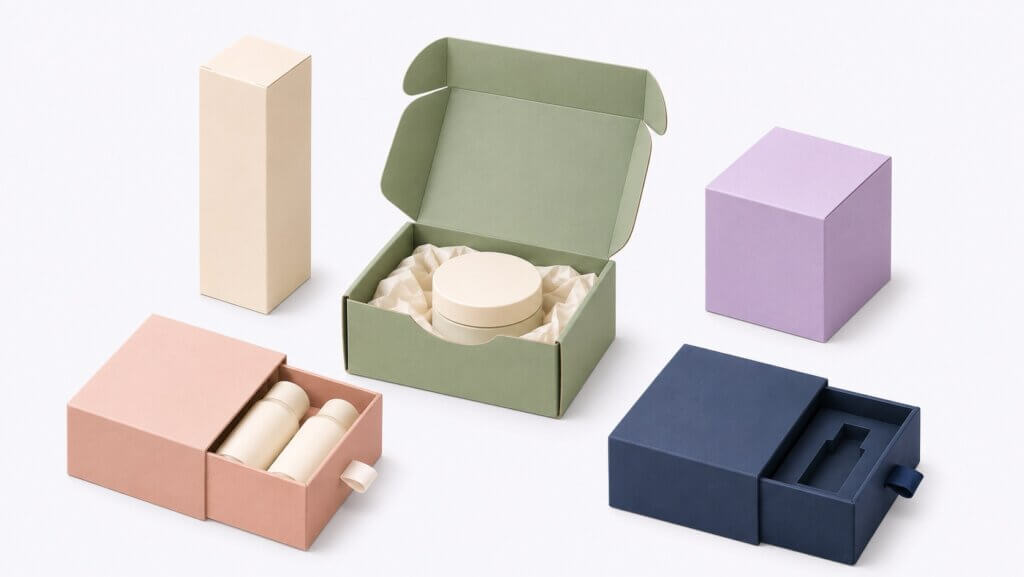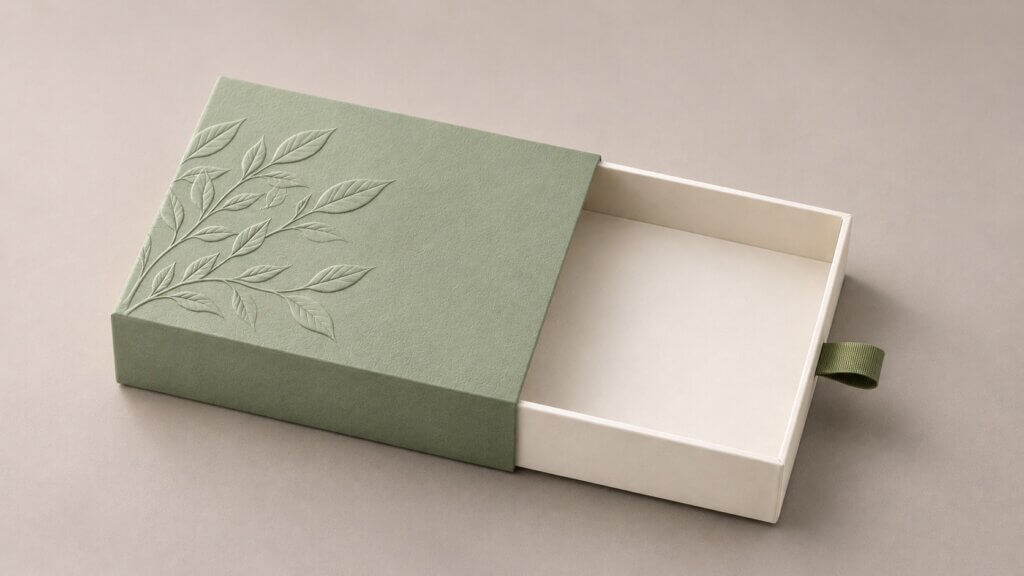

A brand may use the same corrugated box for three product variants, changing only its color. Visually, this appears straightforward. In manufacturing, however, a black exterior, a pale pink surface, and natural kraft may require different substrates, printing conditions, and quality controls.
The cost difference begins with how the color is produced—not simply how many colors appear in the artwork.
Before selecting a printing process, brands should consider paper selection, particularly how surface color and texture influence the final printed appearance. The intended dimensions, printing coverage, and finishing requirements should also be defined before requesting a packaging quotation. Equally important is choosing suitable cardboard materials that meet both structural and visual requirements.
Together, these decisions establish the technical basis for controlling color-related manufacturing costs.
Why Does Box Color Change Manufacturing Costs?
Color influences production through three variables: substrate selection, printing coverage, and process setup.
A small logo printed on a kraft liner requires a different production approach from a full-coverage black design. Depending on the equipment and board construction, large solid areas may require additional attention to ink laydown, drying, surface uniformity, and subsequent converting.
Does adding more colors always increase the price? No. Digital printing and conventional printing have different cost structures. The number of ink separations matters in some processes, while printed area, setup time, run length, and finishing may be more important in others.
The correct starting point is therefore the finished appearance and expected order volume—not the number of colors in the design file.
Should the Color Come From the Paper or the Ink?
For kraft mailer boxes, the natural brown liner can serve as the background, allowing a restrained design to use relatively little ink. However, its base color changes the appearance of overprinted graphics. Pale colors may lose brightness, and fine tonal differences may become less visible.
Black mailer boxes present a different choice: a dark-faced board or a printed black surface. The preferred option depends on material availability, print quantity, desired texture, and edge appearance.
Can printed black look identical to black-faced paper? Not necessarily. A dark liner and a printed surface may differ in reflectivity, surface uniformity, and appearance at cut edges or creases.
For pink mailer boxes, a white liner often provides a more predictable starting point for reproducing light colors. However, consistent results still depend on the paper specification, ink formulation, printing process, and approved color reference.
A physical sample made with the intended production materials is more informative than a screen preview.
What Happens to Color During Creasing and Folding?
Color approval should not stop at the flat printed sheet.
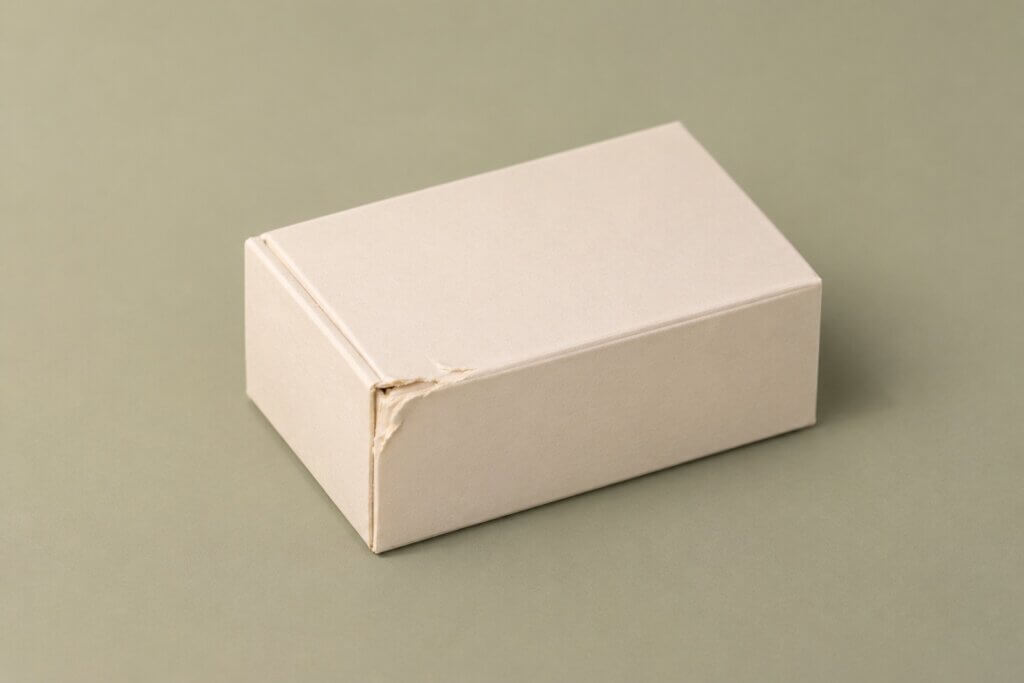
Corrugated board must be scored, die-cut, folded, and assembled. These operations can change the appearance of printed surfaces, particularly around creases and exposed edges.
With custom black mailer boxes, lighter fibers may become visible where the surface coating or printed layer is stressed during folding. Crease geometry, board construction, and the printing or finishing system all influence the result.
Would a protective coating solve this problem? It may improve certain surface properties, but it cannot automatically prevent cracking or fiber exposure at an unsuitable crease. The complete material-and-converting combination must be tested.
For lighter colors, the more important issue may be consistency across broad visible panels. This is why color inspection should include assembled boxes, not only printed sheets.
How Can Multiple Color Variants Share Production Costs?
Once the material and converting requirements are established, brands can evaluate which specifications should remain common across different SKUs.
For example, three color variants may share the same internal dimensions, corrugated grade, flute profile, closure design, and cutting tool. This can reduce structural redevelopment and tooling duplication.
The approach works for tuck top mailer boxes when the closure and product fit remain suitable across variants.
Does one shared die-cutting tool guarantee the same unit price? No. Separate artwork, print setup, material changes, and smaller quantities per color can still affect pricing.
For cardboard boxes with logo, brands can also compare selective logo printing against full-surface decoration. Reducing coverage may simplify production in some processes, although the actual saving must be confirmed against the supplier’s equipment and order volume.
The key is to distinguish shared structural costs from color-specific production costs.
How Should Seasonal Packaging Be Planned?
Color and artwork decisions become more complex when demand is seasonal.
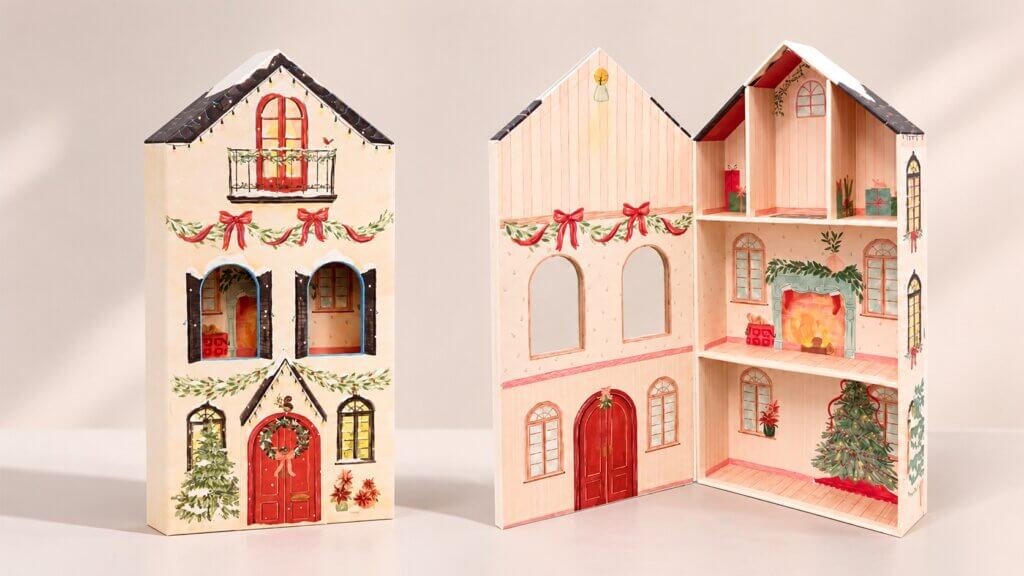
Holiday mailer boxes may use the same structural specification as regular packaging while introducing campaign-specific graphics. This allows brands to retain approved dimensions and tooling instead of developing an entirely new construction.
For christmas mailer boxes, the main commercial risk is not necessarily printing cost. It may be the quantity of unused packaging remaining after the selling period.
Are removable sleeves or labels always more economical? No. Their additional material, application labor, and inventory requirements must be compared with the cost and risk of fully printed seasonal boxes.
A useful purchasing comparison considers total required quantities, artwork versions, production lead times, and the value of packaging that can remain usable after the campaign.
What Should Be Locked Before Mass Production?
The final stage is to convert design approval into measurable production requirements.
The specification should identify the corrugated construction, liner surface, printing method, color reference, approved finish, and finished-box appearance. For critical colors, the buyer and manufacturer should agree on an approved physical sample and a practical method for evaluating variation.
Can a Pantone reference alone guarantee identical results across batches? No. The same nominal color can appear different when substrates, printing processes, or surface finishes change.
It is also important not to transfer material assumptions between structures. Chipboard folding cartons and corrugated boxes may use different board constructions and converting methods; a color approval on one should not automatically serve as the standard for the other.
Before mass production begins, the approved sample, technical specifications, and acceptance criteria should be aligned. The finished package—not the artwork file alone—must define what is acceptable.
Conclusion
Mailer box color affects cost through material selection, printing coverage, converting performance, and production organization.
The most effective strategy is to choose a reproducible color system first, standardize the structure where practical, and evaluate seasonal variants against total inventory exposure.
Brands do not need every color to cost the same. They need each color decision to deliver a measurable visual benefit without introducing unnecessary manufacturing complexity.