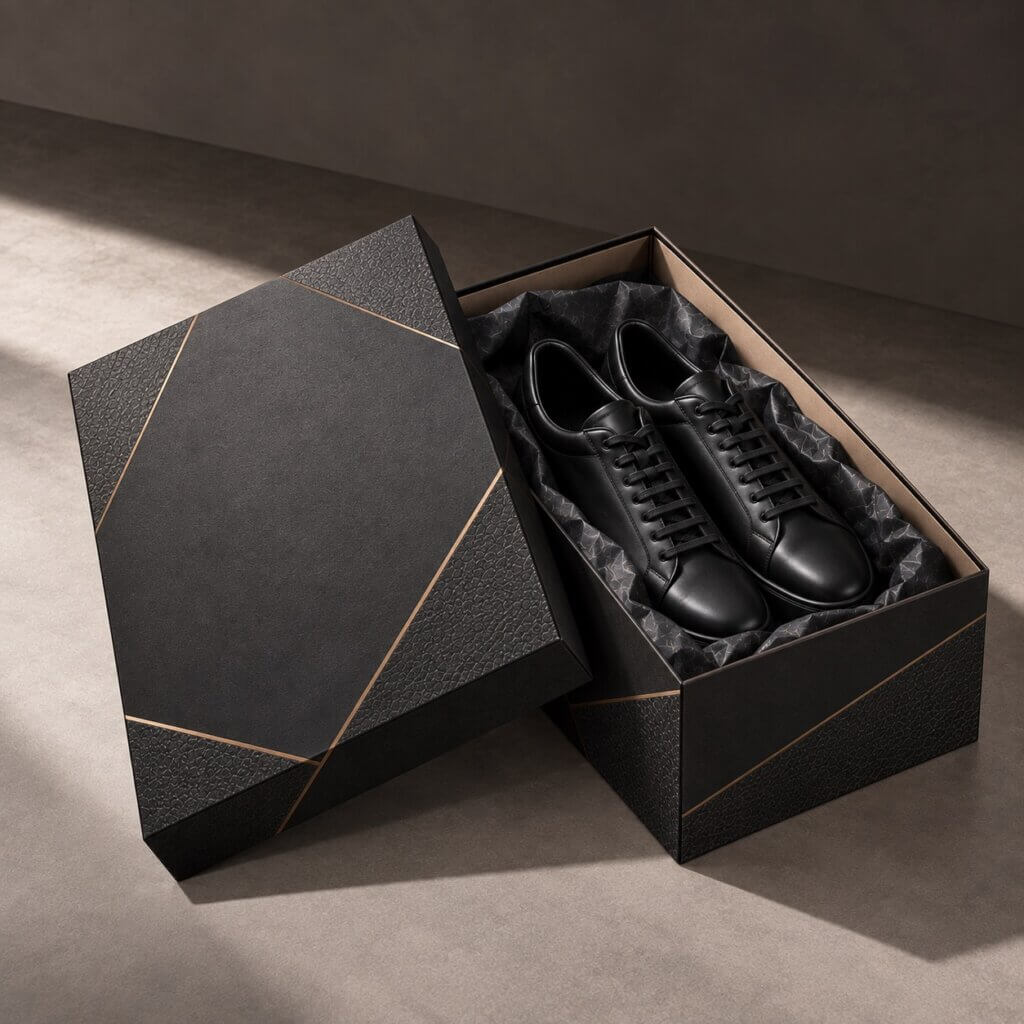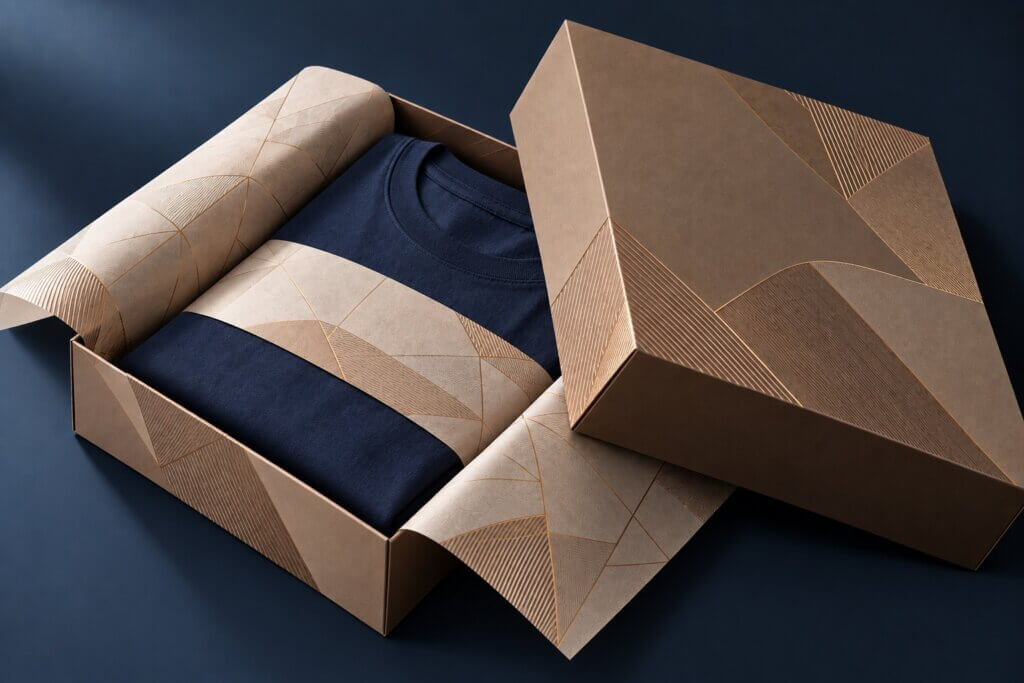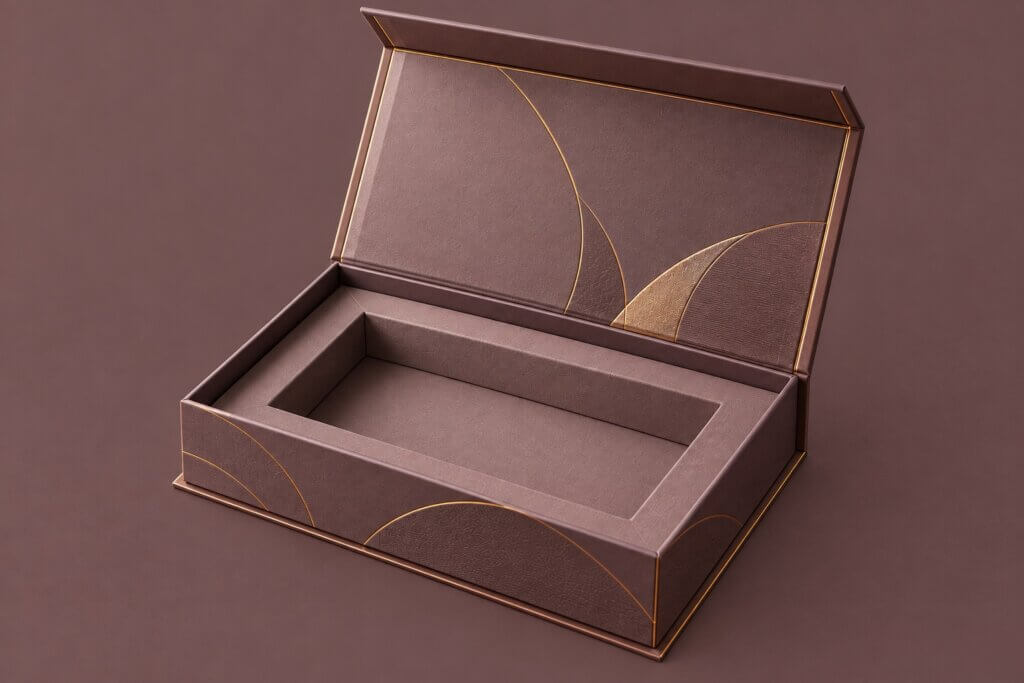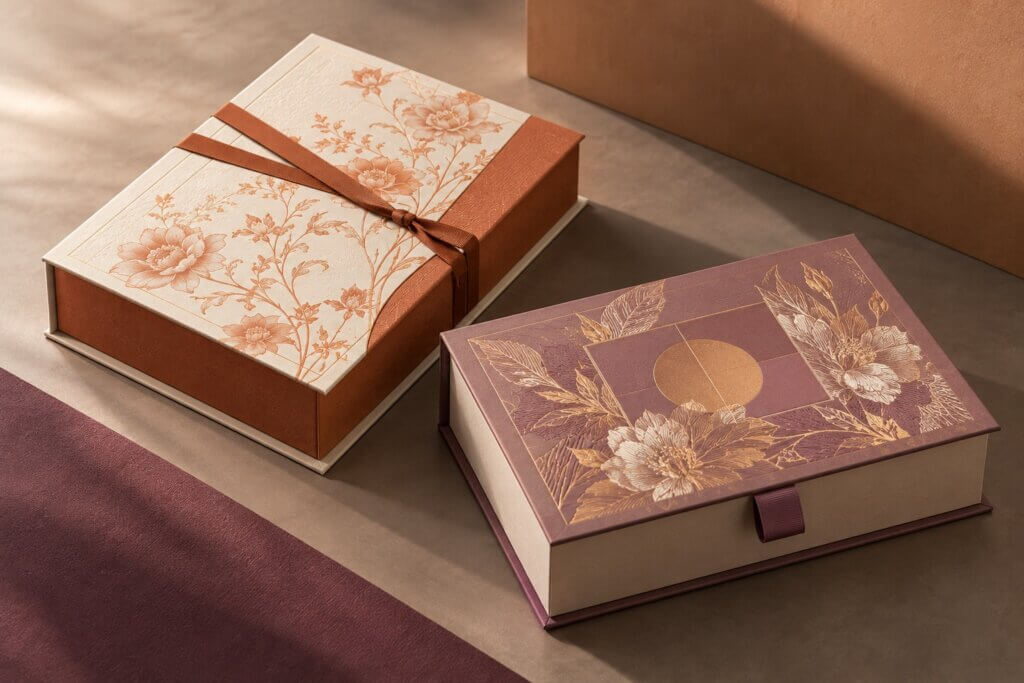

Choosing a packaging structure often starts with a box style: a folding carton, rigid box, mailer, or something more unusual. In practice, that decision becomes much easier when the process starts with the product instead. A 30 ml serum bottle, a set of coffee pods, and a compact drone may all fit into packages of similar external dimensions, but they create completely different structural problems.
The serum needs controlled support around the bottle. Coffee pods need an efficient arrangement that keeps multiple units organized. A drone may need separate spaces for the main unit, controller, batteries, cables, and other accessories. The right structure is therefore not simply the one that looks best. It should hold the product correctly, open naturally, work for the intended sales channel, and remain practical to manufacture at scale.
Start With the Product, Not the Box Style
Before developing a dieline, the first questions should concern the product: its dimensions, weight, fragility, number of components, and how it will be sold. A lightweight retail item may work well in a folding carton, while a product traveling through an e-commerce distribution network may need a stronger corrugated structure. Neither solution is automatically better; they are designed for different conditions.

This becomes clear with custom coffee pod boxes. The number of capsules affects the dimensions, arrangement, and sometimes the internal structure. Ten pods may fit efficiently in a simple row arrangement, while a larger pack may need multiple rows or layers. The aim is to keep the capsules organized without introducing unnecessary material or making packing more complicated than it needs to be.
The same principle applies to cookie boxes with dividers, although the reason for separation is different. Dividers can reduce contact between individual cookies and limit movement during handling while making the presentation more orderly. Compartments that fit too tightly, however, may slow down packing or make delicate products difficult to remove, so protection and usable clearance need to be considered together.
This raises a common question during packaging development: does every product need an insert? In many cases, no. If the outer carton already holds a lightweight and durable product securely, an additional insert may only increase material use and assembly time. Inserts are most useful when they solve a specific problem such as positioning, separation, support, or presentation. The decision should come from what happens to the product inside the package rather than from the assumption that a more complicated interior is always better.
Bottle Packaging Is Mostly About Controlling Movement
Bottle packaging creates a different set of structural decisions. With custom serum boxes, the bottle may be small but relatively heavy for its footprint, especially when glass is used. A carton that looks correctly sized from the outside can still leave enough internal space for the bottle to move laterally or vertically during handling.
A fitted paperboard insert or folded platform can help control that movement. For products that need a more deliberate opening experience, a drawer box can provide another option by combining an outer sleeve with an inner tray and fitted insert. Whichever structure is used, the clearance should be large enough for efficient packing without allowing the bottle to feel loose.
Taller bottles introduce another issue. Custom toner boxes usually have a greater height-to-width ratio than serum packaging, so side compression, bottom closure, board grade, grain direction, and internal support can become more important. Two products from the same cosmetics line may therefore use the same graphics and materials while requiring different structural solutions.
There is no universal answer to how much clearance should be left around a product. Even a few millimeters can change the result: too little space may cause scuffing or slow down packing, while too much allows a dense bottle to shift. Final dimensions should ideally be checked against the actual production product, including its cap, label, and normal manufacturing tolerances, rather than relying only on nominal dimensions supplied at the beginning of the project. This is also why a physical sample remains useful even after the dieline has been checked digitally.
Requirements for dimensions, inserts, materials, sampling, and production can vary from project to project, and our packaging FAQs cover some of the common questions that come up before development.
Electronics Need Space for the Product and Its Accessories
Electronics packaging often becomes more complicated because the main device is only one part of the contents. Custom drone boxes, for example, may need to accommodate a drone, controller, batteries, charging equipment, spare propellers, cables, and documentation. If all these components share one open cavity, they can move independently and come into contact during transportation.
A more effective approach is to divide the interior according to the shape and weight of each component. Die-cut paperboard can position lighter parts, while folded corrugated structures can provide additional support where required. When the package is intended for direct shipping, this internal system can work together with a protective mailer box, rather than relying on a large amount of loose cushioning around the product.
The same principle applies to custom charger boxes, although the structure is normally simpler. The adapter can occupy one defined position while the cable is folded into another area. A small paper insert may be enough to separate them and improve presentation when the customer opens the box. Adding more compartments than necessary increases material, assembly, and packing time without automatically improving protection.
Paper packaging can be suitable for many electronics, but it should not be treated as a universal solution. Paperboard and corrugated inserts can provide effective positioning, separation, and structural support for chargers, cables, small devices, and accessory sets when engineered around the actual product. Heavier or particularly sensitive equipment may require additional cushioning or a different material strategy. The material should therefore follow the protection requirement rather than the other way around.
Structural priorities change with the product inside the package. Multiple small items often benefit from paperboard dividers that keep individual pieces organized, while glass bottles usually need a fitted carton or paper insert to limit movement. Electronics with accessories may require separate compartments so cables, adapters, and devices do not move against one another. Products sold through e-commerce generally place more emphasis on transport protection and may benefit from corrugated construction, whereas premium gift products often give greater weight to presentation, product positioning, and the way the package opens.
Opening Is Part of the Structure
Protection is only one part of packaging design. The way a customer opens and handles the package can also influence the structure. Custom thumb cut boxes illustrate this well: a small semicircular or shaped cutout creates space for a finger to grip an inner tray, sleeve, or product. The feature is simple, but its position and depth determine whether it actually improves usability.
If the cut is too shallow, the user may still struggle to grip the inner component. If it is too deep, too much of the inner box may become visible and the edge can look or feel weaker. Similar attention is required with custom petal top boxes, where overlapping or interlocking top panels form the closure. Die-cut accuracy and crease position affect both the appearance of the closed top and how smoothly it opens.
The same engineering principle applies to a reverse tuck folding carton. Correctly positioned crease lines and tuck flaps help the carton open and close predictably. These details are small compared with the overall dimensions of a box, but they often determine whether the package feels intuitive in use.
A special opening structure is therefore not automatically better. A distinctive closure can make an opening sequence more memorable, but it can also introduce additional assembly or make the package confusing if its operation is not immediately clear. A thumb cut, locking tab, pull tab, or petal closure should have a functional reason to exist. In many projects, the simplest opening that works reliably is the better structural decision.
Retail and E-Commerce Require Different Priorities
The same product may need a different package depending on where and how it is sold. Cosmetic display boxes are designed partly around retail presentation: products need to remain organized while their labels, colors, or primary packaging remain visible. The display may also need to travel flat or partially assembled before being opened and set up at the retail location.
By contrast, tuck top mailer boxes are more closely associated with containment and transport. Corrugated construction can provide additional resistance to normal distribution handling, while the tuck-top closure gives access without requiring a completely separate lid. A shaped box may create stronger visual recognition for a retail product, but unusual geometry should still be evaluated for stacking, packing efficiency, shipping volume, and production yield before the shape is finalized.
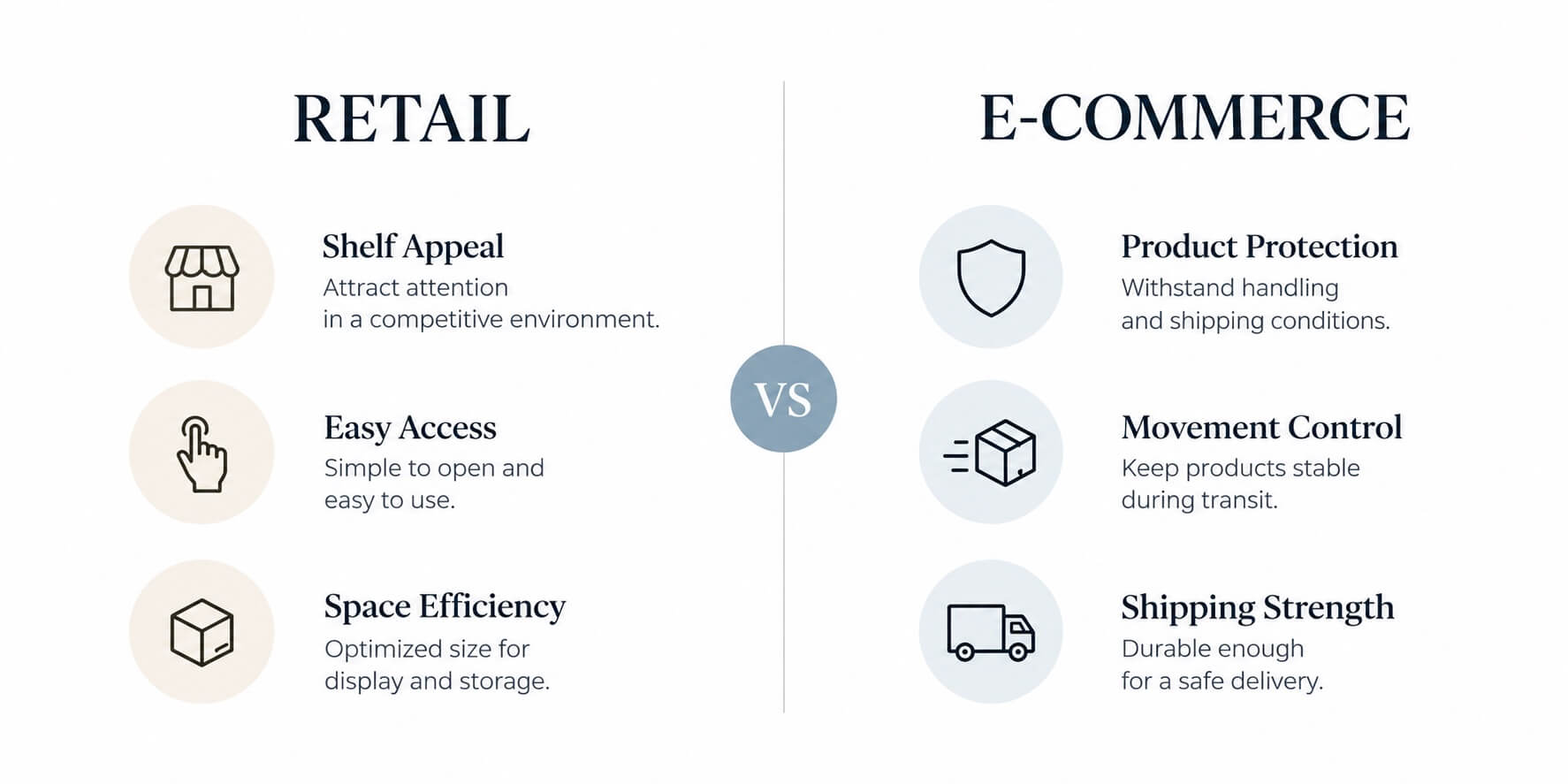
It is possible for the same package to serve both retail and e-commerce, but only when the structure has been designed for both conditions. A sufficiently protective mailer can sometimes handle presentation and shipping, whereas a lightweight retail carton may still require a separate outer shipping box. This decision is best made early, because trying to turn a retail-only package into a transport package after the structural design is complete often creates unnecessary secondary packaging.
Similar Cosmetics Can Need Very Different Structures
Cosmetics provide a useful example of why product category alone is not enough to determine structure. Custom eyeshadow boxes may contain a shallow palette, multiple pans, or another compact component. In this case, accurate positioning and surface protection can matter more than vertical support, and the opening should make the product easy to view and remove.
Serum and toner packaging, by comparison, usually deals with bottles. That difference changes carton depth, loading direction, insert design, closure, and the amount of vertical support required. A brand can maintain a consistent visual system across these products without forcing them into the same structural format.
For the same reason, every product in one range does not need to use exactly the same box structure. Brand consistency can come from typography, color, materials, finishes, and proportions, while the engineering continues to respond to the individual product. Forcing a shallow eyeshadow palette and a tall toner bottle into variations of the same structure may create wasted space or poor product fit without making the range feel more consistent.
When Does a Rigid Box Make Sense?
Not every premium product requires rigid construction. Traditional set up boxes use rigid board wrapped with printed or specialty paper, creating a formed structure before the product is packed. This can provide a substantial feel and a more controlled opening experience, making it suitable for selected gift, beauty, fragrance, jewelry, and premium consumer products.
Other products may justify different structures. A cylindrical gift or product can work naturally with a round box when the geometry suits the contents and presentation. The important point is that a less common structure should solve a real packaging or branding requirement rather than being selected only because it looks different from a standard carton.
Effective bespoke luxury packaging also depends on much more than rigid board. Board thickness, proportions, wrapping paper, corner quality, opening resistance, insert fit, and production consistency all influence the final result. Foil stamping, embossing, specialty paper, or other decorative processes cannot compensate for a poorly fitted insert or an awkward opening experience.
Luxury packaging does not necessarily need more finishing processes either. In many projects, restraint produces the stronger result. One well-chosen material and one accurately executed finish can feel more considered than several decorative processes competing for attention. Structure, fit, edge quality, and consistency across the production run often contribute more to the final impression than the number of finishes applied.
Compare the Structure Before Finalizing the Artwork
When several structures appear suitable, they should be compared against the same practical conditions before the artwork is finalized. Product movement, ease of removal, component count, fragility, shipping method, retail display requirements, and assembly time all influence whether a structure will work beyond the first visual concept.
A useful comparison starts with what happens when the product is actually placed inside the package. If it can shift, an insert or divider may be necessary; if it is difficult to remove, the opening or internal clearance may need adjustment. Multiple components can justify separate compartments, while heavier or more fragile products may require stronger board or additional structural support. The intended sales channel matters as well: a package shipped individually has different protection requirements from one designed primarily for retail display. Assembly should also be considered, particularly for larger production runs, because additional folds, locks, inserts, and compartments can increase both packing time and structural complexity.
This comparison is best completed before final graphics are approved. Artwork can usually be adjusted relatively easily; changing a structural dieline after artwork, sampling, and production preparation have been completed is considerably more disruptive.
Connecting structural development with sampling, production control, and consistent mass production is also part of our packaging manufacturing experience.
Prototype the Product and Package Together
A structural prototype should answer more than whether the box folds correctly. Whenever possible, the actual product should be loaded into the sample and handled in the way the finished package will be used. Tilting the box can reveal movement, repeated opening can expose awkward closures, and removing and replacing the product can show whether an insert is too tight or difficult to access.
For complex structures, the first sample often reveals small adjustments that are difficult to predict on screen. An insert opening may need another millimeter of clearance, a thumb cut may need to move slightly, or a compartment wall may need additional support. These changes are a normal part of structural development and are much easier to make before mass production.
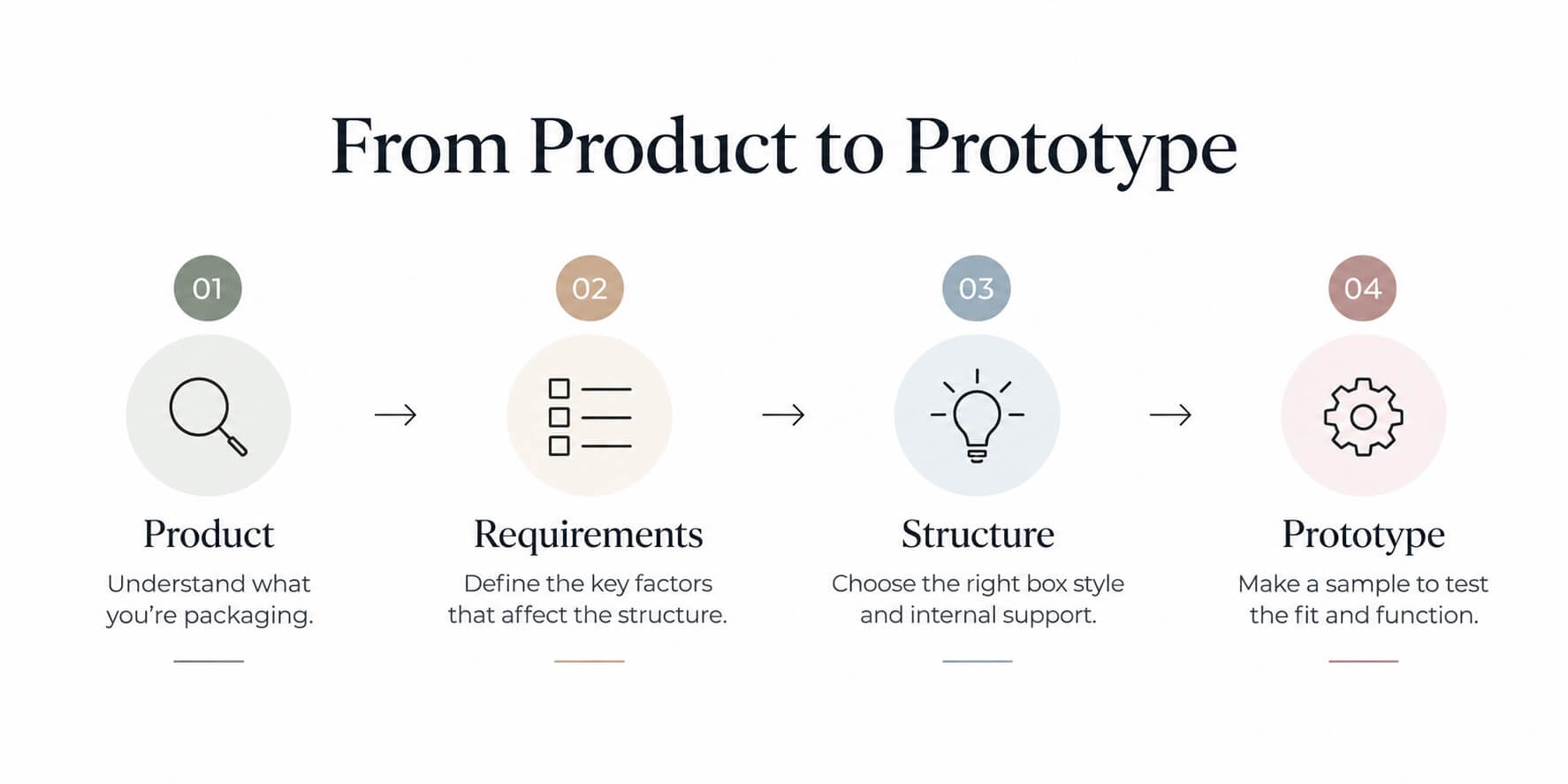
There is also no fixed number of prototypes that every packaging project needs. A straightforward carton based on a proven structure may require little adjustment, while a new insert, unusual closure, or multi-component package may need several iterations. The purpose is not to reach a predetermined number of samples but to resolve product fit, usability, assembly, and protection before hundreds or thousands of boxes are produced.
There is no single packaging structure that works best for every product. Coffee pods benefit from efficient organization, cookies may need separation, bottles require controlled fit, and electronics need space for both the main product and accessories. Retail displays and shipping packages solve different problems, while premium products may justify more deliberate materials and opening structures.
The most useful question therefore comes before printing and decorative finishes: what does this particular product need the packaging to do? Once that is clear, choosing the structure becomes much easier. Good packaging does not need to be structurally complicated; it needs the right amount of structure, in the right places, for the product inside.