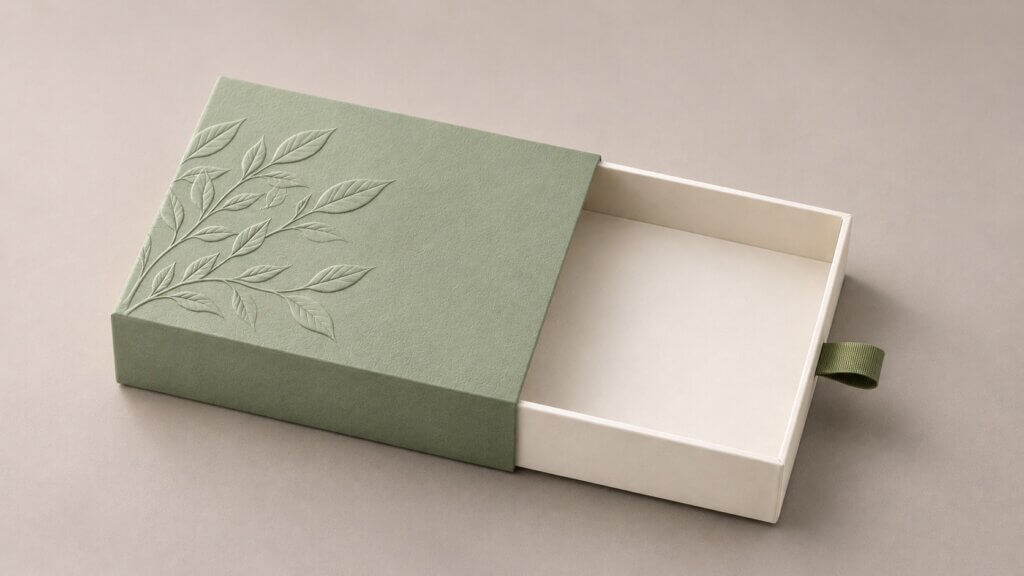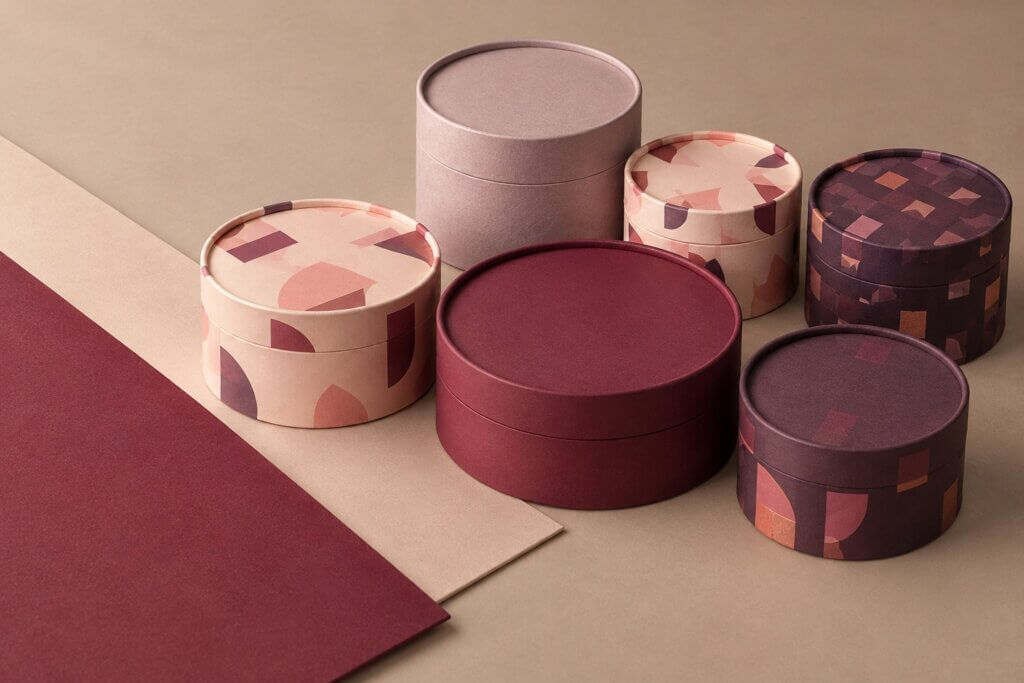

A packaging concept usually describes an intended result: how the product should be presented, how the package should open, what visual character it should communicate, or what reference structure the brand prefers. Manufacturing requires a different level of definition. Before a concept can become a repeatable package, its visual and functional intentions must be translated into dimensions, materials, structural relationships, tolerances, converting requirements, assembly conditions, and measurable quality criteria.
This is where experienced paperboard packaging manufacturers move beyond simply reproducing a reference box. Product geometry, weight distribution, board caliper, folded material build-up, grain direction, crease behavior, insert retention, glue areas, closure engagement, packing sequence, and normal manufacturing variation can all influence whether the final structure performs as intended. A structure that works once as a hand-assembled prototype may still require substantial engineering before it can run consistently through cutting, creasing, gluing, assembly, packing, and final inspection.
For overseas brands working with a packaging supplier china project, the important distinction is therefore between a package that can be made and a package that has been sufficiently defined to be made repeatedly. The development process should progressively remove uncertainty from the structure until the critical characteristics can be controlled during production.
That process begins with the packed product rather than the exterior appearance.
Translate the Concept Into Engineering Inputs
Before structural work begins, the manufacturer needs to establish what the package is physically expected to do. A reference image can communicate style, but it does not define product weight, actual dimensions, center of gravity, surface sensitivity, loading orientation, accessories, acceptable movement, or packing sequence. Even supplied product dimensions require verification because nominal dimensions on a specification sheet may not represent the maximum physical dimensions that the package must accommodate.
The first task is therefore to establish reliable engineering inputs. These normally include the product itself or verified dimensional data, product weight, primary packaging, protruding components such as pumps or caps, vulnerable surfaces, required orientation, accessory arrangement, expected packing method, distribution conditions, and presentation requirements. When several components share one package, their relationship matters as much as their individual dimensions. Buyers evaluating different packaging types should therefore consider not only appearance but also how each structure supports the complete packed system.
A frequent question at this stage is: can a manufacturer develop a package from product dimensions alone? Sometimes, but physical samples are preferable when fit is critical. Bottles may have shoulders wider than their nominal body diameter, molded components can vary slightly between production batches, and soft or flexible products may not behave like their CAD dimensions suggest. When the manufacturer cannot access the physical product, the dimensional information should identify maximum dimensions and critical contact areas rather than only general length, width, and height.
The quality of the structural solution is limited by the quality of the engineering inputs used to develop it.
Build the Structure From the Product Outward
Once the product parameters are established, the next step is not immediately defining the external box size. The manufacturer first develops the usable internal geometry.
Product orientation establishes the starting envelope. From there, engineers consider the clearance required for loading and removal, contact points needed for retention, unsupported areas that may require additional support, and the space occupied by accessories or secondary components. If an insert is required, its geometry becomes part of the dimensional system rather than an independent component placed inside an already completed box.
This distinction is particularly important for custom jewelry packaging manufacturers. A necklace may require controlled routing and multiple retention points to prevent tangling, while a ring requires a completely different relationship between presentation angle, holding force, and removal. Similarly, cosmetics packaging suppliers developing a multi-product set may need to manage several bottles and jars with different diameters, heights, masses, and centers of gravity within one insert.
This leads to a common engineering question: how much clearance should be allowed between the product and the insert? There is no reliable universal value. Clearance should be determined from product dimensional variation, insert material, board caliper, cutting tolerance, loading direction, required retention, and the possibility of surface abrasion. If the nominal cavity is designed almost exactly to the nominal product dimension, ordinary variation in either component can turn a controlled fit into interference.
Professional cardboard packaging design therefore evaluates both the final product position and the path required to place the product into that position.
Account for Material Thickness Before Locking the Geometry
Material selection cannot be treated as a cosmetic decision made after structural development. Paperboard caliper changes the physical geometry of folds, corners, slots, wrapped edges, and overlapping panels. The nominal dimension shown on a flat drawing is therefore not always the same as the usable dimension after the material has been converted and folded.
This becomes more important where several material layers accumulate. A folded wall, wrapped edge, reinforcing panel, glued overlap, or multi-layer insert can create a dimensional stack-up that affects the neighboring component. Individually, each difference may be small; together, they can change lid engagement, insert fit, panel alignment, or closing resistance. A technically sound bespoke packaging design should therefore calculate critical relationships using the intended material construction rather than treating the board as a dimensionless surface.
Grain direction also deserves attention. Paperboard does not behave identically in both directions. Grain orientation can influence folding resistance, panel stiffness, curl, and the appearance of a crease. For structures with long panels, narrow folds, or critical opening behavior, grain direction may need to be specified as part of the production construction rather than left to material utilization alone.
This is one reason structural engineering needs to connect material selection with geometry. A dieline can be mathematically correct and still behave poorly if the physical characteristics of the selected board were not considered during development.
Engineer Creases, Closures, and Assembly Relationships
After the overall geometry is established, attention shifts to the interfaces that determine whether the structure actually functions. These are often more important than the broad external dimensions.
Crease positions, score width, tab length, slot clearance, dust-flap geometry, glue-flap width, lid engagement, and panel overlap all affect assembly behavior. A locking tab that is only slightly too wide may buckle during insertion; too much clearance may produce a closure that feels loose. A crease positioned correctly in a drawing can still produce panel misalignment if the fold does not compensate for material thickness.
Glue areas require similar consideration. The question is not simply whether two panels can be bonded. The manufacturer must consider adhesive location, application consistency, squeeze-out risk, visible surfaces, pressure during setting, and whether variation in the glued joint changes the finished geometry.
These relationships become particularly important in unique box packaging design, where additional moving panels, reveal mechanisms, unusual openings, or layered structures create more dependent dimensions. Every dependent feature introduces another potential tolerance interaction. Good engineering therefore does not attempt to make every component complex; it identifies which structural interaction creates the desired experience and simplifies surrounding components where possible.
A distinctive package is more valuable when its defining feature can be repeated reliably.
Use Prototypes to Test Behavior, Not Just Appearance
Once the initial dieline is developed, a physical prototype provides information that cannot be fully obtained from CAD or a 3D rendering. It allows the structure to be folded, loaded, opened, closed, handled, and evaluated as a physical system.
This is why another common buyer question—is a physical sample really necessary before mass production?—should be considered in terms of risk rather than procedure. A simple structure using a well-established construction may require relatively little structural validation. A fitted insert, unusual closure, heavy product, multi-component set, or new opening mechanism carries more uncertainty and therefore benefits substantially from physical testing.
Early prototypes should concentrate on structural behavior before decorative details dominate the evaluation. Engineers can check whether the product enters without excessive force, whether the insert deforms during loading, whether the closure remains engaged after the package is filled, whether the product can be removed naturally, and whether repeated opening changes the structure. Demei’s FAQ also provides information on prototypes, artwork preparation, and production timing.
Importantly, an approved prototype does not prove that every future unit will behave identically.
It proves that the nominal structure can work. The next engineering task is determining how much variation the structure can tolerate while continuing to work.
Define Tolerances Around Function, Not Around Every Dimension Equally
All converting processes introduce variation. Die cutting, creasing, printing, laminating, wrapping, gluing, and manual assembly cannot produce mathematically identical units. Production readiness therefore depends less on eliminating variation than on understanding where variation matters.
The manufacturer should identify critical-to-function dimensions: relationships where deviation can affect assembly, fit, closure, product retention, or visible alignment. A small change in a non-critical outer panel may have no practical consequence, while the same dimensional change at a locking feature or fitted cavity could prevent correct operation.
Tolerance stack-up becomes particularly important when several dimensions interact. Consider a product held inside a paperboard insert, which is then positioned inside an outer box. Product variation, cavity variation, insert cutting variation, insert placement, and box dimensions can all move in different directions. If the nominal design leaves almost no functional allowance, several individually acceptable deviations can combine into an unacceptable final fit.
This answers another frequent question: why can a production box fit differently from an approved sample even when the same dieline is used? Because a sample represents one combination of dimensions within a system that contains multiple sources of variation. Production engineering has to make the structure robust enough to remain functional across the expected manufacturing range.
The target is controlled tolerance, not theoretical dimensional perfection.
Convert the Approved Structure Into Production-Controlled Information
Once structural testing confirms that the package performs correctly, the project must move from development information to controlled production information.
The final specification should identify the approved dieline revision, finished dimensions, material construction, board caliper where relevant, grain direction where critical, print files, finishing locations, insert orientation, adhesive areas, assembly requirements, and critical dimensions or appearance criteria. Revision control matters because an outdated dieline combined with current artwork can produce a technically manufacturable but incorrect package.
This stage answers another common question: is an approved dieline enough for mass production? Not by itself. The dieline defines geometry, but production also needs material, print, finishing, assembly, and quality references. Where a structural feature is sensitive, the approved physical sample can provide an additional reference, but measurable specifications should still define the characteristics that production must control.
Experienced paperboard packaging manufacturers use these references to establish inspection priorities. Instead of treating every measurement as equally important, quality control can focus on the characteristics that influence function, presentation, or downstream packing.
Production documentation is therefore not administrative paperwork added after design. It is the mechanism that transfers design intent into manufacturing control.
Validate the Structure Through the Real Packing Sequence
Even a correctly manufactured empty package can fail operationally if the packing process was not considered during development.
Pack-out validation should reproduce the actual sequence as closely as possible: erecting the package, installing the insert, loading the main product, positioning accessories, adding literature if required, and closing the structure. The process can reveal problems that remain invisible when the package is evaluated only after it has already been assembled.

For example, a finished insert cavity may hold a bottle securely but require excessive force during loading. A flap may close perfectly when the box is empty but interfere with the product after loading. An accessory compartment may function individually but obstruct the operator’s hand when another component is already in place. These are structural issues even though the finished package may appear visually correct.
For brands working with a packaging supplier china partner, communicating the actual packing method can therefore prevent unnecessary redesign later. Packing location, manual versus assisted assembly, loading direction, and expected daily volume may all influence which structure is most practical.
The package should be engineered for the process that will actually use it.
Preserve the Concept by Removing Unnecessary Manufacturing Risk
Production engineering should not strip creativity from a packaging concept. Its purpose is to identify which parts of the concept create value and then make those parts repeatable.
In unique box packaging design, the distinctive experience may come from a reveal sequence, an unexpected opening direction, a controlled movement between two panels, or the way the product is presented after opening. If that experience depends on several tightly interacting components, engineering work should concentrate tolerance and testing around those relationships while simplifying areas that do not contribute directly to the experience.
The same principle applies to bespoke packaging design. A custom structure is most useful when customization solves a physical or commercial problem: unusual product geometry, presentation requirements, product retention, pack-out efficiency, material reduction, or a specific opening experience. Adding structural complexity without identifying its function increases manufacturing dependencies without necessarily increasing customer value.
A practical example can be seen in Demei’s personal care packaging case study. The structural challenge was not simply producing an unusual visual form. The moving components, presentation action, and paper-based product support had to operate as one system. This type of project demonstrates why production feasibility needs to be developed together with the packaging concept rather than checked only after the design has been completed.
From a Successful Prototype to a Repeatable Package
A production-ready structure is the result of progressively reducing uncertainty.
The process begins by defining the real product and packing requirements. Those inputs determine internal geometry and product support. Material construction then modifies the dimensional relationships, while crease, closure, adhesive, and assembly details determine whether the structure behaves correctly. Physical prototypes test those assumptions. Tolerance analysis determines whether the design can continue to function when normal production variation is introduced. Finally, controlled specifications and pack-out validation connect the approved structure with actual manufacturing and packing conditions.
This engineering logic applies whether a brand is working with cosmetics packaging suppliers, custom jewelry packaging manufacturers, or broader paperboard packaging manufacturers. Different industries change the product requirements, but the underlying manufacturing question remains the same.
A concept becomes production-ready not when one perfect sample has been made, but when the reasons that sample works are understood well enough to reproduce the result consistently at scale.