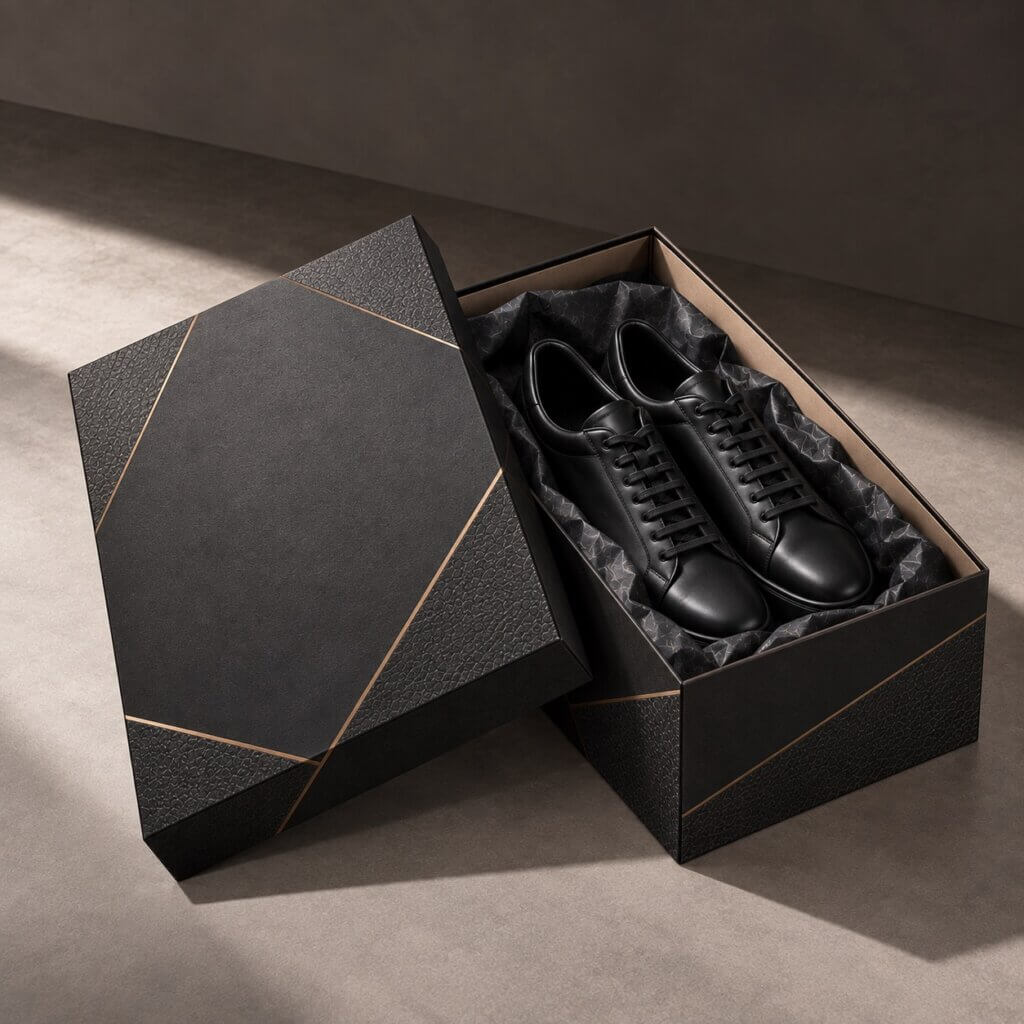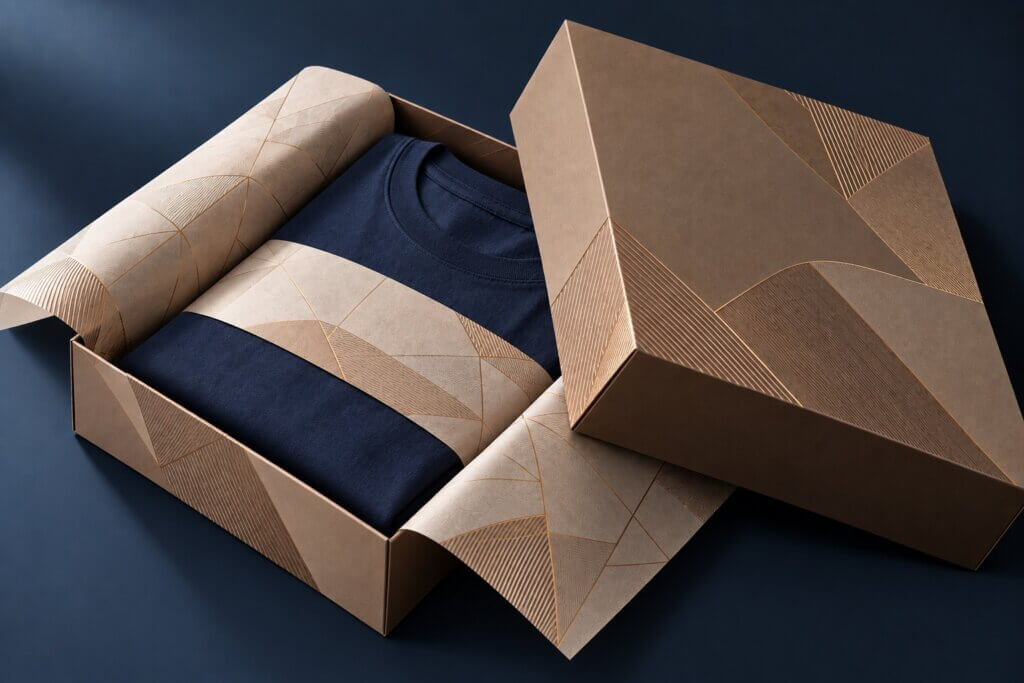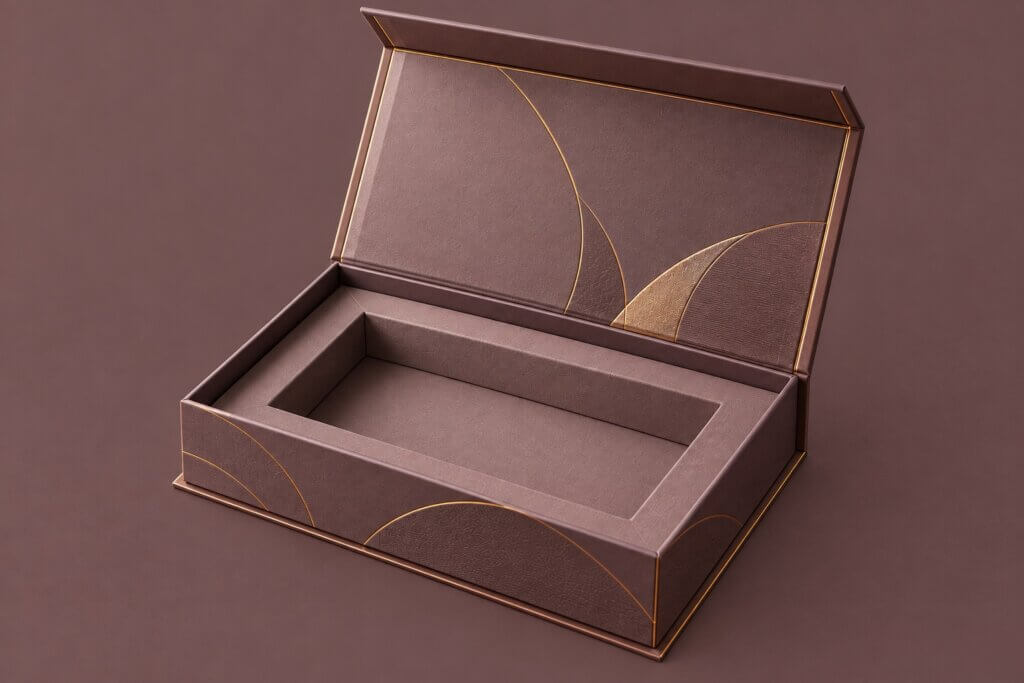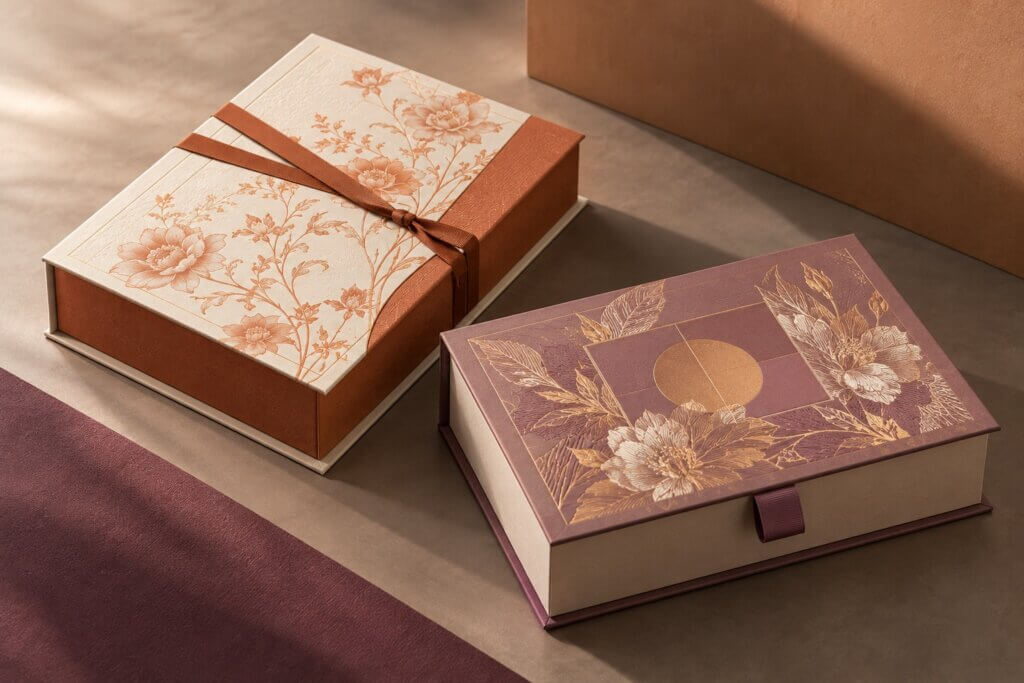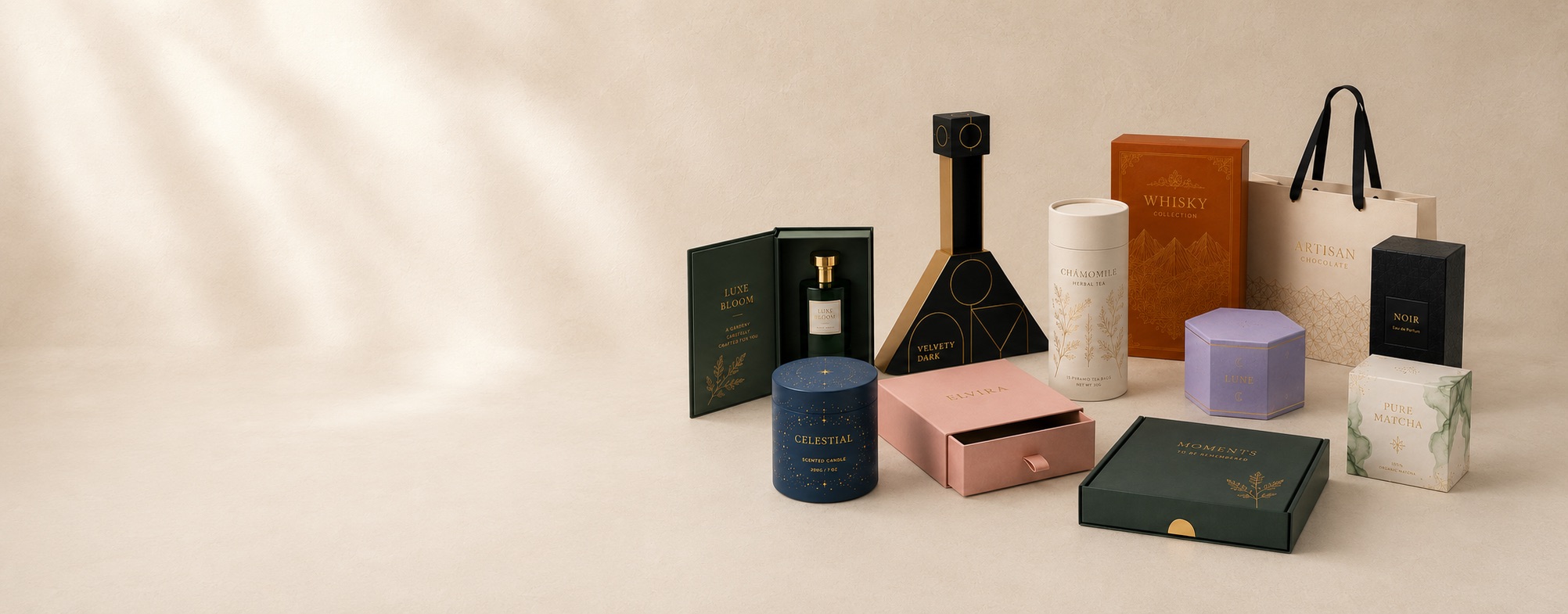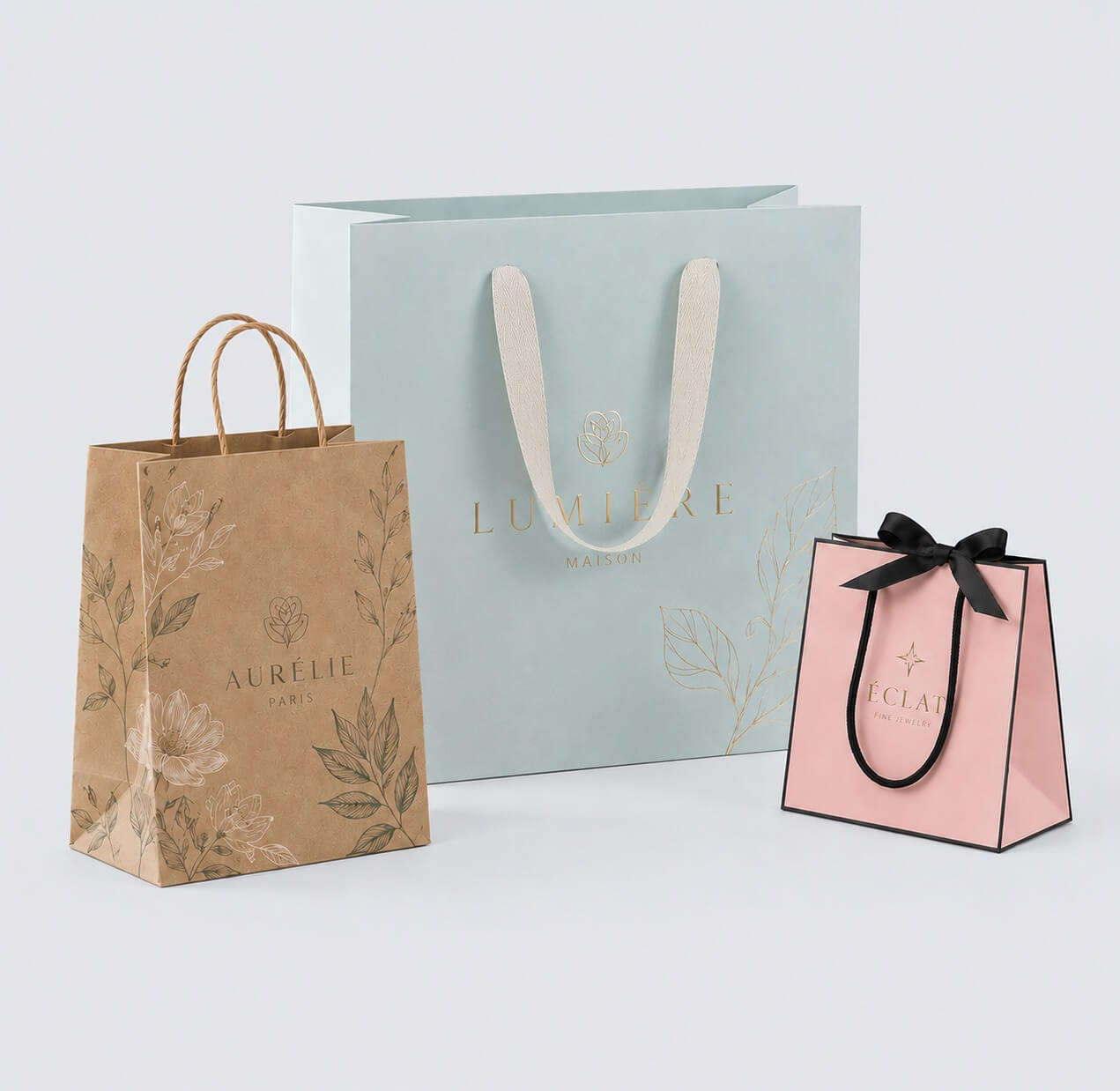

Packaging innovation is easy to confuse with novelty. An unusual silhouette, a dramatic opening motion, an unfamiliar paper, or an unexpected finish can make a package look different at first glance. But difference alone does not explain whether the idea actually improves the packaging.
A more useful way to think about innovation in packaging design is to ask what the design changes. Does it protect or organize the product more effectively? Does it improve the way the product is revealed? Does it remove unnecessary material? Does it make the package easier to use after opening? Or does it create a brand experience that a conventional structure could not provide as effectively?
This distinction matters before choosing among different packaging types. A familiar structure does not automatically mean an ordinary result. For example, custom drawer boxes can remain rectangular and visually restrained while changing how a product is revealed, supported, or presented. Demei’s Pop-Up Display Drawer Box goes one step further: opening the drawer activates a concealed mechanism that raises a display panel, turning a familiar drawer movement into part of the product presentation.
That leads to a better starting point for innovation: do not begin by asking how to make a package look more unusual. Begin by identifying what the package could do better.
Innovation Does Not Have to Begin With a New Box Shape
Structural innovation is sometimes associated with creating a shape that customers have never seen before. In practice, a completely new silhouette is only one possibility. A rectangular rigid box, folding carton, or drawer box can still contain a meaningful innovation if the relationship between the product, structure, and user changes.
Consider jewelry packaging design. A necklace does not necessarily need an unusually shaped outer box. A more useful improvement may be an insert that presents the pendant before the chain becomes visible, holds the chain without tangling, and allows the piece to be removed without pulling against the insert. The exterior can remain simple while the experience becomes more deliberate. The same principle applies to gift packaging design, where opening sequence, product arrangement, or a reusable internal component may contribute more than an unfamiliar outline.
Does innovative packaging need a completely new structure? No. Innovation can come from changing how an existing structure functions, opens, presents the product, uses material, or continues to work after opening. A new shape is valuable only when the shape itself contributes something useful.
This is the first distinction between novelty and innovation. Once the need to invent a new silhouette is removed, the next question becomes much more practical: what problem are we trying to improve?
Useful Innovation Usually Starts With a Specific Problem
A packaging concept becomes easier to evaluate when the problem is defined before the solution. A product may be difficult to remove from its insert. Several components may become visually disorganized after transport. A gift set may reveal everything at once when the brand wants a sequence. A structure may use several materials where one engineered paper component could perform the same function. Or a beautiful presentation box may become useless immediately after the product is removed.
These are very different problems, so they should not lead to the same kind of innovation. A difficult product-removal problem may be solved through finger clearance or a different retaining structure. A weak product reveal may require changes to height, orientation, or opening sequence. Excess material may be addressed by redesigning the insert rather than changing the outer box. The design becomes more focused because every new feature has a reason to exist.
What is the first step in innovative packaging design? Before selecting a structure or finish, define the limitation in the current packaging experience. Innovation is easier to judge when there is a clear before-and-after condition: what could not be done well before, and what does the new design improve?
This problem-first approach also prevents innovation from becoming feature accumulation. Magnets, ribbons, drawers, hinged panels, foil, embossing, and pop-up mechanisms may all be appropriate in the right project, but adding them without a clear purpose produces complexity rather than innovation.
Once the Problem Is Clear, the Opening Sequence Becomes a Design Tool
Opening a package is normally described as a functional action: remove the lid, pull the drawer, unfold the flap. But the sequence can also control when the consumer sees information, branding, accessories, and the main product.
This is particularly useful in luxury packaging design and beauty packaging design, where the product presentation may be part of the intended experience. A fragrance bottle positioned immediately under a lid creates one type of reveal. The same bottle placed behind two opening panels creates another. A drawer that gradually exposes the product changes the timing again, while a rising platform can change both timing and viewing angle.
Demei’s Pop-Up Display Drawer Box demonstrates this principle in physical form. The user performs a familiar action—pulling a drawer—but that movement also raises the display panel through a concealed linkage. The innovation is therefore not simply “a drawer plus a pop-up.” The important relationship is that one user action produces two coordinated structural responses.
Why does opening sequence matter in packaging design? Because presentation happens over time, not only in a photograph of the closed box. The order in which a package reveals its contents can direct attention, separate information from the main product, and make the product itself the visual focus.
Once opening is treated as a sequence rather than a single action, another opportunity becomes visible: innovation can occur in the way the product is presented even when the exterior barely changes.
The Product Itself Can Become the Main Visual Feature
Many packaging concepts try to create impact by adding more graphics or finishing to the outside. Another approach is to use structure to improve the presentation of the product itself.
In makeup packaging design, for example, a set of products can sit at one level inside a conventional insert, or the structural layout can establish a visual hierarchy by changing height, spacing, angle, or reveal order. In jewelry packaging design, a ring, pendant, or bracelet may need very little decoration around it if the insert positions it correctly. The packaging becomes a frame rather than a competing visual element.
This is an important form of innovation because it changes where the design effort is concentrated. Instead of asking, “What else can we add to the package?” the designer asks, “How can the existing structure make the product easier to notice, understand, remove, or appreciate?”
Can simple packaging still be innovative? Yes. A simple exterior combined with a carefully engineered product position, insert, or opening relationship may produce a more distinctive experience than a heavily decorated box. Visual restraint and structural innovation are not opposites.
That principle naturally leads to the next stage. If innovation does not always require adding visual or structural features, it can sometimes come from removing them.
Removing Material Can Be a Design Innovation
Packaging development often treats innovation as addition: another feature, another component, another finish. Yet some of the most useful structural improvements begin by asking whether something can be eliminated.
An eco packaging design project might replace a plastic insert with a folded paperboard locking structure. Two separate components may be redesigned as one connected blank. A heavy multi-layer construction may be replaced by strategically folded sections that create support only where it is needed. In other cases, reducing empty internal volume can decrease material consumption without changing the product experience.
This is also relevant to sustainable food packaging design, although sustainability should not be judged from one material choice alone. A paper-based solution that uses excessive material or requires several unnecessary components is not automatically a better design. Material source, product protection, manufacturing efficiency, transport, and end-of-life considerations all affect the broader result. Current sustainability discussions similarly emphasize that recyclable or paper-based material is only part of the problem; packaging still has to perform its primary function effectively.
Can sustainable packaging also be innovative packaging? Yes, when the design changes how resources are used while maintaining the required function. Replacing a material can be one approach, but eliminating a component, reducing volume, simplifying separation, or designing one paper structure to perform several functions can represent a deeper structural improvement.
Removing something successfully requires understanding what that component was doing. That same thinking can be extended beyond manufacturing to what happens after the consumer opens the package.
Innovation Can Continue After the First Opening
A large amount of packaging is designed around the moment before opening. The package protects the product, creates a first impression, and then loses most of its purpose once the product is removed. For some categories, that is entirely appropriate. For others, the period after opening creates another design opportunity.
Tea, jewelry, accessories, gift sets, and certain beauty products may remain in their packaging for weeks or months. In those cases, the box can become storage, organization, or display rather than disposable presentation. A lid may become a display support. An internal tray may be removable and used independently. A gift box may be designed to close reliably many times rather than perform well only during the first unboxing.
Does reusable packaging always make a design more innovative? No. Reuse only adds value when the secondary function is realistic for the product and consumer. Making a package heavier or more complicated simply so it can theoretically be reused can create more material without creating meaningful utility.
The more useful question is whether the packaging has a natural role after opening. If it does, designing for that role can extend the relationship between product, packaging, and consumer without adding an artificial feature.
This Is Where Packaging Begins to Influence the Consumer Physically
The question how does packaging design influence consumers is often answered through color, typography, graphics, and shelf visibility. Those elements matter, but they describe only the visual side of the experience. Physical packaging also communicates through resistance, movement, order, access, and material behavior.
A drawer that moves smoothly creates a different impression from one that binds. A lid that separates with controlled resistance feels different from one that drops away immediately. An insert that allows a product to be removed naturally creates a different experience from one that forces the user to pull at the product. A carefully ordered gift set communicates differently from several components that move out of position during transport.
Search results around consumer influence commonly emphasize first impressions, usability, product presentation, perceived quality, and interaction—not graphics alone. For a packaging manufacturer, this distinction is important because many of those experiences are created by physical decisions: dimensions, material stiffness, clearance, insert geometry, opening direction, and assembly.
How can packaging design influence consumers without changing the graphics? By changing how the package feels and behaves during use. Structure determines how the consumer reaches the product, what appears first, how components remain organized, and whether the package feels controlled or awkward. Visual communication attracts attention; physical interaction helps determine what happens after the package is picked up or opened.
At this stage, however, an innovative idea is still only a design concept. The next question is whether the intended interaction survives contact with real materials.
A Prototype Turns the Idea Into a Physical Test
A rendering can show where components are positioned and how a package should appear at different stages of opening. It cannot fully reproduce board stiffness, crease resistance, wrapping thickness, friction between components, adhesive behavior, product weight, or the force required to activate a moving section.
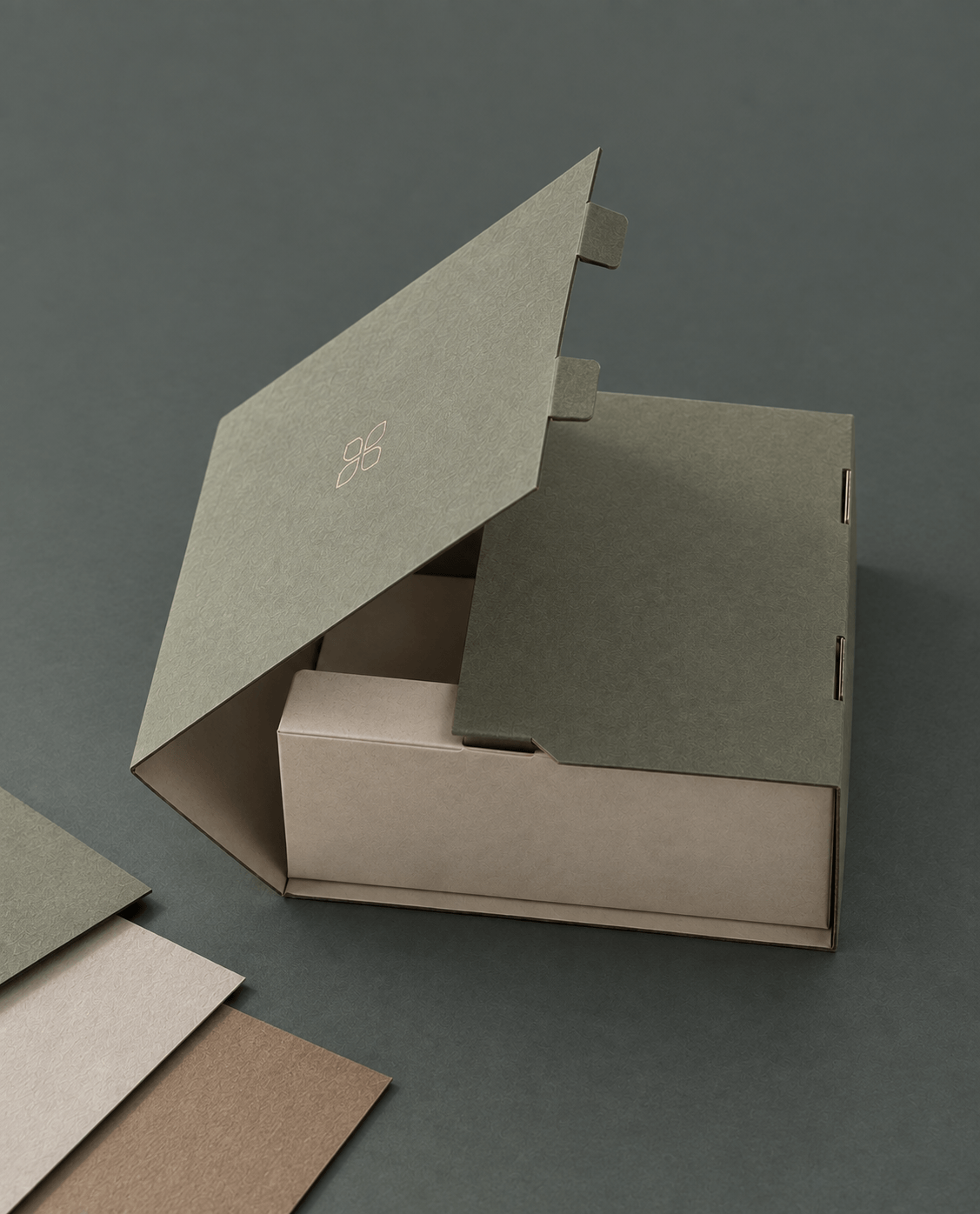
That is why a physical prototype becomes especially useful when the innovation depends on interaction. If a drawer is intended to trigger another component, both movements need to be tested together. If a paper insert replaces plastic, the sample needs to confirm that the product remains secure and can still be removed comfortably. If a package is intended for repeated storage, the closure and structure need to survive more than one opening.
Does innovative packaging always need a physical prototype? Not every graphic change requires one. But when the concept changes structure, material relationships, product fit, opening motion, or user interaction, a physical sample provides information that a screen cannot. Demei’s FAQ confirms that physical prototypes can be used to review structure, materials, artwork, and finishing before mass production.
A successful prototype answers “Can this idea work?” But one successful sample is still not the final definition of packaging innovation.
The Final Test Is Whether the Innovation Can Be Repeated
A sample maker can adjust one component by hand, apply extra pressure to one joint, or compensate for a small fit issue while producing a prototype. A production line cannot depend on thousands of individual corrections. If an innovative feature only works when one highly experienced person continually adjusts it, the idea has not yet become a robust packaging solution.
This is where design and engineering reconnect. The opening sequence has to tolerate normal material variation. Inserts need to position products consistently. Moving components need enough clearance to operate without feeling uncontrolled. Assembly steps need to be understandable and repeatable. The innovation has to survive packing, transportation, opening, and the production quantity required by the project.
What makes packaging innovation practical for mass production? The feature should create a clear benefit, work with real materials, tolerate normal production variation, and be repeatable without excessive correction. Complexity is acceptable when it supports the purpose of the design; uncontrolled complexity is not.
At Demei Packaging, most custom packaging projects start from 500 pieces, but the final MOQ depends on the box type, structure, materials, and finishing requirements. This makes the transition from concept to repeatable production particularly important: the objective is not to prove that one impressive sample can be made, but to establish how the same experience can be delivered consistently across the order.
A Better Question Than “Has This Been Done Before?”
When discussing packaging innovation, it is tempting to ask whether a concept is completely new. But novelty is difficult to measure and is not necessarily the most useful standard. A structure can borrow a familiar mechanical principle and still solve a packaging problem in a better way for a particular product.
A stronger evaluation starts with the problem identified at the beginning of the project. Did the new design improve product presentation? Did it create a clearer opening sequence? Did it reduce an unnecessary component? Did it make the product easier to access or store? Did it extend the useful life of the package? And can those benefits survive real manufacturing rather than existing only in a rendering?
That brings the argument back to where it started. Innovation in packaging design is not defined by how many unfamiliar features a package contains. It becomes meaningful when a structural, material, or interaction decision creates a useful change—and when that change can be reproduced reliably.
The strongest packaging innovation is not necessarily the idea nobody has seen before. It is the idea that gives the package a better reason to exist.