
When buyers compare quotations for custom packaging, the unit price can change noticeably as the order quantity changes. A box quoted at 500 pieces may cost considerably less per unit at 2,000 or 5,000 pieces, even when its dimensions, material, printing, and finishing specifications remain unchanged.
This is common across custom packaging , including folding cartons , drawer boxes , and more complex paper-based packaging.
The difference is not simply a discount for ordering more. A custom packaging quotation combines costs that behave differently as production volume changes. Some costs are associated with preparing a production run and can be spread across more finished units. Others are incurred every time another box is produced.
Understanding that distinction is the key to understanding quantity-based packaging pricing.
Why Do Small Packaging Orders Usually Cost More Per Box?
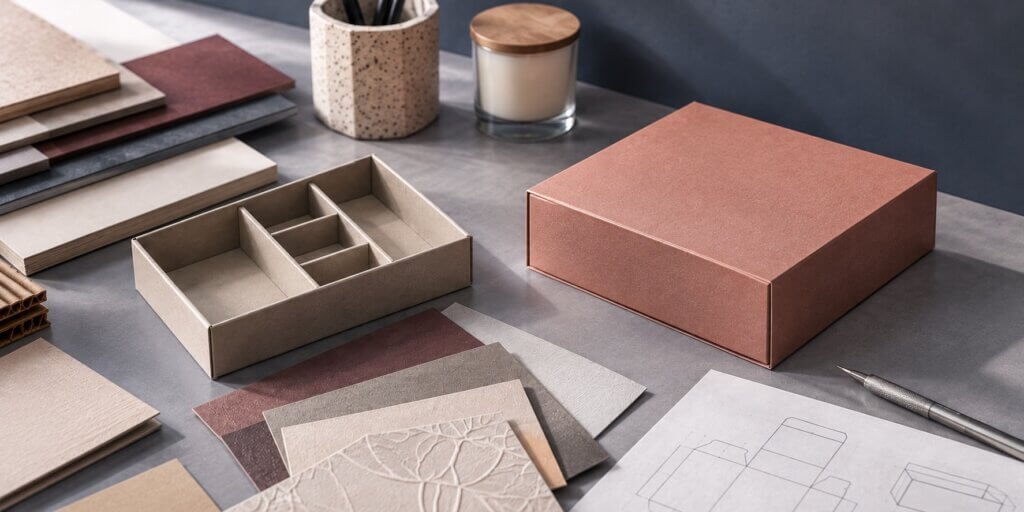
Before normal production begins, a custom packaging job normally requires preparation. Depending on the specification, this can include prepress work, printing setup, cutting dies, machine changeover, color adjustment, and tooling for processes such as foil stamping or embossing.
These requirements do not increase in direct proportion to the number of finished boxes. A cutting die, for example, is not normally made again simply because the order increases from 500 to 5,000 pieces. The same general principle applies to many setup activities required to bring a production line to an approved running condition.
When these costs are allocated across a short production run, their contribution to each finished box is relatively high. As more acceptable units are produced from the same setup, the setup cost per unit falls.
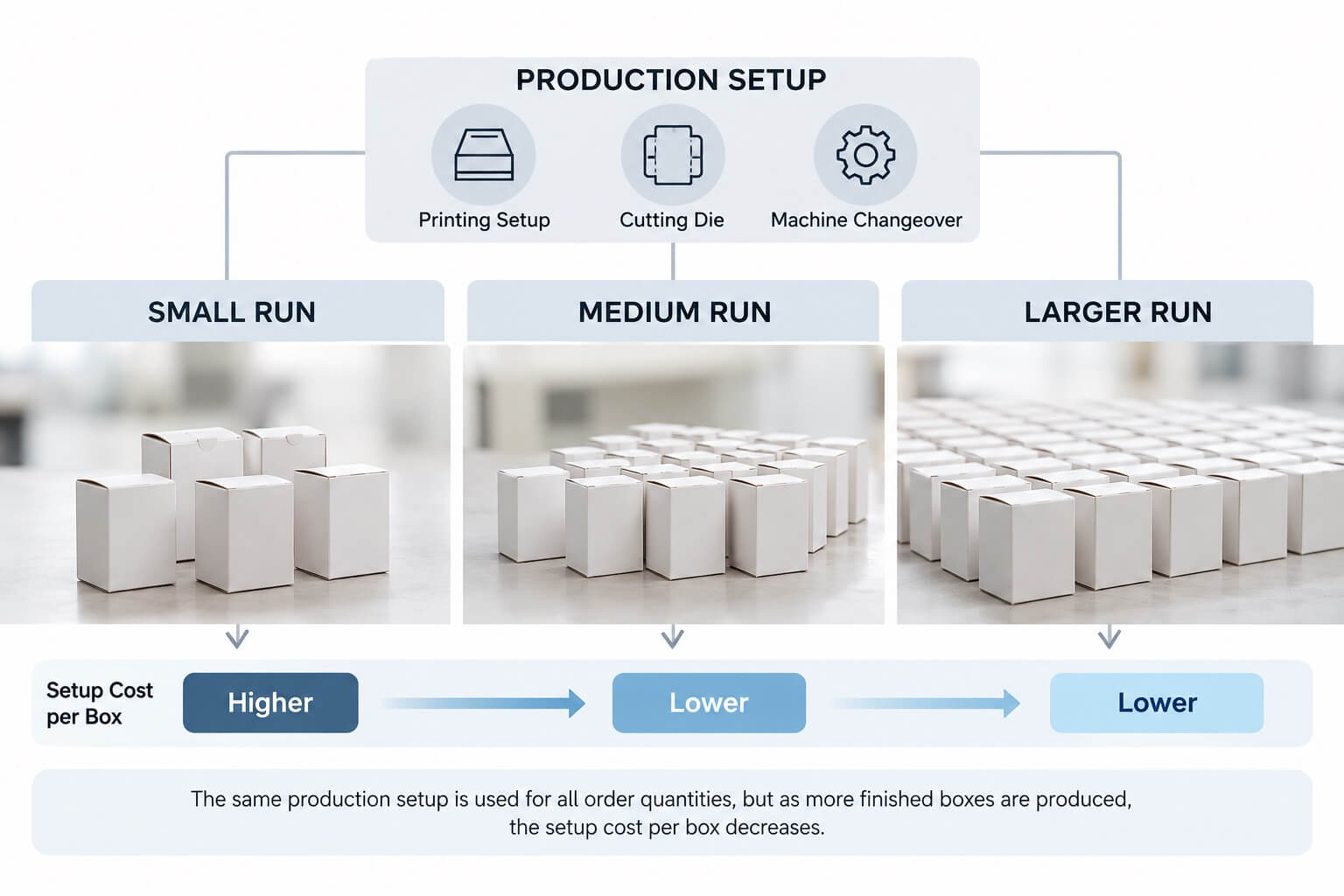
This is one reason tab lock boxes with the same board, print specification, and dimensions can have different unit prices at different order quantities.
It also helps explain why custom packaging manufacturers use minimum order quantities. An MOQ is not determined by one factor alone. Tooling, machine setup, material supplier minimums, order handling, finishing requirements, and the practical efficiency of the production process can all influence the lowest quantity that makes sense for a particular job.
Once production moves beyond these initial requirements, however, another part of the cost becomes important: the material itself.
More Boxes Do Not Simply Mean Buying the Same Paper at the Same Cost Per Box
Paper packaging materials are not normally purchased one finished box at a time. Paperboard, specialty paper, greyboard, corrugated material, foil, and other inputs may be ordered in standard sheet sizes, rolls, packs, or supplier minimum quantities.
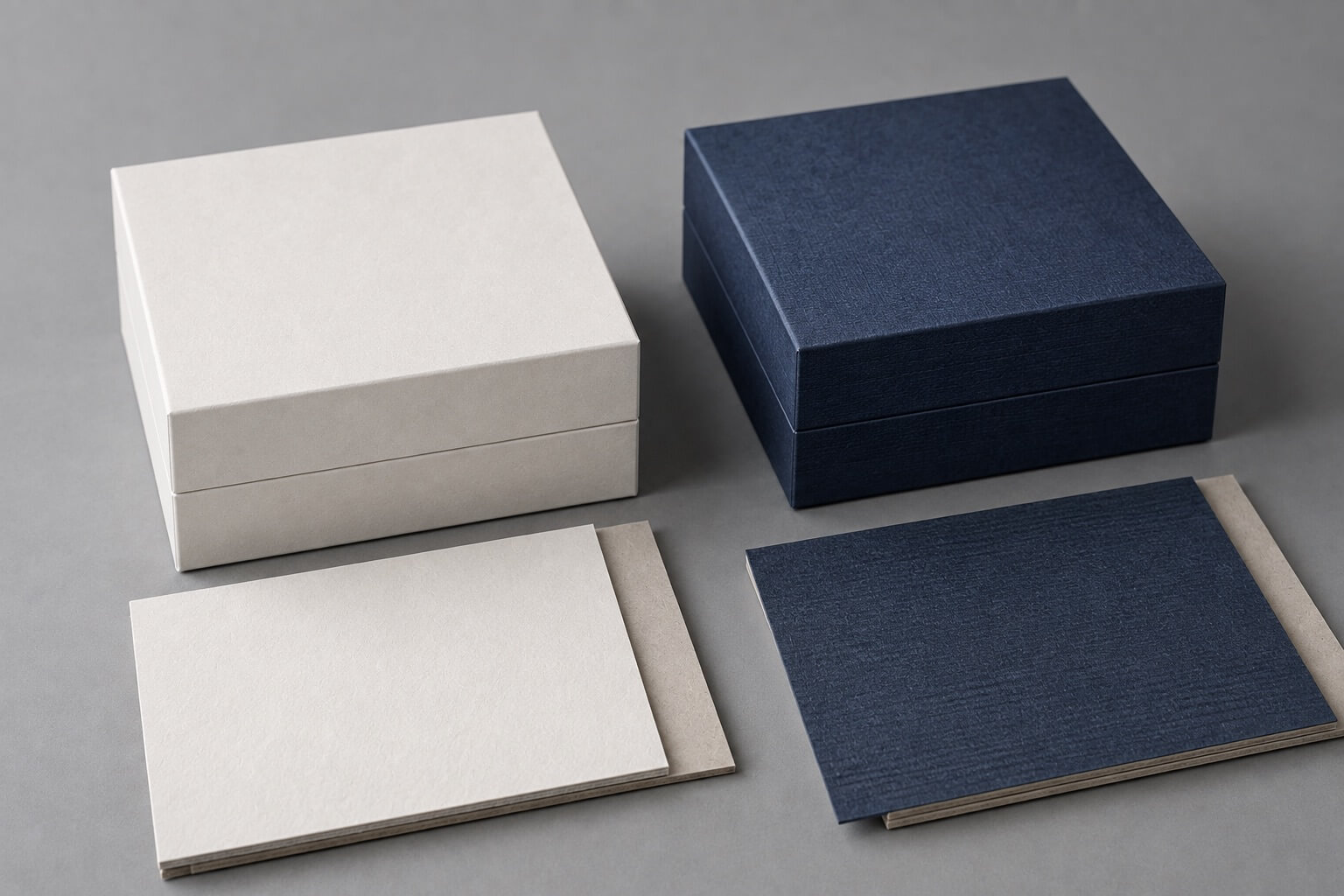
Production also requires material beyond the exact theoretical area of the finished packaging. Sheets may be consumed during machine setup and color adjustment, and allowances are required for converting and normal production loss.
At a small quantity, supplier minimums and these material allowances can represent a relatively large cost per finished box. At a higher quantity, they may be distributed across more saleable units.
This should not be confused with saying that a larger order automatically improves the percentage yield of every sheet. Sheet yield is mainly determined by factors such as the dieline, sheet size, grain direction, gripper and production requirements, and how efficiently the pieces can be imposed for printing and die-cutting.
That distinction matters with shaped boxes. An unusual outline may leave areas of a production sheet that cannot be converted into saleable packaging. Ordering more boxes does not remove that geometric waste, although a larger production requirement may make material purchasing and overall production planning more economical.
This is why finished dimensions alone are not enough to explain a packaging quotation. The factory has to consider how the package will actually be produced from the material.
The same principle continues once those sheets reach the machines.
Longer Runs Spread Setup and Changeover Across More Saleable Units
Printing, die-cutting, gluing, and other converting processes normally require some form of setup before stable production begins.
Operators may need to mount plates or tooling, establish registration, adjust machine settings, verify color, check cutting or creasing, and inspect initial output. Depending on the process, some of the early sheets may be used to bring the job within the approved production standard rather than becoming finished saleable packaging.
Once the process is stable, continuing the same job allows that setup and changeover time to be distributed across a larger number of acceptable units.
For packaging such as roll end tuck top boxes, a longer repeatable run may therefore use printing and converting setup more efficiently than a very short run of the same specification.
The important point is not that the machine necessarily runs faster because the customer ordered more. The production speed may remain essentially the same. What changes is the ratio between setup time and productive running time.
This is also why quantity affects different packaging formats differently. Some processes can run with relatively high levels of automation once the equipment is set. Others continue to require substantial work on every individual box.
Some Costs Remain With Every Box Produced
A larger order can reduce the setup cost allocated to each unit, but it cannot remove the material and conversion work required to manufacture the unit itself.
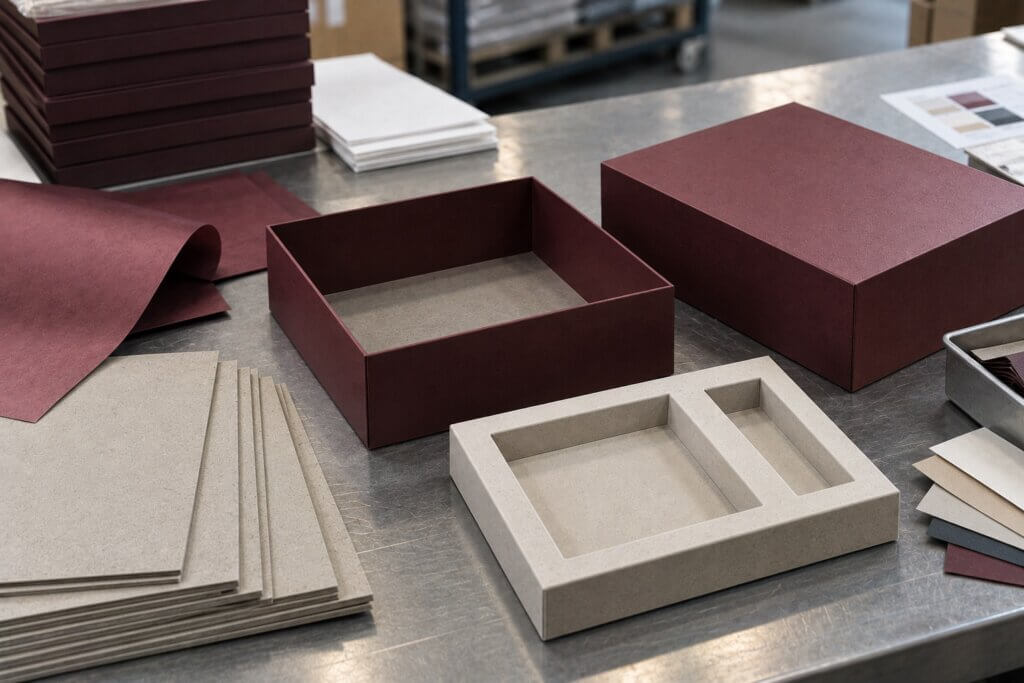
This becomes particularly important with rigid paper boxes. Depending on the construction and available equipment, production can involve board cutting or forming, wrapping, adhesive application, positioning, assembly, and inspection. Some of these operations may be automated or semi-automated, while others may continue to require manual handling.
The cost therefore does not behave in exactly the same way as a simpler carton produced through a highly repeatable converting line.
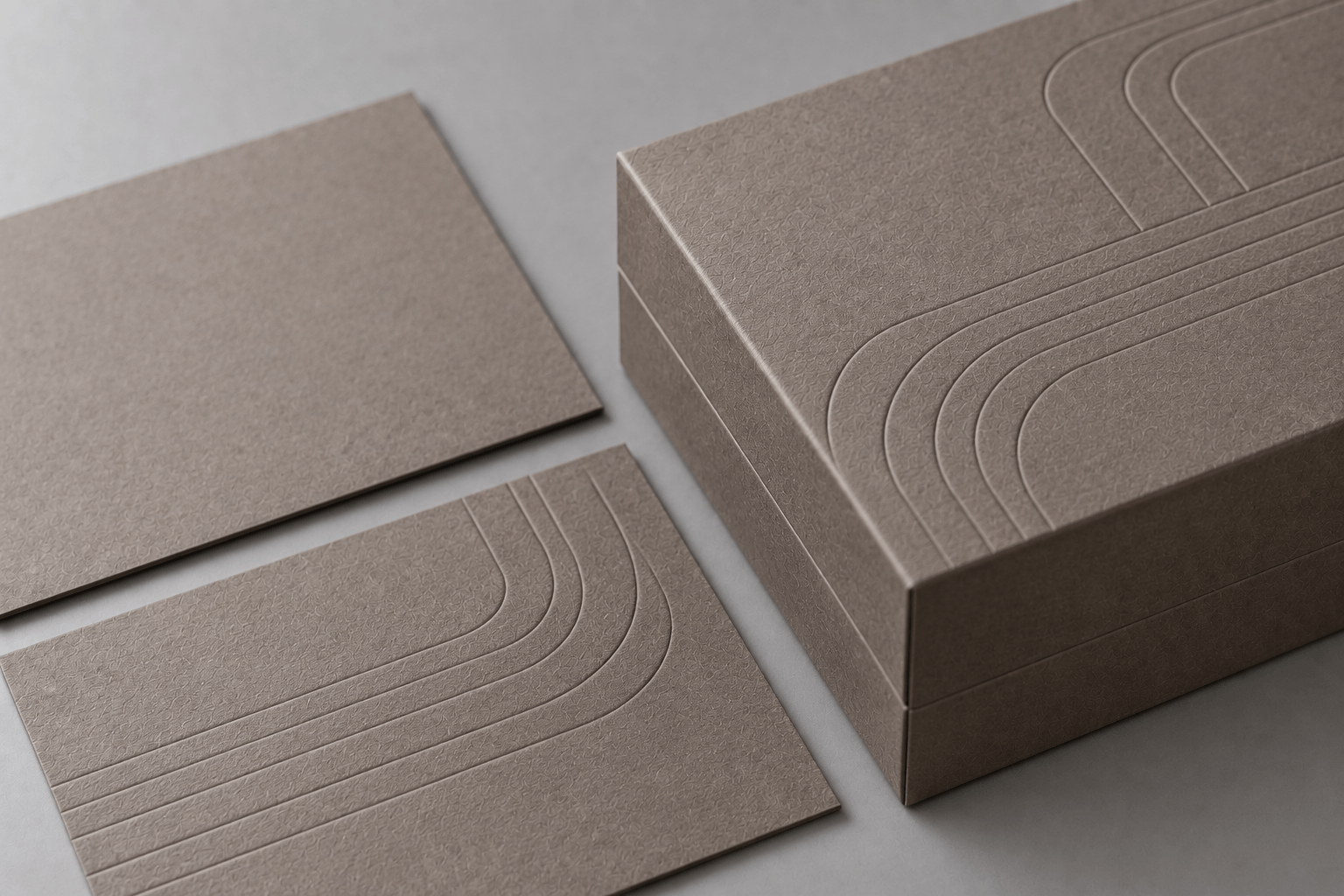
Finishing provides another example. With embossed boxes, the embossing die is a tooling cost that can be allocated across the production quantity. But the actual embossing operation still has to be performed on the production sheets, and registration, pressure, and finished appearance still need to remain within the required standard throughout the run.
Multi-component packaging adds another layer. Custom drone packaging boxes, for instance, may include an outer box, a fitted paper insert, and compartments for accessories. A larger quantity can improve the way setup and purchasing costs are distributed, but each finished pack still requires the specified components to be manufactured, converted, assembled where necessary, and inspected.
This distinction between setup-related costs and per-unit manufacturing costs explains why packaging prices usually fall with volume—but not indefinitely.
Why Does the Price Reduction Become Smaller at Higher Quantities?
When a production run moves from a relatively small quantity to a larger one, several cost advantages can occur at the same time. Setup and tooling are spread across more units, supplier minimum quantities may become less significant on a per-box basis, and machine changeover represents a smaller proportion of the total production run.
As the order becomes larger, however, many of those benefits have already been captured.
The remaining costs are increasingly dominated by materials and conversion activities that continue with every unit. Each custom mobile battery box, for example, still requires the specified board, printing, die-cutting or converting, and any paper insert or accessory compartment included in the approved construction. Inspection, packing, and handling also continue as the production quantity increases.
For that reason, the unit price may continue to decrease at higher quantities, but the reduction often becomes progressively smaller.
There is no universal breakpoint. It depends on the package dimensions, material, sheet yield, printing process, finishing requirements, tooling, level of automation, assembly requirements, and the factory’s production configuration for that particular job.
This is why a buyer should not assume that doubling an order will produce a predictable percentage reduction in unit price.
The more useful approach is to compare actual quotations at several realistic quantities using exactly the same specification.
A Lower Unit Price Can Still Lead to a Higher Total Packaging Cost
Manufacturing efficiency is only one side of the purchasing decision. Inventory is the other.
Suppose a company expects to use 20,000 packages during the next 12 months. Producing all 20,000 in one run may provide a lower manufacturing cost per unit than producing four separate batches of 5,000. For a mature product with predictable demand and stable artwork, that can be commercially sensible.
The calculation changes when demand is less predictable.
Seasonal custom Halloween boxes are a clear example. Increasing the production quantity simply to reach a lower unit price creates little value if a significant portion remains unused after the selling season. Those boxes have already consumed cash and warehouse space, and season-specific graphics may reduce their usefulness in a future cycle.
The same risk exists outside seasonal packaging. Product dimensions can change, ingredient or regulatory information may require an artwork revision, branding can be updated, or a new SKU can replace an existing one. A large inventory of custom chocolate bar boxes purchased at a lower unit price can become expensive if part of that inventory has to be discarded or reworked.
This is why procurement decisions should distinguish between unit manufacturing cost and total packaging cost.
The lowest unit price is not always the lowest-cost purchasing decision.
For stable, repeat-order products, larger runs may make sense. For new products, seasonal programs, or packaging specifications that may still change, accepting a somewhat higher unit price can preserve flexibility and reduce inventory exposure.
How Should Buyers Choose a More Economical Order Quantity?
Instead of asking only for the lowest possible price, buyers can compare several production quantities while keeping the technical specification unchanged.
For example, a quotation might compare the minimum practical production quantity with one or two larger volumes. If dimensions, board grade, printing, finishes, inserts, and packing requirements remain the same, the buyer can see how much of the price change is actually being created by production volume.
This comparison can also reveal where the savings begin to narrow.
A relatively streamlined tab lock cardboard boxes order may reach efficient production conditions differently from a rigid package with several components and manual assembly. The economically sensible quantity is therefore project-specific rather than a fixed number that applies to every paper box.
At Demei Packaging, most custom packaging projects start from 500 pieces, but the final MOQ depends on the box type, structure, materials, and finishing requirements. Once the specifications are confirmed, a quotation can usually be prepared within 24 hours. For projects that require structural development or sampling, these steps are completed before mass production so that the approved construction, materials, printing, and finishes can be carried into the production run.
For a buyer, the objective should not automatically be to place the largest possible order. It should be to find a quantity that gives the project reasonable manufacturing efficiency without creating excessive inventory, unnecessary cash commitment, or a high risk of obsolete packaging.
The better question is not simply:
“How many boxes do we need to order to get the lowest unit price?”
It is:
“At what quantity does the packaging reach a reasonable manufacturing cost while still matching our actual demand?”
That is usually a more useful basis for a long-term packaging purchasing decision.